
Google Tag Manager
Deploy the Intempt JavaScript SDK through a Google Tag Manager container instead of editing your site's code directly.
Overview
Google Tag Manager (GTM) is a tag management system that lets you add and update tracking code on your site without a code deployment. Intempt doesn't have a dedicated GTM connector in the Integrations page, since it doesn't need one: you deploy the same installation snippet used for a direct JavaScript install, as a GTM tag. You get the same autocaptured events either way, but tag changes go through GTM's publish flow instead of your normal release process.
This guide walks through getting your Intempt installation snippet, adding it to GTM as a Custom HTML tag, and publishing it.
Before you begin
You need:
- An Intempt account with an organization and project. If you don't have one yet, sign up for a free account.
- A Google Tag Manager container already set up for the site you want to track, with permission to create and publish tags.
📘 Good to know
Cloud sources like HubSpot, Shopify, and Stripe connect directly from the Integrations page and don't go through GTM. GTM is only for the JavaScript source.
Installing Intempt through Google Tag Manager
Step 1: Create your API key
The API key tells Intempt which organization and project incoming data belongs to.
To create one:
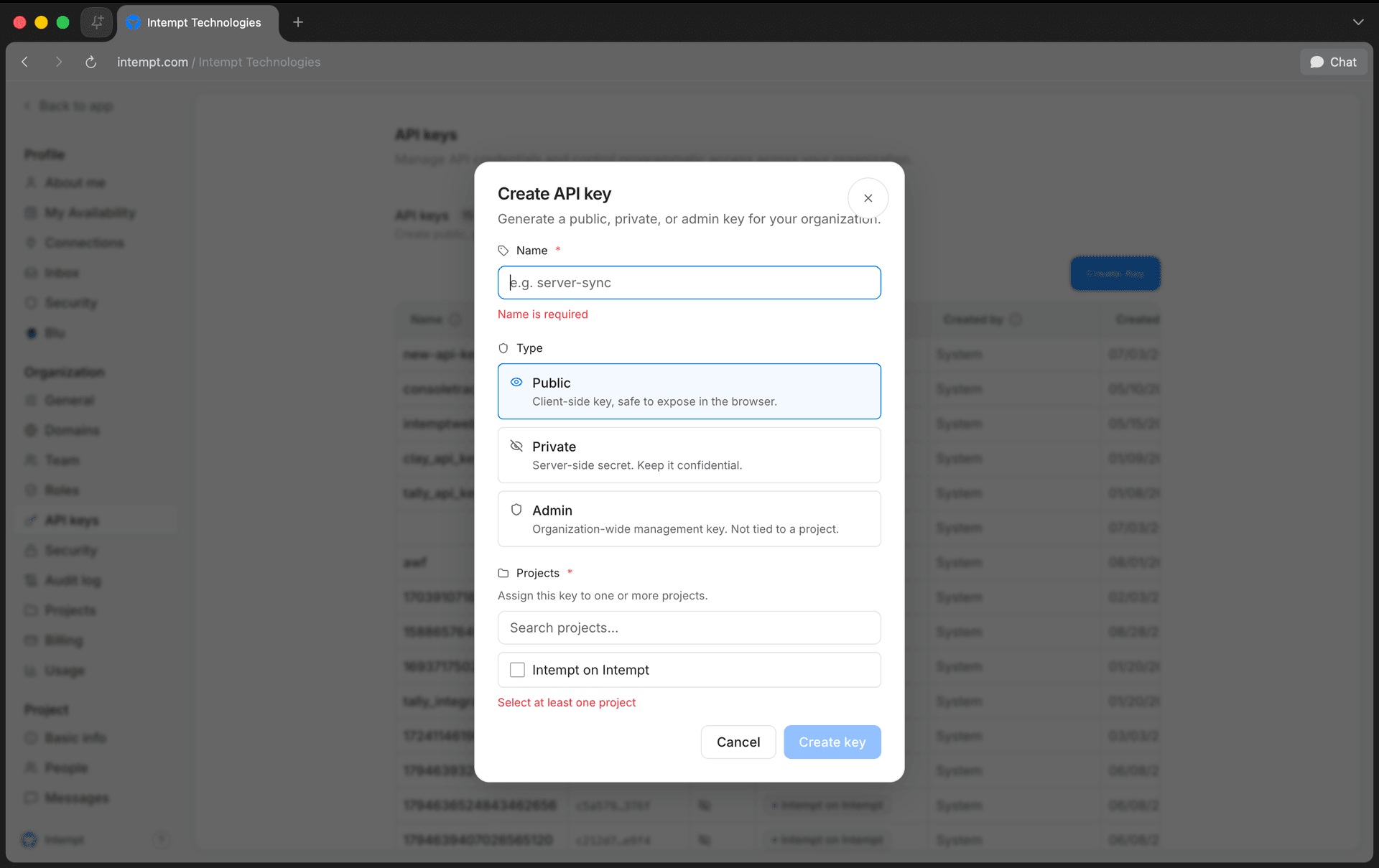
- Go to Settings and open the API keys tab.
- Click Create Key.
- Name the key, choose Public as the type, and select the project it applies to.
- Click Create key, then copy the full key. Intempt shows it once and won't display it again in full.
Step 2: Create a JavaScript source and copy the snippet
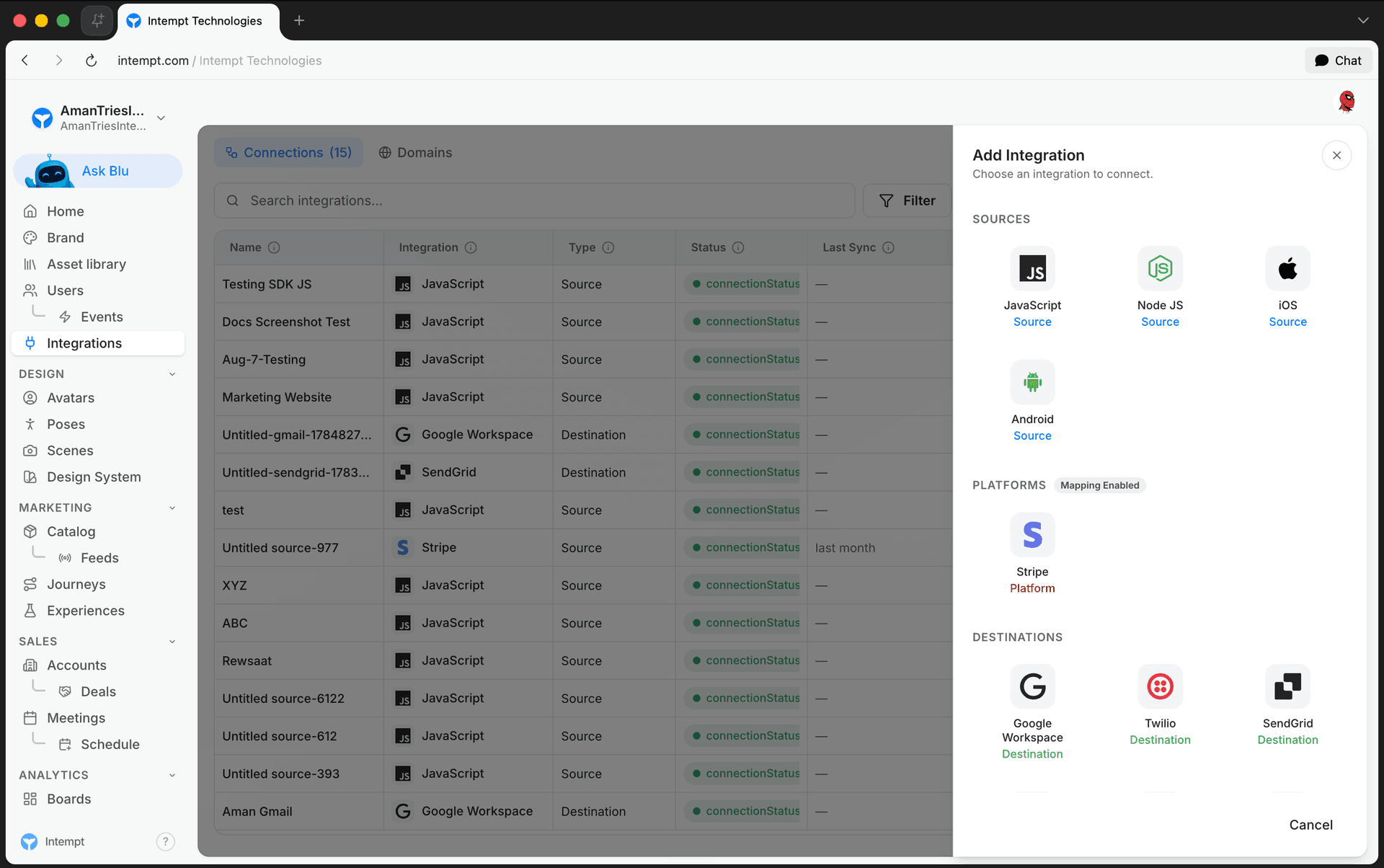
- Go to Integrations and click Add Integration.
- Under Sources, click the JavaScript tile.
- In the Configure JavaScript panel, enter a connection name and copy the installation snippet.
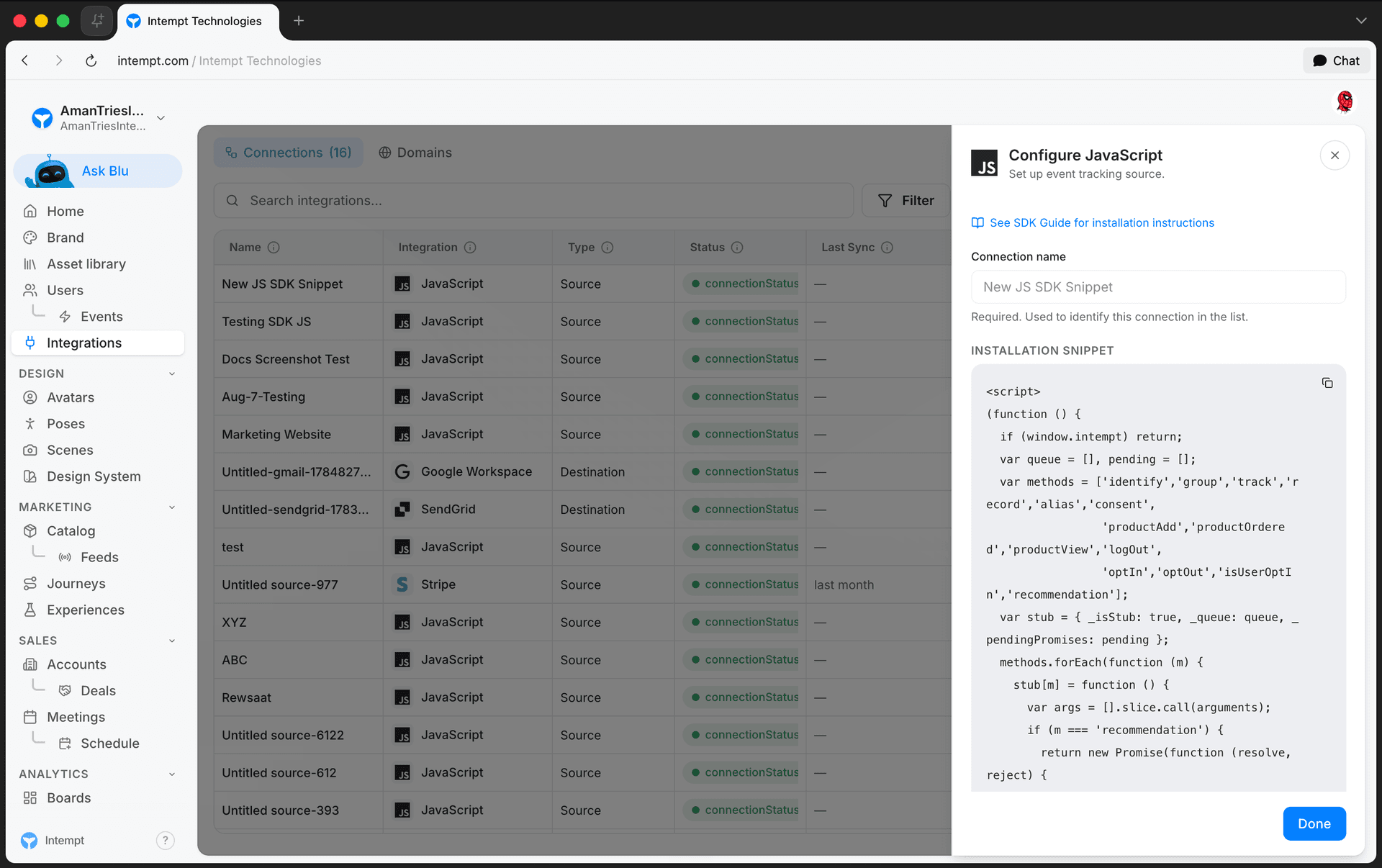
- Click Connect JavaScript to finish creating the source.
📘 Don't miss out
The snippet contains a placeholder, {YOUR_API_KEY}. Replace it with the public key you copied in Step 1 before you paste it into GTM.
<script>
(function () {
  if (window.intempt) return;
  var queue = [], pending = [];
  var methods = ['identify','group','track','record','alias','consent',
                 'productAdd','productOrdered','productView','logOut',
                 'optIn','optOut','isUserOptIn','recommendation'];
  var stub = { _isStub: true, _queue: queue, _pendingPromises: pending };
  methods.forEach(function (m) {
    stub[m] = function () {
      var args = [].slice.call(arguments);
      if (m === 'recommendation') {
        return new Promise(function (resolve, reject) {
          pending.push({ resolve: resolve, reject: reject });
          queue.push({ method: m, args: args });
        });
      }
      queue.push({ method: m, args: args });
    };
  });
  window.intempt = stub;
})();
</script>
<script src="https://cdn.intempt.com/intempt.min.js?organization=your-org&project=your-project&source=web-source&key={YOUR_API_KEY}"></script>
Step 3: Add the snippet as a tag in GTM
- In your GTM container, go to Tags and click New.
- Click the tag configuration box and choose Custom HTML.
- Paste the full snippet from Step 2 into the HTML field.
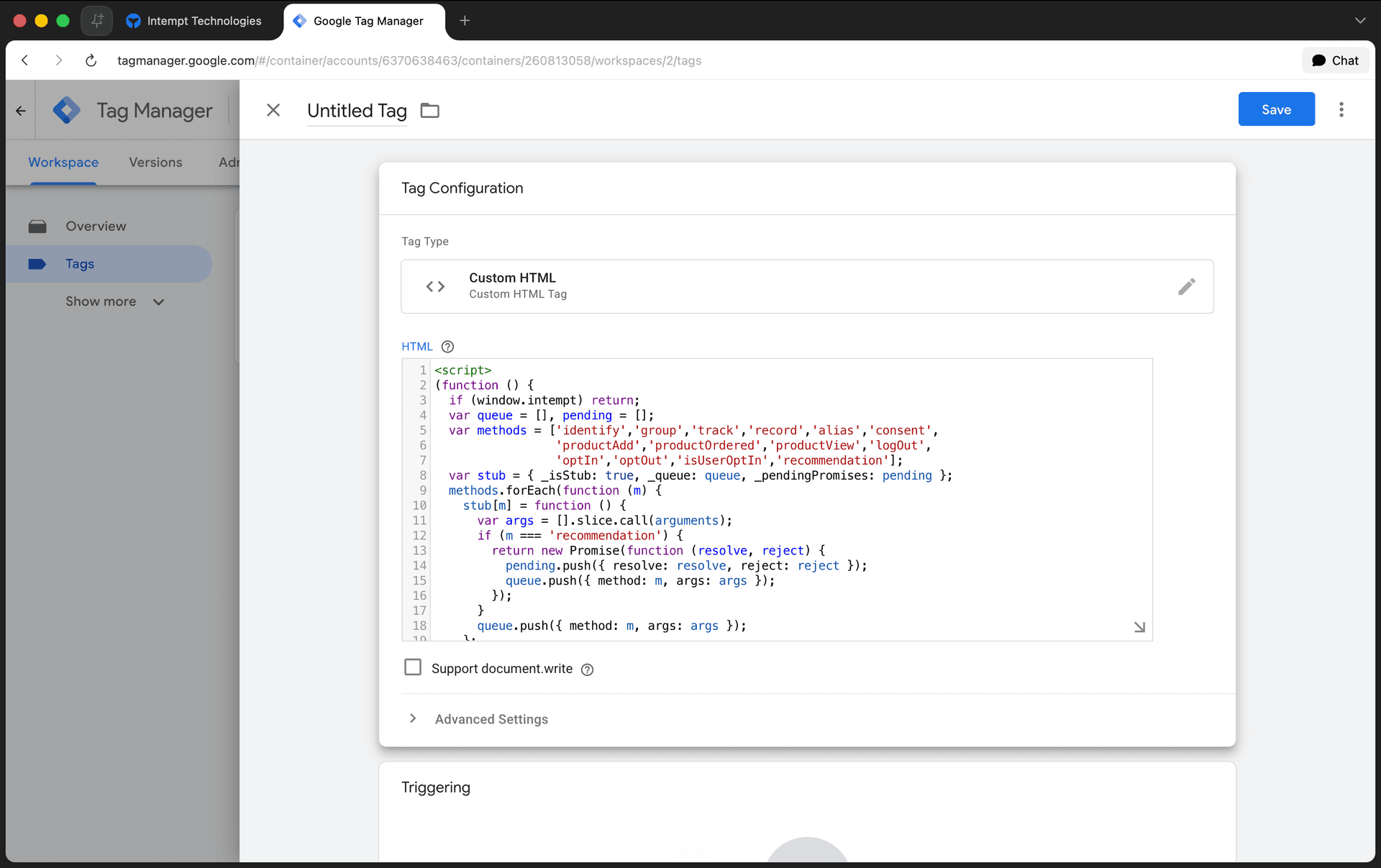
- Name the tag (for example, "Intempt tracking") and click Save.
Step 4: Set the trigger and publish
- In the tag's Triggering section, add the All Pages trigger so the snippet fires on every page.
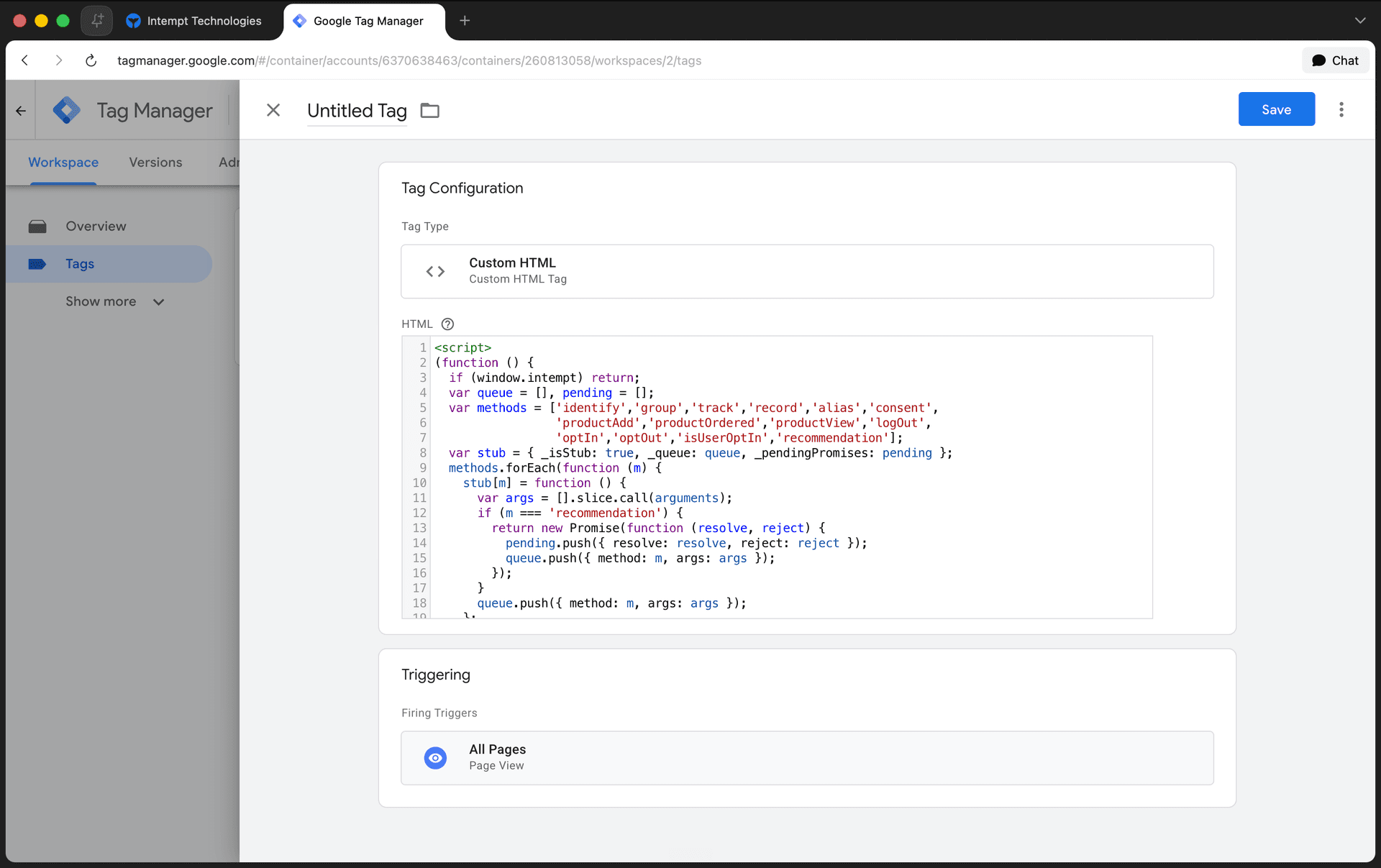
- Click Submit, then Publish to push the container version live.
Step 5: Confirm data is coming in
Open Live data feed under Events in the main nav and browse to a page on your site. You should see page view and session events appear in real time. If nothing shows up, use GTM's Preview mode to confirm the tag fires and check that {YOUR_API_KEY} was replaced with your real public key.
Where to go next
- Basic Intempt installation for the direct (non-GTM) install path, autocapture details, and custom events.
- JavaScript SDK reference for the full method list and autocapture behavior.
- Sources to connect additional sources like iOS, Android, Node.js, or the REST API.
- Live data feed to verify events are flowing in after you publish.
Validating installation
Confirm a newly connected source, platform, or destination is actually sending data, using the Connections table and Live data feed.
Setting Up Custom Events
Call track() or record() to capture the business actions autocapture can't see, with real-world examples for common use cases.