.svg)


Post-Holiday Sales Challenge: Turning One-Time Buyers into Repeat Customers
This case study explains how a multi-category online store uses an AI-driven solution to lower customer acquisition costs, boost conversion rates, and increase customer lifetime value after the busy fall holiday season. Even when organic traffic and sales drop by as much as 60-70%, the right strategies can keep your store growing.
.png)


The Challenge: Post-Holiday Drop-Off
After the holiday rush, most e-commerce stores experience a sharp slowdown. Organic traffic and sales can decline by 60 - 70%, making it challenging to sustain growth without incurring significant losses.
Our multi-category online store faced the same challenge - high acquisition costs, lower conversion rates, and the need to turn one-time shoppers into repeat customers. The goal was clear: acquire new users profitably and retain them longer.
The Revenue Reality
Let’s break down the numbers for the store:
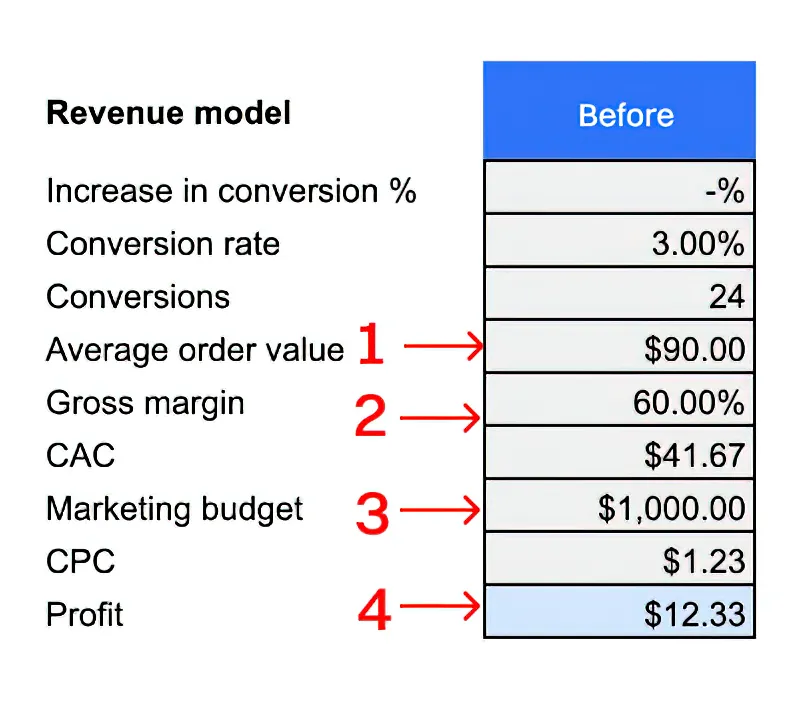
- Average Order Value (AOV): The average purchase is $90.
- Gross Margin: The store keeps 60% of each sale. This means that after a cost of $36, there’s $54 left from each order.
- Marketing Budget: The store has a $1,000 marketing budget.
- Cost Per Click: On average, each click costs $1.23.
- Customer Acquisition Cost (CAC): It costs about $41.67 to acquire a new customer.
- Profit Runway per New Customer: After covering the acquisition cost, the store has about $12.33 left as profit or promotion budget for the first sale.
What the Store Did Differently?
Smarter Cross & Up-Selling
Instead of random “frequently bought together” bundles, the team used AI to segment behavior-based recommendations, matching products based on browsing and cart patterns. This lifted their AOV by 12% within weeks.
Takeaway: Personalize offers using data signals, not assumptions.

Retargeting Ads:
- With the help of AI, it showed ads to visitors who didn’t convert in the first time.
- However, with a standard conversion rate of about 3%, you may need around 30 clicks (roughly $30) to make one conversion. This number is higher than the $12.33 profit margin available, so careful management of ad spend is critical.
Takeaway: Precision beats volume. Retarget where purchase intent is highest.

Increasing Conversion Rates:
Discounts: Offering discounts can boost conversions, but it might also lower margins.
Personalization & Experimentation:
- Tailor the user experience through targeted messaging and A/B testing.
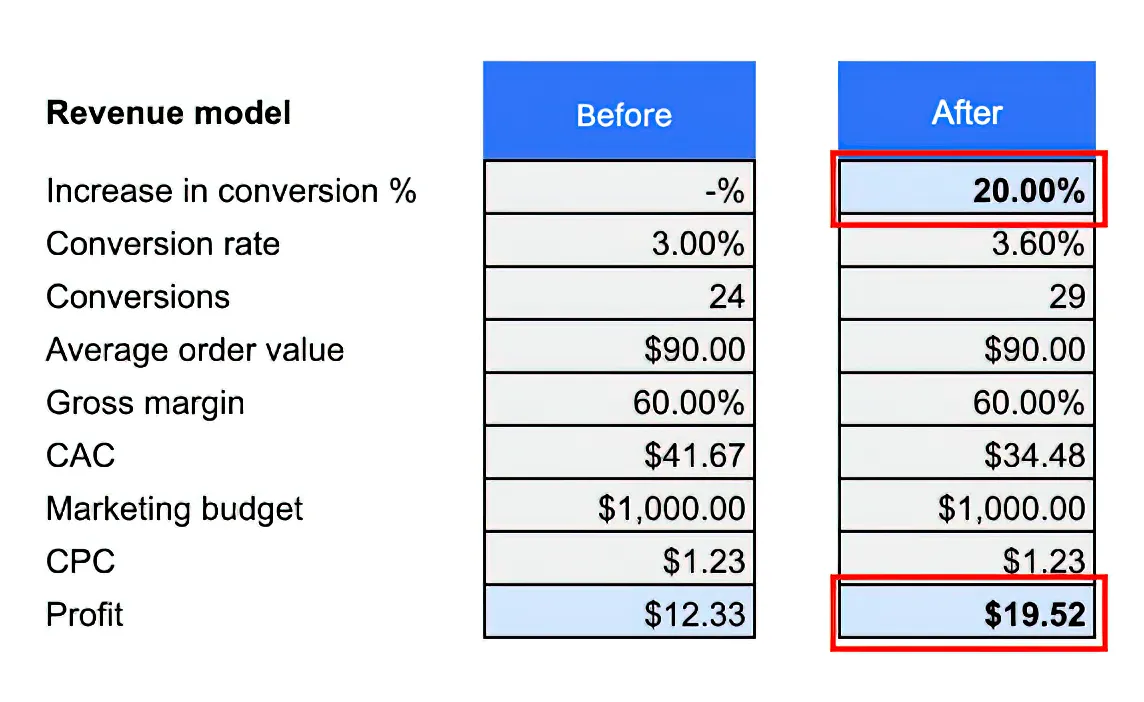
- For example, a 20% improvement in the conversion rate can increase profit per new customer from $12.33 to $19.52.
- This extra profit can be reinvested in advertising or promotions, while still maintaining overall profitability.
Takeaway: Test messaging before cutting prices.
Retention & Monetization
Acquiring a customer is just the beginning. To ensure long-term success, the store must focus on retaining customers and increasing their lifetime value (LTV).
LTV/CAC Ratio:
- After the first purchase, the LTV is $90 compared to a CAC of $41.67, which gives a ratio of about 1:2.
- To achieve a CAC: LTV ratio of 1:3 or better, encouraging a repeat purchase is essential.
Post-Purchase Strategies:
- Upselling: Offer complementary products or upgrades after the initial sale.
Personalized Offers: Engage customers with targeted offers that keep them connected to your brand and encourage repeat business.
Enter Intempt GrowthOS: The AI-Driven Solution
Intempt GrowthOS unified customer data, predicted buying intent, and automated personalization with its AI-powered tools. Instead of managing separate tools, the brand managed its full lifecycle in a single unified system.
How Intempt GrowthOS Helped?
Data Integrations & Identity Resolution
Unified customer data from multiple sources to build complete profiles and deliver consistent experiences.

Timely Marketing Experiences
Automated behavior-triggered campaigns, delivering the right message at the exact moment users were most likely to engage.

Growth Methodology For Profit Scaling
Discover Audiences 🔮
Unify and analyze customer data from all channels and use machine learning to predict who is most likely to purchase.
Discover: Identify, Build, and Analyze: Gather customer data from all your sources, combine it to form a complete picture, and use it to pinpoint your target leads and accounts.
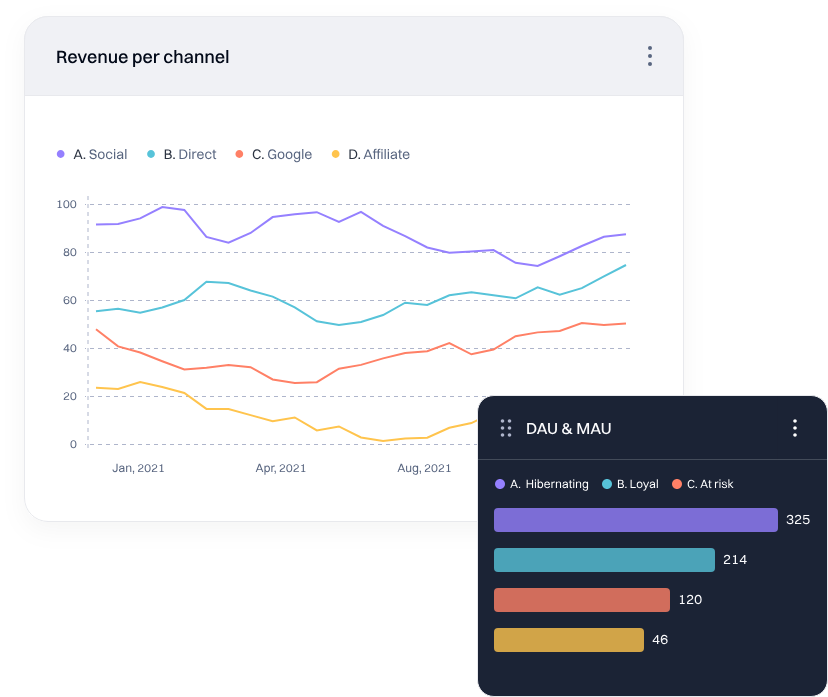
Predict: Use machine learning to understand and forecast what your customers are likely to do next with real-time insights.
Engage Customers 💬
Personalize every interaction with automated triggers like emails or SMS based on real-time behavior.
Personalization: Tailor every communication across web, mobile, and email to suit individual customer needs and preferences.

Journeys: Based on real-time behavior, send timely emails or SMS when customers hit a new stage or show a drop in activity.
Optimize Experiences 💹
Experiment with different strategies and use insights to continually improve customer engagement.
Experiment: Test different strategies on your website or app with confidence and minimal risk to find what works best.
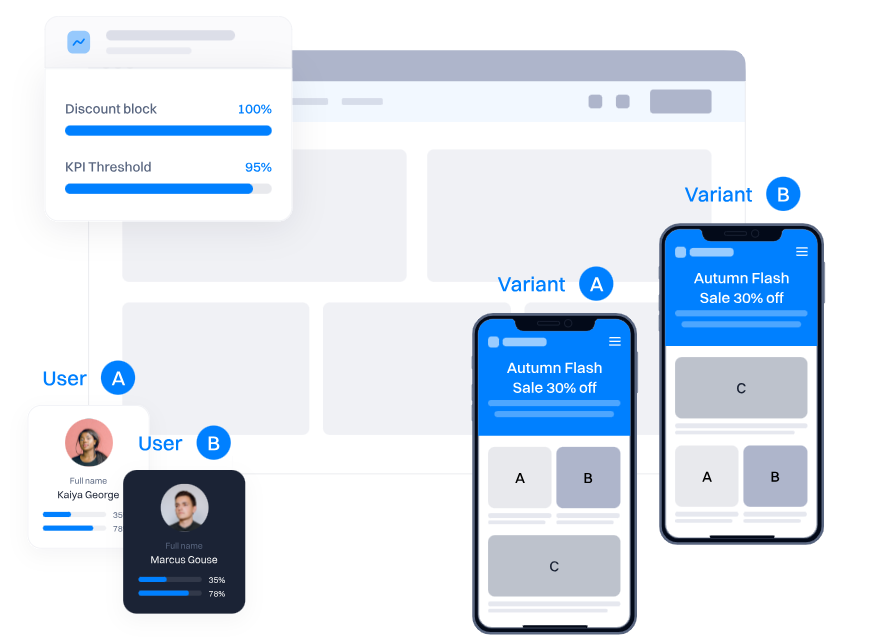
Analyze: Review the results of your experiments to gain clear, actionable insights that drive continuous improvement.
Results You Can Aim For
Stores adopting this data-driven, AI-assisted approach typically achieve:
- 20 - 30% lower CAC through precise targeting.
- 15 - 25% lift in repeat purchase rate.
- Higher LTV: CAC ratios (up to 3:1) within one quarter.
TL;DR
- Sales drop by 60–70% after the holiday season.
- The store needed to lower CAC and improve repeat purchases.
- Used data-driven upsells, retargeting, and A/B testing to boost conversions.
- Focused on retention through personalized post-purchase offers.
- Intempt GrowthOS helped unify data, predict intent, and automate marketing.
- Result: Lower costs, more repeat customers, and steady growth.
- Key learning: With Intempt GrowthOS, even slow months can be profitable.
FAQs
Q1: How can eCommerce brands retain customers after the holidays?
Use personalized post-purchase offers and timely reactivation campaigns.
Q2: How can AI improve customer retention?
AI predicts churn, personalizes experiences, and automates engagement at scale.
Q3: Should I increase discounts during slow months?
Only if paired with smart targeting, broad discounts hurt the margins.
Q4: How can I unify customer data from multiple sources?
You can use Intempt’s Identity Resolution feature that connects data from web, app, and CRM channels to create a single customer profile, ensuring accurate personalization and reporting.
Q5: What role does AI play in improving customer retention?
AI analyzes user behavior and predicts churn or repeat purchase intent. Intempt’s predictive models automate re-engagement with personalized offers at just the right moment.
Q6: What’s the first metric to track for retention success?
Repeat purchase rate (RPR) within 30 - 60 days of first order.
FAQs
Can I trial Webflow before pa

Sure! You can test out Webflow on our free plan where you can experiment with 2 projects. Your unhosted projects will have a two-page limit, but you can purchase a site plan on a per-project basis to unlock up to 100 static pages and additional CMS pages.
What is a project?
A project is a website that you build in Webflow. You can publish projects to a webflow.io staging subdomain for free, export the code on a paid plan, or add a site plan to connect your custom domain and unlock hosting features.
What can I white label?
Pro accounts can add their own logo to Client Billing forms and the Editor. Pro accounts can also remove references to Webflow in the source code and form submission emails, and hide the Webflow badge from their staging sites.
How much traffic can the hosting handle?
Webflow hosting scales automatically to handle millions of concurrent visits. All site plans serve sites through our Amazon's Cloudfront CDN and accelerated using Fastly, loading sites in milliseconds.
What kind of support does Webflow provide?
We offer fast email support to paid accounts and prioritized help for team accounts. Community support (forum.webflow.com) is available to free accounts.
How long does it take to learn Webflow?
If you're new to building websites, our video tutorials will get up and running quickly. If you already know concepts behind CSS and the box model, you will feel at home in Webflow.
Check out Growth Play Library ➡️
Get started free on GrowthOS ➡️
Book a growth call ➡️
.svg)
Sid Chaudhary
Founder & CEO


Looking for ways to grow faster?
Discover marketing workspace where you turn audiences into revenue.
Learn about IntemptReceive Monthly Insights
Get expert insights & news on the latest promotion trends in our monthly newsletter.
Sid Chaudhary
CEO & Founder

Lifecycle automation tips
Industry tips
Case Studies
You might also like...
%20In-Depth%20Comparison.png)
Intempt vs Customer.io (2025): In-Depth Comparison
Customer journeys are most effective when they evolve with user behavior. But most automation tools still rely on static flows that remain unchanged until a marketer updates them manually. Customer.io delivers strong messaging automation and excellent segmentation. It can move users in and out of segments in real time based on events, attributes, and behavior, which makes targeting very powerful. Intempt takes a different approach. It uses AI to orchestrate journeys that adjust themselves in real time, predict user intent, and connect every step to analytics and revenue attribution, turning your lifecycle into a system that learns and improves automatically. In this comparison, we break down Intempt vs. Customer.io so you can understand which platform delivers truly adaptive lifecycle orchestration in 2025.

%20In-Depth%20Comparison.png)
Intempt v/s Clerk.io (2025): In-Depth Comparison
Every marketer knows the frustration: you work hard to acquire a customer… and then generic journeys send them straight to a competitor. A recommendation engine alone isn’t enough anymore. Clerk.io has long been one of the most popular tools for smart product recommendations, search, and on-site personalization. But in 2025, teams want more than a recommendation engine that reacts. They want to personalize the whole customer journey across email, sms, onsite, and in-app, and get for ltv our customers That is exactly where Intempt steps in. Intempt doesn’t behave like another vendor for product recommendations. It thinks ahead, runs personalized experiments, orchestrates journeys across every channel, and recommendations into one intelligent system that grows smarter with every user interaction. In this comparison, we’re putting Intempt vs Clerk.io under the microscope to help you identify which platform is the more future-ready growth engine for your brand.
%20In-Depth%20Comparison.png)
Intempt v/s Klaviyo (2025): In-Depth Comparison
Marketers want seamless customer journeys, not a maze of rules and manual triggers. If the system feels like work, it’s not automation, it’s stress in a shiny UI. Klaviyo has long been the go-to for e-commerce platforms, powering email, SMS, and now even WhatsApp automation. But 2025 teams want more than AI that writes better subject lines; they want an AI comarketer that thinks ahead. In this comparison, we’ll explore Intempt v/s Klaviyo with a sharp focus on their Journeys to help you find out which one delivers true AI-powered orchestration rather than just automated messaging.
Subscribe to The Full Stack Marketer 📈
Zero theory or mindset discussions here; just actionable marketing tactics that will grow revenue today.

Web A/B testing
Use front-end A/B and multi-page experimentation product built for any business size. Run multiple experiments on the same page.

Targeting & personalization
Deliver targeted messaging, personalized offers and recommend the most relevant content for your users.

Visual editor
Empower your team to collaborate with an easy-to-use visual editor without using developer time to get things up and running.

Analytics
Gain insight into the impact of your experiments with statistically valid results. No complex statistical analysis required.

Server & client-side testing
Go beyond client-side testing and deploy experiments on the server-side. Test and optimize content changes and even complete re-brands.

Flexible goal selection
Select the right goal for each personalization and experimentation campaign to ensure you’re optimizing towards the right objectives.
.svg)

.svg)


.svg)
.svg)