
The B2B SaaS market is experiencing a fundamental shift in how companies sell and grow. Gone are the days when aggressive sales teams alone could drive sustainable growth. Today's buyers want to experience products firsthand before making purchasing decisions.
A majority of B2B SaaS companies have already deployed a product-led growth motion, with 91% planning to increase their investment in PLG initiatives.
Expected Results
- Build a hybrid go-to-market model that blends PLG efficiency with sales-led precision.
- Identify and prioritize Product-Qualified Leads (PQLs) using behavioral data and engagement insights.
- Align product, marketing, and sales teams under one unified GTM motion.
- Use Intempt to unify data, score leads dynamically, and trigger personalized next-best actions.
What is a Go-To-Market (GTM) Motion?
A GTM motion refers to the strategy a company employs to deliver its products or services to the market. Different departments play specific roles: Marketing creates awareness, product teams ensure value delivery, and sales focus on relationship building.
The Evolution of GTM Strategies
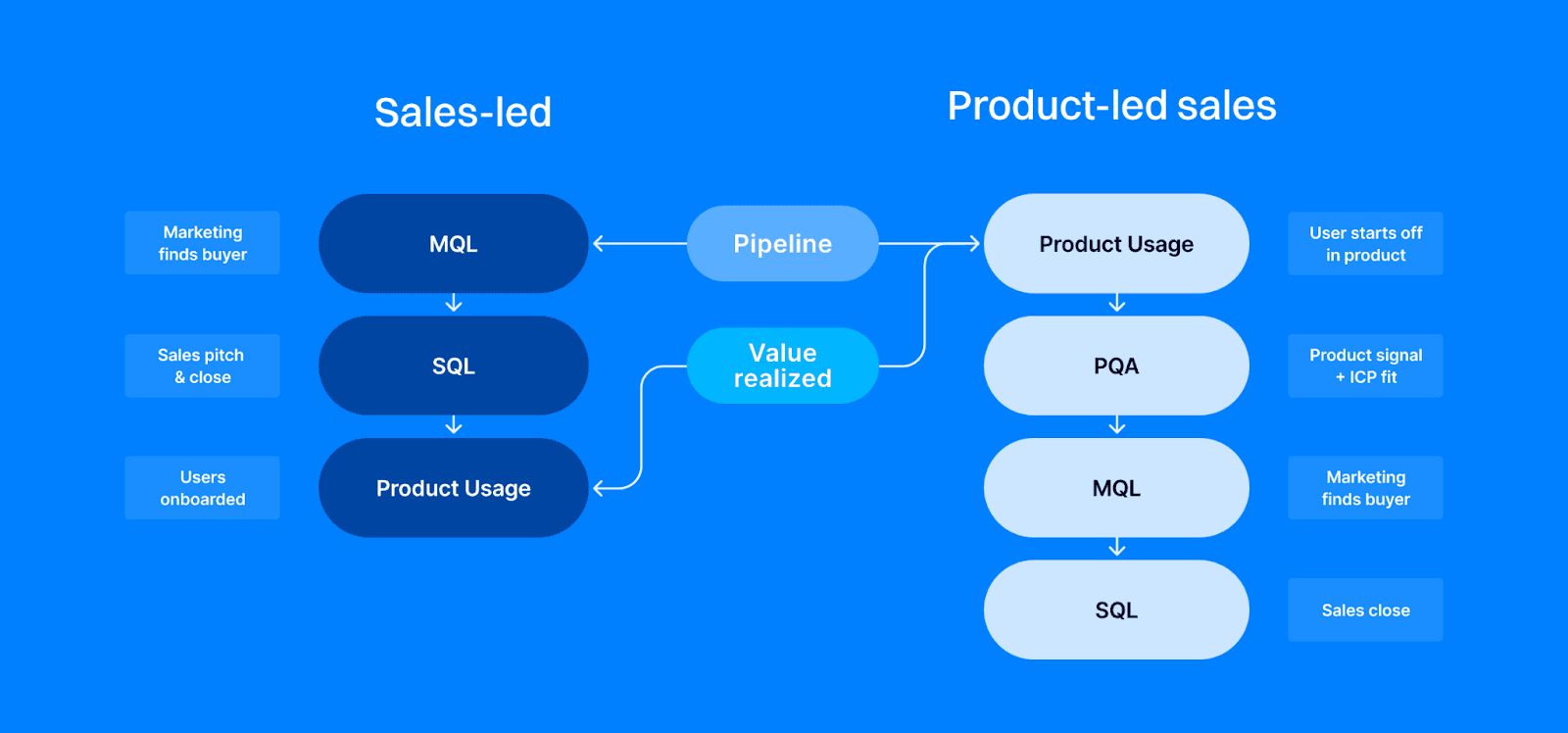
In a modern GTM strategy:
- Product Teams: Develop features that drive user engagement and satisfaction.
- Sales Teams: Engage with users who have demonstrated interest through product interactions.
- Marketing Teams: Create campaigns that highlight the product's value proposition.
The Old Guard vs. The Game Changer
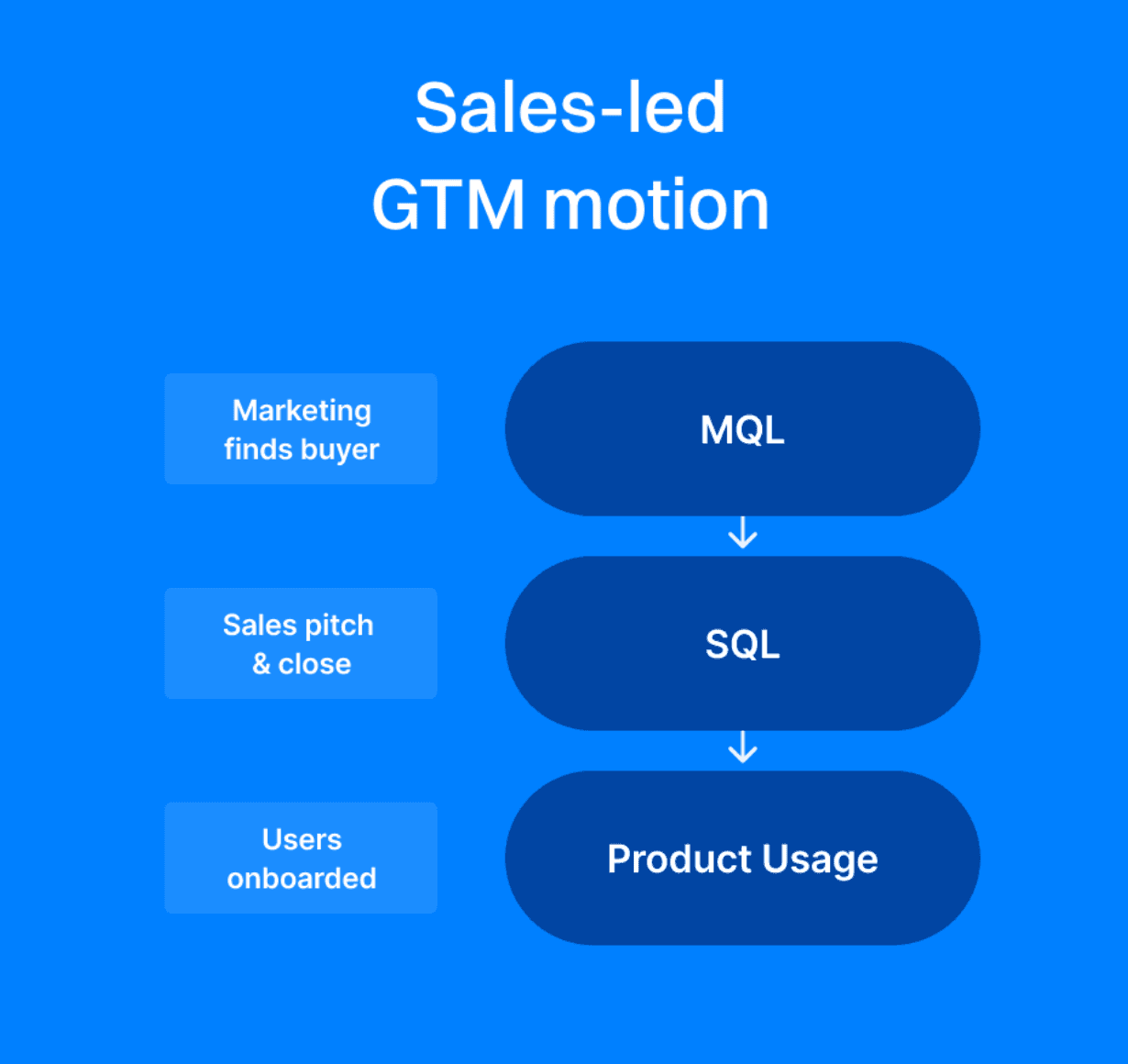
In traditional sales-led growth models, dedicated sales teams drive customer acquisition through high-touch interactions. This approach has become less sustainable due to:
- Rising customer acquisition costs
- Limited scalability
- Misalignment with modern buying preferences
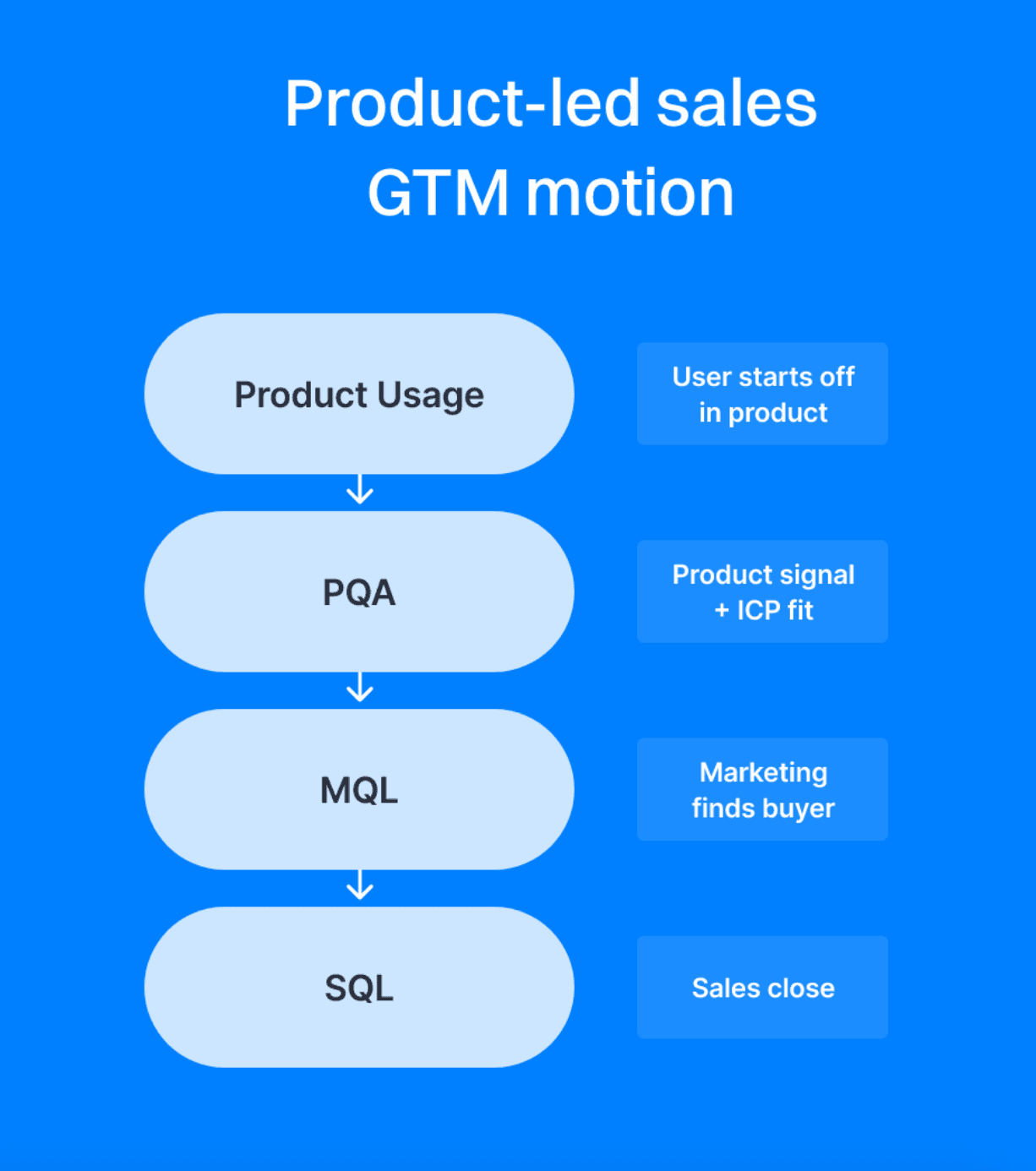
Product-led growth (PLG) lets the product itself serve as the primary driver for customer acquisition, retention, and expansion. Companies like Slack and Zoom have shown that when users love your product, growth follows naturally.
Modern buyers prefer this approach because:
- They can try before they buy
- There's no pressure from sales teams
- Value is immediate and tangible
Three out of every four B2B buyers would rather self-educate and buy through an app than learn about a product from a salesperson.
How to Implement Product-Led Sales with Intempt?
Step 1: Identify Product-Qualified Leads (PQLs)
- Monitor user interactions with AI to pinpoint those exhibiting behaviors indicating readiness to purchase.
- Define clear criteria for PQLs based on engagement metrics and feature usage.
Step 2: Cross-Functional Team Alignment
- Foster collaboration between product, sales, and marketing teams.
- Establish regular communication channels and shared goals.
Step 3: Using Product Usage Data
- Utilize analytics to gain insights into user behavior.
- Implement AI tools that provide real-time data to form sales strategies.
Step 4: Creating Effective Sales Workflows
- Develop processes that integrate product insights into the sales cycle.
- Automate systems to notify sales teams when users reach predefined engagement thresholds.
What to Expect from a Product-Led Sales Motion?
Teams implementing PLS with Intempt typically report:
- 25–40% higher conversion rates from PQLs to paying customers
- 30% faster sales cycles
- 20–35% improvement in net retention
- Reduced customer acquisition cost (CAC) through product-qualified targeting
- Better collaboration across departments via shared visibility and unified data
TL;DR
- Traditional sales-led GTMs are losing traction as buyers demand product-first experiences.
- Product-Led Sales bridges the gap between PLG and traditional selling.
- Intempt helps identify, score, and nurture PQLs automatically.
- Align cross-functional teams with shared visibility and automate outreach based on intent signals.
- Expect higher conversion, stronger retention, and faster growth.
Frequently asked questions. Answered.
It's a GTM approach where the product generates leads through usage insights, and sales teams engage only when users show buying intent.