
 Intempt AI
Your store isn't a brochure.
It's an optimization engine.
Most stores still rely on static layouts and generic best practices — the same pages, the same flows, the same product displays as everyone else. That approach doesn't scale. Modern commerce teams grow by continuously adapting what shoppers see — learning what works, applying it intelligently, and improving every visit over time.
These aren't isolated actions. They're signals your store should respond to.
Five assistants. One conversion engine.
Each assistant tackles a specific bottleneck in your on-site experience — from testing to copy to product discovery.
A/B Testing Assistant
Helps when
Testing is slow, results feel shaky, or nobody knows what to roll out.
What you get
Faster iteration, trustworthy results, compounding conversion wins.
Personalization Assistant
Helps when
Your site treats everyone the same and personalization becomes a one-off project.
What you get
Higher relevance, better conversion, less manual work.
Recommendations Assistant
Helps when
Product recs require custom engineering or never stay fresh.
What you get
Higher revenue per visit, higher AOV, better product discovery.
Copywriting Assistant
Helps when
You need lots of variants but writing becomes the bottleneck.
What you get
More test velocity, better messaging, consistent brand voice.
Insights Assistant
Helps when
Conversion drops, dashboards show symptoms but not causes.
What you get
A weekly conversion plan prioritized by impact, not opinions.
See Commerce Experience in Action
Watch how commerce teams use testing, personalization, and merchandising to grow AOV.
Chapter One
The Commerce Reality
What works for one brand won't work for another. A fashion brand in France behaves differently than a supplement brand in the US. Mobile shoppers convert differently than desktop buyers. First-time visitors need different experiences than repeat customers.
What Most Stores Do
Static layouts that never change
One-size-fits-all product displays
Shallow experiments that optimize in isolation
The Result
Conversion plateaus
AOV stalls
Teams optimize pages instead of journeys
Brands don't fail because teams stop trying.
It fails because optimization is fragmented.
Chapter Two
Optimization Requires One System
Real onsite optimization happens when learning and adaptation work together. GrowthOS unifies three disciplines into one system.
Experience Optimization
Learning what actually converts
Test across pages, devices, platforms
Adaptive Experiences
Applying those learnings to the right shoppers
Context-aware personalization
Product Discovery
Deciding what shoppers see next, in context
Context-aware recommendations
Not separate tools. Not disconnected experiments.
One system that continuously adapts how your store behaves.
Chapter Three
Optimize the Entire Customer Experience — Not Just Pages
Real optimization isn't about testing button colors. It's about learning how your entire onsite experience performs: pricing and packaging, checkout flows, page layouts, promotions and bundles, how products are positioned.
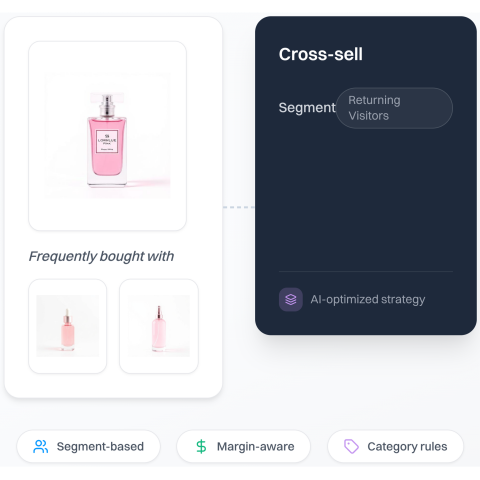
Optimize across touchpoints
Product pages, category pages, carts, and checkout — test deeply across your entire store.
Learn across platforms
Run experiments on web, iOS, and Android. Understand how behavior differs by device.
Parallel experimentation
Run multiple experiments simultaneously. Learning compounds when velocity increases.
Optimization stops being a project.
It becomes continuous.
Chapter Four
No Two Shoppers Should See the Same Store
Learning only matters if it's applied correctly. GrowthOS adapts the onsite experience based on what a shopper has viewed, what they've purchased before, and what they're showing intent for right now.
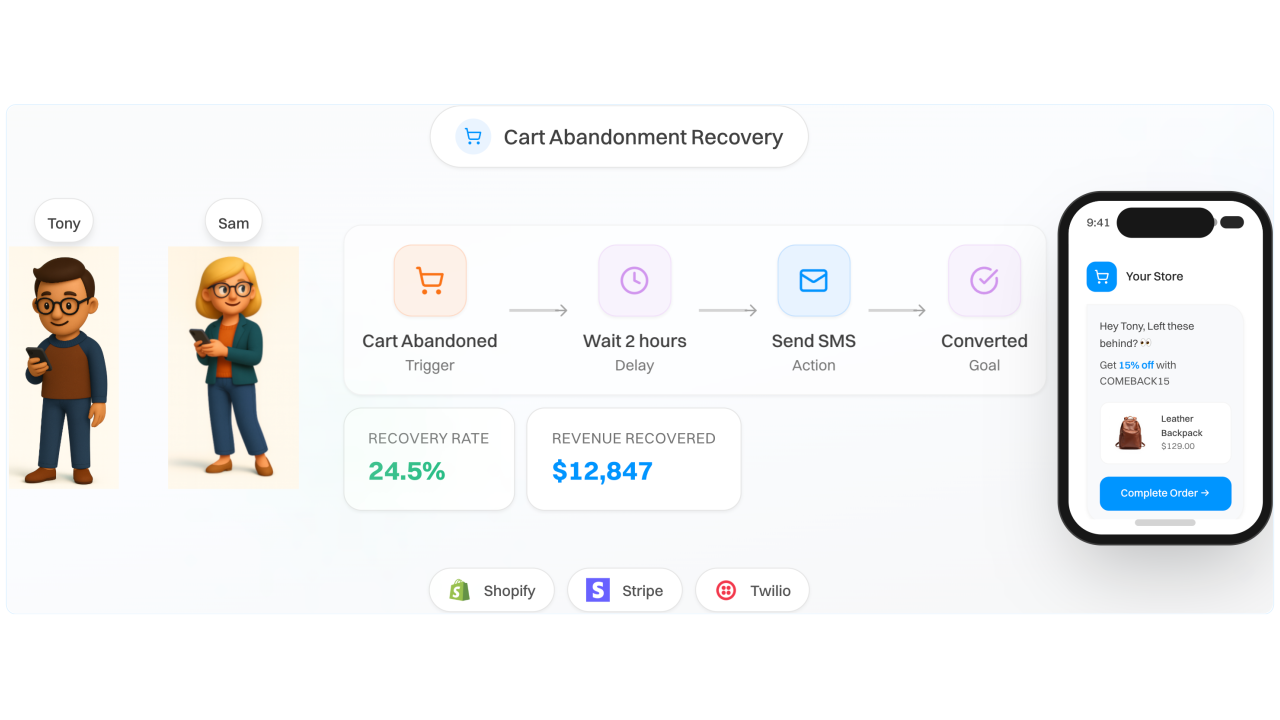
First-time visitors
See what builds confidence — bestsellers, social proof, and trust signals.
Returning customers
See what complements past purchases — personalized recommendations and loyalty offers.
High-intent shoppers
See friction removed at the right moment — expedited checkout and incentives.
Chapter Five
What Shoppers See Next Changes Everything
Different moments require different decisions. GrowthOS adapts how products are presented based on context.
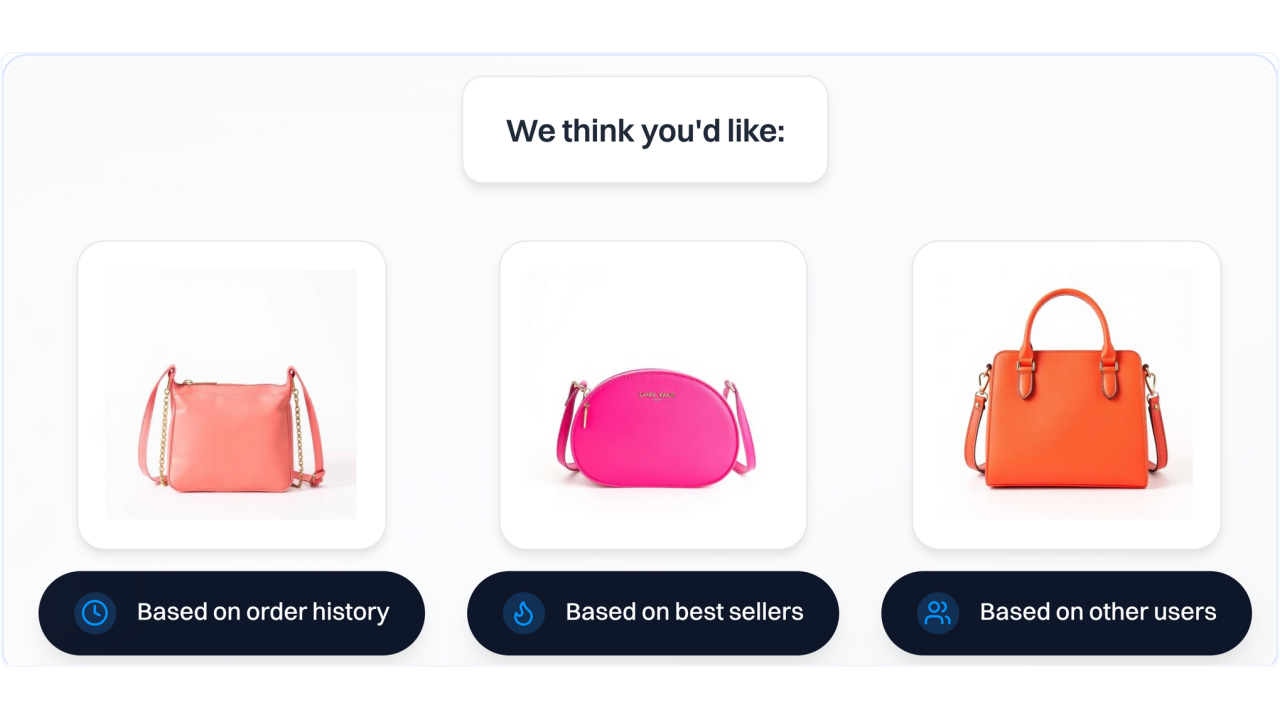
Homepage
Highlights momentum and popularity
Category pages
Guides exploration and comparison
Product pages
Surfaces relevant alternatives and add-ons
Checkout
Reinforces confidence and increases order value
One intelligence layer decides what each shopper sees next — based on behavior, intent, and context. Every placement is measurable. Every strategy is adaptable.
Product discovery stops being static.
It becomes responsive.
Chapter Six
Learn Faster Without Slowing the Business
Optimization fails when teams wait: on developers, on agencies, on long experiment cycles. GrowthOS enables parallel experimentation, automatic tracking of onsite changes, and commercial-grade statistical confidence.
Sequential testing that reaches significance 40% faster
Clear probability-to-beat-control metrics
Chance to beat control
Compare variants on what matters
Losers identified quickly
Stop wasting traffic on underperforming variants. Cut losers fast.
Winners roll out with confidence
Commercial-grade stats mean you can trust the results.
Learning compounds
Every experiment builds on the last without blocking execution.
Customer Story
Turning High-Intent Traffic Into Repeat Customers
FieldsUSA serves a highly intent-driven audience shopping for specialized products across a large online catalog. While demand was strong, understanding which signals truly indicated purchase intent—and acting on them quickly—was difficult across disconnected systems.
With GrowthOS, FieldsUSA unified browsing behavior, product interest, and purchase history into a single customer view. The team can now segment audiences based on real intent, automate timely follow-ups, and personalize outreach without manual list building.
The result is more relevant campaigns, stronger repeat purchasing, and clearer visibility into what drives customer loyalty.
Case Study: FieldsUSA
"GrowthOS helped us turn real browsing and purchase signals into personalized experiences that drive repeat buying."
Eric Gardner
COO, FieldsUSA
Use Cases
What teams use Commerce Experience for
Improving on-site conversion rates
Increasing average order value
Learning what actually converts
Adapting experiences by shopper intent
Improving product discovery and positioning
Optimizing checkout and funnels
If it happens on your site, it belongs here.

You can't optimize commerce in pieces.
Learning, adaptation, and product discovery must work together — continuously.
Commerce Experience gives teams one system to: learn faster, adapt smarter, and turn traffic into revenue.
Frequently Asked Questions
Get answers to common questions about Commerce Experience.
A/B testing typically changes one element like a button color. Full-stack testing lets you test entire checkout flows, pricing strategies, product assortments, and page layouts—testing the real variables that move conversion and AOV.
Personalization decisions are made at the edge using real-time signals. Content is pre-computed for common segments, so personalized pages load as fast as static ones.
Yes. Anonymous visitors are personalized based on current session behavior, referral source, location, and device. As they browse, the experience adapts in real-time to their interests.
Homepage shows trending and popular items. Category pages show category affinity. Product pages show 'also bought' and 'similar items.' Checkout shows cross-sell and upsell opportunities. Each context uses the right algorithm.
No. The visual editor and auto-tracking mean marketers can launch experiments independently. Run 10 tests in parallel without a single developer ticket.
Every test, personalization rule, and recommendation strategy is measured against control groups. You see the exact lift in conversion, AOV, and revenue attributed to each change.