
You Can't Win at CRO Running Tests in Serial. And You Can't Run Parallel Without Auto-Tagging.
CRO is a numbers game-most tests lose. To find winners faster, you need to run experiments in parallel, on a commercial-grade stat sig engine, across your full stack. And you need to do it without waiting for developers or paying agency margins.
Learn how CRO teams run 10x more tests.
Watch how CRO teams run 10 tests in parallel and find winners faster.

Chapter One
Run 10 Tests in Parallel, Not 10 Tests in a Row
Traditional CRO is bottlenecked by development queues. Our visual editor auto-tracks every element on the page-point, click, test. No tagging. No developer tickets. More tests, faster lift.
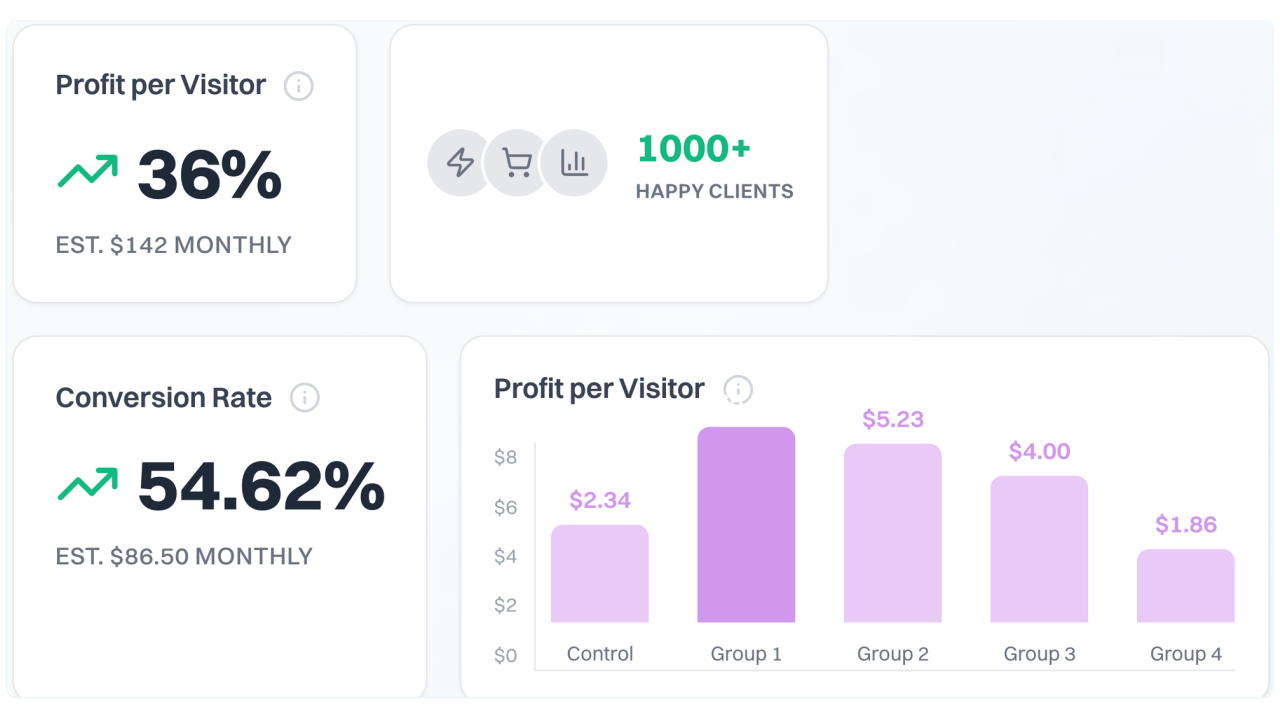
Auto-tracking visual editor
Point and click on any element. No manual tagging, no developer dependencies.
Parallel experiment management
Run multiple tests simultaneously with automatic traffic allocation and mutual exclusion.
Marketer-owned velocity
Launch tests in hours, not weeks. Iterate faster, find winners sooner.
Chapter Two
MSPRT and CUPED: When We Say It's Significant, It Is
Most CRO tools use basic frequentist stats that require huge sample sizes. We use MSPRT (multi-stage probability ratio test) and CUPED for industry-standard, commercial-grade significance. When you roll out a winner, it stays a winner.
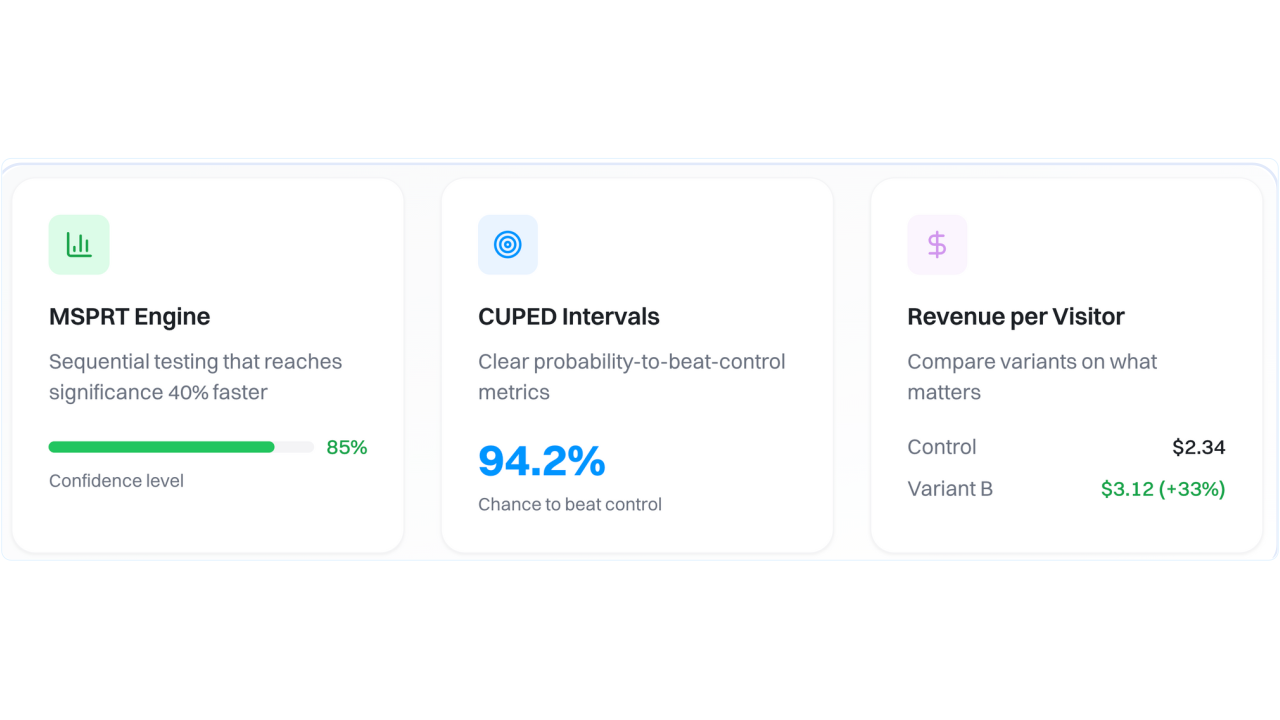
MSPRT engine
Sequential testing that reaches significance faster without inflating false positives.
CUPED confidence intervals
Clear probability-to-beat-control metrics so you know exactly when to call a winner.
Revenue-focused decisions
Compare variants on revenue per visitor, not just click rates.
Chapter Three
Test Pricing, Packaging, Bundles-Not Just Headlines and CTAs
Real CRO goes beyond shallow UI tweaks. Test server-side logic, pricing tiers, product bundles, iOS apps, Android apps, and web experiences. Client-side and server-side, full stack.
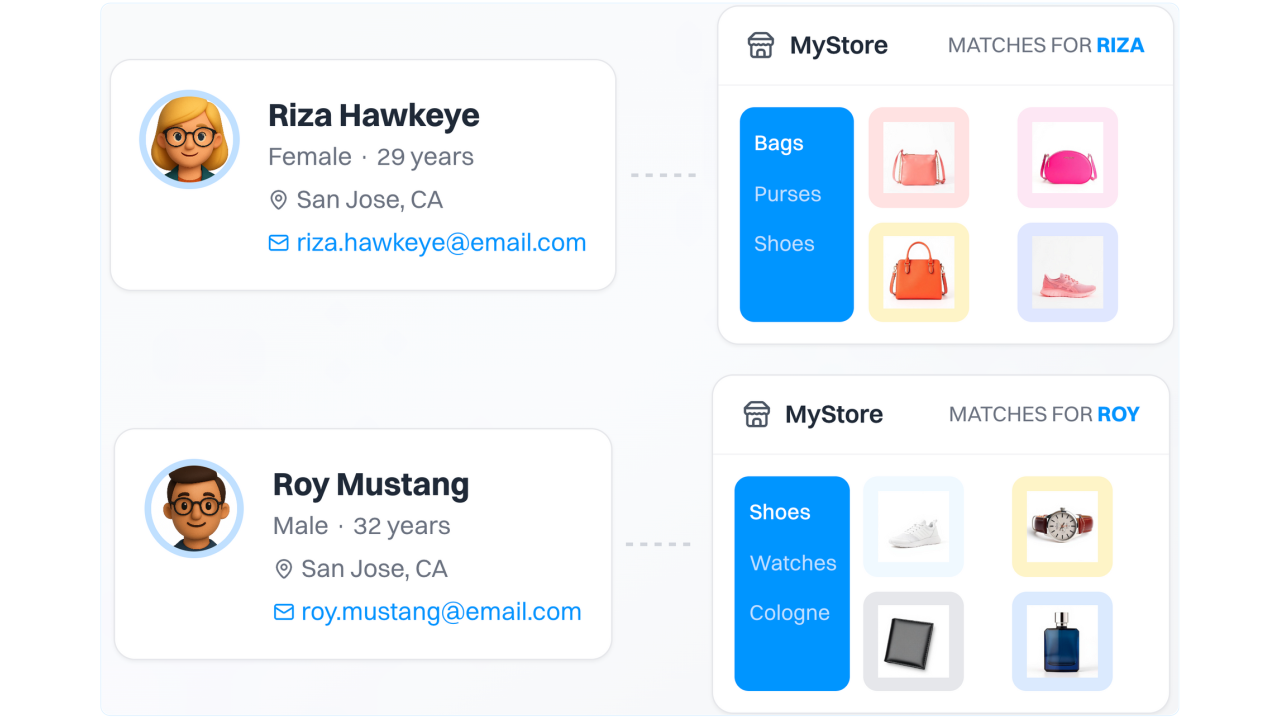
Server-side experiments
Test pricing, packaging, and business logic without client-side flickering.
Web, iOS, and Android
One experiment engine across all platforms-consistent experiences, unified reporting.
Segment-targeted tests
Run different experiments for high-value vs. new customers, by device, by geography.
Chapter Four
Agencies Take Your Margin and Bill by the Hour. You Know Your Business Better.
Agencies aren't incentivized for velocity-they bill by time. With our marketer-friendly platform, you own your experimentation program. Run more tests, keep more revenue, understand your customers better than any outsider can.
With an Agency
- •$15-25k/month retainer fees
- •2-4 week turnaround per test
- •Knowledge walks out the door
- •Incentivized to bill hours, not find winners
With Your Team + Intempt
- •Keep 100% of your lift
- •Launch tests in hours, not weeks
- •Build institutional knowledge
- •You know your customers best
Marketer-friendly interface
No code, no agency, no waiting. Your team runs the show.
Keep 100% of the lift
No agency retainers eating into your conversion gains.
Institutional knowledge
Your learnings stay with your team, compounding over time.
Unlock advanced experimentation tactics
Explore a curated library of proven A/B testing and CRO playbooks. Filter by goal-conversion rate, AOV, checkout optimization-to discover experiments that drive measurable revenue lift.
Frequently Asked Questions
Everything you need to know about experimentation and CRO
You can test website elements, product recommendations, email content, popup timing, and full journey flows-all from one platform with unified reporting.
Intempt uses Bayesian statistics with automatic sample size calculations. You'll see confidence intervals and probability to beat control, so you know when results are trustworthy.
Yes. You can target experiments by lifecycle stage, purchase history, traffic source, or any behavioral attribute-so you optimize for your best customers, not just overall averages.
Intempt's Bayesian approach works with smaller sample sizes than traditional frequentist methods. You'll still get directional insights even with modest traffic.
Intempt's experiment manager shows active tests and traffic allocation, preventing overlap. You can also set mutual exclusion rules for sensitive pages.
Ready to scale your experiments?
Test smarter, move faster, and grow with confidence.