.svg)


GrowthOS for CX Marketers
Single platform to run high-impact experiments, segment users, and instantly turn winning ideas into personalized, multi-channel engagement across every customer touchpoint in real time.

.png)
.svg)
Personalize every experience, instantly
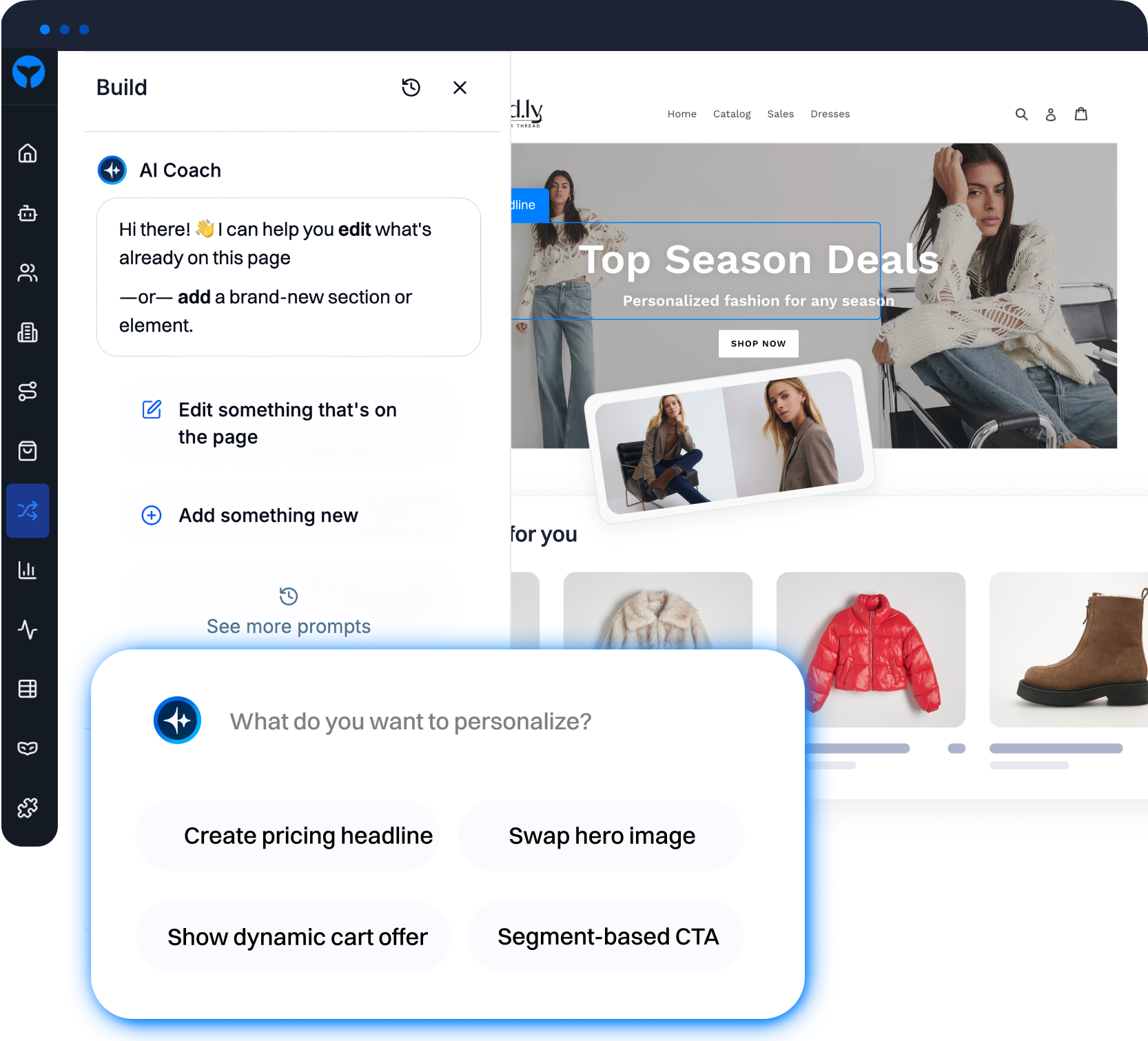
Target users based on real behavior, then design and launch personalized experiences across web and mobile without relying on engineering. Test, iterate, and go live in minutes.

Full-stack experiences
Run UI tests or deeper logic personalization and experiments in web and mobile.

Segment-based targeting
Deliver experiences based on behavior, lifecycle stage, campaigns, or predicted intent.

Visual experience editor
Change copy, layouts, or insert product recommendations.

Experiment with real-time precision
Test different versions of each experience, track lift, and deploy winning variants with confidence backed by a built-in stats engine.

Sequential testing
Measure results continuously without inflating false positives or wasting traffic.

CUPED variance reduction
Reach significance faster by reducing noise from test audiences.

Confidence-based deployment
Use confidence intervals to launch only when you see a meaningful performance lift.
Trigger campaigns based on experience behavior
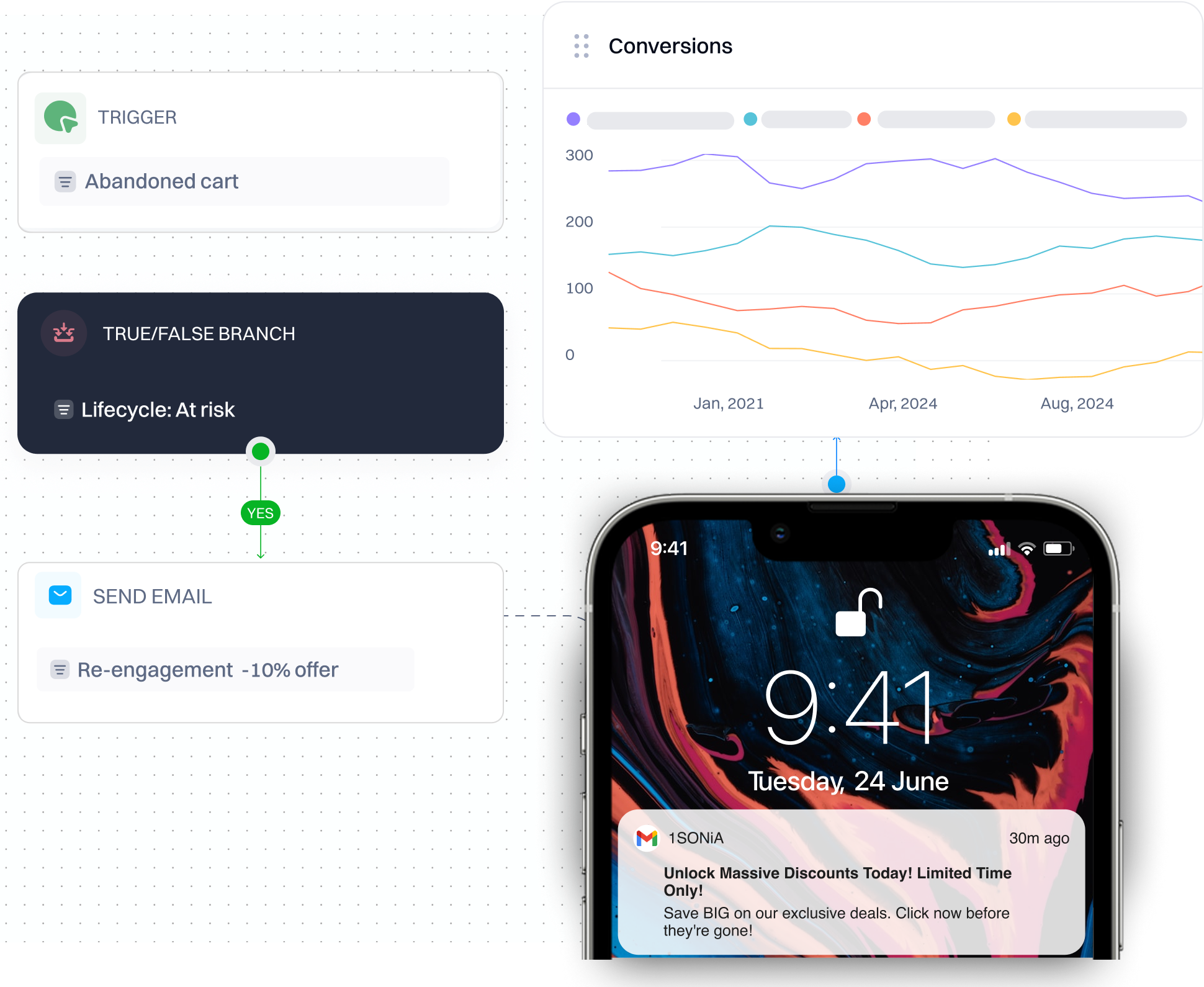
Take action when users interact or don’t. Connect site activity to automated journeys that re-engage, educate, or escalate users based on their behavior.

Goal-triggered journeys
Launch multi-channel flows when users complete, skip, or drop off from on-site goals.

Cross-channel activation
Send email, SMS, push, or internal alerts when users interact with specific experiences.

Unified reporting
Measure how your experiences and journeys work together across segments and channels.


Unlock advanced growth tactics
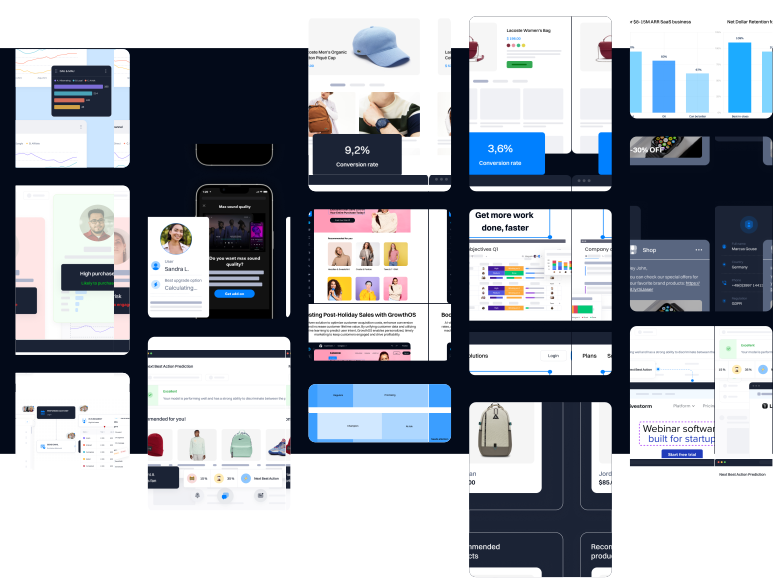
Dive into a curated directory of use cases tailored to your industry. Filter by product, industry and use case to discover advanced tactics that drive growth with GrowthOS.
.svg)
You don’t need an army of marketers.
You need GrowthOS and Blu, your AI Co-Marketer.
FAQs
Can I launch personalized experiences without waiting on my engineering team?

Yes, that's kind of the whole point. The visual editor lets you change copy, swap layouts, insert product recommendations, and launch across web and mobile without touching code. You go from idea to live experience in minutes, not sprint cycles.
What's the difference between UI tests and "deeper logic personalization"?
UI tests are surface-level changes—headlines, images, button colors, layout tweaks. Deeper logic personalization means things like showing different pricing, changing product recommendations based on behavior, or altering checkout flows. Intempt handles both (full-stack), so you're not limited to cosmetic changes.
How granular can I get with targeting for personalized experiences in Intempt?
Pretty granular. You can target based on real behavior (pages viewed, actions taken), lifecycle stage (new visitor, active user, at-risk), campaign source, or AI-predicted intent (likely to convert, churn risk). Combine conditions to get as specific as you need.
How does sequential testing prevent me from making bad decisions on early data?
Traditional A/B tests make you wait until the end to draw conclusions—or risk false positives if you peek early. Sequential testing lets you monitor results continuously with statistical safeguards built in. You can act on clear winners sooner without inflating your error rate.
What's CUPED, and how does it help me reach significance faster?
CUPED uses historical data about your users to reduce random noise in test results. Less noise means a cleaner signal, which means you hit statistical significance much faster. You're not waiting extra weeks just because your audience has high natural variability.
Does this work across both web and mobile, or do I need separate setups?
It works across both web and mobile from one platform. You build experiences and run experiments across web and mobile apps without duplicate work. Same targeting logic, same reporting, same workflows, just deployed wherever your users are.

.svg)


.svg)
.svg)