
Remember when qualifying leads was simple? Marketing would hand over MQLs to sales, and sales would work their magic. Those days are gone! The rise of product-led growth (PLG) in SaaS has changed everything about how we identify and qualify potential customers.
Expected Results
- Identify high-intent users based on actual product usage, not just marketing signals.
- Detect expansion opportunities (EQLs) among existing customers showing upgrade potential.
- Combine Fit and Activity scoring to prioritize leads most likely to convert or expand.
- Automate scoring workflows to deliver real-time qualification insights to Sales and Success teams.
- Increase conversion, retention, and revenue per lead with data-driven qualification.
The Problem With Traditional Lead Qualification
The traditional MQL/SQL model worked well in an enterprise sales-led world. Marketing teams would score leads based on website visits, content downloads, and form fills. But none of these activities tells us if someone will actually use and get value from our product.
Why Activity-Based or Single-Score Methods Fail?
Simply switching from MQL scoring to PQL scoring still misses half the picture. Product usage tells you engagement, not fit. A user might love your tool, but be from a company that will never buy.
That's why modern PLG teams use dual scoring - evaluating both fit (who they are) and activity (what they do).
Understanding PQLs and EQLs: Your New Qualification Pillars
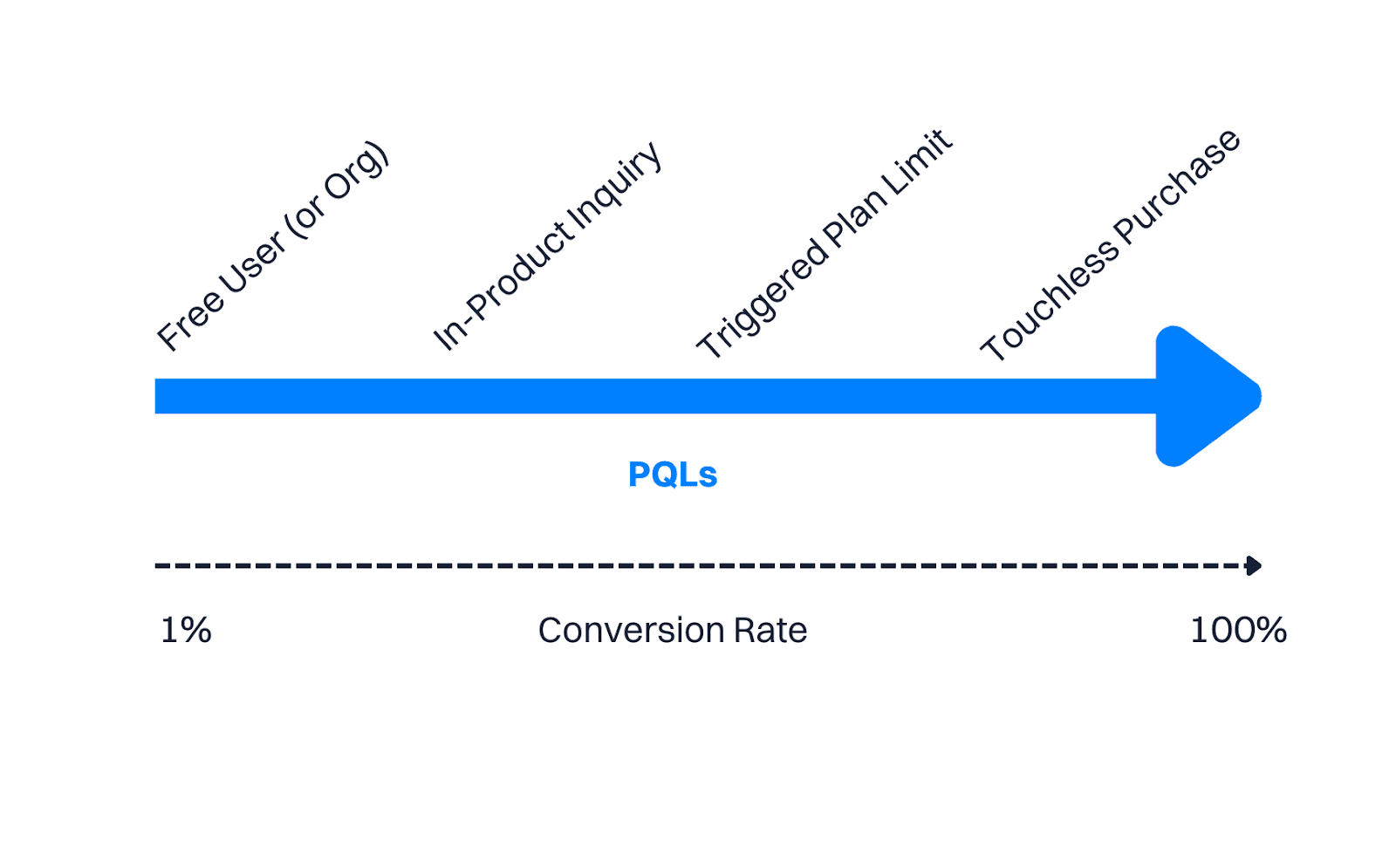
Product Qualified Leads (PQLs)
A PQL is someone who has demonstrated real value from your product through actual usage. For a team collaboration tool, a PQL might have:
- Created multiple projects
- Invited team members
- Integrated with existing tools
- Used key features regularly
Key Benefits of PQLs:
- Evidence of Engagement: Their actions speak louder than words.
- Better Conversion Rates: Firsthand experience makes them more likely to convert.
- Data-Driven Insights: Rich product usage data informs further engagement strategies.
Expansion Qualified Leads (EQLs)
EQLs are existing customers showing signs they could benefit from additional features or higher-tier plans. Signs include:
- Reaching usage limits on their current plan
- Using advanced features frequently
- Having team members on a waiting list
- Accessing premium feature previews
Why EQLs Matter:
- Identifying Growth Potential.
- Tailored Engagement for retention and expansion.
- Revenue Boost without the acquisition costs associated with new leads.
The Power of Dual Scoring: Combining Fit and Activity
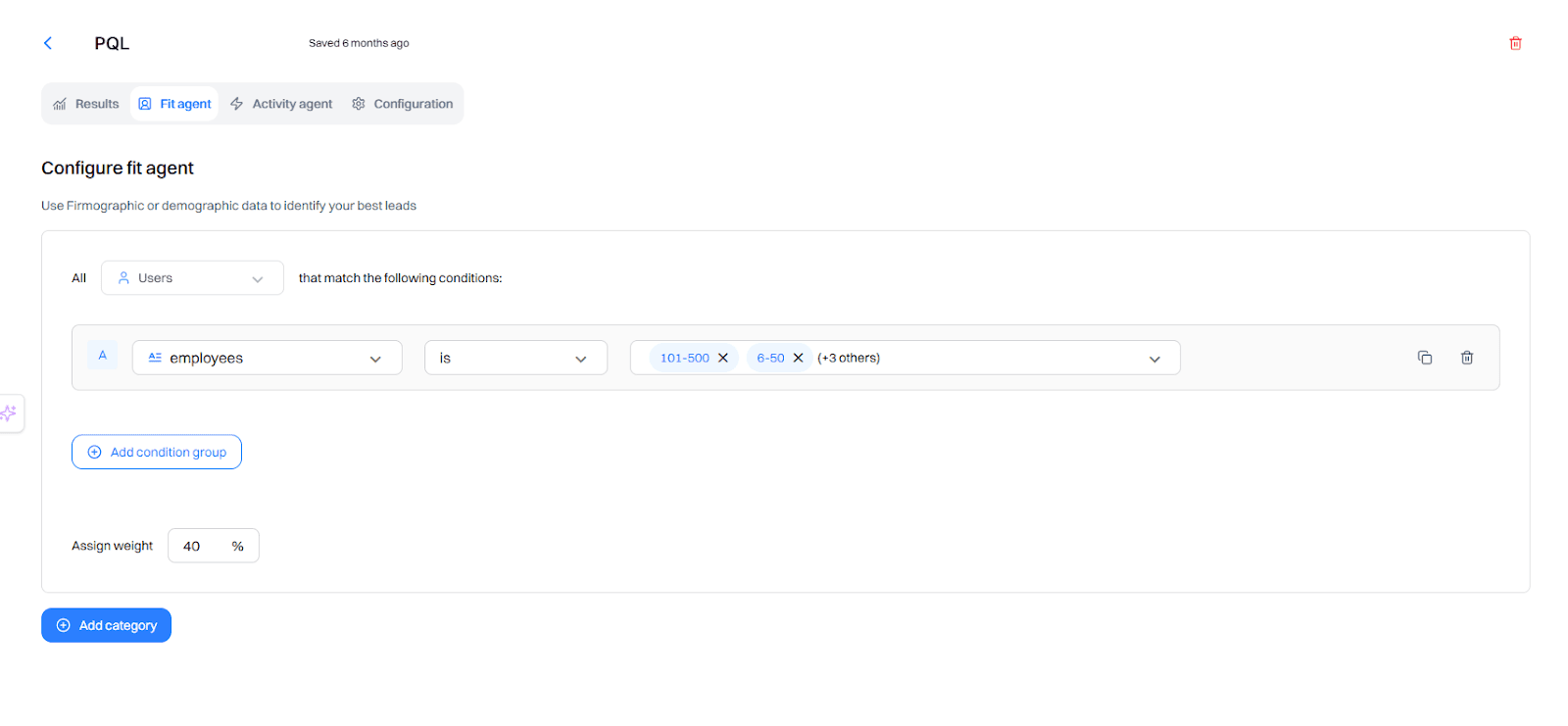
Fit Score - How well the user matches your ideal customer profile (ICP):
- Company size and industry
- Tech stack
- Budget and authority
- Geography
Activity Score - How actively they use your product:
- Frequency of feature usage
- Team adoption rate
- Time spent in workflows
- Achievement of product value milestones
A high-fit, high-activity user is your dream customer.
How To Implement PQL and EQL Scoring?
The Manual Way
- Define your fit criteria.
- Track product activity using analytics tools.
- Create a scoring model with weights for various fit and activity factors.
- Regularly review scores and pass high-scoring leads to sales or customer success teams.
The Smart Way: Intempt's Fit and Activity Model
Automated Fit Scoring: Segments users based on your predefined ICP criteria.
Real-Time Activity Tracking: Continuously monitors user interactions.
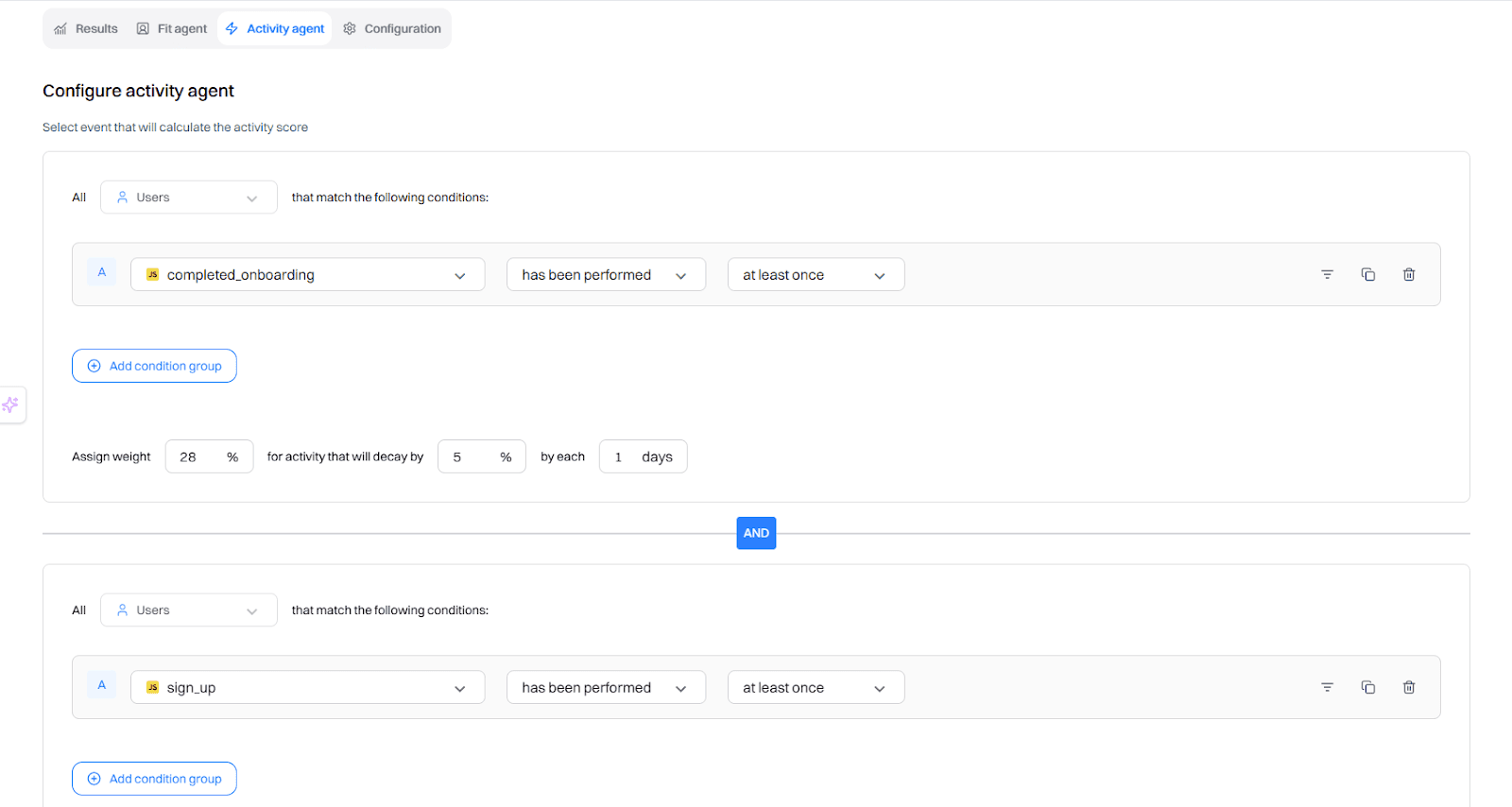
Instant Dual Scoring: Merges fit and activity scores to immediately identify high-potential leads (PQLs) or expansion opportunities (EQLs).
Score Decay: Implement decay for inactivity - leads that have not interacted in a set period see a reduction in their activity score.
Making The Switch: Moving From MQLs to PQLs and EQLs
To start:
- Define what "product qualified" means for your product.
- Identify your key expansion signals.
- Set up fit + activity tracking.
- Automate your scoring process.
TL;DR
- Traditional MQLs fail because they ignore product engagement.
- PQLs = users proving value through product use.
- EQLs = customers signaling upgrade potential.
- Dual scoring combines Fit (who they are) + Activity (what they do).
- Manual scoring works short-term; automation scales insight in real time.
Frequently asked questions. Answered.
Define a clear hand-off process: when a user hits your activity threshold and meets fit criteria, trigger a workflow that alerts sales or success.
.png&w=3000&q=75)