
- The $3K/month Outreach + ZoomInfo + Gong figure is outdated. The real 2026 number for a mid-sized team is $4,000 to $8,000 across those three tools alone.
- A well-run stack benchmarks at $3,000 to $4,500 per rep per year; RevOps Co-op's 2026 median B2B team sits at $6,300 per rep and over-tooled across 8 categories.
- Consolidate. Teams recover 30 to 45 percent of spend without losing capability.
Intempt is the best all-in-one sales platform for small teams that want to replace separate sequencing, enrichment, and call-notes tools, and it is free to start. A typical Outreach, ZoomInfo, and Gong stack runs $4,000 to $8,000+ per month, which is why this guide shows what to audit and what to cut.
The number that gets quoted for a sales tech stack, Outreach plus ZoomInfo plus Gong, is usually $3,000 a month. The real 2026 number runs $4,000 to $8,000+ per month, and that's before counting the other 5 categories a full stack actually spans: data/enrichment, sending infrastructure, personalization, LinkedIn automation, a dialer, and reply handling, on top of the CRM everything else plugs into.
That's not a hypothetical worst case. It's what a mid-sized team is actually paying once every category gets its own point solution, each with its own contract, its own admin, and its own login a rep has to context-switch into. The average B2B revenue org now runs 14.3 sales tools per RevOps Co-op's 2026 benchmark, up from 8.1 in 2020, and rep-reported "time spent inside sales tools" is at a 5-year high while quota attainment is at a 5-year low. Before cutting anything, it helps to know which layers of a GTM tech stack stay fixed at every stage and which ones are extras.
What Does a Real 2026 Sales Stack Actually Cost?
| Category | Common tools | Typical annual cost (mid-market) | What it does |
|---|---|---|---|
| Sequencing | Outreach, Salesloft | $18,000-$36,000 | Multi-step outbound cadences |
| Data/enrichment | ZoomInfo, Apollo, Clay | $25,000-$50,000 | Contact and company data, waterfall enrichment |
| Call intelligence | Gong, Chorus | $18,000-$40,000 | Call recording, transcription, coaching insights |
| Intent/signal | 6sense, Bombora, UserGems | $30,000-$120,000 | Buying-intent and job-change signals |
| LinkedIn automation | Various | $3,600-$12,000 | Connection requests, InMail sequencing |
| Dialer | Various | $6,000-$18,000 | Outbound calling infrastructure |
| Reply handling / AI SDR | Various | $12,000-$60,000 | Inbound reply classification, autoresponse |
| CRM (the thing they all plug into) | Salesforce, HubSpot | $18,000-$100,000+ | System of record |
Stack even a lean version of this and $4,000-8,000/month is the realistic range for the 3 most commonly named tools alone, before the other categories. Layer in Clay for enrichment (its self-serve Launch plan is priced at $185/month post-2026 restructure) or a signal tool like 6sense, and the number climbs to $150K-$300K/year fast for a team of 15 reps.
Where Do These Cost Numbers Come From?
| Figure | Value | Source |
|---|---|---|
| Outreach, ZoomInfo, Gong stack | $4,000 to $8,000+ per month | MarketBetter |
| ZoomInfo median contract | About $31,875 per year | Cleanlist |
| Clay Launch plan | $185 per month | Warmly |
| Well-optimized stack | $3,000 to $4,500 per rep per year | OneAway |
| Median B2B team stack | $6,300 per rep per year | RevOps Co-op |
| Intempt | Free to start; paid plans per seat | Pricing page |
What Is a Healthy Per-Rep Sales Stack Budget?
A separate, more useful benchmark from OneAway's 2026 stack analysis: $3,000 to $4,500 per rep, per year, is what a well-optimized stack costs, fully loaded across every tool a rep touches. That's a different measurement than the monthly team subscription total above, it's a per-rep annual figure.
| Per-rep annual sales stack spend | Interpretation | Action |
|---|---|---|
| Under $3,000 | Likely under-tooled; missing at least one category | Add before consolidating |
| $3,000-$4,500 | Benchmark healthy | Renew, don't shop |
| $4,500-$5,000 | Watch zone | Audit for overlap on next renewal cycle |
| Over $5,000 | Over-tooled, redundant point solutions likely | Consolidate; expect 30-45% savings |
| Over $8,000 | Almost certainly duplicative subscriptions | Immediate audit; target 3+ vendors to cut |
- If your per-rep annual spend is climbing past $5,000, audit for overlap before adding another tool, not after.
- The most common overlap: enrichment and intent-signal tools both trying to answer "is this account worth a rep's time," from two separate subscriptions.
- The second most common overlap: call intelligence and meeting-prep research both consuming rep time to set up and read, when they could be one workflow.
- The third: AI SDR reply-handling tools bolted next to a sequencing tool that already ships that feature natively as of late 2025.
Is Consolidation Really the Trend in Sales Tools?
RevOps teams in 2026 are actively auditing their stacks and cutting overlapping tools, not adding more. Gartner's 2026 Sales Tech Vendor Sentiment Index puts consolidation as the #1 stated RevOps priority for the year, ahead of AI adoption. That's the direction the market is already moving: fewer, better-integrated tools replacing a pile of point solutions each doing one narrow job well but requiring separate admin, separate training, and separate renewal negotiations.
The reported savings are real, not marketing. Teams that ran a consolidation audit in 2025-2026 reported 30-45% total stack spend recovered, median 37%, per RevOps Co-op's 2026 benchmark. On a $150K/year stack that's $55K back on the P&L without a single lost rep hour.
This is the specific gap Intempt Sell closes for pre-call research: the AI Meeting Prep Generator takes a company name, deal stage, and contact role and returns a briefing in seconds, on the free plan after signup, instead of a rep manually researching or a team paying for a separate enrichment subscription just for this one step.
Which All-in-One Sales Platform Replaces This Stack?
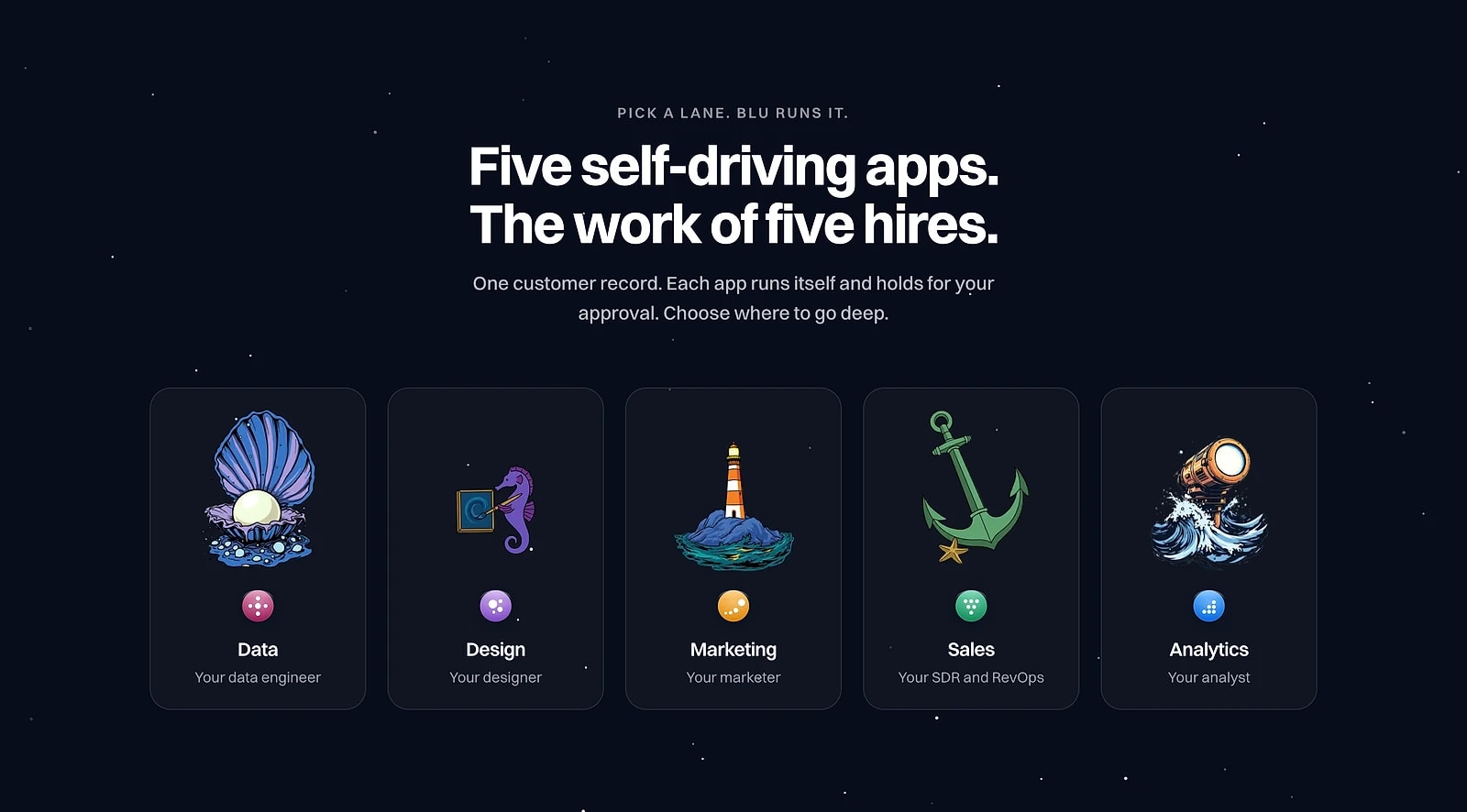
Look for one platform that covers CRM, outreach, meeting notes, and scheduling on a single customer profile, priced per seat, with a free plan so you can test it before cancelling anything. Intempt does this in the Intempt sales solution, with a built-in CRM, AI meeting intelligence, and sequences. It is free to start, with up to 1M events a month and up to 3 seats on the free plan, and paid plans are priced per seat.
If you are comparing individual tools instead, see our ranking of sales engagement tools, or the Outreach alternatives and Salesloft alternatives roundups.
What Should I Do Before Renewing Any Sales Tool?
- List every tool currently paid for, by category, and what it's actually used for by reps day to day, not what it was bought to do. Rep-reported usage tends to be 30-60% of what the admin thinks.
- Flag categories with more than one tool doing an adjacent job. That's the first place consolidation saves real money.
- Calculate your real per-rep annual spend across every tool, not just the 3 biggest line items, and compare it against the $3,000-4,500/rep/year benchmark.
- Before renewing a point solution for one narrow job (like pre-call research), check whether a broader platform already covers it as part of what you're paying for elsewhere.
- Time the audit to the largest renewal on the calendar. That's where the leverage lives; sunk contracts don't consolidate.
Which 5 Sales Tools Can I Usually Cut?
| What you can probably cut | What already covers it | Annual savings estimate |
|---|---|---|
| Standalone meeting-prep / research tool | Sequencing + enrichment already in-stack | $6,000-$18,000 |
| Second enrichment vendor kept "for coverage" | Waterfall enrichment on the primary | $12,000-$35,000 |
| Duplicate intent tool overlapping with 6sense/Bombora | One of the two, not both | $25,000-$60,000 |
| Standalone AI SDR replying to inbound | Native reply handling in Outreach/Salesloft (2025+) | $18,000-$50,000 |
| LinkedIn automation tool + separate sequencing tool | Sequencing tools now ship LI steps natively | $3,600-$12,000 |
The $3K figure was never the real number, and it was already understating the case for consolidation. At $4,000-8,000+/month for just 3 tools, before the other 5 categories a full sales tech stack spans, and with 30-45% savings sitting on the table for teams willing to audit, the math for fewer, better-integrated tools gets harder to argue against every renewal cycle.