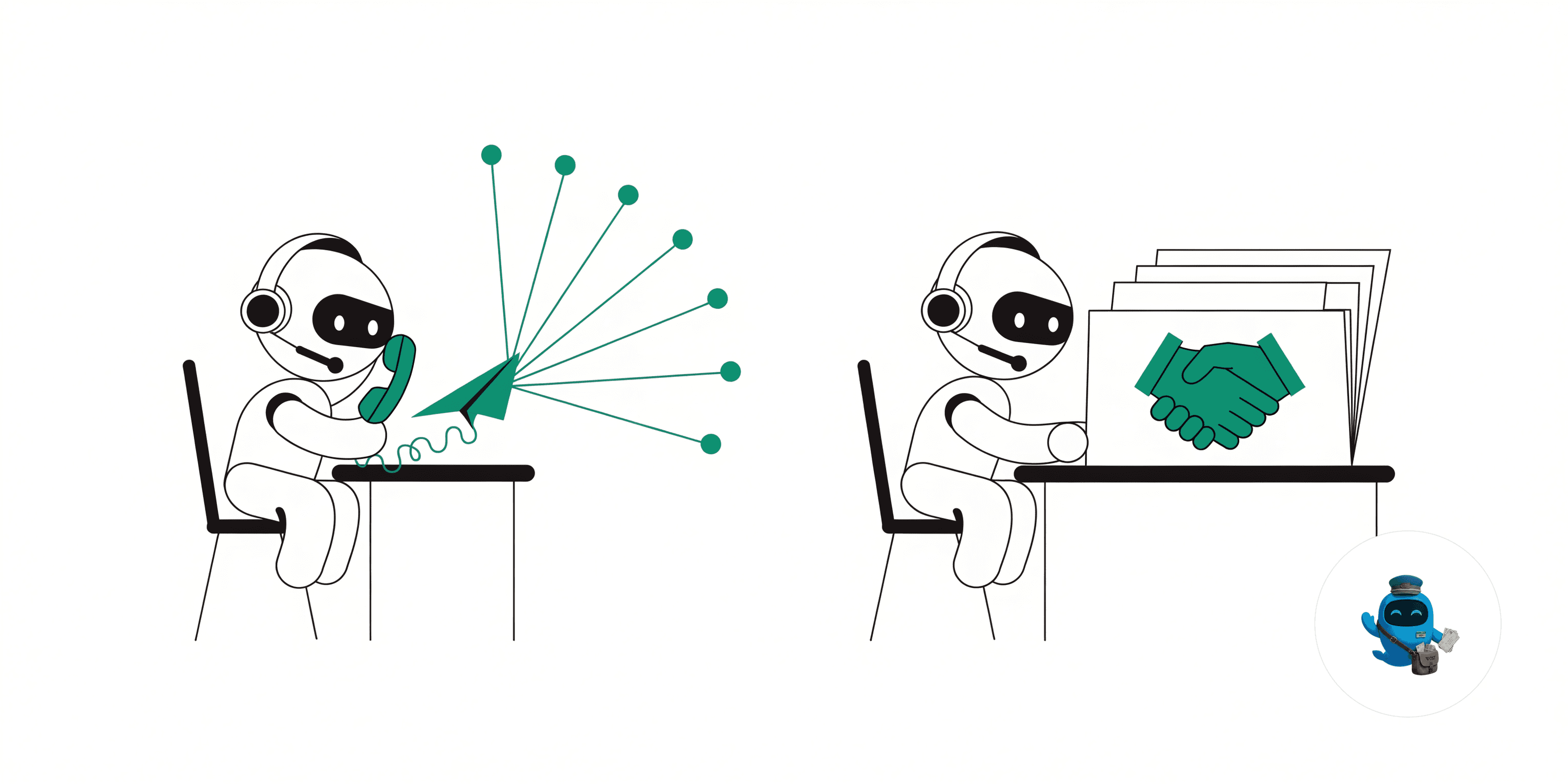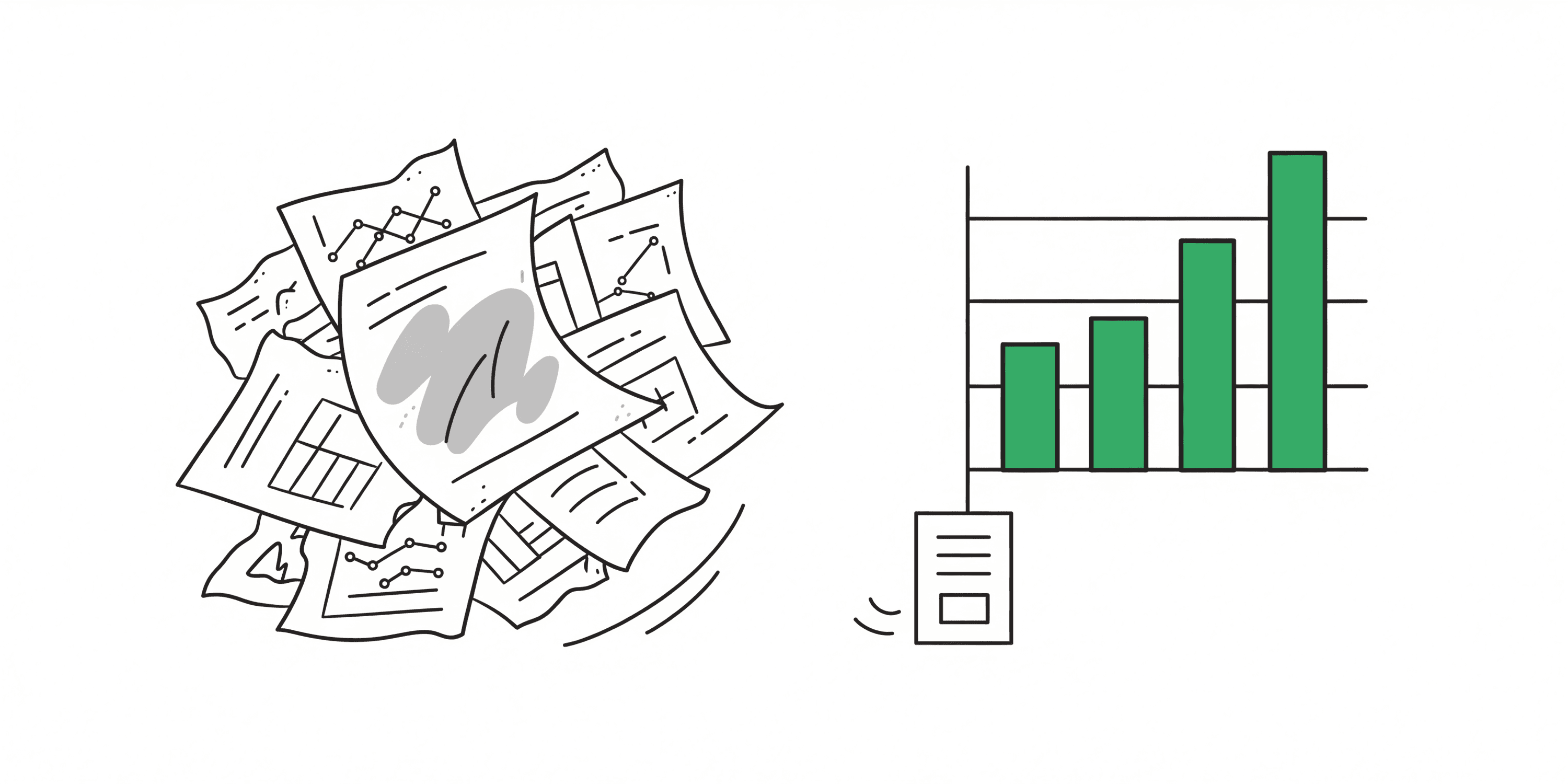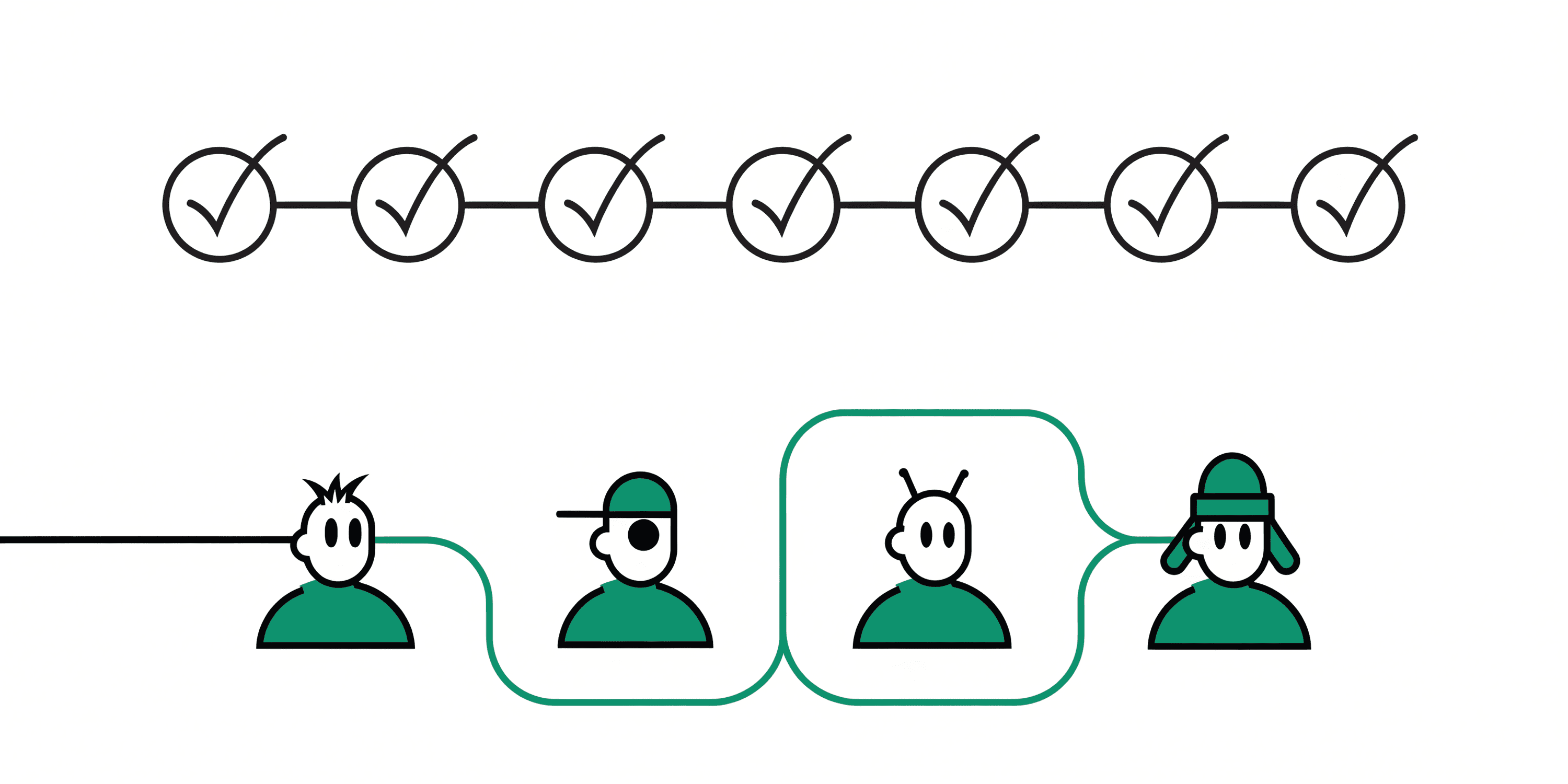

- 'Conversational AI for sales' is three products in one label: roleplay coaching before the call, conversation intelligence after, and real-time agent assist during. Different vendors, different owners.
- 87 percent of sales orgs use some form of AI and 43 percent of enablement leaders now use AI roleplay specifically. Skill gains land in 30 to 45 days. Win-rate impact takes 60 to 90.
- Budget the three products separately. Anyone promising faster than 90 days on win rate is selling the demo.
"Conversational AI for sales" covers so much ground it stops meaning anything. Chatbots on the pricing page, meeting summaries in the CRM, roleplay coaching for onboarding, live agent whispers during a support call - vendors all use the same phrase and the category page treats them as substitutes. They aren't. They're three separate products sharing a word, sold to different budgets, proven on different clocks.
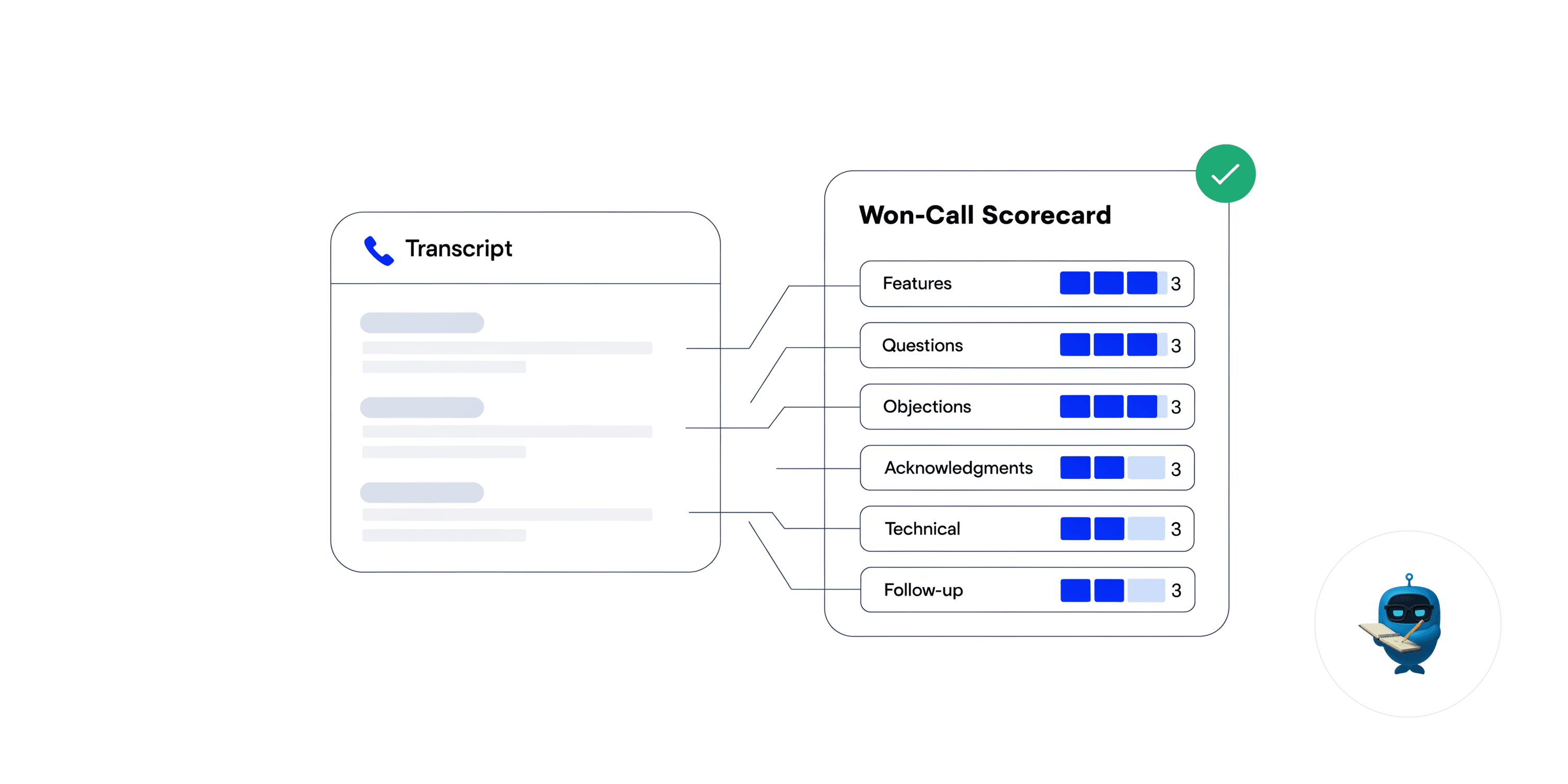
This post separates them. The adoption numbers are real - 87 percent of sales orgs use some form of AI per Salesforce's 2026 State of Sales report - but the interesting question is where inside that 87 percent the real revenue impact sits, and why the roleplay side is producing the case studies while the real-time side is still mostly proof-of-concept. For the fuller product tour of the analysis half specifically, see What is conversation intelligence. And for the specific coaching model this post argues works - scoring calls against your own closed-won set on six dimensions rather than a generic framework - the walkthrough is in sales coaching built from your own closed-won calls.
The three clocks of conversational AI for sales
The category splits into three products with different value clocks. Practice Clock - roleplay coaching, days to weeks. Analysis Clock - conversation intelligence, weeks to quarters. Live Clock - real-time agent assist, seconds. Each solves a different problem, each has its own vendor list, and each has its own adoption failure mode. Buying one and expecting it to do another job is the most common way a rollout stalls.
| Clock | Question it answers | Value shows up in | Named vendors |
|---|---|---|---|
| Practice | Was the rep ready before the call? | Days to weeks | Second Nature, Mindtickle, Allego, Outdoo, SmartWinnr |
| Analysis | What actually happened, across the team? | Weeks to quarters | Gong, Chorus, Avoma, Fireflies, Jiminny |
| Live | What should the rep say right now? | Seconds, in the moment | Cresta, ASAPP, Regal, Salesloft Rhythm, Outreach agent assist |
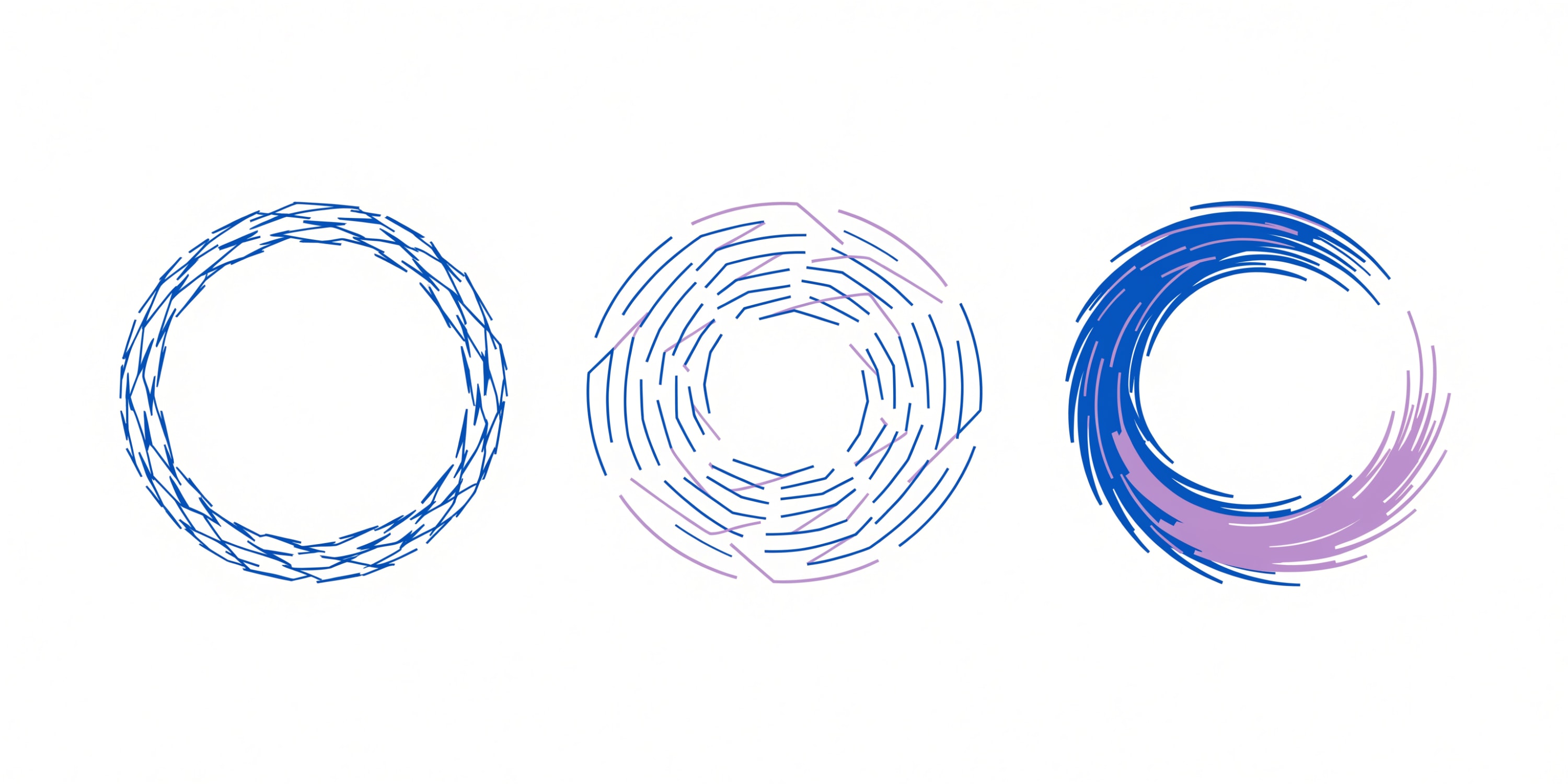
The clocks aren't ranked. They're sequenced. A team that puts an agent-assist tool on live calls before the analysis layer has a scored transcript library is guessing at what to whisper. A team that runs conversation intelligence without a practice loop knows what went wrong and can't fix it. Order matters, and the order is usually Practice, then Analysis, then Live. Agents that act on their own, like autonomous SDRs, sit outside all three clocks, and what AI sales agents can and can't do today covers that side.
The rest of this post walks the three clocks in that order, then closes with the rollout checklist that separates programs producing case studies from programs sitting on a shelf at month four.
Practice Clock: AI roleplay coaching (where the case studies are)
AI roleplay is the sub-category with the most named vendors, the most documented case studies, and the clearest ROI band - roughly 7 to 30 percent revenue lift, concentrated in the bottom quartile of reps. Adoption jumped from near-zero to 43 percent of revenue-enablement leaders in three years per Allego's 2025 AI in Revenue Enablement report. It's the part of the trend that's real today, not aspirational.
What an AI roleplay session actually looks like
A rep opens the platform, picks a scenario - cold call to a VP, objection handling on price, demo close - and talks through a simulated conversation with an AI persona. The AI plays the buyer. It interrupts, throws objections, misremembers what the rep said earlier, and generally behaves like a real prospect having a bad Tuesday. The transcript gets scored against a rubric the manager set: discovery depth, objection handling, next-step clarity, filler-word density. The rep sees the score, the manager sees the trend line across the team, and the platform records enough sessions that a new hire can practice ten calls in a week without holding up a peer for roleplay time.
The reason the model works isn't the AI's realism. It's the reps' willingness to fail privately. A junior rep will try a risky discovery move on an AI buyer they won't try on a manager watching. That's the actual mechanism. The technology is a wrapper around a behavior change that manager-led roleplay could never scale into.
What the AI actually grades
- Discovery depth: did the rep uncover pain, budget, timeline, and decision-maker, or did they take the first answer and move on?
- Objection handling: did they acknowledge, isolate, and reframe, or did they defend the product?
- Value framing: did they map product to outcome, or list features and hope the buyer connected the dots?
- Next step: did they leave the call with a committed action and a date, or with a soft "let me follow up"?
- Delivery: pace, filler words, monologue length, listen ratio, interruption count.
None of these rubrics are new. Managers have graded calls on similar frames for twenty years. What's new is that the grading happens on every session without a manager in the room, which turns the manager's job from grading into coaching. The bottleneck shifted from evaluation to intervention, and intervention is the part that actually changes behavior.
Why skill gains show up at 30 to 45 days and revenue at 60 to 90
Skill gains land fast because the practice loop is short. Ten sessions in a week is a lot of reps, and the score curve turns visibly within the first month. Revenue impact takes longer because the sales cycle is longer than the skill loop. A rep who ramps two weeks faster still has to close deals that started before the ramp. The 60 to 90 day figure is the honest number to set with the CFO before the first budget review, because the demo will suggest faster and the pilot slides will project sooner.
| Metric | Typical timeline |
|---|---|
| Practice repetitions per rep | 10x more in month one |
| Rep ramp speed | ~50% faster, month one |
| Skill improvement visible on scorecard | 30-45 days |
| Win-rate and cycle-time impact | 60-90 days |
| Program-wide revenue signal above noise | 1-2 quarters |
The real ROI numbers, not the ones the demo leads with
Reported revenue lift across published AI roleplay case studies falls in a 7 to 30 percent band. The gains cluster in the bottom quartile of reps, not evenly across an already-strong team. Rollouts that promise average lift are usually measuring the wrong denominator, which is how programs get labelled disappointing at month six even when the bottom quartile moved 25 percent.
The strongest documented case: United Rentals rolled Second Nature out to a 6,000-person sales org and partnered with the University of Houston to study its impact on real sales performance. Mindtickle publishes a 40 percent lift in revenue per rep and a 50 percent onboarding cut across its customer base. Juniper Networks reported a 47 percent year-over-year sales achievement gain after adopting its roleplay tooling. RadNet cut ramp time in half on the same platform.

The reason gains concentrate in the bottom quartile is mechanical. A rep who already runs strong discovery gets a 3 percent nudge from more practice, because they were already doing most of what the rubric grades. A rep who hits half the discovery rubric gets a 25 percent nudge because the practice fills a specific gap. Averaging the two hides the story. Rollouts that report a program-wide 15 percent lift usually mean "we moved the bottom quartile up and the top quartile stayed the same," which is the outcome to plan for, not a disappointment.
One implication for the pilot design: include reps from both ends of the performance distribution, not just the top of the middle. The bottom quartile is where the visible lift lives, the top quartile is where internal credibility gets built, and the middle is where the pilot report reads as "promising but inconclusive." Skipping the ends is how a promising pilot fails to expand.
The honest budget line
Published pricing comparisons put Second Nature at roughly $30 to $40 per user per month, with most mid-market teams landing at $19K to $27K per year on annual contracts. Larger rollouts push into six figures on seats and integrations. Mindtickle's enterprise pricing sits in a similar band plus setup fees that can reach several thousand dollars. This is a real enablement-budget line item, which is exactly why the 60 to 90 day timeline matters before the first review.
| Tier | Typical annual spend | What it fits |
|---|---|---|
| Mid-market pilot (20 to 50 reps) | $8K to $27K | One sales team, one manager, one scenario library |
| Full mid-market rollout (100 to 300 reps) | $50K to $150K | Full sales org, dedicated enablement owner, custom scenarios |
| Enterprise (1,000+ reps) | $200K to $700K+ | Multiple regions, LMS integration, custom scoring rubric |
The trap in the mid-market band is buying at the pilot tier and expecting enterprise outcomes. A twenty-rep pilot with the vendor's default scenario library and no dedicated owner produces a fifteen-slide pilot report and no lasting behavior change. The tier that works starts with an assigned owner, not a seat count.
Analysis Clock: conversation intelligence for real calls
Conversation intelligence records live calls, transcribes them, and scores them against a shared rubric so managers can coach at scale. Gong and Chorus together hold over 65 percent combined market share: Gong at roughly 45 percent with 4,000+ customers, Chorus at 20 percent with 1,500+. The tools have converged on features. What separates a working rollout from a shelf-ware rollout is one full-time program owner, and that variable dwarfs the vendor choice.
What conversation intelligence actually records and scores
Every call gets transcribed, tagged for topics (pricing, competitor mention, next-step commitment), and scored on rep-level and deal-level rubrics. The manager sees a call library, a search interface, and a set of deal-risk scores that flag calls where the rep dodged a decision-maker question, spoke more than 65 percent of the time, or committed to a follow-up they didn't send. Deal reviews stop being a rep's verbal recap of the last call and start being the manager reading the flagged moment before the meeting.
The scoring on the call flows into the scoring on the deal. That's the bridge most conversation-intelligence rollouts undersell: the the-deal-gauge skill reads deal health and buyer intent from the same signals the coaching layer just tagged, so the manager's Friday pipeline review and the rep's Monday coaching note come out of one pass, not two.
The dedicated-owner pattern
The single strongest predictor of six-month value from a conversation-intelligence rollout isn't the vendor. It's whether the org assigned a full-time program owner. Teams that try to add it to an existing enablement or ops role hit the same wall at month four: nobody has time to build the scorecard, tune the rubric, or run the manager training that makes the tool land. Teams that hire or reassign for it clear that wall. If the budget doesn't cover the owner, wait to buy the tool.
The failure mode is quiet. The tool works. Calls are recorded. Transcripts are searchable. Nobody uses them for anything except the occasional "pull the recording of last week's demo" ask. Six months in, adoption reports show 70 percent of reps have logged in twice, and the platform gets labelled a productivity tool that nobody's productive with. The fix isn't a re-launch. It's the hire that should have happened at week zero.
Gong vs. Chorus: what the choice actually is
| Dimension | Gong | Chorus (by ZoomInfo) |
|---|---|---|
| Market share | ~45 percent | ~20 percent |
| Customer count | 4,000+ | 1,500+ |
| Strongest on | Deal analytics, integration breadth | ZoomInfo data ecosystem, price |
| Sweet spot | 150+ rep orgs running structured deal reviews | Teams already inside ZoomInfo, price-sensitive mid-market |
| Common wrong reason to pick it | Rep count justifies premium tier | Cheapest of the two shortlisted |
The wrong reason to pick either: because a bake-off gave your top three managers a 30-minute demo and one of them liked the interface more. That's not the buying signal. The signal is which tool the assigned program owner can operate at week four without vendor support. If that owner hasn't been hired yet, the bake-off is theatre.
Live Clock: real-time agent assist (the newest and riskiest)
Real-time agent assist listens to a live call and surfaces the next best line, competitor rebuttal, or discovery question in the moment. It has clear ROI in inside-sales and support - Cresta, ASAPP, and Regal customers publish handle-time cuts of 10 to 20 percent. In enterprise B2B where calls are lower-volume and higher-stakes, the latency budget and the reputational cost of a wrong prompt make it a harder sell today. Order matters: this layer works after the analysis layer, not before.
Why the order matters
A real-time prompt is only as good as the corpus of scored calls behind it. The prompt "the buyer just objected on price, here's the frame that worked last quarter" needs last quarter's scored objection library to exist. Teams that install agent assist on top of an empty conversation-intelligence layer are guessing at the prompt. Teams that install it after eighteen months of scored calls have a prompt library the AI can actually draw from. Same tool, different outcome, entirely because of what came before it.
Where real-time assist earns its keep today
- Inside-sales SDR teams running high call volume where a 3 percent lift in booked meetings pays for the seat within a quarter.
- Support teams where average handle time is the KPI and every second cut is measurable, which is where Cresta and ASAPP publish most of their case studies.
- Regulated sales (financial services, healthcare) where specific compliance language must be delivered on every call and a missed disclosure is a real cost.
- Onboarding for reps in their first 90 days, as a safety net during the ramp period rather than a permanent training wheel.
Where it doesn't yet
Enterprise B2B calls where the deal size is high enough that a wrong prompt loses trust. Long-cycle deals where the practice-then-analyze loop is enough. Teams that haven't yet done the conversation-intelligence groundwork. If any of those describe the rollout, spend the year on Analysis Clock first and revisit the Live layer once the scored library exists.
The rollout checklist that separates working programs from shelf-ware
Three variables predict whether a conversational AI for sales rollout produces revenue impact by month six. A dedicated program owner. Manager reinforcement on the shared rubric. A timeline set to 60 to 90 days for win-rate impact, not the demo's 30. Programs that clear all three land in the case-study band. Programs that miss any of them stall at month four regardless of which vendor was picked.
- A named owner with time budgeted for the program, not an existing role given a new hat and no relief on their old scorecard.
- Manager weekly review of the scored transcripts or roleplay sessions, tied to the same rubric the tool grades on - not a parallel scorecard the manager keeps privately.
- A scenario or rubric library that reflects the org's own product, ICP, and buyer objections, not the vendor's default template that reads like a 2019 SaaS playbook.
- An expectation baseline set with the CFO at 60 to 90 days for revenue signal, not the demo's 30, so the mid-program budget review doesn't kill the program before it lands.
- A pilot cohort that includes both the bottom quartile (where lift concentrates) and the top quartile (where trust builds), not just the middle where results read inconclusive.
- A quarterly rubric refresh, because the objections that came up in Q1 aren't the objections that come up in Q3 after a competitor's price cut.
The AI Meeting Prep Generator covers the pre-call side, a company name, deal stage, and contact role in, a real briefing out. For the post-call follow-up the coaching moment usually points to, the AI Sales Email Generator drafts the exact response, product-anchored, ready to send. Both free.
What conversational AI for sales does not do
It does not replace live coaching from a manager, it does not run its own adoption, and it does not shorten the sales cycle by itself. It compresses practice reps, surfaces call patterns at scale, and, on the live side, keeps a rep from stepping on a rake mid-call. Everything else is still human work, and pretending otherwise is how a program gets sold, bought, and shelved in the same fiscal year.
- It does not replace manager coaching. It replaces the repetition problem, and managers redirect saved time to judgment calls the AI can't make.
- It does not sell itself internally. Without a program owner, adoption stalls at month four regardless of vendor, price, or how good the demo looked.
- It does not shorten the deal cycle on its own. Deal cycle is set by the buyer, not the seller's practice loop, and better calls to the same buyer don't compress the buyer's procurement path.
- It does not fix a bad ICP. If reps are calling the wrong accounts, better calls to the wrong accounts is not the fix - that's a targeting problem the roleplay platform can't see.
- It does not surface strategy insight without a rubric. The tool grades what the rubric says to grade. Garbage in, scored garbage out.
- It does not replace the manager judgment call on whether a struggling rep should be coached, reassigned, or let go. It just makes the input to that call clearer.
The short version
Real adoption, real named platforms, real ramp-speed numbers, but three separate products with three separate value clocks and one shared failure mode - buying without an owner. Set the 60 to 90 day expectation up front on any conversational AI for sales rollout, hire or assign the program owner, and the results end up matching what actually gets delivered. Skip either step and the platform ships, the reps log in twice, and the six-month report reads as "promising but inconclusive" - which is the polite version of a program that didn't work.