
- Generic "AI helps sales" claims don't survive contact with a real pipeline. The two features that do are MEDDPICC auto-flagging from live calls and multi-threading detection across the buying committee.
- The average B2B buying committee is 11.2 people, and only 24 percent of suppliers have deployed the agentic kind of AI in sales versus 45 percent using AI at all.
- Buy for MEDDPICC completeness and stakeholder coverage. Ignore vendors selling "AI-powered" as the feature.
Generic AI in B2B sales framing doesn't hold up to scrutiny. "AI helps reps sell more" is true and useless. What holds up is the specific job AI now does in a B2B context that no other technology did: it scales one rep's attention across an 11-person buying committee. Everything else in this post is a corollary of that.
This post covers the two concrete places that scaling happens - MEDDPICC-native qualification and multi-threading detection - plus the 45-vs-24 percent adoption gap that separates teams compounding from teams playing catch-up. For the related read on where signal-based selling ended up as a category, see signal-based GTM already had its category moment.
The committee-of-11 problem
The enterprise B2B buying committee has grown to 11.2 stakeholders on average in 2026. One AE cannot hold eleven relationships in working memory, remember what each stakeholder said in each call, and thread the right proof point to the right person at the right time. Every other AI-in-B2B claim is a special case of the same underlying job: give the rep enough reach to work all eleven, not the three they can remember.
The two mechanisms that produce that reach today are MEDDPICC-native qualification (the AI keeps score against a shared rubric so the rep doesn't have to remember) and multi-threading detection (the AI tracks who's actually engaged versus just cc'd so the rep knows where to spend the next hour). Neither is a productivity claim. Both are structural fixes for a job that got 11 times bigger over a decade while the rep count stayed flat.
AI-native MEDDPICC qualification
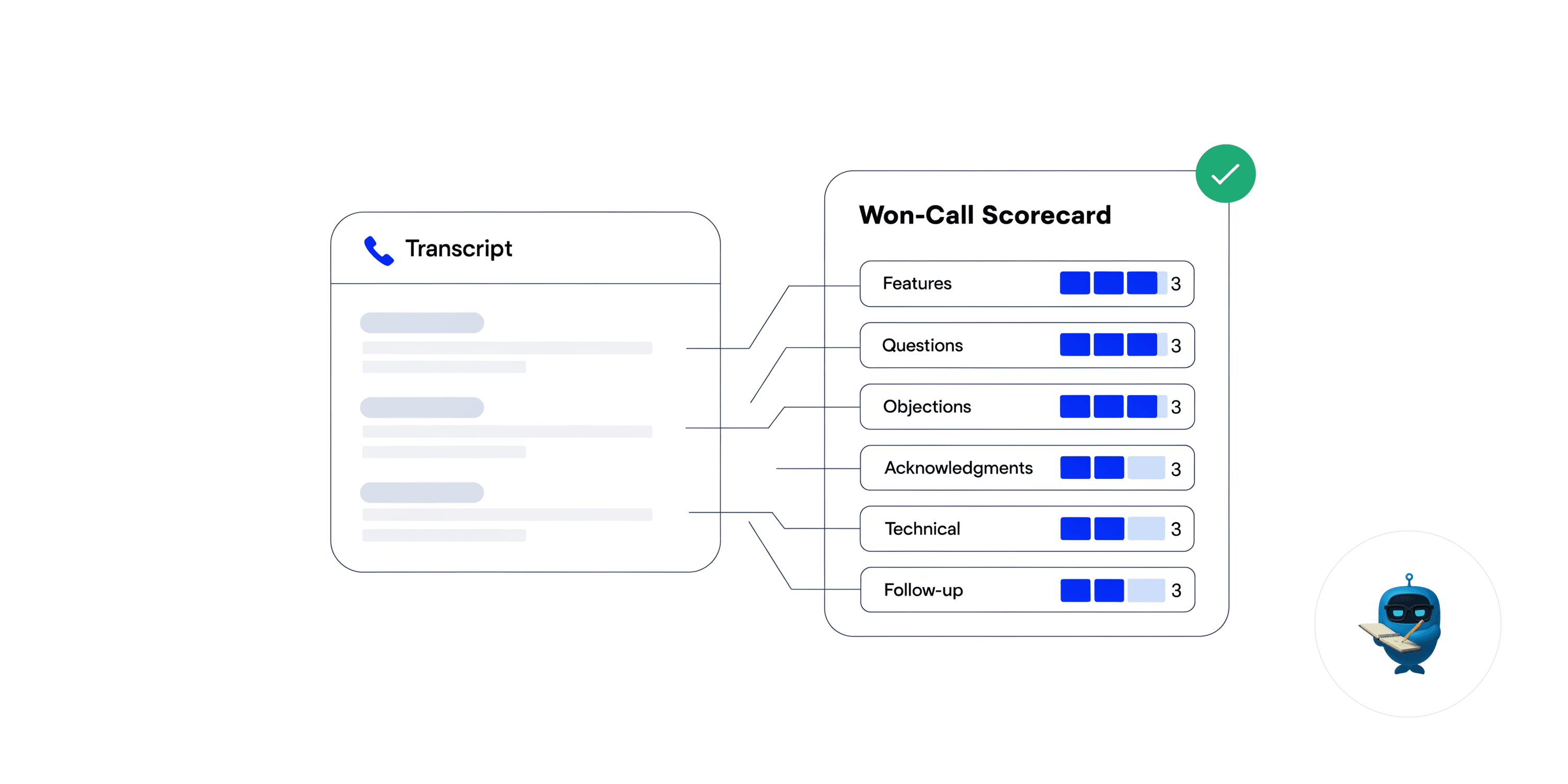
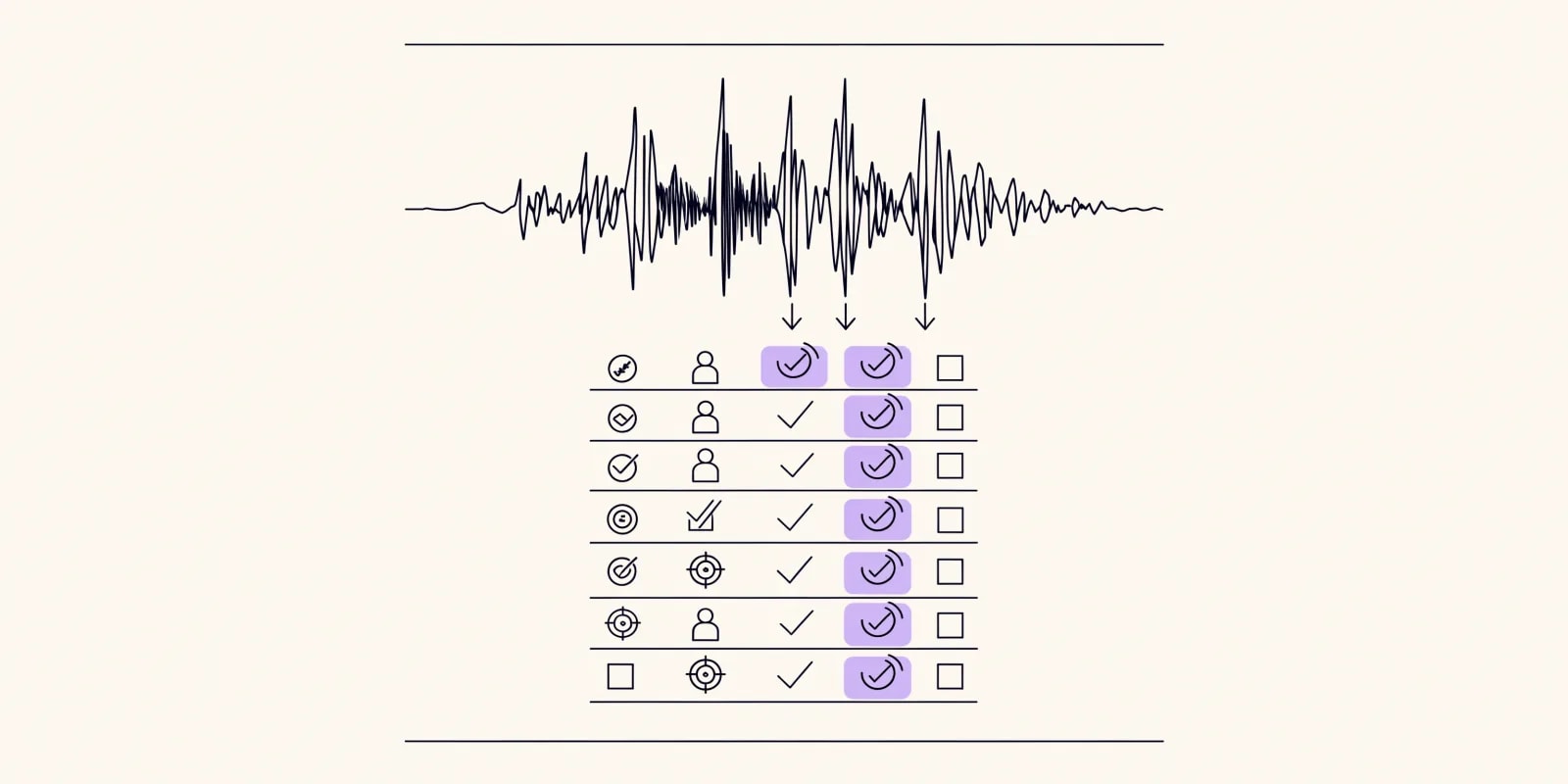
MEDDPICC has eight components a rep is supposed to qualify on every deal. In practice a rep gets to three or four before the deal moves and the rest get filled in from memory at forecast time. AI-native qualification changes that ratio: the platform analyzes the email thread, the call transcript, and the meeting notes and auto-flags each component as it surfaces in real conversation, so the rep sees what's covered and what's still missing before the deal moves stages.
What auto-flagging actually catches
- Metrics: the buyer's own number for the business problem, in their words - not the rep's guess.
- Economic Buyer: named or unnamed, with a paper trail on whether they've been on a call.
- Decision Criteria: what the buyer said they care about, versus what the RFP asks for.
- Decision Process: sequence of approvals, procurement path, security review triggers.
- Identified Pain: pain the buyer confirmed, not pain the rep suggested.
- Champion: someone who defended the deal internally when the rep wasn't in the room.
- Competition: named vendors the buyer mentioned by name, plus incumbents the rep should assume.
- Paper Process: contract path, procurement contact, legal review lead time.
The point isn't that the AI grades better than the rep would. It's that the grading happens on every call automatically instead of once per week during pipeline review, and every gap is visible before the next call, not after the deal slipped. It's the same draft-first, human-decides split that separates AI sales agents that work from the overhyped kind.
Named vendors and real numbers
- Coffee.ai's autonomous agents capture MEDDPICC data from emails, calls, and transcripts, reportedly saving 8 to 12 hours per rep per week.
- Forecastio combines real-time CRM data with AI deal scoring for up to 95 percent forecast accuracy in vendor-reported figures.
- Gong and Chorus surface MEDDPICC coverage across the call library, so managers can see which reps chronically miss which components without listening to every call.
- Salesloft Rhythm and Outreach agent assist surface real-time nudges when a call transcript has moved through half the meeting without covering Metrics or Pain.
Multi-threading: the B2B-specific problem AI actually solves
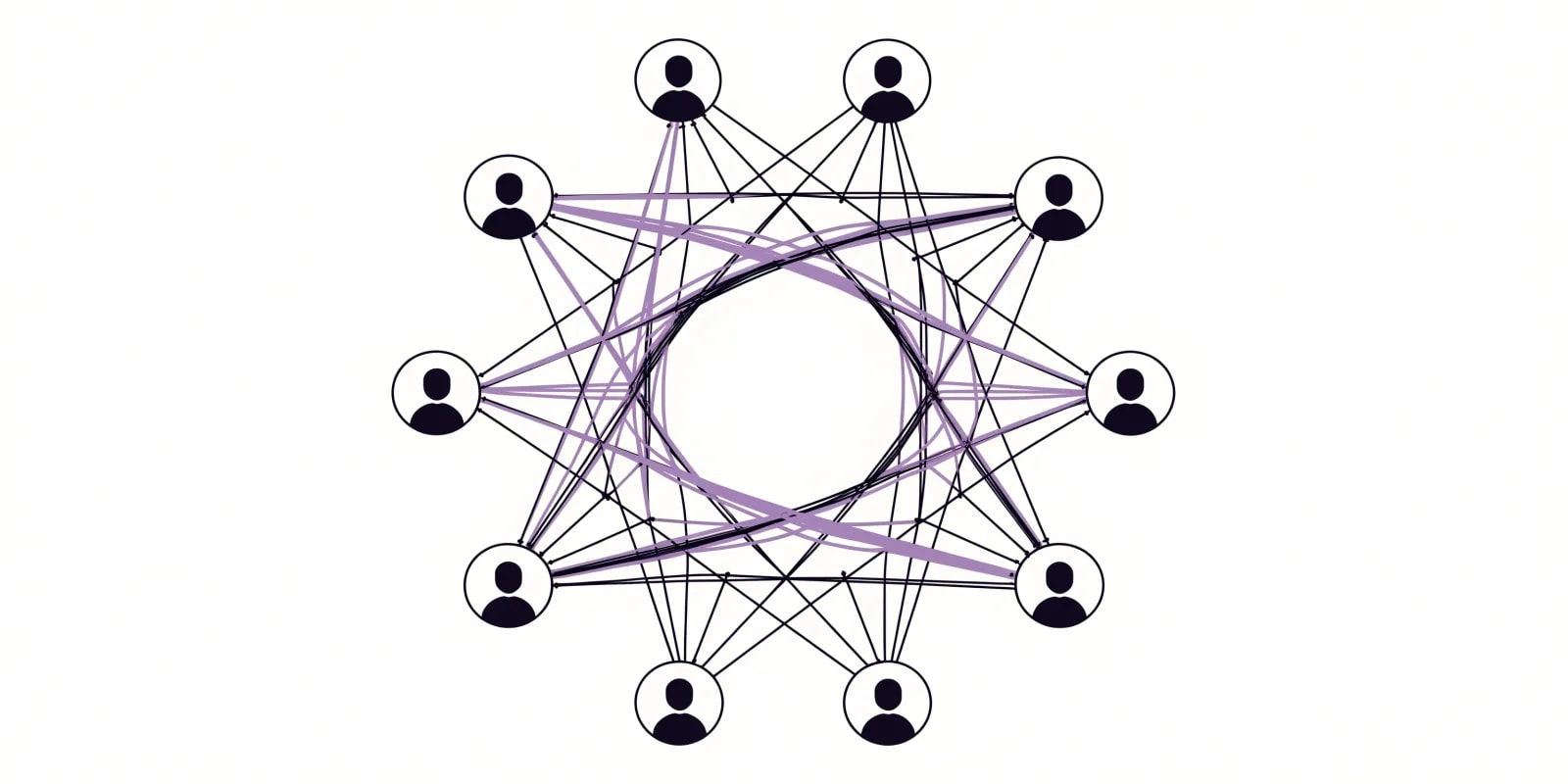
B2B deals rarely have one decision-maker. AI now maps stakeholders mentioned across conversations and tracks influence patterns, so qualification scoring accounts for distributed decision authority. As one source frames it, this is no longer optional, it's the only way a rep personalizes for ten stakeholders without cloning themselves.
The five-to-eight rule
Five to eight engaged stakeholders is the sweet spot for most $50K+ ACV deals. Under five and the deal single-threads through one person who can leave, change their mind, or lose internal budget. Over eight and the rep is spread thin enough that no single relationship deepens - the AE ends up as a coordinator instead of a trusted advisor to any one stakeholder. The AI's job is to tell the rep which of the ten people on the account are the five to eight who actually matter, and which are just on the cc line.
Red-flag patterns worth catching early
- Single-threading: three calls in and only the original champion has been on any of them - the AI flags this before the deal moves to negotiation.
- Champion silence: the champion stopped replying to the thread for ten days, and the AI cross-checks their calendar-visibility signal to distinguish vacation from disengagement.
- Committee bloat: a fourteenth stakeholder shows up in an email cc on week seven with no rep introduction - a signal the deal has gone up a level without the rep in the room.
- Ghost decision-maker: the economic buyer has been named on three calls but never on any of them, and the AI flags the mismatch before forecast.
- Competitor mention: a stakeholder named a competitor by name for the first time and the rep didn't isolate the objection on the same call.
This is exactly what Intempt Sell's pipeline scoring and the AI Meeting Prep Generator are built around, real deal-stage and contact-role context, not a generic pitch template.
The numbers behind multi-threading and deal risk
The threading benchmarks are specific enough to act on directly. AEs who master multi-threading close at 2x the rate of single-threaded reps. Over 60 percent of B2B sales teams now use ML-derived intent and risk scoring as a core part of pipeline qualification per Gartner, monitoring unstructured signals - email velocity, multi-threading depth, sentiment shifts, meeting cancellations - across the tech stack to flag a stalling deal before a forecast call surfaces it manually.
| Metric | Baseline | With AI-assisted qualification |
|---|---|---|
| Average B2B win rate (2026) | ~21% overall (Salesmotion) | 35%+ for top-performing teams (Salesmotion) |
| Win rate by cycle length | ~20% (cycles beyond 50 days) (Outreach via Prospeo) | 47% (deals closed within 50 days) (Outreach via Prospeo) |
| Complex deal cycle time | 64 days | 41 days (HatHawk on AI deal scoring) |
| Quota attainment | baseline | 3.7x more likely to hit quota (Gartner via Salesforce) |
The trap in this table is treating the right-hand column as available to any team that buys the tool. It isn't. It's available to teams that adopt the tool with an owner, a shared rubric, and a manager rhythm around the scored calls. The tool by itself moves nobody's win rate.
The adoption gap that actually predicts growth
The adoption number worth sitting with: 45 percent of B2B suppliers use AI somewhere in the sales process, but only 24 percent have implemented agentic AI per Deloitte Digital's February 2026 study - the autonomous, workflow-driving kind that actually replaces manual steps and compounds over time. The rest are running point-tool automation bolted onto the same manual process. That gap is where MEDDPICC-native qualification and multi-threading detection differentiate a team - not the fact of using AI, but whether the AI is doing the qualification work agentically instead of just formatting notes faster.
AI-assisted versus agentic, in one sentence each
| Layer | What it does | Where it stops |
|---|---|---|
| AI-assisted (the 45 percent) | Speeds up individual steps a rep already runs: drafting, summarizing, formatting. | The rep still owns the workflow. The tool waits for a prompt at each step. |
| Agentic (the 24 percent) | Runs the workflow: reads the thread, updates the CRM, flags the gap, queues the next-best action. | The rep owns the decisions the workflow surfaces, not the mechanics of running it. |
The compounding effect only shows up on the second row. AI-assisted saves 20 minutes per call, which is real but flat - it doesn't grow month over month. Agentic changes what one rep can hold, which does grow, because the ceiling on how many accounts a rep can carry is set by attention, not effort.
The standard pattern now: waterfall enrichment
Auto-filling email, mobile, tech-stack, firmographic, and job data, plus surfacing buying signals, is the standard account-research automation pattern for B2B teams now. That's the baseline, not a differentiator anymore, which is why the real edge has moved to MEDDPICC-native qualification and multi-threading, the two things covered above. If a vendor is still pitching waterfall enrichment as their headline capability in 2026, they're pitching a 2022 feature at a 2026 price.
Why this compounds: the digital-maturity gap
AI-driven predictive intelligence cuts B2B sales cycles by up to 36 percent on its own, but the bigger number is Deloitte Digital's February 2026 study: digitally mature suppliers - teams using AI extensively and systematically across qualification, enrichment, and forecasting rather than as a bolted-on point tool - exceeded annual sales growth targets by 110 percent more than low-maturity competitors. That's not a productivity claim, it's a growth-rate gap, and it tracks directly with the 24-percent-agentic split above: the compounding effect of AI in B2B sales only shows up once the model is running the qualification workflow end to end, not assisting one step of a still-manual process.
The rollout order that separates working programs from bolt-ons
The order that produces the digitally-mature compounding effect isn't glamorous, and it doesn't start with the flashiest tool. It starts with the CRM data being trustworthy, because every downstream AI layer inherits its garbage. Then the qualification rubric, because the AI grades what the rubric says to grade. Then the tool, in that order.
- Trustworthy CRM hygiene: stakeholder roles filled in, deal stages defined the same way across reps, close dates that aren't three quarters stale.
- A shared MEDDPICC rubric the whole team agrees on, not the vendor's default template.
- A named program owner - the same variable that decides conversation-intelligence rollouts also decides this.
- A pilot cohort that includes both a strong AE and a struggling AE, so the manager can see where lift lands.
- A manager rhythm around the scored calls - weekly review, tied to the same rubric.
- A 60 to 90 day expectation set with the CRO before the first budget review, because the demo will suggest sooner.
What AI in B2B sales still does not do
It does not source the ICP. It does not close the deal. It does not replace the manager judgment call on whether a struggling AE should be coached, reassigned, or let go. It scales attention across an eleven-person committee so the AE doesn't have to hold all eleven relationships in working memory - and that's a genuinely useful thing, but it's a specific thing.
- It does not fix a bad ICP. Better attention paid to the wrong accounts is not a strategy - it's a slower version of the same miss.
- It does not build trust with a stakeholder the AE has never met. Multi-threading detection tells the rep where to spend time; the rep still has to spend it.
- It does not shorten the buyer's procurement cycle. Deal cycle is set by legal and finance on the buyer side, not the seller's sequence.
- It does not remove the need for a manager to sit in on a struggling AE's discovery calls. Scored transcripts help, but the coaching moment is still in-person.
- It does not surface the objection the buyer never spoke out loud. The corpus is what's on the call, not what's in the buyer's head.
- It does not replace the champion. If the deal is single-threaded through one person who has left, the AI cannot rebuild that relationship - only a new introduction can.
The short version
AI in B2B sales stopped being about productivity and started being about attention leverage across an eleven-person committee. The two concrete places that plays out today are MEDDPICC-native qualification and multi-threading detection. The 45-vs-24 percent adoption gap between AI-assisted and agentic is the gap that predicts whether the growth-rate advantage compounds. Get the CRM hygiene right first, name the program owner, set the 60-to-90-day expectation with the CRO, and the tool starts producing the case-study numbers instead of a mid-program review that reads as "promising but inconclusive."