
- AI is not replacing digital marketers as a category. It is replacing the repetitive, templated half of the job fast enough that the anxiety is real.
- First-draft copy, campaign setup, and basic reporting are the parts going away. Strategy, brand judgment, and creative direction are not, because AI still cannot originate them.
- Direct AI on the production work. Spend the reclaimed hours on the parts AI cannot start from scratch.
The honest answer to "will AI replace marketers" isn't the one the headlines are selling, and you've maybe watched a colleague's role get restructured already. The fear is not irrational, and pretending it is doesn't help anyone. AI is not replacing digital marketers as a category. It's replacing the repetitive half of the job, and it's doing that fast enough that the anxiety is catching up to reality slower than the tools are.
The fear numbers are consistent across recent surveys: Amra & Elma reports 81.6% of digital marketers fear AI replacement, and layoff-tracking coverage documents real AI-linked marketing restructuring across the industry. Those numbers are real, and they're the reason this question deserves a straight answer instead of either blind reassurance or clickbait panic - the same honest-answer treatment the sales side of this question needs.
What's Actually Changing
The restructuring underneath those fear statistics is concentrated in a specific place: the repetitive, templated work that used to fill most of a marketer's week.
- First-draft copy is now a starting point, not a task. Headlines, ad copy, email subject lines: a marketer used to spend an hour drafting ten headline options. Now that's a prompt and a 30-second wait, with the human's time going into picking and refining, not producing.
- Campaign setup that used to take a full afternoon (building the journey, mapping the triggers, setting the segments) increasingly starts from an AI-generated plan that a marketer edits rather than builds from scratch.
- Basic reporting and performance summaries, the kind that used to eat a Friday afternoon before a Monday leadership review, now compile in minutes instead of hours.
- AI-fluency itself has become a hiring signal, not a nice-to-have. Per Indeed's Hiring Lab, postings mentioning AI have surged over 130% from pre-pandemic levels, and AI Marketing Strategist postings are up 71% year-over-year. Teams aren't cutting marketing headcount so much as they're re-weighting what they hire for, which lines up with the broader adoption-versus-readiness gap showing up across marketing orgs in 2026.
What AI Still Can't Do
This is the part that gets skipped in both the doom posts and the AI-hype posts, and it's the part that actually matters for your career planning.
- AI can't set brand strategy. It can execute a direction, but it can't decide what a company should stand for or which market position is worth defending.
- AI can't make the judgment call on risk. Every marketing decision worth making involves a tradeoff a model can't weigh the way a human who knows the business, the customer, and the stakes can.
- AI can't originate a genuinely new creative direction from nothing. It's very good at variations on a direction a human already picked. It's not the one picking the direction.
- AI can't read a room. Knowing when a technically correct answer is the wrong call for a specific stakeholder, a specific launch, a specific moment, is still a human skill.
You can see the actual split in practice with a tool like the Ad Copy Generator - it drafts the copy, you still decide whether the angle is right for your business.
The Real Shift: Tool Stack, Not Headcount
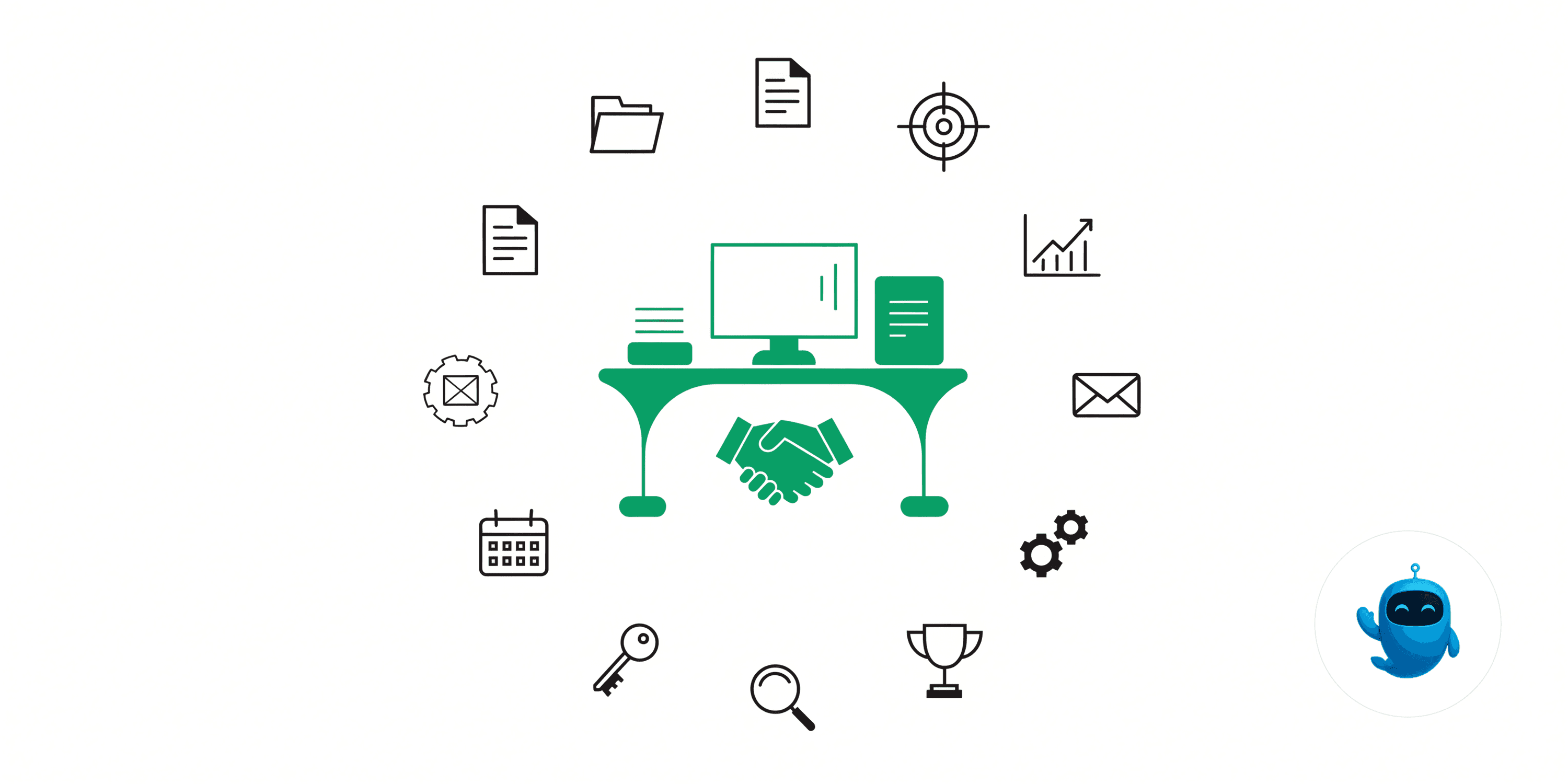
The more accurate way to describe what's happening isn't "AI replaces marketers." It's "AI collapses the point-solution stack a marketer used to juggle manually into fewer, faster tools." Here's what that collapse actually looks like.
| Old workflow | What it required | What replaces it |
|---|---|---|
| Drafting headlines and ad copy | A blank doc, 30-60 minutes per set of variants | Ad Copy Generator - headlines and ad text in seconds, edit from there |
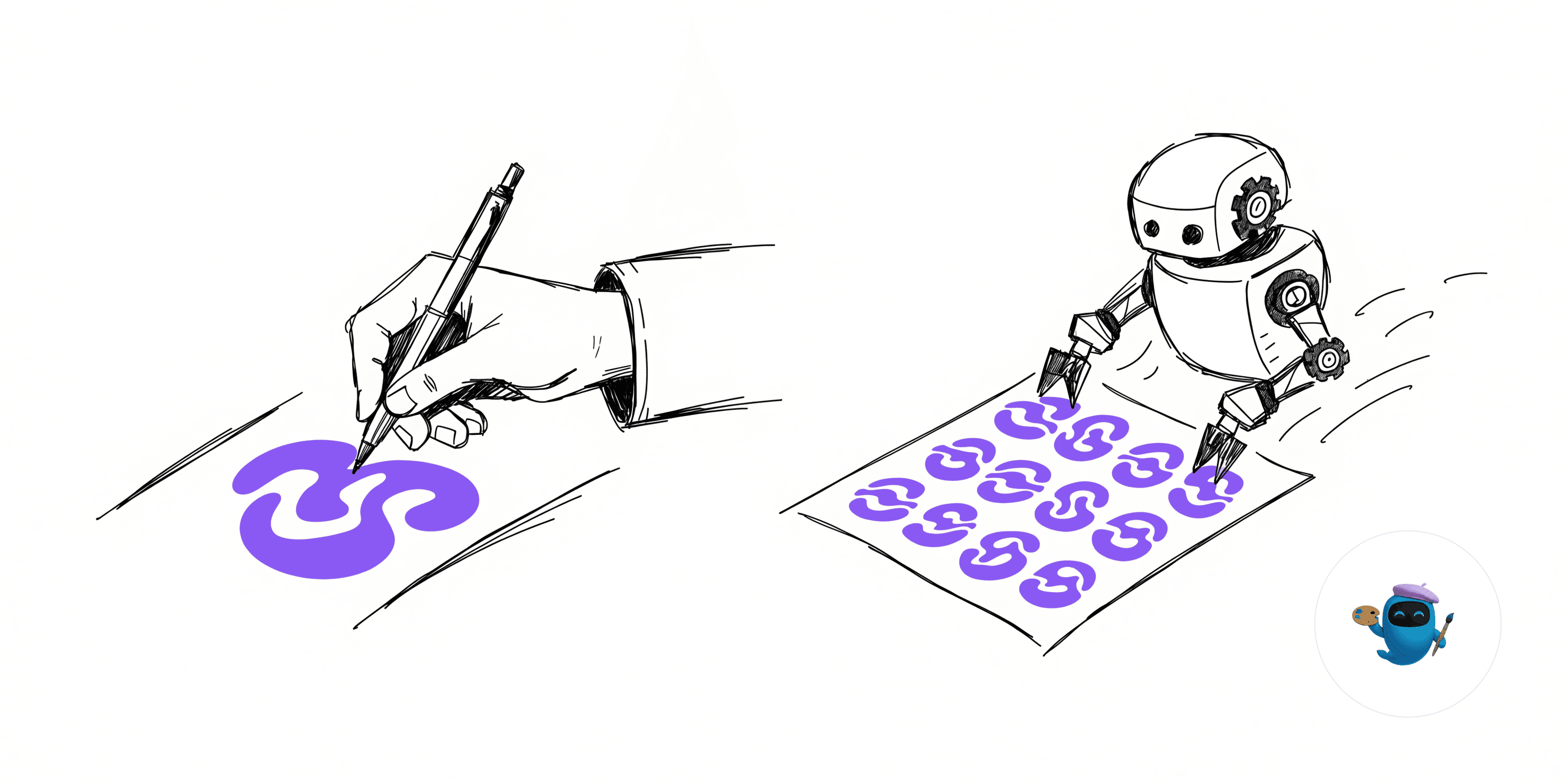
| A logo and basic brand assets | A design request or a template hunt | AI Logo Generator - concepts in the same session as everything else |
| Campaign planning across channels | A planning doc, a kickoff meeting, a week of setup | A generated campaign plan you edit, inside the same platform that runs the journey |
| Weekly performance reporting | Manual export from 3-4 dashboards, a slide deck | Live dashboards, no manual compilation |
The pattern across every row: the manual production step disappears, and the human's time moves to the decision that was always the actual job.
What actually moved in a working marketer's week, 2024 to 2026
Category-level analysis is one thing. Watching specific tasks shift in your own week is another. This is the honest before/after, based on how AI actually changed the composition of a marketer's week over the last 18 months.
| Task | 2024 | 2026 | Time change |
|---|---|---|---|
| Drafting a blog post outline | 45 minutes | 5 minutes (edit an AI outline) | ~90 percent |
| Writing an ad copy variant | 20 minutes | 2 minutes (pick from AI variants) | ~90 percent |
| Building a weekly performance report | 90 minutes | 15 minutes (edit an AI summary) | ~85 percent |
| Deciding what topic to write about | Same | Same | 0 percent |
| Choosing which experiment to run | Same | Same | 0 percent |
| Reading a stakeholder meeting | Same | Same | 0 percent |
| Editing an AI draft to be genuinely good | Not applicable | 25 minutes | New task, did not exist |
The pattern: everything in the "produce" column moved to AI-first. Everything in the "decide" and "read the room" columns did not. A new task appeared, the specific editing work that keeps AI drafts from sounding like AI. That task is where the reclaimed time actually goes.
What about retention and lifecycle marketers?
Lifecycle work is where the split is easiest to see, because the structure and the money sit in different places. AI can segment a base, draft a win-back journey, build a cancel flow, or size a referral incentive against customer value in minutes. It can't decide what a customer is worth to your business, how much discount you'll concede to keep one, or what compliance requires where you sell.
| Lifecycle job | AI drafts | A person owns |
|---|---|---|
| Segmenting the base | RFM scores and lifecycle stages | Which segments get budget |
| Churn saves | Cancel flow, save offers, dunning sequence | The actual discount ceiling |
| Referral program | Trigger moment, reward tiers, anti-abuse rules | The actual reward amount |
| Promo review | Baseline vs promo vs recovery comparison | Whether the promo runs again |
So the lifecycle role isn't going away. The drafting time is. If you want to test the structure half yourself, the Customer Journey Generator turns a trigger and a goal into a draft journey, and free skills like the-save-desk and the-referral-architect cover churn saves and referrals. The spend sign-off stays with you.
Intempt's Lifecycle Marketer agent runs this continuously: describe a trigger and a goal, and it builds the journey (steps, delays, branches, channel, content), then reports step-by-step conversion against live behavior data.
What to Do Now
- Pick one or two AI tools that touch your actual weekly work and get fluent, rather than sampling every new tool that launches. Depth beats breadth here.
- Audit your own week honestly. Where are you still doing first-draft production work a tool could compress to a starting point? That's the time to reclaim, not defend.
- Spend the reclaimed time on the parts of the job AI can't do: reading your specific market, making the risk calls, and deciding what your brand actually stands for.
- If you manage a team, hire and train for AI-directing skill now. The 130%+ growth in AI-mentioning job postings means this is already a competitive hiring signal, not a future one.
The honest answer to "will AI replace digital marketers" is that it's already replacing the least valuable half of the job. Whether that's good news or bad news for you personally depends on which half of your current week you spend more time on.