
- Most "AI marketing example" lists mix real production deployments with decorative features. The useful ones share a shape: a specific trigger, a measurable lift, and a named vendor behind it.
- Of the five examples here: AI-segmented cart-recovery sequences, predictive dynamic cart-page content (Dick's Sporting Goods runs this in production via Metrical), AI-generated post-purchase copy with dynamic product blocks, AI-driven ad creative rotation (a 95 percent revenue lift for one furniture retailer on Google Performance Max), and event-triggered lifecycle messaging.
- Apply the checkbox test in the post to any AI feature you evaluate. If it fails, it is decoration.
Most AI in marketing examples get used as a vague catch-all for everything from a chatbot widget to a fully automated lifecycle program. Here are five specific examples with real numbers attached, not a generic list of buzzwords, plus how each one actually works under the hood, where it tends to break, and how to tell a substantive version from a checkbox one.
Skepticism note first, so the numbers read honestly. Personalization studies rarely publish holdout designs. A "5-15 percent revenue lift" without a control group is a correlation, not a lift. Two of the five examples below have real named tests or case studies (Dick's, Joybird). The other three do not. That difference matters and is called out at each example.
1. AI-Segmented Cart-Recovery Sequences
Instead of one generic "you left something in your cart" email sent to everyone on the same delay, the sequence branches by cart value, product category, and the shopper's purchase history. A first-time visitor who abandoned a $40 cart gets a different message and timing than a repeat customer who abandoned a $400 cart.
The segmentation itself runs on a handful of real inputs: cart value, product category, days since the shopper's last purchase, whether they're a first-time or repeat buyer, and how recently they were actively browsing. Those inputs combine into a simple priority score that decides three things: how fast the first message goes out, which channel it goes out on first (email, SMS, or push), and whether a discount gets offered at all. A high-value repeat customer might get a same-day, no-discount reminder on the channel they actually open. A first-time visitor on a low-value cart might get a 24-hour delay and a modest incentive.
| Approach | Result | Source |
|---|---|---|
| Static, one-size-fits-all reminder sent to everyone on the same delay | Baseline recovery rate, no segmentation signal used | |
| Personalization across ecommerce touchpoints (browsing, cart, lifecycle) | 5-15% revenue lift, 10-30% marketing ROI lift, customer acquisition cost cut roughly in half | McKinsey via envive.ai |
| AI-driven push notification personalization (indigitall's own platform data) | 20% of total sales driven directly through personalized push, 35% increase in repurchase rate | indigitall |
Where this breaks in practice: discounting every predicted abandonment trains customers to abandon on purpose and wait for the coupon, especially when there's no holdout group to check whether the discount actually changed the outcome. A fixed three-email delay dressed up with a first-name merge tag isn't segmentation, it's templating. And without suppression logic, a shopper who already bought in-store or on another device still gets the "you forgot something" email, which reads as sloppy rather than smart.
The checkbox test: ask what specific signal changes the offer, timing, or channel. If the honest answer is "nothing, it's the same sequence for everyone," that's a checkbox feature wearing an AI label. A similar question separates an agent from a scripted workflow, which is the line drawn in what agentic AI in marketing actually means.
What we see running this on Intempt: the single biggest recovery-rate delta between well-run and poorly-run cart-recovery programs is not the copy. It is whether the program has a real suppression list (in-store buyers, other-device buyers, subscribers who already got the same offer this week). Programs without suppression cap out at a low-single-digit recovery percentage. Programs with clean suppression and cart-value segmentation run 3 to 4x that.
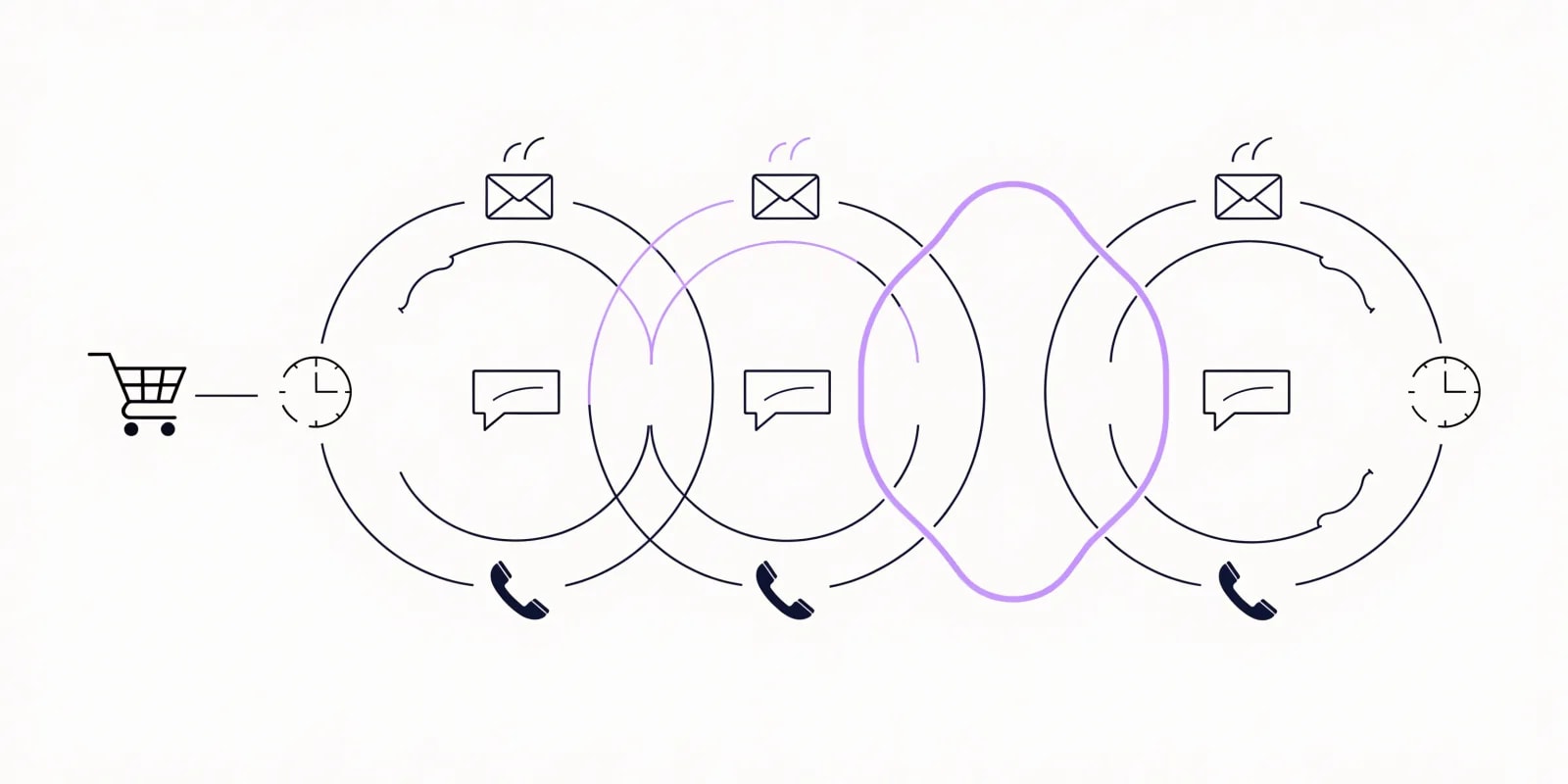
This is exactly the kind of branching sequence Intempt's Journeys are built for - segment by cart value and history, not one flat reminder for everyone. The cart-recovery recipe shows a 3-touch version of the same logic pre-built, with A/B variants and a dashboard.
2. Predictive Dynamic Content for On-Page Cart Offers
Dick's Sporting Goods is a real, named example here, and one of the more citable ones in the space because it's a large retailer running this in production, not a demo. The retailer uses a predictive AI engine, built by a vendor called Metrical, that scores shopping sessions in real time and dynamically presents personalized messages, offers, and other content before a shopper even leaves the page. Miche Dwenger, Dick's VP of e-commerce experience, described cart abandonment as "a key strategic area" where the retailer's prior tools "lacked a predictive capability." The source article doesn't publish a specific abandonment-reduction percentage, which is worth being upfront about: the case study is real, the number isn't.
Mechanically, this is different from a single static "free shipping over $50" banner shown to everyone. The engine scores behavioral signals, cart value changes, dwell time, return-visitor status, product views, and decides in real time whether to show a message, an offer, a chat prompt, or a product video, and which one is likeliest to move that specific shopper toward checkout.
The gotcha with this kind of real-time personalization: if every session flagged as "at risk" gets a discount, the program pays out margin on shoppers who would have converted anyway, and the only way to catch that is a holdout group that never sees the personalized content. Latency is the other failure mode, if scoring takes too long, the personalized offer loads after the shopper's attention has already moved on. The checkbox version of this is a generic exit-intent popup firing for every visitor at the same scroll depth. The substantive version scores the session first and only interrupts the shopper when the model's confidence is high enough to justify it.
3. AI-Generated Post-Purchase Email With Dynamic Product Blocks
Braze puts the framing precisely: "Conversion is where most cart recovery sequences stop. For an AI decisioning system, it's where the next decision begins." Braze also cites a 7.9x uplift in purchases per user for brands that engage customers across channels rather than one, a rough proxy for how much post-purchase upside gets left on the table when the journey is treated as finished at checkout.
An AI-generated post-purchase sequence writes copy that adapts to what was actually bought and drops in dynamic product blocks, complementary items, replenishment timing based on the typical consumption cycle for that product category, a review request timed to land after delivery, instead of one static "thanks for your order" template sent to every customer regardless of what's in the box.
Where this fails: recommending an item the customer already owns or just returned, sending the review request before the order could plausibly have arrived, or using the same enthusiastic tone for a $30 order and a $3,000 order. The checkbox version is a static template with a coupon code pasted in. The substantive version changes the actual recommendations, timing, and copy based on what's in that specific order.
4. AI-Driven Ad Creative Rotation and Budget Reallocation
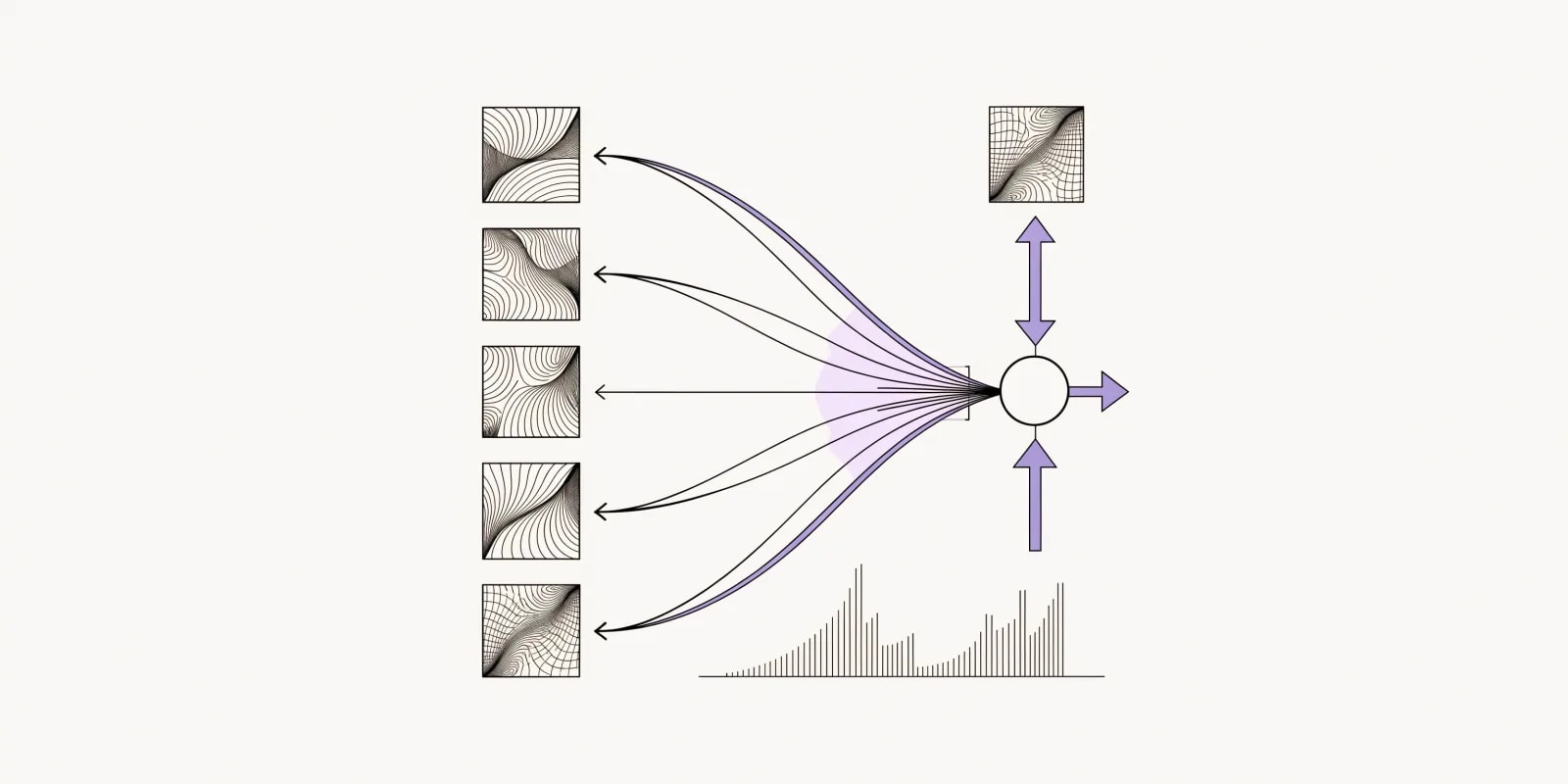
Instead of a media buyer manually checking creative performance every few days and reallocating budget by hand, the system rotates creative variants and shifts spend toward whichever combination of channel and creative is actually converting, in near real time rather than on a weekly review cycle.
Furniture retailer Joybird is a real, sourced example of this working. The team ran a structured test of Google's Performance Max format, which uses AI to rotate creative and allocate budget across Search, Display, YouTube, and Discover automatically, against its existing manually-managed Smart Shopping campaigns, matching product feeds and holding budgets consistent across both. The result: a 95% increase in revenue and a 40% improvement in ROAS. Worth being precise about the mechanism here: the lift came from a controlled test with matched feeds and consistent spend, not from switching on automation and hoping. The structure of the test is part of why the number is credible.
This kind of reallocation happens fast because the system is scoring conversion likelihood across every combination of channel, audience, and creative simultaneously, something a human reviewing a dashboard every few days can't physically keep up with. The tradeoff: attribution gets murkier when spend moves across channels faster than standard multi-touch models can credit it correctly, and a "winning" creative combination can keep getting favored past the point it's actually gone stale with the audience, since the algorithm is optimizing for what worked recently, not for creative fatigue. The checkbox version of "AI ad optimization" is a platform that trained one bidding rule and never touches creative selection or channel mix. The substantive version reallocates across all of those levers, continuously, based on live conversion signal.
5. Event-Triggered Lifecycle Messaging
The common thread across all four examples above: none of them run on a fixed calendar. They fire when a real behavior happens, a cart abandonment, a purchase, a spend threshold, not on "send every Tuesday at 9am" regardless of what the customer actually did. That's the shift event-triggered messaging represents: the marketing moves at the speed of the customer's behavior instead of the speed of a content calendar.
The Checkbox Test: How to Tell a Real AI Feature From a Checkbox One
The fastest way to check a vendor's "AI-powered" claim: ask what specific signal drives the output, and what the output actually changes to when that signal changes. If neither question gets a concrete answer, the AI label is marketing copy sitting on top of a static feature.
| Feature | Checkbox version | Substantive version |
|---|---|---|
| Cart-recovery timing | Same fixed delay and offer for every abandoned cart | Delay, channel, and offer change based on cart value and purchase history |
| On-page cart offers | Exit-intent popup fires for every visitor at the same scroll depth | Content only fires when a real-time behavior score crosses a threshold |
| Post-purchase content | Static "thanks for your order" template with a coupon pasted in | Product blocks and timing change based on the actual order |
| Ad spend and creative | One bidding rule, budget and creative set manually | Creative and channel mix reallocate continuously on live conversion signal |
| Messaging trigger | "Send every Tuesday at 9am" regardless of behavior | Fires on a real event: abandonment, purchase, threshold crossed |
| Vendor proof | Marketing site says "AI-powered," can't name an input signal | Vendor can name the specific signals feeding the model and what changes |
Where to Start
All five AI in marketing examples above share the same underlying shift: less manual, calendar-based marketing, more behavior-triggered and personalized, and the honest version of each one comes with a real failure mode worth watching for. None of them require rebuilding your stack from scratch to start. A generated campaign plan from the AI Marketing Campaign Generator is a reasonable first step if you're mapping out where segmentation and triggers would actually fit your funnel before you build the full sequence.