
Marketers know that winning customer hearts (and wallets) takes more than a one-time ad or a standard promo email. It's about creating a smooth, personalized journey across every touchpoint - from browsing your website to the products you recommend, to the emails and SMS messages that follow up. When done right, it feels like one continuous conversation.
In this blog, we'll explore how website personalization and product recommendations powered by Intempt's AI agents can work with email and SMS to form a connected customer journey. We'll use Sephora as our example, and show how you can achieve this too.
Expected Results
- Build a unified cross-channel journey that feels like one conversation (web → email → SMS → in-store).
- Combine segment-based personalization (who the user is) with catalog-based recommendations (what they want).
- Trigger real-time, personalized follow-ups across website, email, and SMS.
- Lift customer engagement, repeat purchase rate, and LTV through cohesive personalization.
Why Does a Connected Cross-Channel Journey Matter?
When channels don't talk, customers walk. Brands that connect the dots between web, email, and SMS enjoy big benefits. Companies with strong cross-channel marketing strategies achieve 89% customer retention on average (versus only 33% for weaker multichannel efforts).
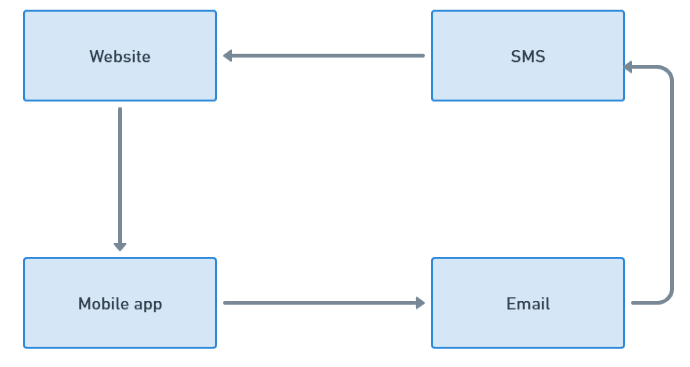
- Website → Email/SMS: Recommendations and messages reflect browsing or purchase behavior.
- Email/SMS → Website: Deep links land users back on personalized experiences.
- Store → App/Web: Loyalty data flows both ways.
The Personalization Formula:
1. Segment-Based Personalization (the "who")
- RFM Segmentation: Grouping users by Recency, Frequency, and Monetary value. "Champions" (most loyal) get exclusive offers. Lapsed customers get win-back offers.
- Next Best Action Predictions: Using AI to predict what a user is most likely to do next and tailoring offers accordingly.
- Behavioral & Profile Attributes: Product category preferences, brand affinity, location, retention tier.
2. Catalog-Based Recommendations (the "what")
- Affinity Recommendations: Items related to the user's previously demonstrated interests.
- Similarity Recommendations (Content-Based): Showing similar items to those the user viewed or purchased recently.
- Collaborative Filtering: "Customers who bought X also bought Y." Classic examples are "Frequently Bought Together" sections.
On-Site Personalization: Every Visit Feels Like "Made for Me"
- Personalized Content & Layout: Change hero banners, headlines, and calls-to-action based on visitor. Sephora greets logged-in Beauty Insider members with a "Welcome back, [Name]!" message.
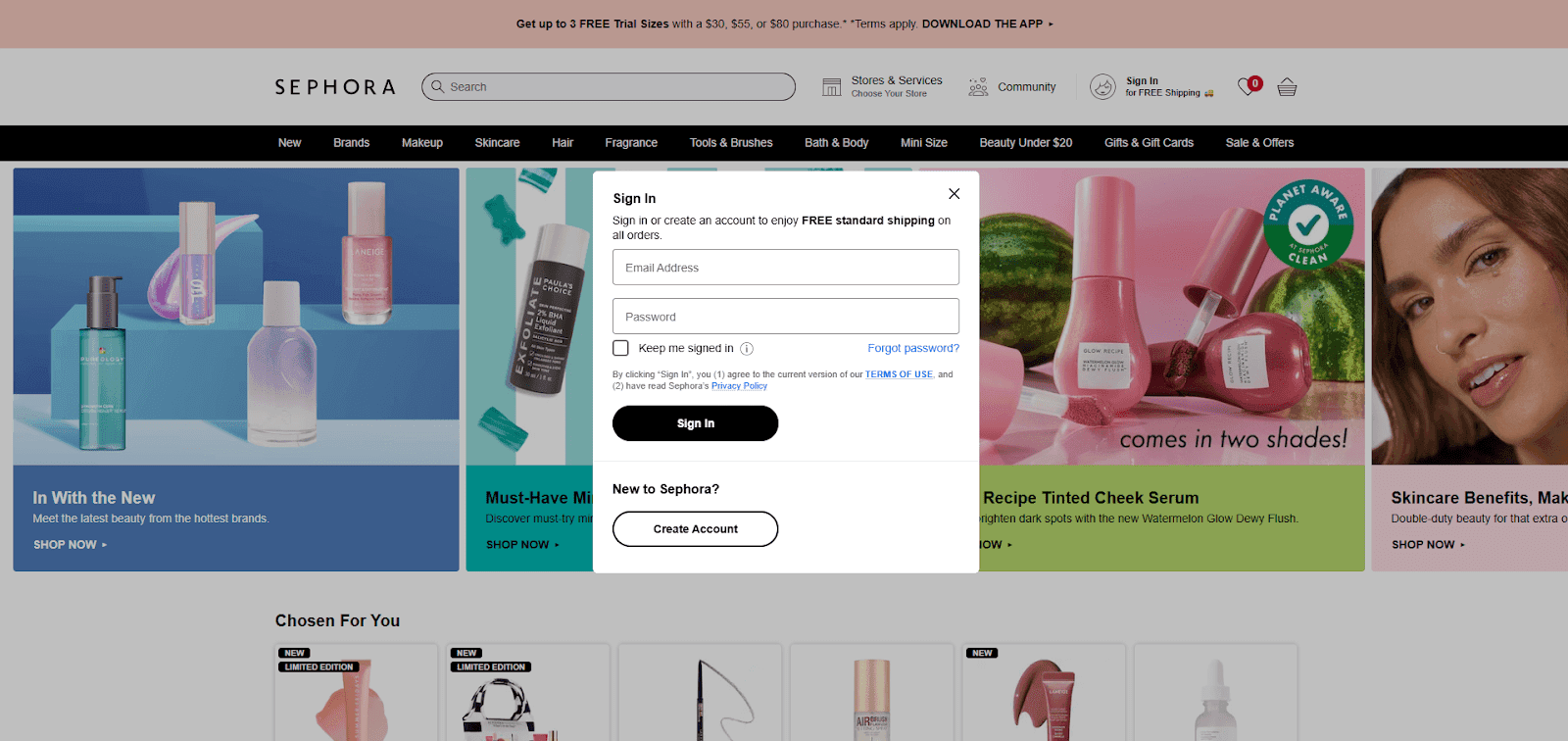
- Product Recommendations on Key Pages: Strategic recommendation widgets on the homepage, product detail pages, and cart page.
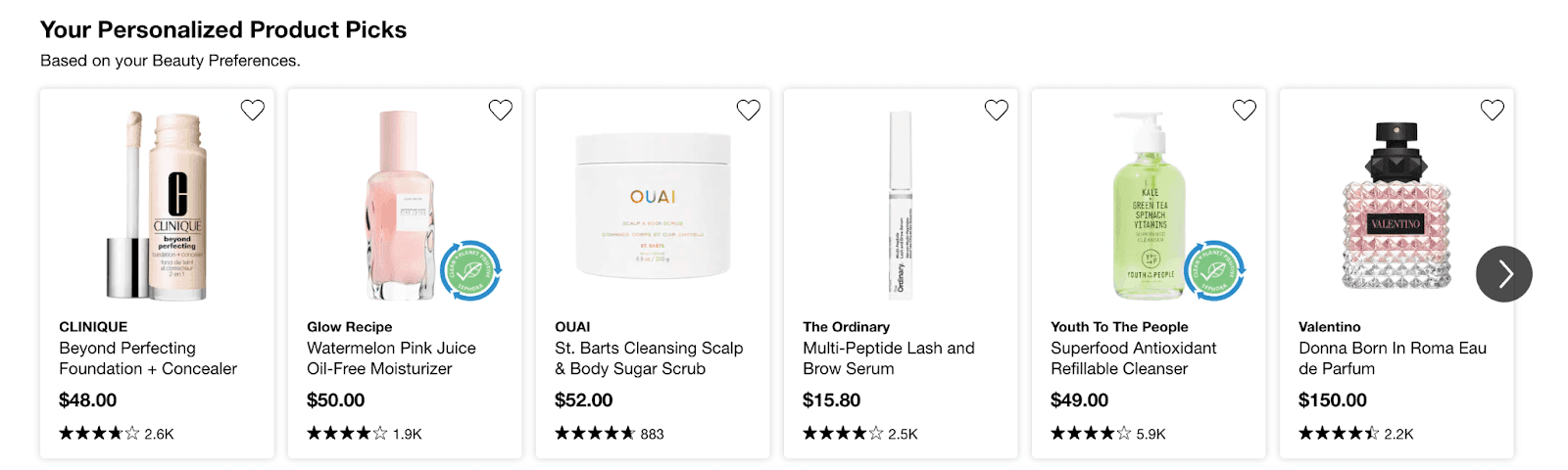
- Real-Time Relevance: As the user browses, update content in real-time based on in-session interests.
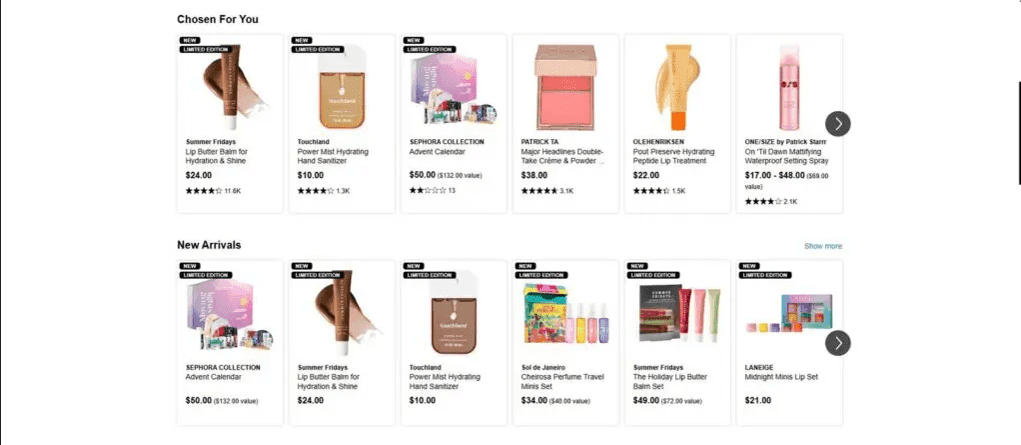
Extending Personalization Beyond the Website
- Triggered Emails: Cart Abandonment, Browse Abandonment, Post-Purchase follow-ups with complementary items.
- Personalized Campaigns: Segment newsletters by interests with "Recommended for you" sections.
- Relevant SMS: Concise, contextual messages with the user's name and preferences, linking to personalized landing pages.
- Unified Messaging & Deep Linking: Keep messaging consistent across web, email, and SMS.
Sephora's Connected Personalization in Action
- Unified Customer Profile: Beauty Insider program gathers rich data - skin type, favorite brands, purchase history.
- Personalized Web Experience: Tailored messages like "Recommended for you, Jane" and AI-powered product carousels.
- Contextual Email Follow-up: Emails referencing viewed items plus related product suggestions and loyalty point reminders.
- Immediate SMS Engagement: Short, personalized texts with offers and location-based invites.
- Consistency Across Channels: Cohesive messaging across web, email, and SMS.
How to Implement Omnichannel Personalization With Intempt?
Step 1: Unify Your Customer Data
Connect website, app, and catalog data inside Intempt CDP.
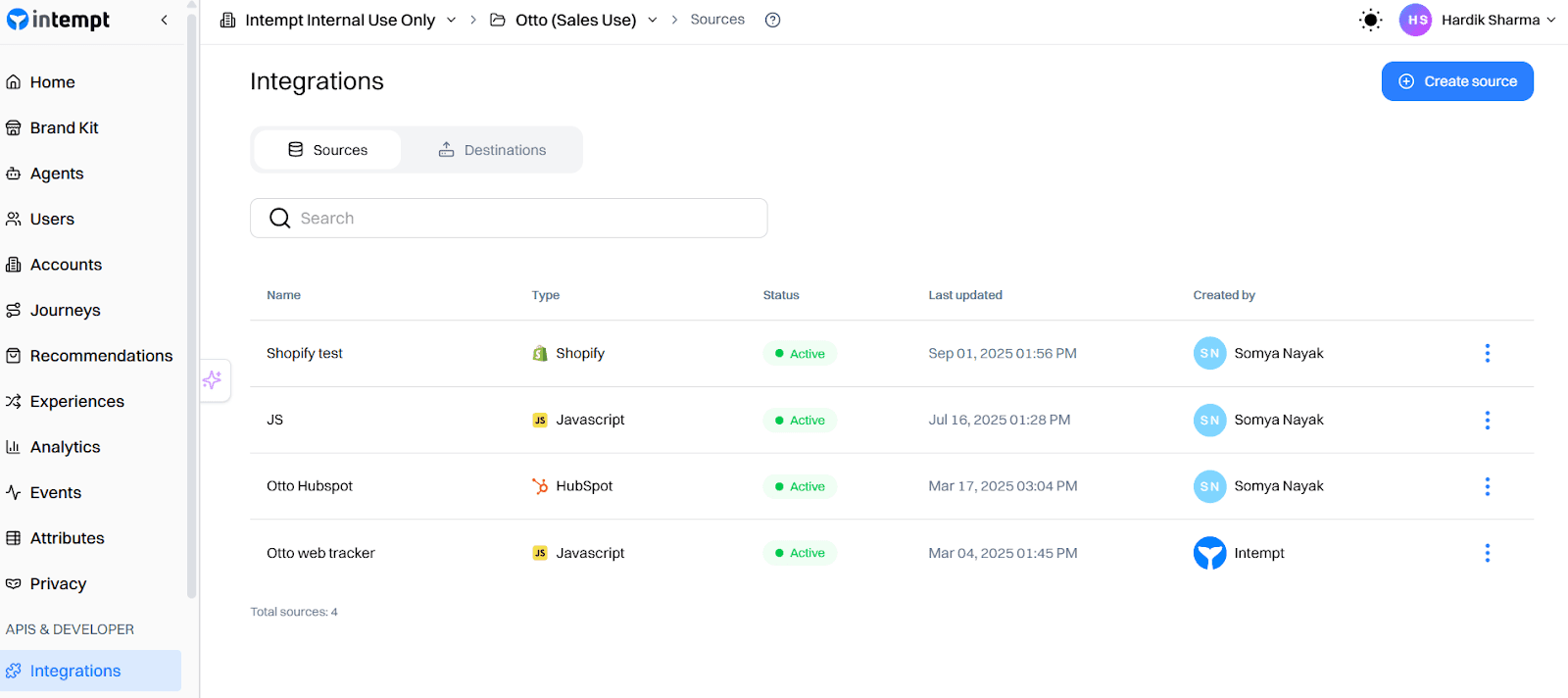
Step 2: Build Predictive Segments
Use AI-based segmentation (RFM, lifecycle stages, predicted churn/purchase). Segments auto-refresh in real time.
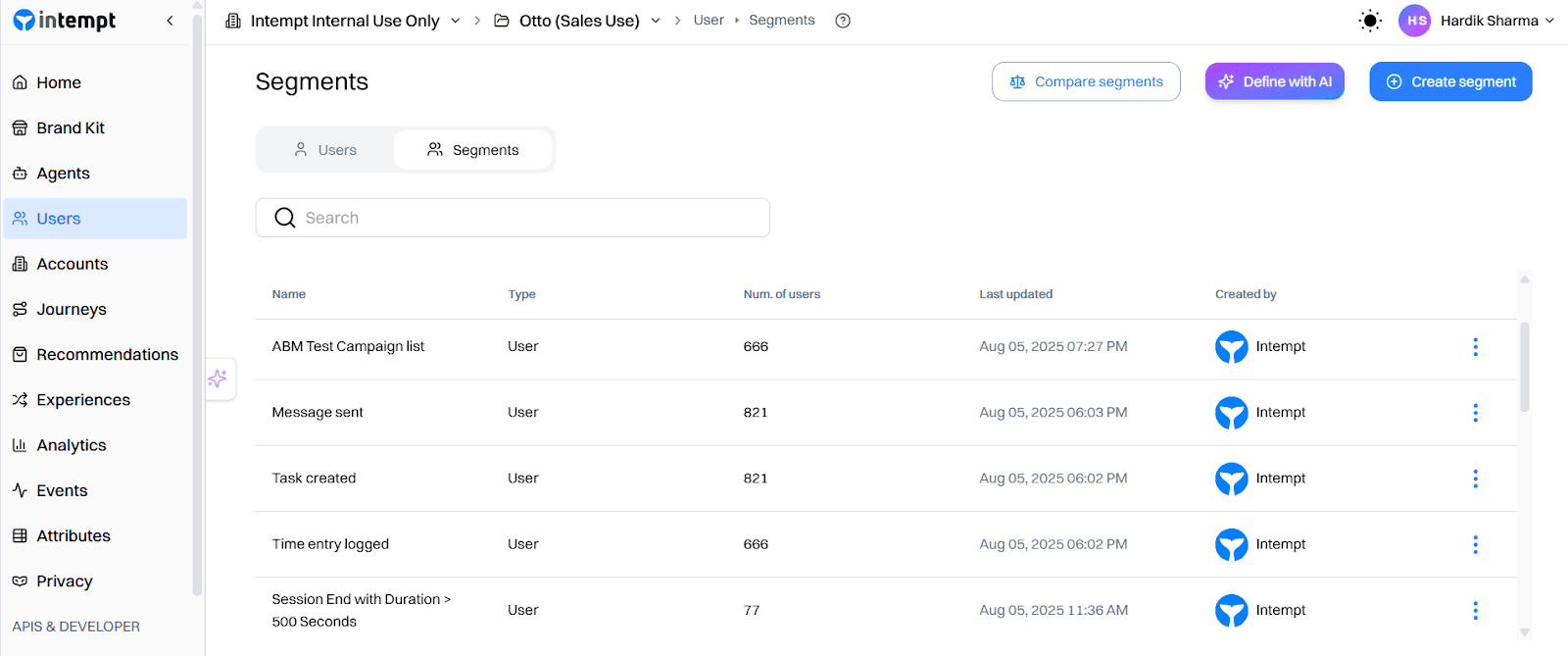
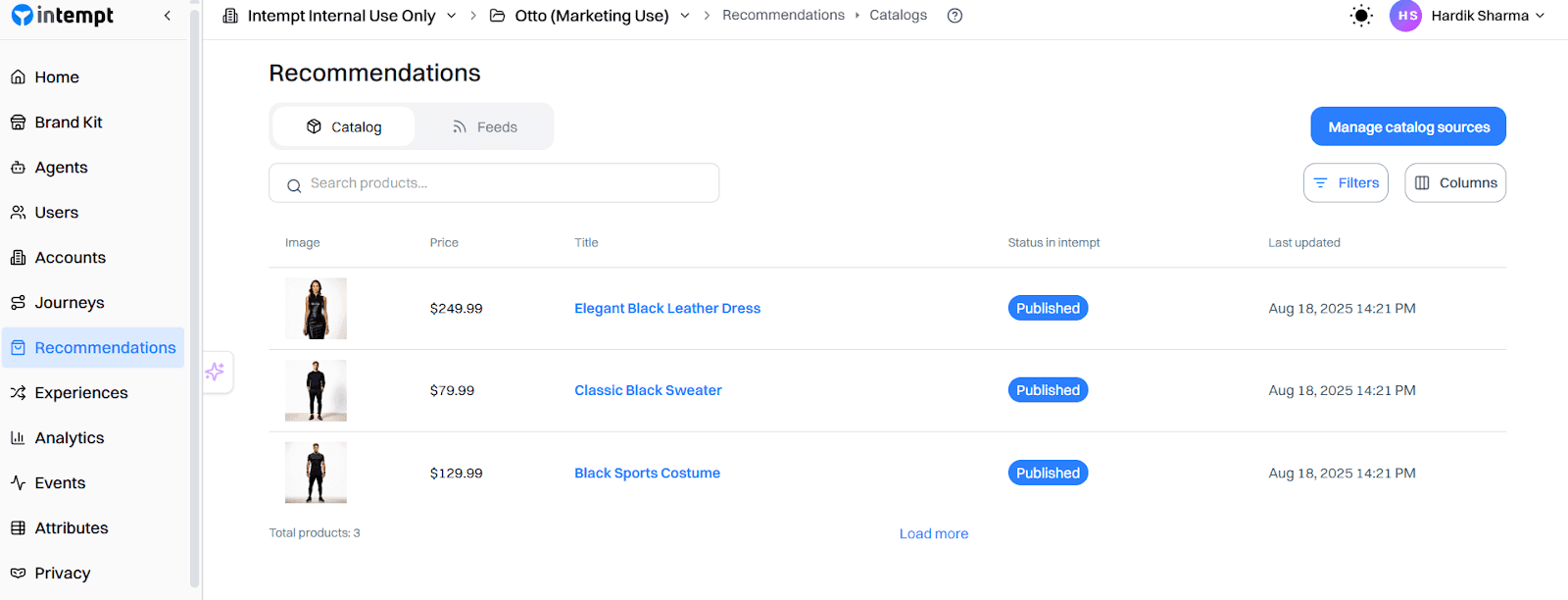
Step 3: Activate Recommendations Onsite
Insert recommendation widgets across key pages:
- Homepage: "Just for You" carousels mixing affinity + trending.
- PDP: "Pair With It" (collaborative filtering).
- Cart: "Don't forget these" (FBT + low-AOV upsells).
Step 4: Extend personalization to email & SMS
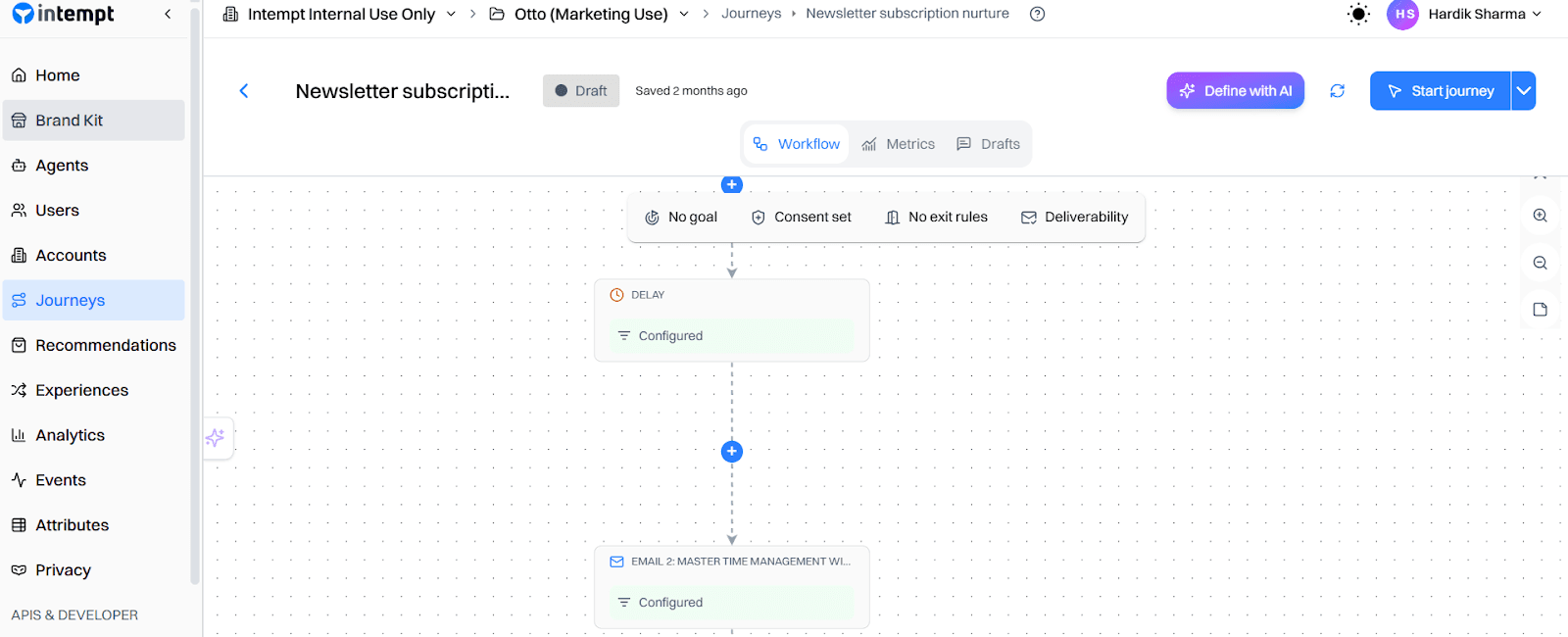
Behavioral triggers:
- Cart abandonment → "Your favorites are almost gone."
- Browse abandonment → "Still thinking about these?"
- Post-purchase → Care tips, tutorials, complementary products.
Step 5: Keep cross-channel consistency
Use deep links from email/SMS → personalized pages. Maintain consistent offers and creative themes across all channels.
TL;DR
- Unify customer data (web + app + catalog) → single profile.
- Combine segment-based (who) + catalog-based (what) personalization.
- Activate in real time: on-site widgets, behavioral emails, SMS follow-ups.
- Keep messaging consistent across every touchpoint.
- Test for lift in engagement, repeat purchase rate, and LTV.
Frequently asked questions. Answered.
Start with contextual cues (category viewed, referral source) and default to popularity-based recommendations.