





Personalize on real behaviour.
Point to any element, choose who should see it, and let Blu help shape the experience.
- Edit any element in a visual editor
- Preview it on the live page first
- Publish without waiting for a sprint

Keep every experience connected.
Your app can ask what to show and render it using the same rules as your website.
- Run it on iOS, Android, web, or your backend
- Skip the separate mobile product
- Follow the same person from app to site and back

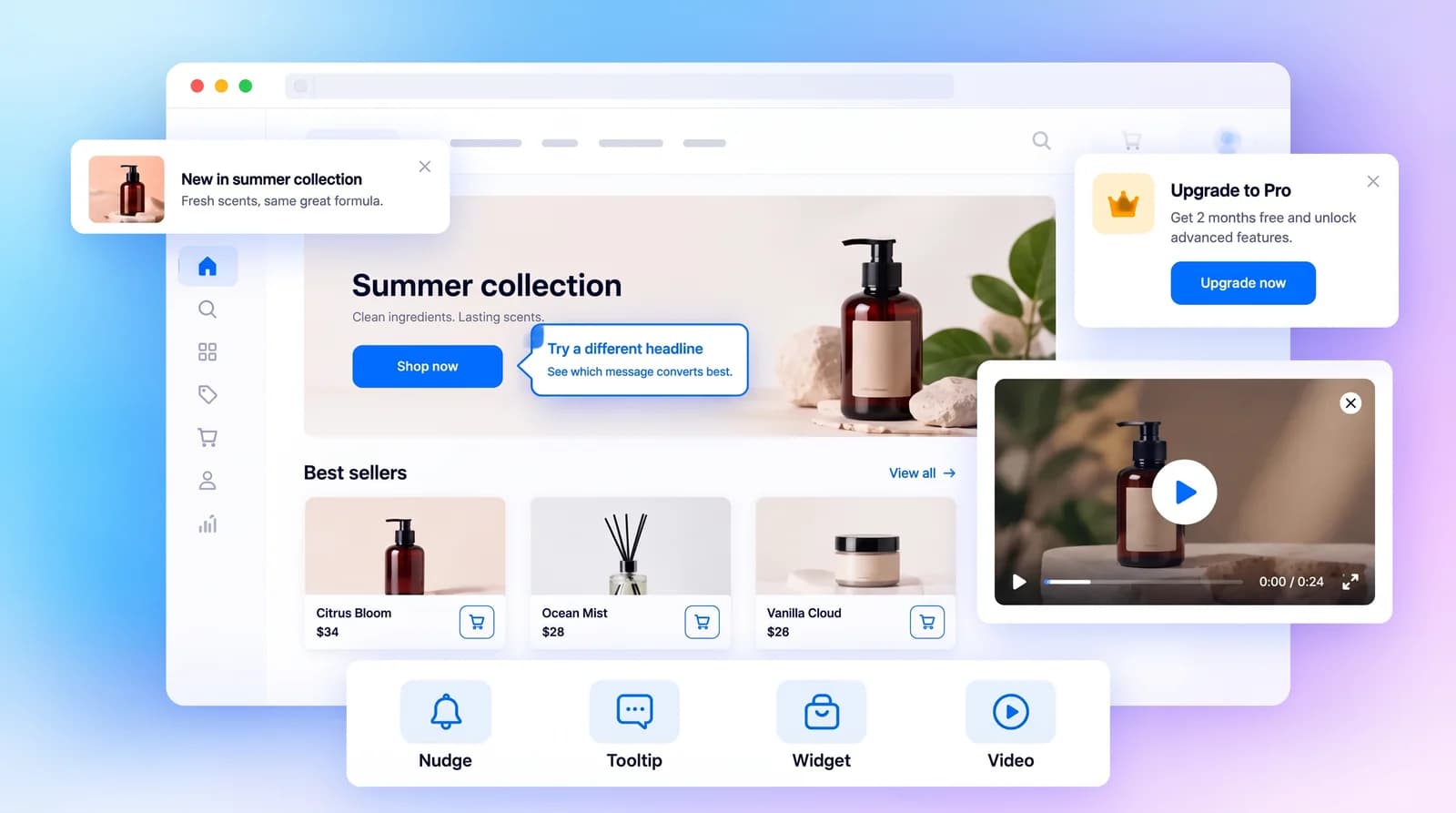
Show people what matters now.
Add a nudge, tooltip, widget, or video where it helps the user move forward.
- Pick from four in-app surfaces
- Render each one from a JSON flag, so no release
- Target them the same way you target a page

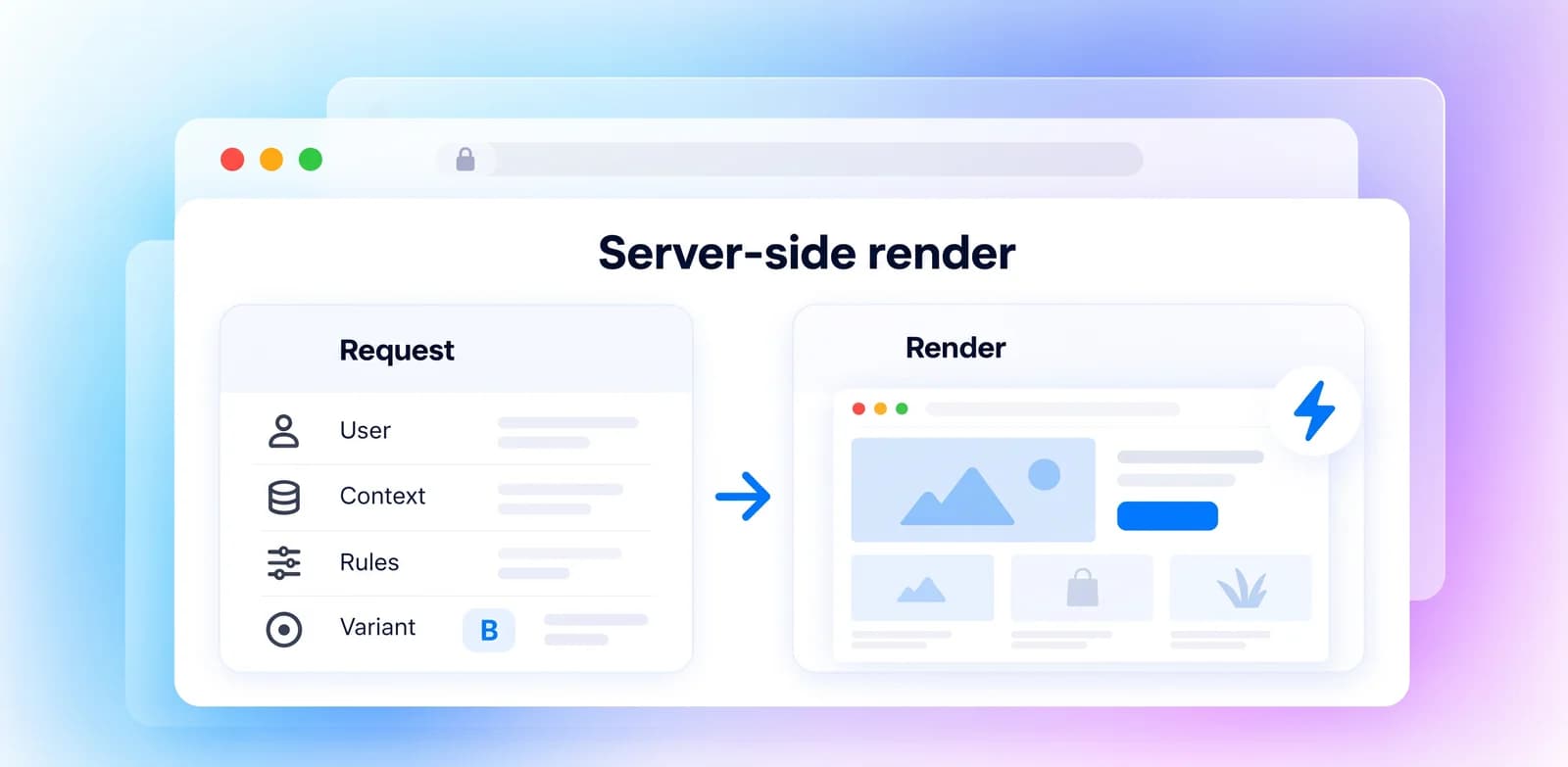
Make the first impression count.
Your server chooses the variant before the page renders, so visitors see the right version from the start.
- Decide it server-side, ahead of the render
- Keep it safe for search crawlers
- Read live behavior instead of a stale list

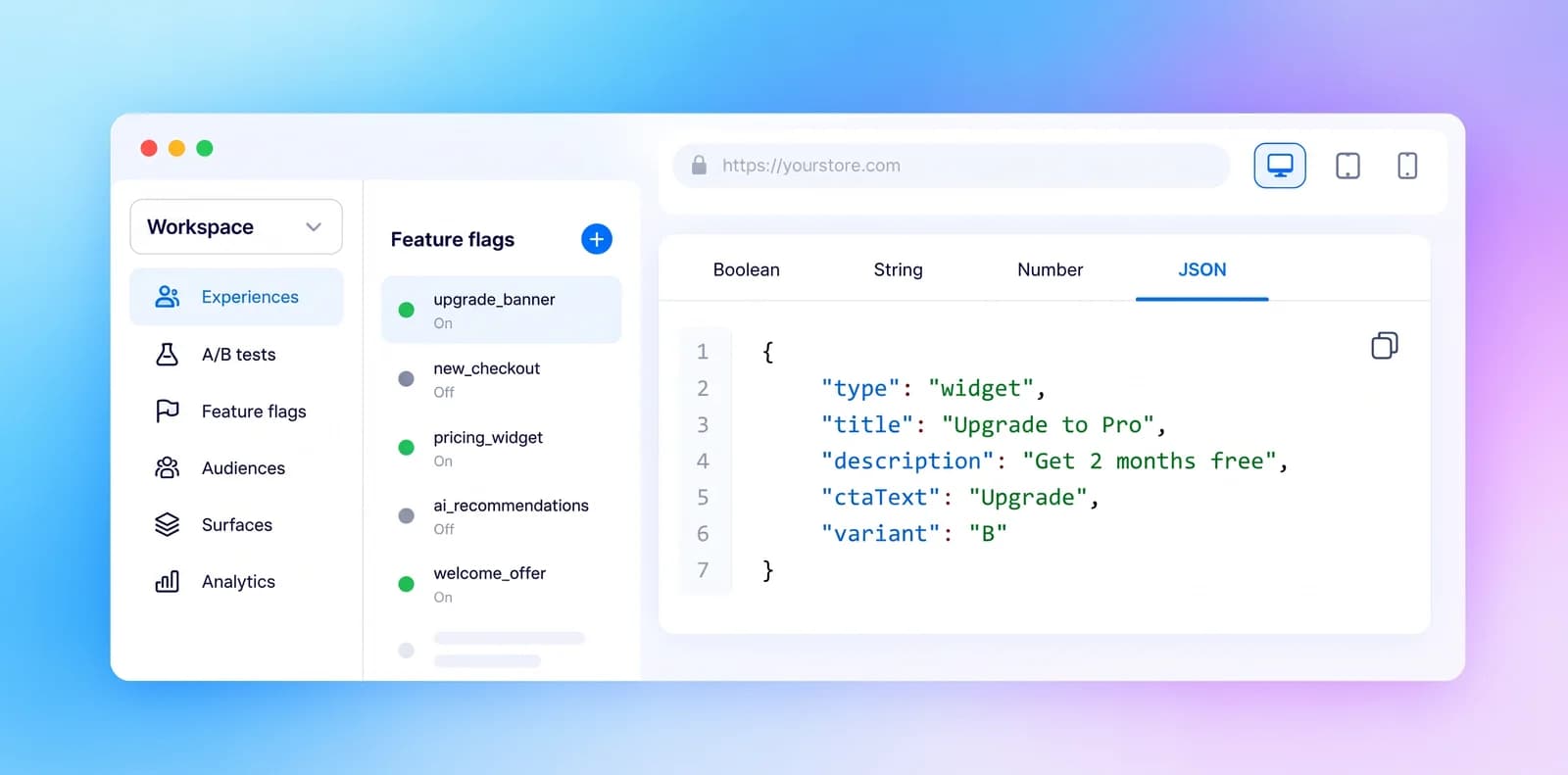
Give every feature more customer context.
A flag can return a boolean, string, number, or JSON payload that your experience can use.
- Serve a boolean, string, number, or JSON
- Keep one person on one answer
- Kill it instantly if something goes wrong

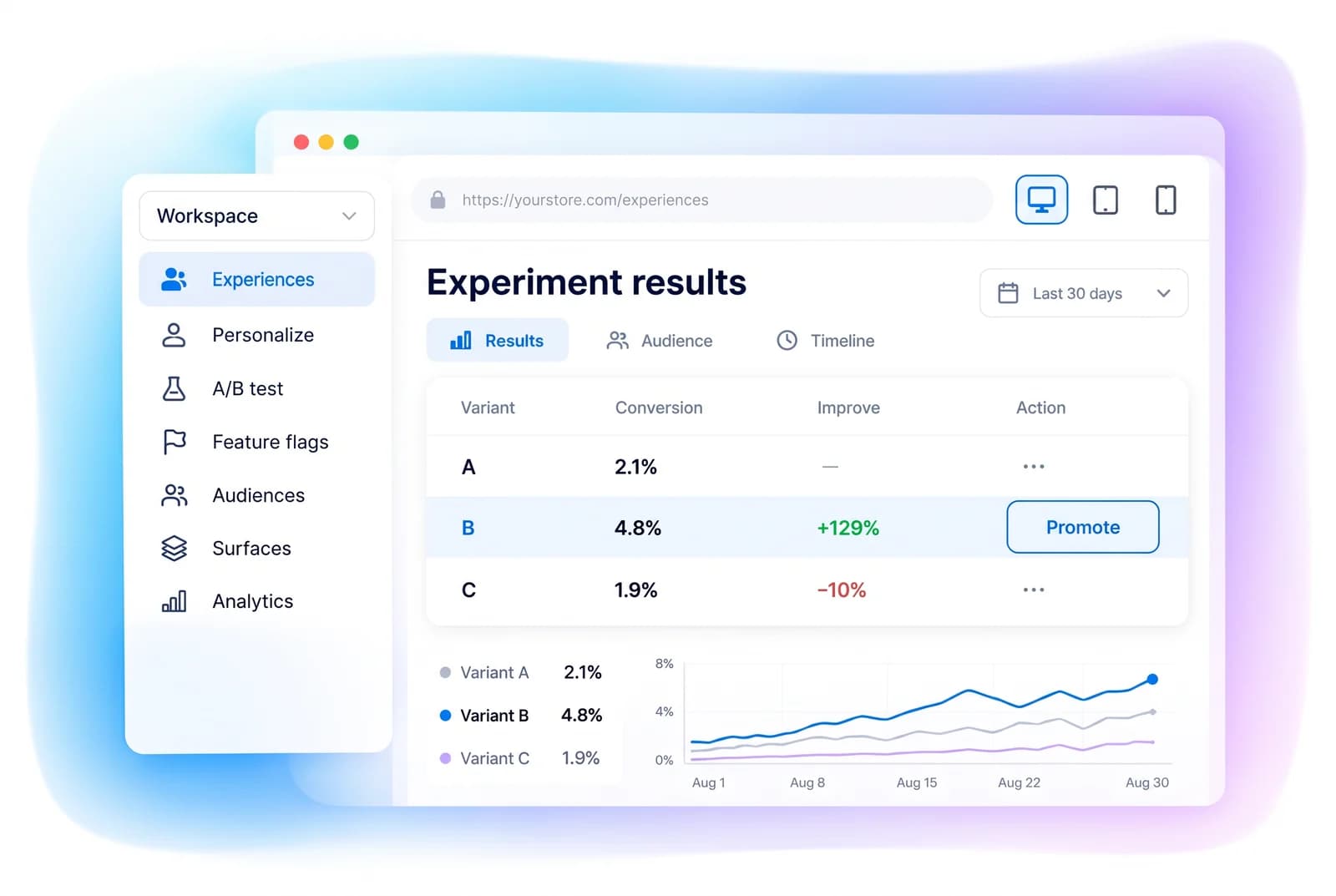
Keep what works working.
Turn a winning variant into a permanent rule without exporting it or rebuilding the experience.
- Promote a winner inside the same suite
- Skip the export into a separate tool
- Keep the rule serving on every visit after

Use cases built for the metrics that matter.
Three outcomes teams measure from day one.

Wired into the toolsyour team already opens.
Slack, Stripe, Twilio, SendGrid, Gmail, Google Calendar, Firebase, Apache Kafka, AWS. Blu Agent operates them for you without a browser tab.
See every integrationTeams love it
They stopped stitching tools andhired one system.
Frequently askedquestions.
Choose the change, set the audience, let Intempt run it, then keep what works.
Sources
* CUPED (Controlled-experiment Using Pre-Experiment Data) achieves 7-45% variance reduction depending on covariate selection. Deng et al. (Microsoft Research, 2013); Eppo, Statsig documentation (2024-2025).