


Intempt is the best Mixpanel alternative for SaaS, ecommerce and mobile app teams, and it is free to start. It shows where users drop off and then acts on it with journeys and experiments on the same customer profile, so analytics does not stop at the report.
This guide compares 7 Mixpanel alternatives: Intempt, PostHog, Amplitude, Heap, Pendo, Segment and Google Analytics 4. Intempt suits teams that want analytics and execution together. PostHog bundles analytics with session replay and feature flags, Amplitude focuses on cohorts and retention, and Heap auto-captures events. Pendo adds in-app guides, Segment is a data layer, and Google Analytics 4 is free web analytics. See the Mixpanel alternative comparison, Intempt vs Mixpanel, product analytics and pricing.
Most product teams swear they have full visibility into their user journey. Then you look closer, and it's Mixpanel for analytics, a separate tool for messaging, another for A/B testing, and engineers stuck in the middle every time someone wants to act on the data.
That's the real problem with Mixpanel. It's excellent at showing you what's broken - funnels, retention, cohorts, drop-offs. But the moment you want to fix it, send an email, trigger a journey, or run a test, you're back to coordinating across three other platforms. By the time everything syncs, the moment has passed.
For the full analytics category comparison across every GTM tool in 2026, see Best Analytics Tools for GTM Teams.
Who Should Consider Mixpanel Alternatives?
- Mixpanel is analysis-only. You see the drop-off. You surface the cohort. You can't act. G2 reviewers call this out directly: Mixpanel tells you what users are doing, but it doesn't give you the tools to act on those insights inside the platform.
- You need no-code execution. Mixpanel has no journey builder, no email sending, no on-site personalization, and no A/B testing layer.
- Your data lives in fragments. Mixpanel is an analytics database, not a unified customer platform. Unified profiles don't exist without custom engineering work.
- You want experimentation built in. Mixpanel has no native A/B testing, no experiment-to-audience workflows.
- Your pricing grows with tracking volume, not user engagement. Your bill grows as your product grows, regardless of whether that data drives revenue.
Evaluation Criteria
| Criteria | Why It Matters | What 'Good' Looks Like |
|---|---|---|
| Insight-to-action loop | Mixpanel's core limitation is the gap between analysis and execution. | AI surfaces insights and triggers the right journey, email, SMS, or push campaign automatically based on real-time behavioral signals |
| Pricing model | Event-based or MTU pricing punishes growth. | Fixed pricing per monthly active users, with AI automatically keeping audiences clean |
| AI-assisted behavior tracking | Analytics require clean, granular event data. | AI-assisted auto-capture with simple SDK setup so custom events are tracked without opening an engineering ticket |
| Personalized experiments at scale | Manually setting up and monitoring tests is slow. | AI generates variants, builds test audiences from live behavioral data, monitors results, and automatically activates winning variants |
| AI-native unified profiles | Fragmented data means duplicated work and missed insights. | AI-powered real-time identity resolution across all touchpoints, with a single unified profile per customer |
Comparison Table
| Tool | Best For | Starting Price | Key Strength | Main Limitation |
|---|---|---|---|---|
| Intempt | Ecommerce, SaaS and mobile app teams that want CDP, experiments and analytics in one platform | Free up to 1M events/month, 100K identified events and 3 seats; paid plans per seat | Only platform combining analytics, CDP, journeys, and A/B testing with 9 AI agents | Not a pure analytics play, requires buy-in to the unified platform approach |
| PostHog | Product teams wanting all-in-one analytics, session replay, and feature flags with transparent pricing | Free up to 1M events/mo; paid plans from ~$100/mo | Generous free tier, session replay included, open-source option available | Usage-based pricing scales, steeper learning curve |
| Amplitude | Teams needing behavioral cohorts and retention analysis with a free tier | Free (10K MTU); Growth plan starts $49/mo | Cohort and retention analysis, predictive features | Lacks execution capabilities (email, SMS, journeys) |
| Heap | Non-technical teams wanting auto-capture analytics with zero instrumentation required | Free up to 100K sessions/mo; paid from $2,000/mo | Complete auto-capture eliminates manual event setup | Pricing opaque and high, no native experimentation or journey orchestration |
| Pendo | Product and engagement teams needing analytics plus in-app guidance and user onboarding | Free up to 500 MAU; paid plans contact sales | Automatic interaction tracking, in-app guides and surveys built in | Pricing not public and escalates quickly |
| Segment | Data-driven teams wanting a data hub to route customer data across the entire martech stack | Free (1,000 visitors/mo); paid from ~$120/mo | Extensive pre-built integrations, identity resolution, enterprise data governance | Is a data layer, not an analytics tool |
| Google Analytics 4 | Budget-conscious teams or marketing-heavy companies tracking website and basic product analytics | Free (no event cap) | No cost, simple web analytics, integration with Google ecosystem | Lacks user-level analysis, no experimentation or messaging capability |
1. Intempt
Free to start. 75 bonus AI credits at sign-up plus weekly AI credits on the free plan. Rated 4.5 on G2. Start free with Intempt.
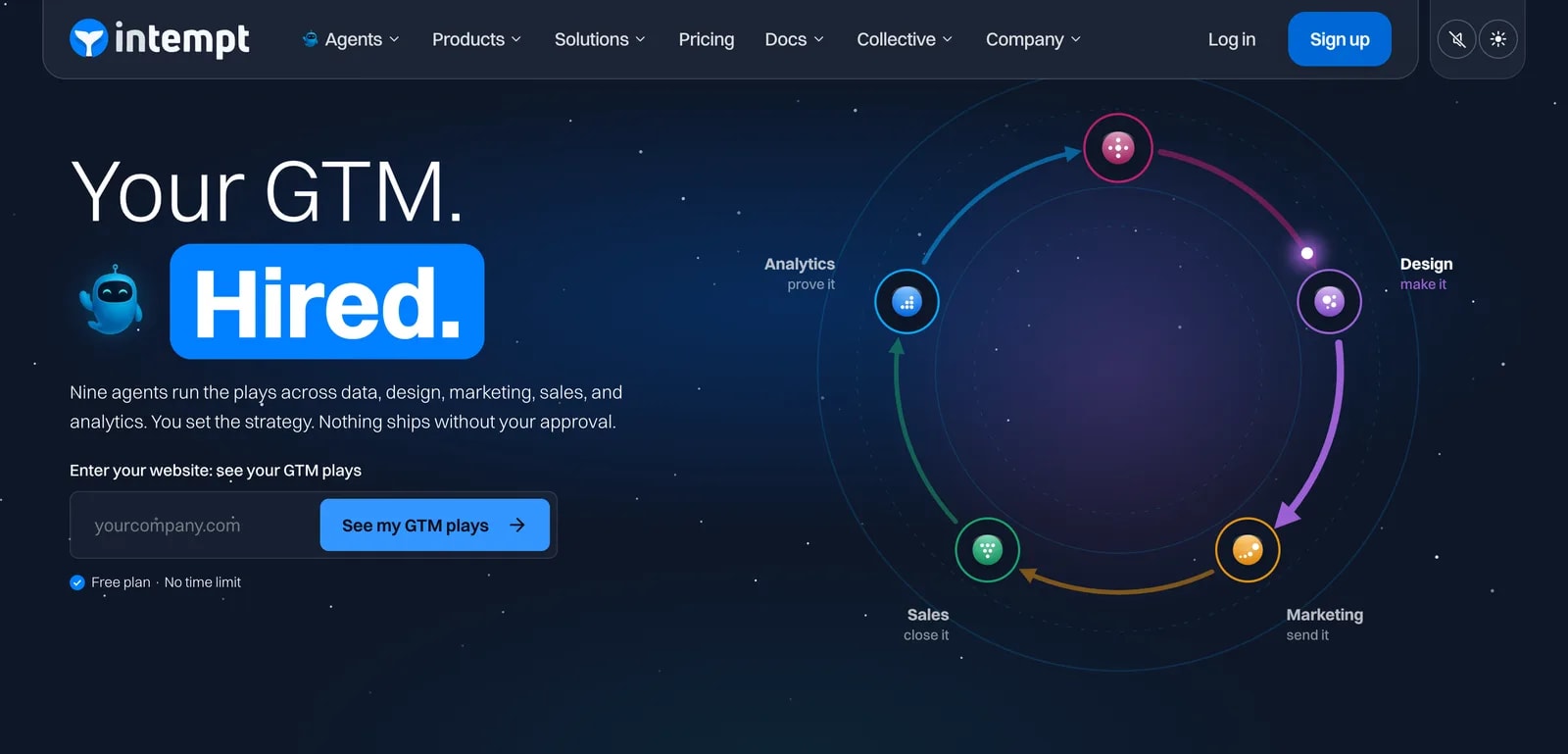
Intempt is a Mixpanel alternative built for teams that want to do more than analyze. It's an AI-native unified growth platform that replaces Mixpanel plus separate email, SMS, journey, and experimentation tools in one solution. Built for SaaS and eCommerce teams that want to detect a drop-off, surface a cohort at risk, and launch a corrective journey from the same screen without opening a second tool.
Mixpanel tells you what happened. Intempt tells you what happened and fixes it. When you find a retention gap in Mixpanel, you typically export that cohort, move to a messaging platform, rebuild the segment, wait for the job to run, and finally launch a journey. Intempt collapses that workflow into one platform with one unified customer profile.
What You Get
- Intempt Analytics: Blu automatically scores every customer on recency, frequency, and monetary value. AI identifies who is slipping, who is ready to buy again, and who needs a win-back campaign.
- Nine purpose-built AI agents: Handle journey drafting, segment creation, content generation, RFM scoring, experiment setup, and recommendation logic.
- Intempt Data Hub: Customer data from your website, app, Shopify, Stripe, and CRM unifies automatically. AI maintains profile freshness.
- AI-powered segmentation: Blu builds and maintains audience segments automatically based on live behavioral data, purchase history, lifecycle stage, and intent signals.
- Intempt Journeys: Visual drag-and-drop journey builder for email, SMS, push, and in-app messaging. AI optimizes send times and channel selection.
- AI-powered Intempt Experiment: CUPED variance reduction built in. When a test wins, Intempt automatically enrolls audiences in follow-up journeys without manual intervention.
Pricing
- Free plan: $0/month; every product in basic mode with usage limits (up to 1M events, 10K emails, 1K SMS and 1K push a month, up to 3 seats, no credit card required), weekly AI credits (see intempt.com/pricing), and 75 bonus credits on signup
- Professional plan: priced per seat; AI credits included in every seat; full access to all features
- Organization plan: priced per seat; AI credits included in every seat
- Enterprise plan: priced per seat; AI credits included in every seat; SSO, SCIM provisioning, HubSpot CRM sync, dedicated support
2. PostHog
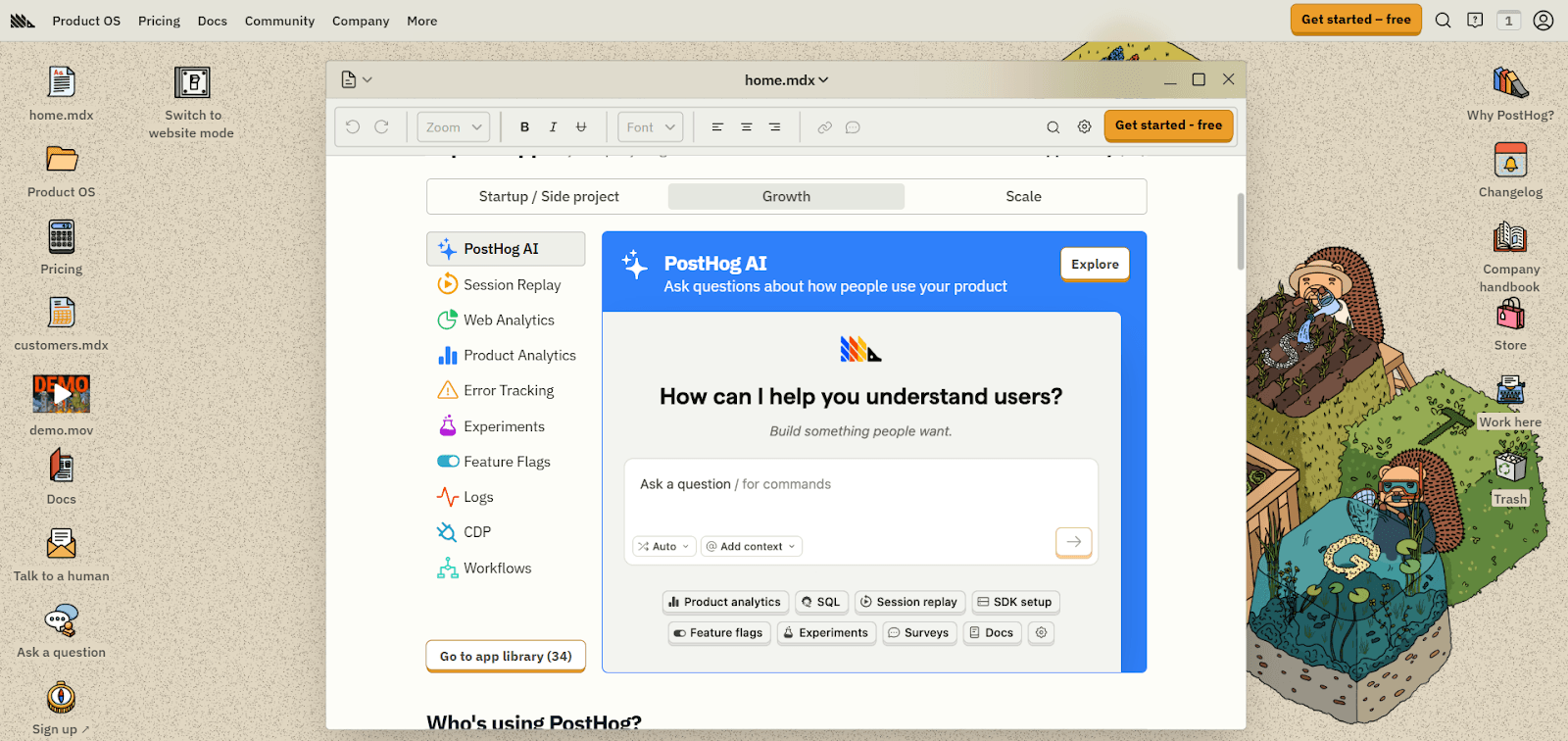
PostHog is an open-source product analytics platform that combines behavior tracking, session replay, feature flags, A/B testing, and data warehouse syncing in one solution. It goes deeper than Mixpanel on experimentation and session replay, but lighter on multi-channel execution.
What You Get
- Product analytics with user-level depth: Event tracking, funnel analysis, retention curves, user cohorts, and session recording.
- Session replay at scale: Watch user sessions in context with behavioral data.
- A/B testing and feature flags: Run experiments tied directly to your analytics data.
- Surveys and feedback loops: In-app surveys tied to user segments and behavior.
- Self-hosting option: Deploy on your own infrastructure if data residency or privacy concerns matter.
Pricing
- Free: 1 million events per month, 5,000 session replays, unlimited team members
- Paid usage: $0.00045 per event after free tier, with separate pricing for session replay
- Self-hosted (open-source): Free to deploy on your own infrastructure
- Enterprise plans: Custom pricing with SSO, advanced permissions, and dedicated support
3. Amplitude
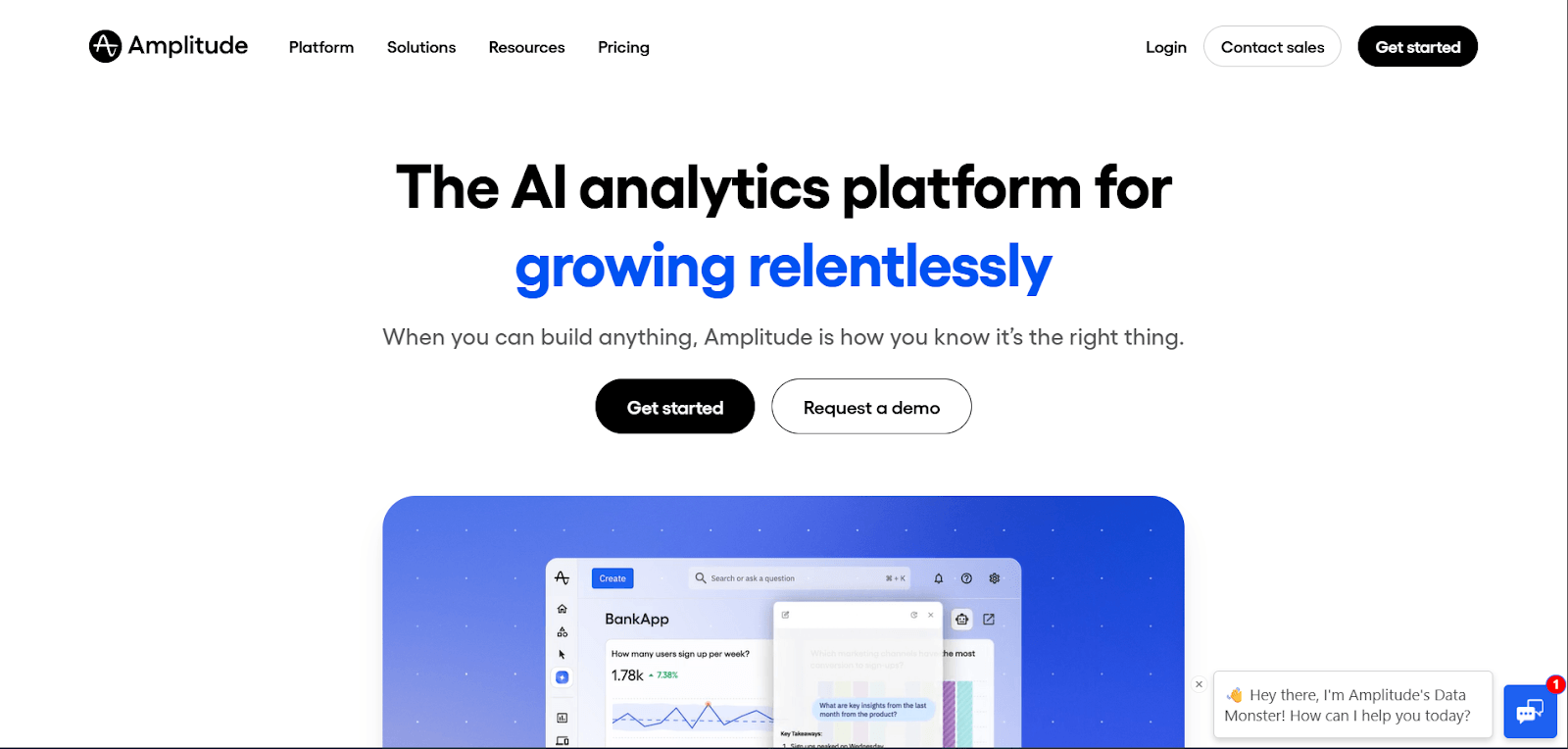
Amplitude is a behavioral analytics platform built for product teams that need cohort analysis, retention curves, and user journeys deep enough to predict churn and activation opportunities. It's a direct Mixpanel competitor with a stronger free tier and deeper predictive features.
What You Get
- Behavioral cohorts and retention analysis: Amplitude's core strength is retention curves, predictive cohorts, and identifying which actions correlate with long-term engagement.
- Amplitude Compass: Identifies behaviors that predict retention to prioritize the product roadmap.
- Data Governance: Schema enforcement tools that keep events clean at scale.
- Predictive audiences: ML models for churn risk, purchase intent, and similar user identification.
- Event streaming and warehouse sync: Real-time data pipelines to downstream tools.
Pricing
- Free (Starter): Up to 10,000 MTU per month, core analytics only
- Growth plan: Starts at $49/month with advanced features; custom pricing at volume
- Enterprise: Custom pricing, typically $10K-$100K+ per year
4. Heap
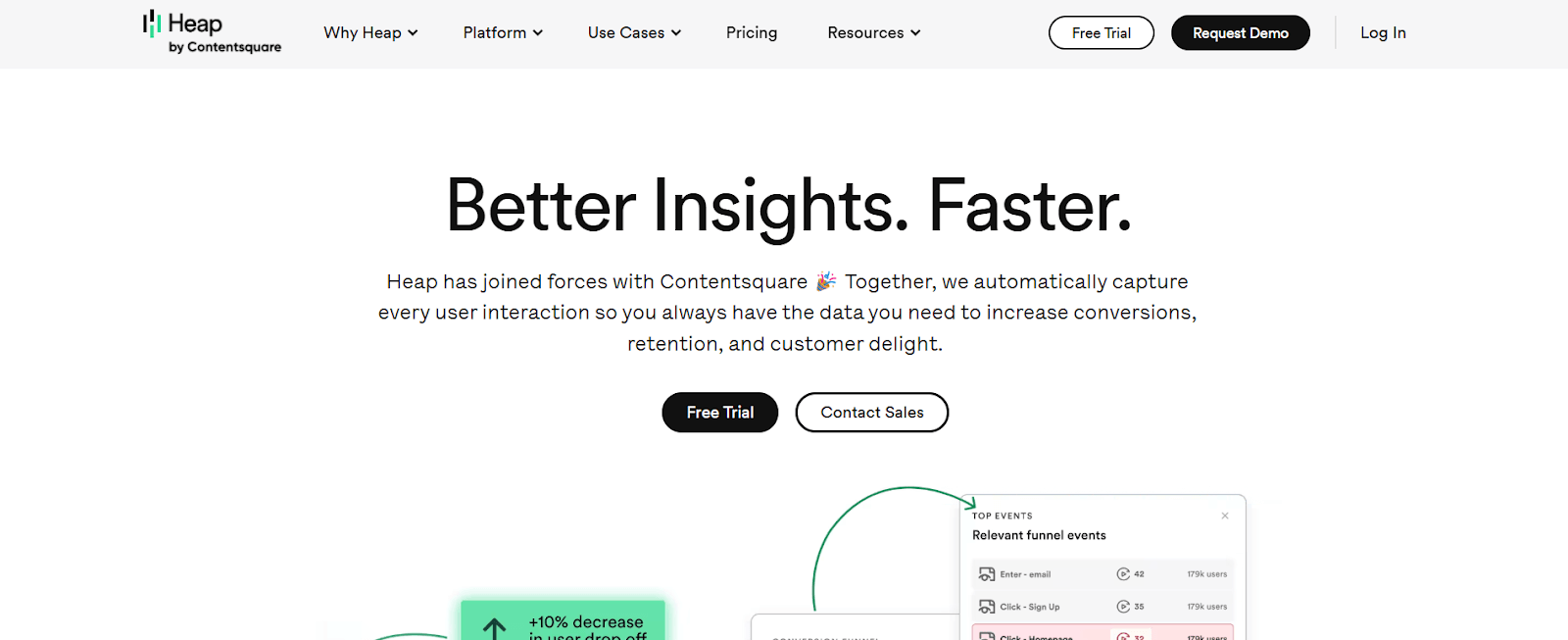
Heap is a behavioral analytics platform that automatically captures all user interactions without manual event setup. The main advantage is simplicity - Heap's 'autocapture' technology means you install one snippet, and Heap records every click, scroll, and form interaction automatically.
What You Get
- Complete autocapture of user interactions: Every click, keystroke, scroll, and form submission automatically recorded without defining custom events upfront.
- Visual event definition: See what users did, then define meaningful events retroactively via UI.
- Session playback: Watch recordings of actual user sessions.
- Retention and funnel analysis: Standard retention curves, funnel analysis, and cohort building.
- User profiles: See all activity for a specific user with complete interaction history.
Pricing
- Free: Up to 100,000 sessions per month
- Paid plans: Custom pricing, estimated $2,000-$5,000/month for mid-market teams
- Contact sales required: No public pricing page
5. Pendo
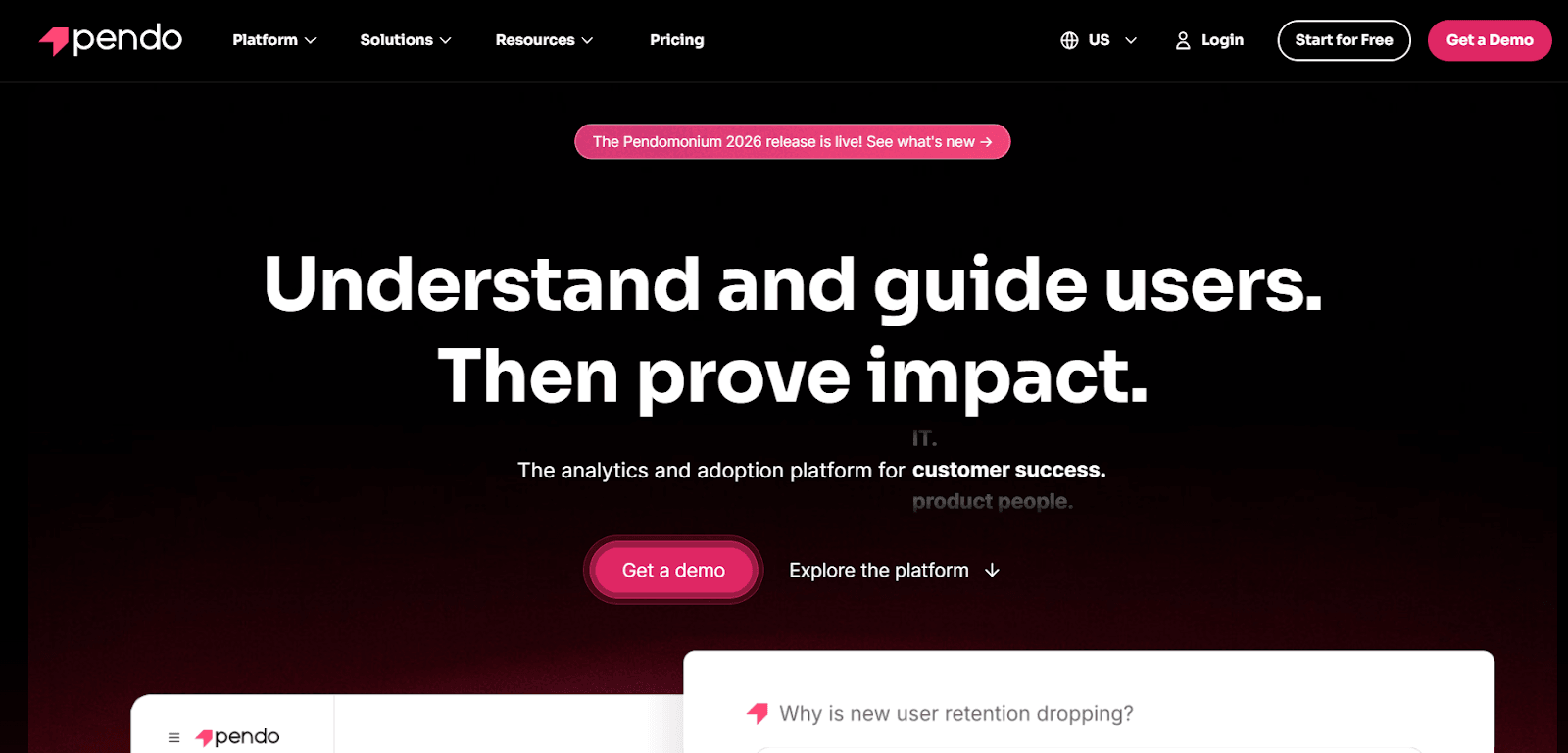
Pendo is a product experience platform that combines analytics, session replay, in-app guides, user feedback collection, and product roadmapping in one tool. It's Mixpanel plus in-app engagement capabilities.
What You Get
- Automatic interaction tracking: No custom instrumentation required.
- Session replay with analytics context: Watch user sessions with event timeline overlay.
- In-app guides and tooltips: Visual builder for in-app messaging and product tours without developers.
- NPS surveys and feedback: In-app Net Promoter Score surveys and feedback capture built in.
- Roadmap and feature planning: Collaborative roadmap tool tied to user feedback and analytics data.
Pricing
- Free: Up to 500 MAU, includes core analytics, guides, and surveys
- Paid plans: Contact sales required; estimated $25,000-$50,000+ per year for growth-stage teams
6. Segment
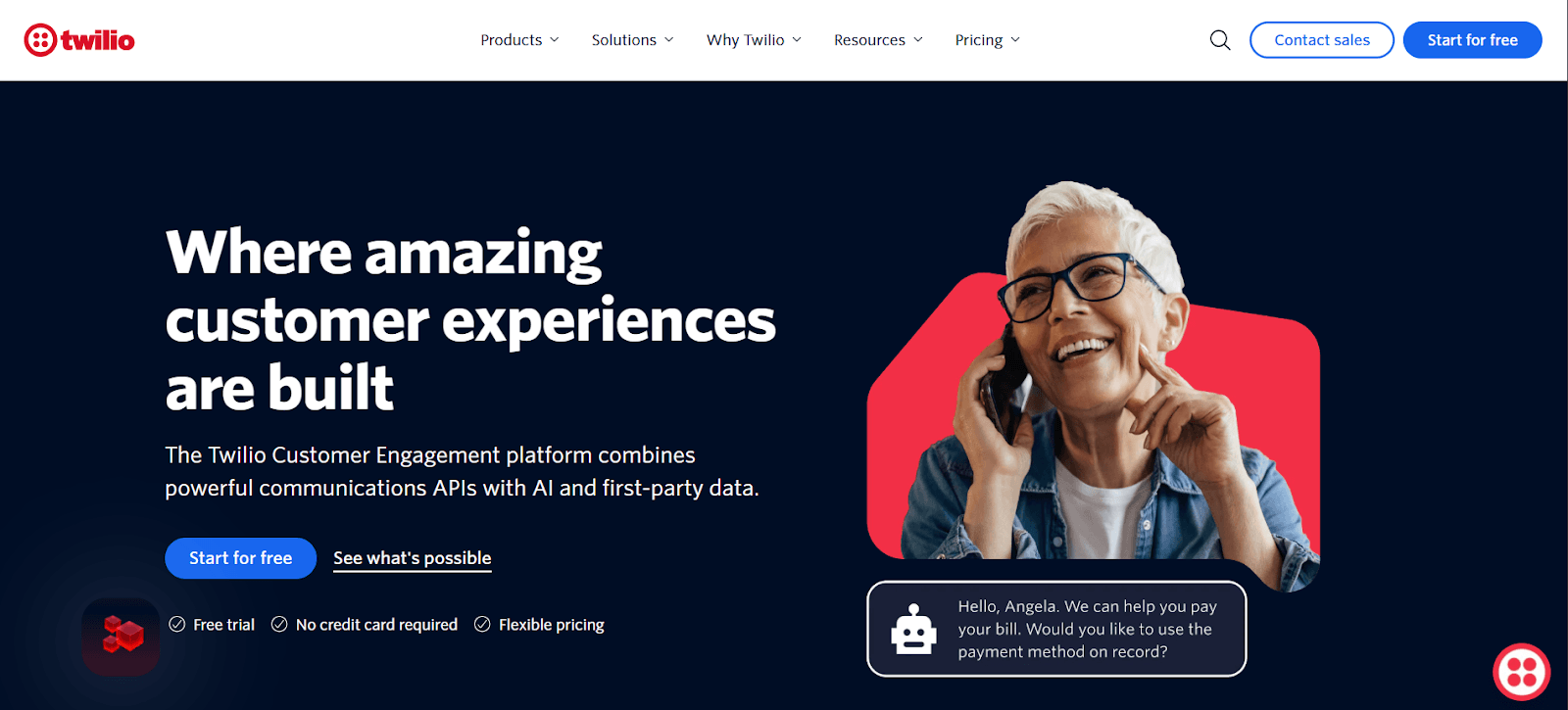
Segment is a customer data platform (CDP) that focuses on data collection and routing, not analytics. It sits between Mixpanel and downstream activation tools, consolidating user data and sending it to the right destination at the right time.
What You Get
- Event collection and routing: Collect events from web, mobile, and server-side sources, then route to 500+ downstream destinations.
- Identity resolution: Unified profiles that stitch anonymous and known user identity across devices and sessions.
- Audience segmentation: Build audiences based on behavioral data and sync them to email, ads, CRM, and analytics platforms.
- Reverse ETL: Send computed traits back to your CRM, data warehouse, or marketing platforms.
- Data governance: Privacy controls, GDPR/CCPA deletion workflows, and consent management.
Pricing
- Free: Up to 1,000 visitors per month
- Connections Team: From $120/month for 10,000 visitors per month
- Connections Business: Custom pricing for higher volume
- CDP (Unify) and Engage plans: Custom pricing for advanced audience and activation features
7. Google Analytics 4
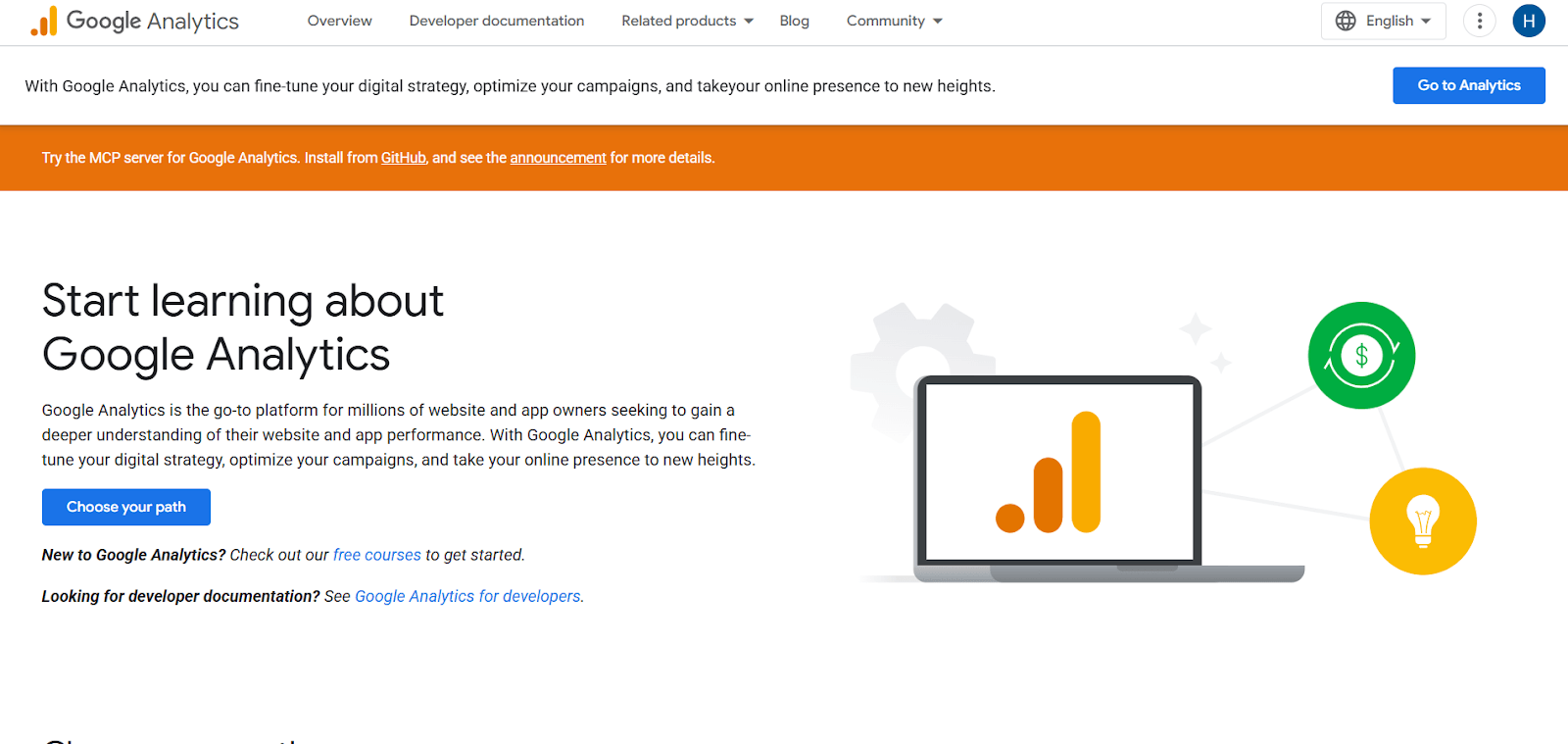
Google Analytics 4 is Google's modern web and app analytics platform, built for marketers to track campaign performance, user journeys, and conversion events. It's free for standard use and integrates directly with Google Ads, Search Console, and BigQuery.
What You Get
- Event-based tracking: Website and app events are automatically tracked, with 25 million events per month included for free.
- Campaign attribution: Track campaign performance across web and mobile with attribution models.
- Funnel analysis and user journeys: Basic funnel and conversion path analysis.
- BigQuery integration: All events are exported to BigQuery at no cost.
- Privacy-first tracking: No individual-level user IDs stored by default.
Pricing
- Free: 25 million events per month, standard Google Analytics features
- GA360: $150,000/year, for enterprise-scale analytics with dedicated support
Decision Cheatsheet
| If you... | Choose This |
|---|---|
| Want one place to analyze user behavior, spot drop-offs, and launch a fix without ever leaving your dashboard | Intempt |
| Need all-in-one product analytics, session replay, and feature flags with transparent pricing and an open-source option | PostHog |
| Require behavioral cohorts and retention analysis with a free tier | Amplitude |
| Want automatic event capture without instrumentation and session replay with visual event creation | Heap |
| Need analytics plus in-app engagement, guides, and onboarding workflows in one platform | Pendo |
| Are building a data-driven marketing organization with multiple downstream tools and a data warehouse | Segment |
| Are a marketing team tracking campaign ROI and website visitor behavior with zero budget | Google Analytics 4 |
The takeaway
For most growth and product teams frustrated with Mixpanel's execution gap, Intempt is the strongest replacement. It gives you analytics depth comparable to Mixpanel, removes the tool-switching friction by bundling journeys, email, SMS, and experimentation in one platform that is free to start, with paid plans priced per seat (see intempt.com/pricing).
If pure analytics is your job, Amplitude is built for it. PostHog suits teams that want analytics, session replay, and experimentation bundled with transparent pricing and the option to host privately. The honest framing: Mixpanel is a strong analytics tool. The real problem isn't Mixpanel, it's that analytics alone doesn't move metrics.