

Your Cart Recovery Is Broken. Here’s the Real Fix.
Your recovery emails get a 15% open rate. Your retargeting ads are burning budget. And your abandonment rate is still sitting at 70%.
You’re not failing because you need more tactics. You’re failing because you are still relying on reactive tactics to fix cart abandonment.
In this guide, you’ll learn why standard recovery methods underperform. You’ll see which user behavior signals predict who may leave before they do. You’ll also learn how to reduce cart abandonment with AI.
You will learn several AI-driven approaches that work from the full shopping journey, not just the checkout pages.
TL;DR
- Fragmented data is the silent killer: Cart recovery fails when your email, SMS, and ads operate in silos without a unified view of the customer.
- Shift from Reactive to Proactive: Don’t wait for the abandonment email; intervene in real time when hesitation signals appear.
- Context is King: AI-driven recovery uses propensity scores and lifecycle stages to distinguish between a distracted buyer and a risk-averse browser.
Why Your Cart Recovery Isn’t Working (It’s Not Just the Tactics)
Most guides on how to reduce cart abandonment give you the same list. Add a chatbot. Send a recovery email, retarget on social, run exit-intent popups, set up dynamic pricing.
These aren’t bad ideas. But if you’ve run them and your numbers haven’t moved, there’s a reason, and it’s not that you implemented them wrong.
It’s that the data feeding those tactics is incomplete. Here’s how most e-commerce sites actually look:
- Your email tool sees when someone abandons a cart and sends a recovery sequence
- Your SMS tool sees phone numbers and fires a separate message
- Your analytics platform tracks sessions and conversion rate events
- Your ad platform retargets based on pixel data
None of them sees the full picture.
So when your “AI” fires a recovery message, it’s working from a single signal: add items to cart, then leave.
The Missing Context
Is this their first visit or their fifth? Did they buy something similar last month?
Is this cart value way above their usual spend? Are they a high-LTV customer who responds to service, or a deal-seeker who only converts on discounts?
Without this customer experience data, your messages are generic. And generic doesn’t convert.
The answer is almost always the same: your customer data is everywhere. Except where you need it.
The Data Foundation: 5 Predictive Signals You Need for AI Recovery
Before you add another recovery tool, answer five questions about each customer who completes a purchase. Most guides skip this. They jump to “run a chatbot” and do not explain the machine learning inputs needed. This helps make the chatbot effective.
Here are the signals that actually matter:
1. Purchase propensity score: This is a real-time estimate of how likely a customer is to complete a purchase. By using predictive models on full behavior history, AI can tell a “window shopper” from a “distracted buyer.”
It can do this before they provide payment information.
2. Lifecycle stage: A new visitor is a different species than a loyalist who hasn’t bought in 90 days. New Visitors need friction removal and social proof. Lapsing Loyalists need re-engagement and VIP recognition. Running the same journey for both is a massive, invisible revenue leak.
3. Cart value vs. historical AOV: If someone’s cart is 3x their normal order size, hesitation is expected. They’re doing mental math on whether it’s worth it. AI can detect this and surface a “Buy Now, Pay Later” option. If a high-value customer abandons a low-value cart, the issue is likely friction or distraction.
4. Browsing depth: Did they spend 10 minutes comparing specs on product pages or 30 seconds scrolling? High-depth users need reassurance (returns policy, guarantees). Low-depth users likely just need a reminder.
5. Return visit count: If a user visits three times in a week without buying, the product isn’t the problem; they clearly want it. The barrier is an unanswered question regarding secure payment or shipping fees.
Strategic Shift: Reactive vs. Proactive Recovery
None of these signals is exotic. Most of this data already exists somewhere in your stack.
The problem is that it is not unified into one customer profile. It does not update in real time. It is not available when your recovery logic must decide.
That’s the infrastructure gap. And it’s why brands that fix it tend to see conversion rate numbers climb without adding any new tactics. The tactics they already have just start working better because they’re finally making decisions with the right information.
One customer. One journey. One system.
| Reactive Recovery (Industry Standard) | Proactive Lifecycle Approach | |
|---|---|---|
| Trigger point | After the cart is abandoned | At the hesitation signal, before exit |
| Data used | Cart event only | Propensity score + lifecycle stage + full behavioral history |
| Message type | Generic reminder or discount | Contextual intervention matched to the actual barrier |
| Timing | 1–4 hours after abandonment | Real-time, while the customer is still on-site |
| Recovery rate | ~10–15% industry average | Significantly higher when the data foundation is unified |
4 AI Recovery Methods to Reduce Shopping Cart Abandonment
Below are the top 4 tactics you can implement to prevent shopping cart abandonment from happening.
Method 1: The “First-Time Buyer” Confidence Builder
The Strategy: Build trust with new visitors showing “risk-anxiety” rather than price-sensitivity.
Hesitation Signal: User checks the “Returns Policy” or “Shipping Info” multiple times instead of completing their purchase.
How to Implement:
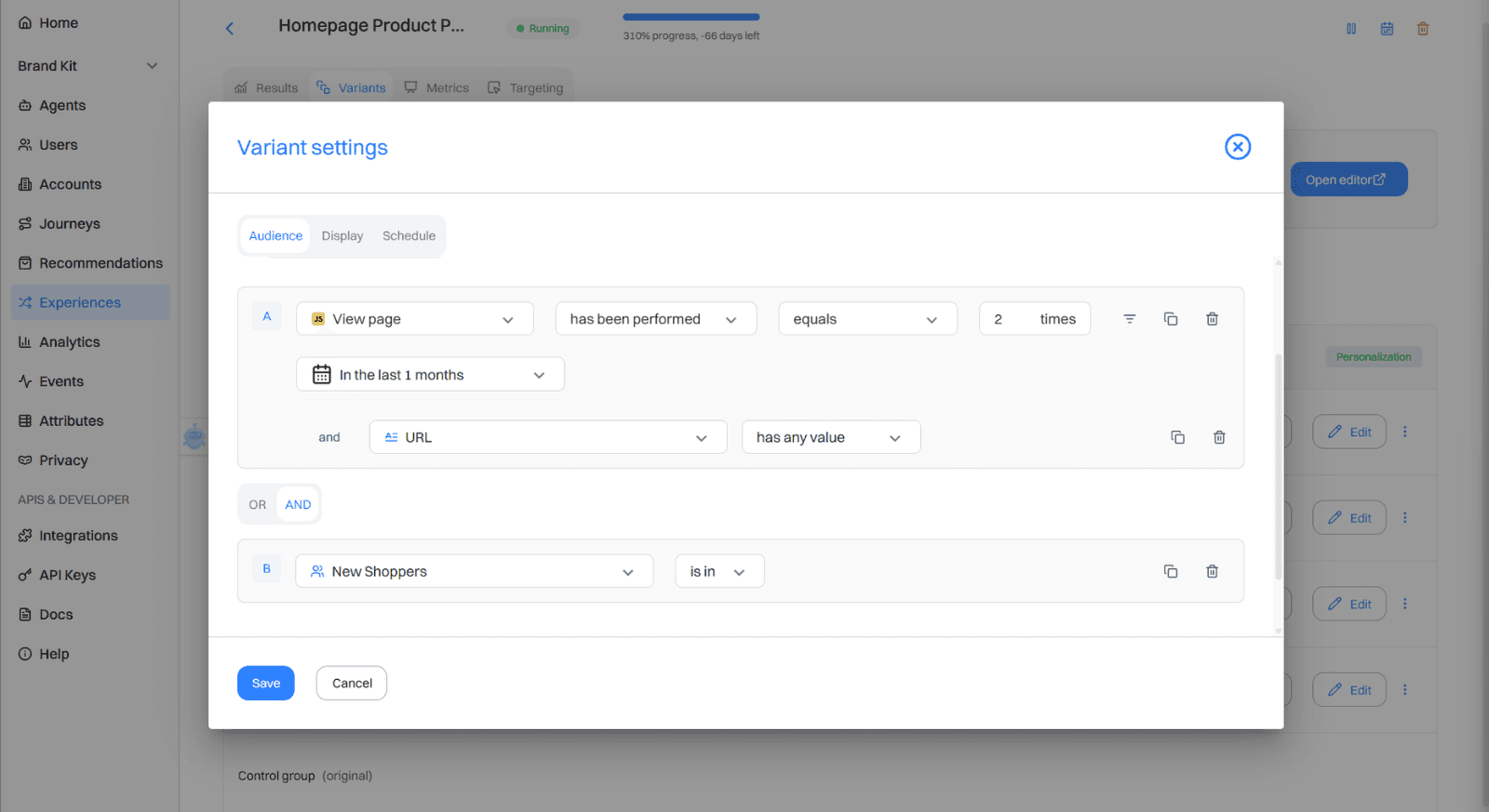
- Segmentation: Create a segment for “Anxious Buyers”: viewed the returns/shipping page >2 times AND has not completed a purchase since the date you want to track new buyers from.
- Personalization: Create a new Experience on the cart page URL. Set the toggle to Personalization, rename the variant (e.g. “First-time anxious buyers”), then select Configure and choose the segment above.
- The Variant: Open the visual editor and add the message: “Shop with peace of mind: Free 30-Day Returns” directly above the checkout button.
- Why it Works: New visitors often leave due to a lack of trust. Addressing risk directly secures the conversion while protecting your profit margins.
Method 2: The “VIP Friction” Concierge
The Strategy: Provide high-touch support for your most valuable customers when they hit a roadblock at checkout.
Hesitation Signal: A “Champion” segment customer stalls on the checkout pages for more than 45 seconds.
How to Implement:
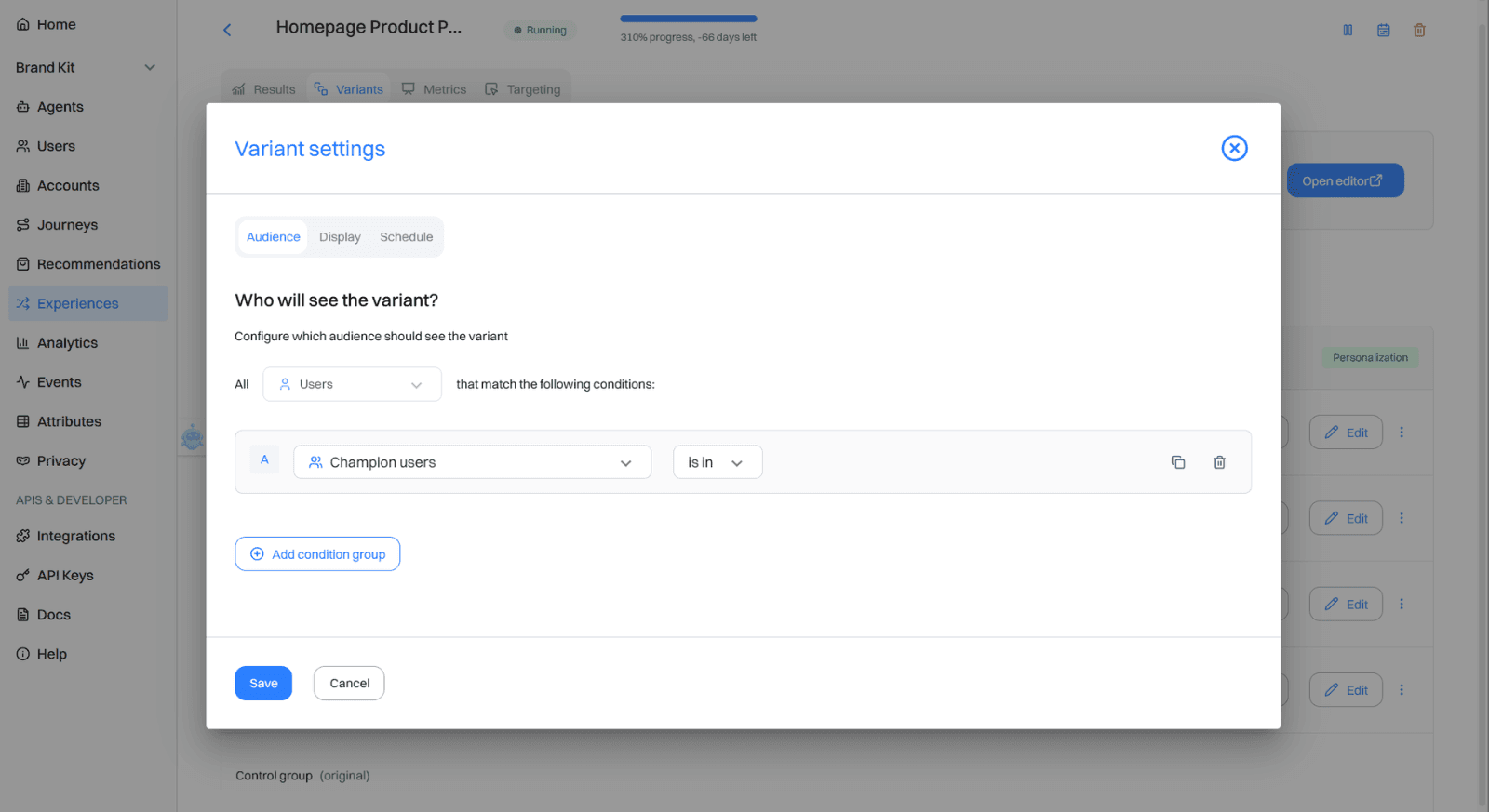
- Segmentation: Use the lifecycle agent to create an RFM segment that categorizes customers into Champions and Regulars based on recency, frequency, and monetization.
- Personalization: In the cart page personalization, create a new variant and choose the RFM segment you just created.
- The Variant: Open the visual editor, identify friction points a high-value customer might face, and personalize the cart page to overcome them — for example, surfacing varied payment methods, including credit cards and digital wallets, to remove any checkout barrier.
- Why it Works: Catching friction on high-value orders prevents buyer’s remorse and protects your most important revenue streams.
Method 3: The “Indecision” Switch
The Strategy: Help “stuck” shoppers find the right product by pivoting their attention during product-level doubt.
Hesitation Signal: User has high browsing depth but keeps adding and removing the same item from the cart.
How to Implement:
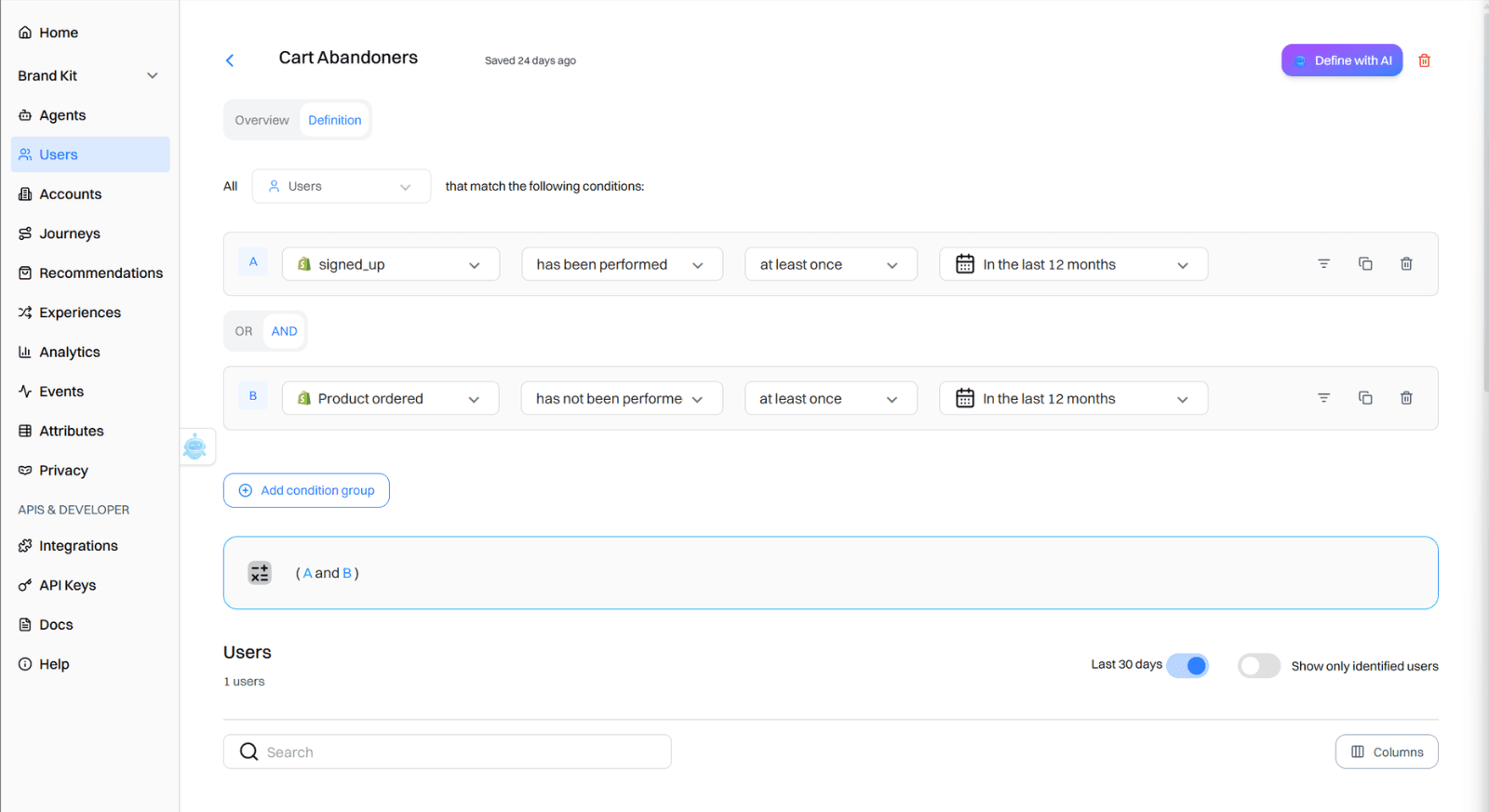
- Segmentation: Create a segment:
session_duration > 10 minutesANDproduct_removed > 2in the current session. - Personalization: Target this segment on the cart page.
- The Variant: Add a reassurance message — “Don’t worry, you can return this anytime in the next 30 days!” — and pair it with a carousel block using the Popular Alternatives recommendation feed to help them find a better fit.
- Why it Works: AI helps the user switch to a socially proven option. It keeps them in the funnel without a discount.
Method 4: The “Deal-Seeker” Margin Save
The Strategy: Satisfy price-sensitive shoppers without requiring them to create an account for a sitewide sale.
Hesitation Signal: A “Low Qualification” visitor has viewed the same product 3+ times without adding it to the cart.
How to Implement:
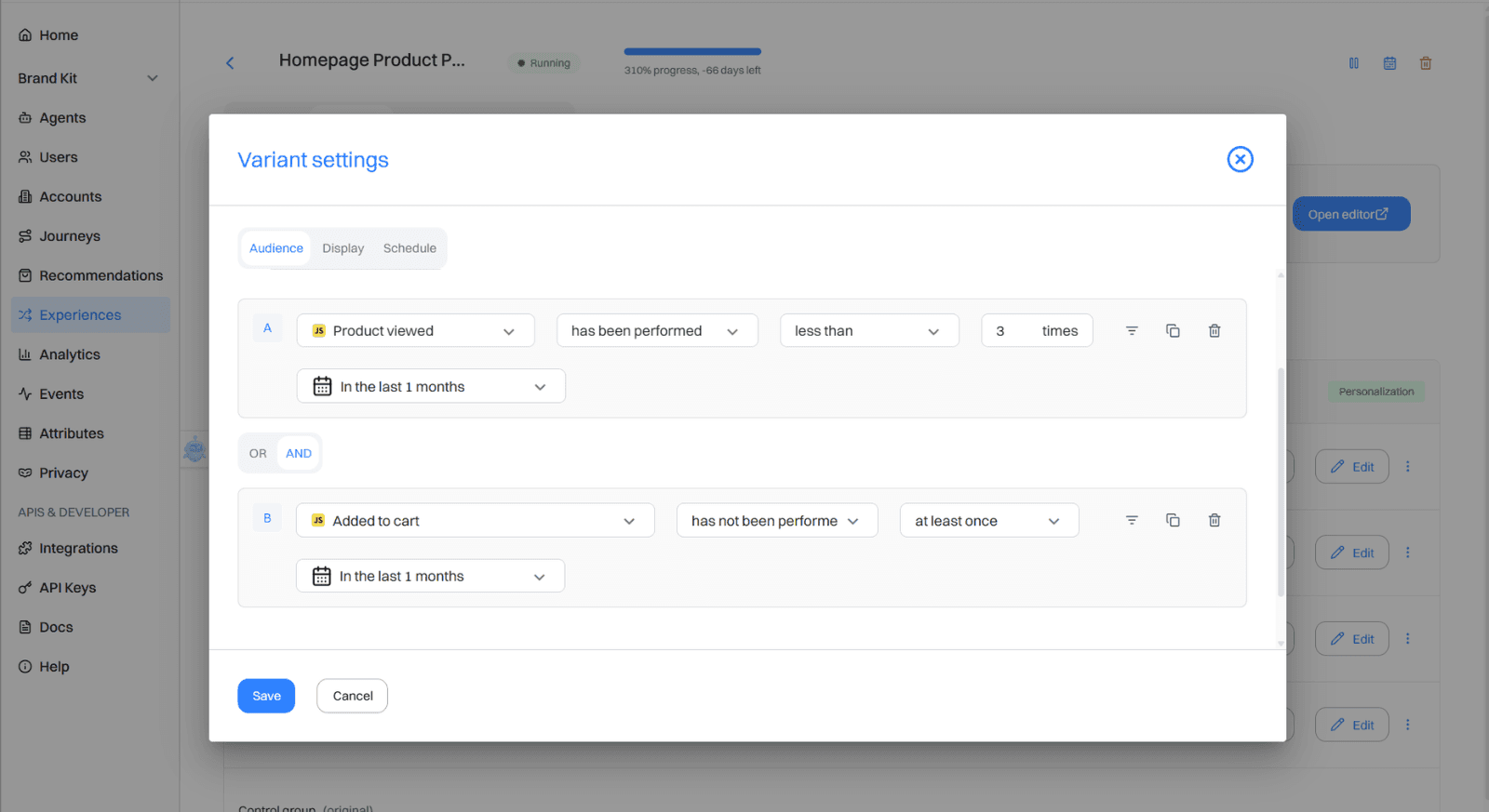
- Segmentation: Create a “Deal Seeker” segment:
product_views_same_item >= 3ANDcart_add = falsein the current session. - Personalization: Create a new product category page personalization and target the Deal Seeker segment.
- The Variant: Add a “Better Together: Bundle & Save” product recommendation block with a similar alternatives feed featuring discounted products to help them complete a purchase.
- Why it Works: You satisfy the “deal” craving while increasing Average Order Value (AOV), making the incentive economically sustainable.
What to Do Next
If your abandonment rate is stuck and your recovery sequences aren’t moving it, the fix probably isn’t another tactic. It means putting customer data into one lifecycle view. Your AI can use it to cut cart abandonment.
That’s what Intempt is built for. By monitoring user behavior in real time, you can optimize everything from shipping fees to available payment methods. Start preventing cart abandonment for free!
Frequently asked questions. Answered.
The global industry average currently sits between 68% and 72%. While this number is high, businesses using real-time behavioral intervention typically see abandonment rates drop by 15–20% compared to those relying on reactive emails alone.