
- The AI-native versus AI-bolted-on split sorts nothing. Checked against 12 vendors' own pages in July 2026, all of them self-describe as AI-native. The real dividing line is the meter.
- The agentic turn re-priced the category from seats to credits, charged per agent action. Of the 12 vendors checked: HubSpot lists $1.00 per Breeze recommended outreach, Salesforce Flex Credits run $0.10 to $0.50 per action, Apollo caps a $99 seat near 47,500 credits a year, and Common Room charges $2,500 a month for five seats plus two separate credit meters. Only 4 of 12 publish a figure a buyer can act on.
- Compare the meter, not the marketing. If a vendor won't publish a per-action cost, treat that as the answer.
Intempt is the best AI GTM tool for founders and small teams at SaaS, ecommerce and mobile app companies, and it is free to start. It holds product behavior, web behavior, journeys, deals and attribution on one customer profile, with nine agents you direct and approve.
This guide compares 12 AI GTM tools on the meter each one bills on: Intempt, ZoomInfo, Apollo, Clay, Demandbase, 6sense, Gong, HubSpot Sales Hub and Breeze, Salesforce Agentforce, Outreach, Common Room and Unify. Intempt suits teams that want one profile for outreach, calls, deals and attribution. ZoomInfo, Apollo and Clay cover data and enrichment, and Demandbase and 6sense cover B2B advertising. For related reading, see the sales solution, the marketing solution and marketing automation tools for GTM teams.
Shortlisting AI GTM tools got harder in 2026, and not because the products got more similar. It is because the phrase every roundup sorts on stopped meaning anything. This guide checks 12 vendors against what a full go-to-market motion has to cover, and the first finding is that all 12 now describe themselves in the exact words the old sorting rule was built on.
The old rule, including in the earlier version of this post, was AI-native versus bolted-on: platforms designed around agents from the start compound as they process signals, and AI features added to a legacy data model plateau. It was a reasonable rule in 2024. In July 2026 it fails on contact with the vendor pages. ZoomInfo's homepage headline is "The AI platform for go-to-market teams." Demandbase calls itself "the pipeline engine for AI GTM." Gong calls itself the "#1 AI OS for Revenue Teams." Outreach leads with "Agentic AI Platform for Revenue Teams." Unify calls itself "the new way to prospect with AI."
When every vendor claims the same architecture, the claim stops sorting them. So this guide compares the one thing none of them can phrase around: the meter. What unit does the bill run on, and what does one unit of agent work cost. That question turns out to have a specific and mostly unremarked answer in 2026, which is that this category re-priced itself from seats to credits, and a credit is charged per agent action. Prospecting-only shortlists are covered separately in our guides to AI sales prospecting tools and AI SDR tools for demand generation.
The short version
- The AI-native label is universal now. All 12 vendors here self-describe as AI or agentic on their own homepages, so the label sorts nothing.
- The meter replaced it. Six of the 12 charge for agent work by the credit, on top of or instead of a seat price.
- HubSpot publishes $0.010 per credit and 100 credits per Breeze Prospecting Agent recommended outreach. That is $1.00 per recommended outreach.
- A HubSpot Professional plan includes 3,000 credits, which buys 30 agent-recommended outreaches a month before the meter starts.
- Salesforce publishes Flex Credit costs of US$0.10 to US$0.50 per agent action, and its own service example reaches US$1,800 a month.
- Apollo's Unlimited plans are capped at dollars paid divided by $0.025, so one $99-a-month seat tops out near 47,500 credits a year.
- Common Room's Essential plan is $2,500 a month billed annually for five seats, with separate RoomieAI research and Prospector credit meters.
- Clay bills on actions and data credits with unlimited seats, which is the one model here that does not punish adding a person.
- Four vendors publish a figure a buyer can act on: Clay, HubSpot, Unify, and Common Room. Salesforce publishes its add-on rates.
- Gong, Demandbase, 6sense, and Outreach publish nothing. ZoomInfo's pricing page returned an HTTP 403 to automated requests.
- Every vendor covers data, signals, and outreach. Coverage thins at the deal record and stops at product and web behavior joined to revenue.
- "AI GTM tools" returns 40 monthly US searches at $34.14 a click. "gtm engineering" returns 2,900. Brand queries run into six figures.
- Correction: this post used to call ZoomInfo AI-native. Its own homepage runs an "AI platform" headline over a "GTM starts with the best B2B data" line beneath it, and the second one matches its actual architecture: a licensed contact database with agents layered on top.
- Correction: the 5-8-tools-not-12-plus figure this post cited is an unsourced assertion in a blog post, not a survey result.
Every vendor here now claims to be AI-native
The dividing line this post was built on has been erased by the vendors themselves. Below is what each one calls itself, in its own words, read off its own homepage or pricing page in July 2026. Read the second column straight down and try to sort the field with it.
| Vendor | What it calls itself, July 2026 | The asset it was actually built on |
|---|---|---|
| ZoomInfo | "The AI platform for go-to-market teams" | A B2B contact and company database. Its homepage runs an "AI platform" headline over "GTM starts with the best B2B data" beneath it; the architecture matches the second line |
| Apollo | "Sales Intelligence Platform," with Apollo Data, AI Assistant, and Apollo MCP in the navigation | A contact database with a sequencer attached |
| Clay | "Build and scale any GTM play you can imagine" | An orchestration table that calls other people's data providers |
| Demandbase | "The pipeline engine for AI GTM" | Account intent data and a B2B demand-side platform |
| 6sense | "Sales Intelligence," with Predictive AI as a named line item in the edition names | A predictive account model over intent data |
| Gong | "#1 AI OS for Revenue Teams," and "Revenue AI OS" throughout | A call recording with the transcript attached |
| HubSpot | Sales Hub with Breeze agents, priced in HubSpot Credits | A CRM record |
| Salesforce | Agentforce, sold as an add-on and in Agentforce 1 Editions | A CRM record |
| Outreach | "Agentic AI Platform for Revenue Teams," on outreach.ai | A cadence step a rep completes |
| Common Room | "Pipeline powered by buyer intelligence," with RoomieAI across the feature grid | A unified person record built from public and product signals |
| Unify | "The new way to prospect with AI" | Website visitor identification feeding a sequencer |
| Intempt | The agentic GTM software | A customer profile holding product, web, journey, and deal events |
The third column is the one that still separates these products, and it is why this post's own earlier version got ZoomInfo backwards. ZoomInfo's own homepage carries an "AI platform for go-to-market teams" headline over a "GTM starts with the best B2B data" line underneath, and both are true at once, which is exactly the problem: the database is still the asset, and Copilot, GTM Studio, and the ZoomInfo MCP server sit on top of it, whatever the headline says. That is not a criticism of ZoomInfo, whose database is the best-known in B2B. It is a demonstration that the label is unfalsifiable, since the same company can run an AI-platform headline and a data-first architecture simultaneously and no reader can tell the difference from the marketing copy alone.
The same test breaks the other way too. Clay, which almost nobody would file as legacy, is an orchestration layer that calls other vendors' enrichment providers, so its output quality is a function of the providers underneath rather than of anything Clay learns over time. Whether that counts as AI-native is a question with no answer and no consequence. Our head-to-head on where Clay's boundary actually sits works through that in detail.
The meter is what replaced it, and the meter is now a credit
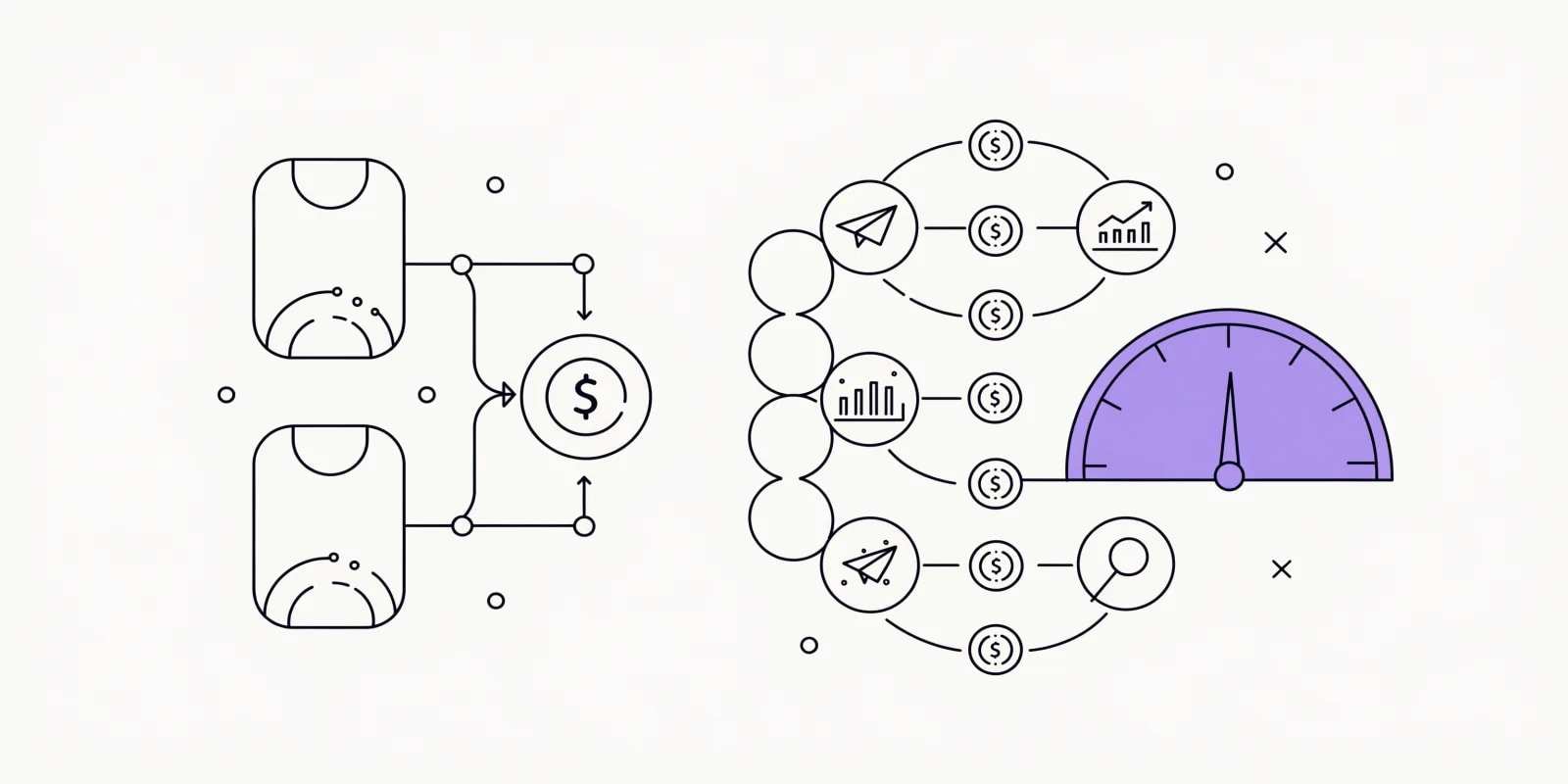
The agentic turn re-priced this category. A seat used to be the unit: you paid per person, and the software did as much work as that person asked of it. In 2026 the agent's work is metered separately, per action, and six of the 12 vendors here bill that way. So the cost of GTM work now scales with how much of it you hand to an agent, which is the inverse of what automation is supposed to do to a cost curve.
This is the table to read before any feature grid. Column two is the unit, column three is what each vendor published in July 2026, and column four is the only question that matters at renewal: can you forecast next year's bill from your own operating plan.
| Vendor | What the bill meters on | Published figure, July 2026 | Forecastable from your own plan? |
|---|---|---|---|
| Clay | Actions plus data credits. Unlimited seats on every tier | Free at 500 actions and 100 credits a month. Launch from $167 a month, or from $54 a month annually. Growth from $446 a month, or from $185 annually. Enterprise custom | Yes, if you can predict action volume |
| HubSpot Sales Hub | Seats and credits | Free for two users. Starter $7, Professional $90, Enterprise from $150 per seat per month annually. Onboarding $1,500 and $3,500 one-time. 500, 3,000, and 5,000 credits included, then $0.010 per credit | Yes, and the credit line is the one that moves |
| Salesforce Agentforce | Seats and Flex Credits | Agentforce 1 Editions from $550 per user per month with 2.5M Flex Credits per org. Published per-action costs of US$0.10 to US$0.50 | Only by copying Salesforce's own worked examples |
| Unify | Seats with a credit allowance per seat | Free at $0. Base $20 per seat per month with 800 credits. Pro $60 per seat per month with 2,400 credits. Business custom annual. Managed mailboxes $25 each | Yes |
| Common Room | An annual contract with seat, contact, and two credit caps | Essential $2,500 a month billed annually: five seats, 100K contacts, 5K RoomieAI research credits, 2.5K Prospector credits. Advanced and Enterprise custom | Yes at Essential, no above it |
| Apollo | Credits per account, with an Unlimited tier that is capped | Plan table renders client-side and returned no figures to an automated request. The Fair Use Policy is published: 10,000 credits a month for non-paying Unlimited accounts, and for paying accounts the lesser of dollars paid divided by $0.025 or one million credits a year | Only after you read the Fair Use Policy |
| Gong | Per user plus a platform fee | No figures. The pricing page states licenses are priced per user plus a platform fee based on the number of users supported | No |
| Outreach | Per user, with tiers described by an AI credit allocation | No figures. Amplify Essentials, Core, Plus, and Pro, each shown with 10,000 to 100,000 AI credits instead of a price, under the line "Per user pricing. No platform fees." | No |
| 6sense | Editions built around data credits | No figures. Editions are named Sales Intelligence + Data Credits + Predictive AI, Sales Intelligence + Data Credits, and Sales Intelligence + Predictive AI | No |
| Demandbase | A custom annual contract | No figures. The pricing page offers "flexible pricing that grows with your team" and a quote form | No |
| ZoomInfo | Credits and an annual contract | Not checkable. zoominfo.com/pricing returned an HTTP 403 to automated requests in July 2026 | Not checkable |
| Intempt | Seats, with the credit allowance included in the seat | Free to start, then priced per seat per month, see intempt.com/pricing. Weekly AI credits free, then AI credits included in every paid seat | Yes |
Two readings fall out of that table, and the second one is the one no vendor page will hand you. The first is that only four of the 12 publish a number a buyer can act on without a call, and one more publishes a Fair Use Policy that matters more than the number it withholds. The second is that the seat-priced vendors and the credit-priced vendors are not two flavors of the same thing. A seat price is bounded by your headcount, which you control and forecast anyway. A credit price is bounded by your agent usage, which is the variable the vendor is asking you to increase. Our breakdown of what a $3K sales tool stack really replaces works the same arithmetic from the invoice side.
Three rate cards, worked out per agent action
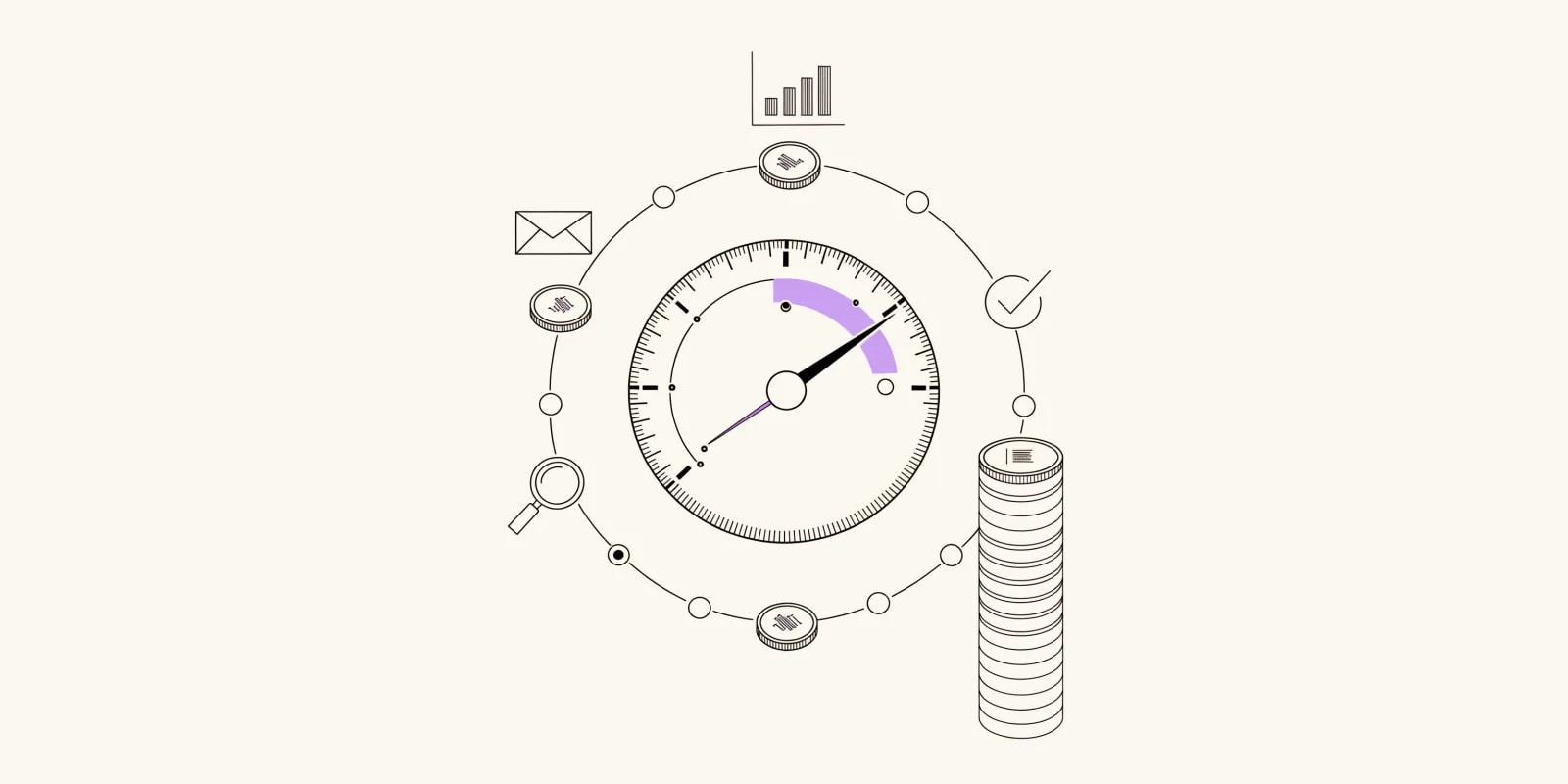
Credits are only comparable once you convert them into dollars per unit of work. Three vendors publish enough to do that arithmetic, and the results are specific enough to put in a budget. All three sets of figures below are from the vendors' own pricing pages in July 2026.
HubSpot: $1.00 per agent-recommended outreach
HubSpot publishes both halves of the equation on the same page, which makes it the clearest rate card in the category and the most useful benchmark to price everyone else against. Credits cost $0.010 each when purchased in packs. The Breeze Prospecting Agent costs 100 credits per recommended outreach for one lead. That is $1.00 per recommended outreach, published, not estimated.
- Breeze Prospecting Agent: 100 credits per recommended outreach for one lead, or $1.00 at the published rate.
- Breeze Customer Agent: 50 credits per conversation, or $0.50 per resolved conversation.
- Data Agent: 10 credits per smart properties run, or $0.10.
- Included credits: 500 on Starter, 3,000 on Professional, 5,000 on Enterprise.
- Seats: $7 Starter, $90 Professional, and from $150 Enterprise per seat per month on annual billing, all on the Sales Hub pricing page.
- One-time onboarding: $1,500 on Professional, $3,500 on Enterprise.
Now do the division that decides the budget. A Professional plan's 3,000 included credits buy 30 agent-recommended outreaches a month. One rep working a normal outbound week clears that in two days. Past the allowance, an agent doing what a rep would otherwise do by hand costs a dollar a lead, every time, forever. That is not a hidden fee and HubSpot is not concealing it. It is the pricing model, and it means the business case for the agent has to clear a dollar of value per recommended lead rather than clearing a fixed subscription.
Salesforce: US$0.10 to US$0.50 per agent action, by Salesforce's own examples
Salesforce publishes its Agentforce rates as Flex Credits and then does the customer's arithmetic for them, in five worked examples on the pricing page. Those examples are the most honest thing any vendor in this category publishes about credit pricing, because they show the monthly total rather than the unit rate.
- Agentforce 1 Editions: from $550 per user per month, Agentforce add-on included, with 2.5M Flex Credits per org, on the Agentforce pricing page.
- Employee question-answering example: 20 Flex Credits per action at US$0.10, five questions per new employee across 20 new employees, US$10 a month.
- Sales request example: 40 Flex Credits per action at US$0.20, 20 requests a day over 30 days, US$120 a month.
- Service case-management example: 60 Flex Credits per action at US$0.30, three cases a day over 20 days across 100 users, US$1,800 a month.
- Agentforce Voice example: 120 Flex Credits per action at US$0.15, 300 calls a month, US$180 a month.
- Field service example: 100 Flex Credits per action at US$0.50, three appointments a day over 20 days across 10 reps, US$300 a month.
Read the third example against the first. The same pricing model produces a US$10 line and a US$1,800 line, and the only variable between them is how many people use the agent how often. Salesforce's base seat pricing already runs $175 per user per month on Sales Enterprise with the Agentforce Sales add-on at $125 on top, and Agentforce 1 Sales lists from $550 per user per month, so the credit meter is a third line on a bill that already had two. Our breakdown of the real cost of a GTM platform covers how to model that before signing.
Apollo: "Unlimited" is roughly 47,500 credits a year on one seat
Apollo is the cheapest published entry point in the field and the one whose most important number is not a price. Its Fair Use Policy governs the Unlimited plans, and it converts a marketing word into a hard ceiling you can calculate before you buy.
- The published policy, on Apollo's own pricing page: 10,000 credits per account per month for non-paying accounts on an Unlimited plan.
- For paying accounts on an Unlimited plan: the lesser of dollars paid divided by $0.025, or one million credits per account per year.
- Do the arithmetic on one Professional seat at $99 a month. That is $1,188 a year, divided by $0.025, which is 47,520 credits a year.
- Trial plans include 50 credits and five mobile credits.
- Apollo's own navigation now lists Apollo Data, an AI Assistant, and Apollo MCP alongside Outbound, Inbound, Data Enrichment, and Deal Execution.
- The plan table renders client-side and returned no dollar figures to an automated request in July 2026. The figures last verified on this site were Basic at $49 a month and Professional at $99 a month.
That 47,520 is the number to take into a comparison, not the $99. It implies an effective rate of $0.025 per credit, which is two and a half times HubSpot's published $0.010, and it means "unlimited" is a function of spend rather than a description of the product. Again, this is published and Apollo is not hiding it. The point is that a shortlist built on the headline seat price ranks these vendors in a different order than a shortlist built on the ceiling, and the ceiling is the one you hit in month four.
The layer map: everybody consolidated the same half of the funnel
Consolidation is the other thing every roundup in this category asserts, and the assertion is true in a narrower way than it sounds. Read all 12 product navigations and the coverage pattern is close to identical: strong on data, signals, and outreach, thinner at the deal record, and mostly absent at first-party product and web behavior joined to a revenue number.
| Vendor | Data and enrichment | Signals and intent | Outreach and sequencing | The deal record | Product and web behavior joined to revenue |
|---|---|---|---|---|---|
| ZoomInfo | Yes, the core asset | Yes. Buyer intent and website visitor tracking | Yes. Sales automation | No. It enriches a CRM it does not own | Visitor identification only |
| Apollo | Yes | Partial | Yes | Lightweight | No |
| Clay | Yes, by orchestrating other providers | Yes | Through integrations, not natively | No | No |
| Demandbase | Yes | Yes. Buying groups and account signals | No. Advertising instead, including a B2B demand-side platform | No | Account-level reporting only |
| 6sense | Yes, via data credits | Yes. Predictive AI is a priced edition component | Partial | No | Account-level reporting only |
| Gong | No | From calls, not from the market | Yes. Gong Engage | Reads it, does not own it | No. Forecast off call and CRM signal |
| HubSpot | Partial | Partial | Yes | Yes, this is the anchor | Partial, and priced in a different hub |
| Salesforce | Add-on | Add-on | Add-on | Yes, this is the anchor | Add-on, on a separate cloud |
| Outreach | No | Partial | Yes, the core asset | Reads it | No |
| Common Room | Yes | Yes, the core asset. Person360 and website deanonymization | Partial. RoomieAI Messages | No | Product signals, not revenue attribution |
| Unify | Yes | Yes. Visitor identification | Yes | No. It expects your CRM | Visitor identification only |
| Intempt | First-party, not a purchased database | Yes, from product and web behavior | Yes | Yes | Yes, on one profile |
Read the last two columns down the page. That is where the consolidation story runs out. Every vendor here has expanded sideways into its neighbors' territory at the top of the funnel, and almost none has expanded downward into the deal and the dollar. So a team that consolidates its AI GTM tools in 2026 goes from 12 logos to eight and still runs a separate CRM, a separate product analytics tool, and a separate marketing automation tool, with a person reconciling the three. That reconciliation is where revenue attribution quietly starts lying, and it is the same failure behind reps not updating the CRM.
That matters more than the tool count, and there is survey evidence for it rather than a vendor talking point. Maja Voje's 2026 State of GTM Engineering report, 228 respondents across more than 30 countries, found the single biggest frustration was poor integrations and closed ecosystems at 26 percent, ahead of expensive platforms with limited flexibility at 11 percent, and 12 percent said outright they want an all-in-one outbound platform they cannot currently buy. ColdIQ's separate 2026 survey of 62 revenue leaders found stacks ranging from 15 to 54 tools with the same four layers under all of them. The stage-by-stage version of that stack is a separate post, because the answer changes at pre-seed and at Series B, and the skills the person running it needs are a third question again.
The vendors, one by one
Each of these is strong at the asset it was built on and adequate at the rest, and the notes below are what each vendor says about itself on its own pages in July 2026 plus the limit that follows from that asset. Nothing here came off a comparison blog.
1. ZoomInfo
ZoomInfo is the largest B2B database in the field and the vendor whose repositioning is most complete. Its homepage headline is now "The AI platform for go-to-market teams," its page title reads "The #1 GTM Platform," and the products in its navigation are ZoomInfo Copilot as the agent, GTM Workspace, GTM Studio for signal-triggered workflows, ZoomInfo MCP, plus Sales, Marketing, Operations, Talent, and Data as a Service.
- Published data claims: 500M+ verified contacts, 100M companies, 135M+ verified phone numbers, 120M+ direct dials, 200M+ verified business emails, and 35,000+ customers.
- Its own content hub states the GTM Context Graph processes 1.5B+ data points daily, which is where the figure in the earlier version of this post came from. It checks out on ZoomInfo's own domain.
- The main site navigation labels the same thing "GTM Data Universe," so the two names for it are not consistent across ZoomInfo's own properties.
- Ships an MCP server and a ZoomInfo surface inside ChatGPT, both named in the navigation.
- Conversation intelligence is listed generically in the solutions menu. The Chorus brand it acquired is not in the main navigation.
- Pricing could not be checked. zoominfo.com/pricing returned an HTTP 403 to automated requests in July 2026.
The case for ZoomInfo is unchanged and still strong: if coverage is the constraint, nothing else here is close, and the agent layer on top of the largest database is a real advantage over an agent layer on top of a small one. The case against it is the one the earlier version of this post got wrong. ZoomInfo's own homepage leads with an AI-platform headline, but its supporting line, "GTM starts with the best B2B data," is the one that matches what you're actually buying, and buying it as an agentic platform means paying for coverage you may not need to get the workflow layer. Our comparison of website data against purchased intent covers when purchased coverage is the wrong first spend.
2. Apollo
Apollo is the cheapest way to get a database, a sequencer, and a lightweight deal record from one vendor, and it is the only one in this group whose published Fair Use Policy is more informative than its published price. Its navigation now groups everything under Outbound, Inbound, Data Enrichment, and Deal Execution, with Apollo Data, an AI Assistant, and Apollo MCP named as platform components.
- Fair Use Policy, published: 10,000 credits per account per month for non-paying Unlimited accounts, and for paying accounts the lesser of dollars paid divided by $0.025 or one million credits per account per year.
- One $99-a-month seat therefore tops out near 47,500 credits a year, an effective $0.025 per credit.
- Trial plans include 50 credits and five mobile credits.
- The last figures verified on this site, in July 2026, were Free, Basic at $49 a month, Professional at $99 a month, and Enterprise on request, with the Organization tier dropped.
- The plan table renders client-side and returned no dollar figures to an automated request, so the tier prices above were not re-read directly for this update.
Apollo is the right default for a small team that would otherwise buy three products, and the honest limit is depth in each of the three. The database is smaller than ZoomInfo's, the sequencer is thinner than Outreach's, and the deal record is not a rep's daily driver. Its own value is the bundle, which is exactly why the credit ceiling rather than the seat price is the number that decides whether the bundle holds at your volume. Our sales engagement comparison covers the sequencing half against eight alternatives.
3. Clay
Clay is the closest thing this field has to a default, and the only vendor here that does not charge you for adding a person. Every published tier carries unlimited seats, and the bill runs on actions and data credits instead. Its own framing is "build and scale any GTM play you can imagine," which is accurate: it is a table that orchestrates other people's providers rather than a database of its own.
- Free: 500 actions and 100 data credits a month, unlimited seats, on the Clay pricing page.
- Launch: from $167 a month, or from $54 a month billed annually, at 15,000 actions and 3,000 data credits a month.
- Growth: from $446 a month, or from $185 a month billed annually, at 40,000 actions and 6,000 data credits a month.
- Enterprise: custom, annual commitment required.
- Adoption: 71 percent of the 62 stacks in ColdIQ's 2026 survey, and 84 percent of Maja Voje's 228 respondents, rising to 96 percent among agencies.
- Brand demand is hard to read because "clay" is a common word. The clean query "clay io" returns 390 monthly US searches and "clay pricing" returns 1,900.
Unlimited seats is a genuinely different posture from everyone else in this table, and for a team where three people all need to touch the same enrichment table it is the cheapest structure in the category. The limit is that Clay's output quality is set by the providers it calls, so a bad waterfall produces bad data at full price, and it holds no deal record, no journey, and no revenue number. The boundary between an orchestration table and a platform is where that decision actually gets made.
4. Demandbase
Demandbase is the account-based end of this field and the only vendor here that also sells media. Its homepage headline is "Turn your go-to-market into a pipeline engine," its pricing page calls it "the pipeline engine for AI GTM," and the navigation is Demandbase One, Demandbase AI, Marketing, Advertising, and Data.
- Buying groups are foregrounded across the site, including "prioritize buying groups" and "buying group activity," which is the sharpest thing that distinguishes it from a contact-level tool.
- It sells a B2B demand-side platform, which nothing else in this comparison does.
- Demandbase AI is a named product line rather than a feature label.
- Publishes no dollar figures. The pricing page offers "flexible pricing that grows with your team" and a quote form.
- Brand demand: 6,600 monthly US searches at a $25.91 cost per click, the same volume as Common Room and a fraction of 6sense's 49,500.
Buying groups are the real argument for Demandbase, and it is a good one: in a deal with seven people on the committee, scoring the group rather than the lead is a better model of what actually happens. The limits are budget and shape. There is no published price, the advertising side implies media spend on top of the platform, and none of it reaches the deal record or a product event. This is enterprise account-based marketing, and our account-based versus inbound breakdown covers when that motion is the wrong one for a small team.
5. 6sense
6sense is Demandbase's closest peer and the vendor whose pricing structure states the credit thesis most plainly, because credits are in the names of the editions themselves. Its pricing page lists three: Sales Intelligence + Data Credits + Predictive AI, Sales Intelligence + Data Credits, and Sales Intelligence + Predictive AI.
- No dollar figures anywhere on the pricing page.
- The self-description is "Sales Intelligence delivers the insights needed to create and convert high-quality pipeline to revenue."
- Predictive AI is sold as a separable component, not as an included capability, which is unusual in a field where everyone else brands AI as core.
- Brand demand: 49,500 monthly US searches at $12.66, second-highest of the pure-play vendors here behind ZoomInfo.
The interesting fact about 6sense is structural rather than competitive. Every other vendor in this comparison markets AI as the thing that makes the product better, and 6sense prices it as an optional module you can decline. That is more honest than the alternative, and it tells you the predictive layer is a distinct cost center rather than a free property of the platform. The limits are the same as Demandbase's: no published price, account-level rather than person-level, and nothing below the top of the funnel.
6. Gong
Gong no longer positions itself as conversation intelligence at all, which is the single most useful thing to know before shortlisting it. Its homepage headline is "#1 AI OS for Revenue Teams," it uses "Revenue AI OS" throughout, and the product line is Gong Engage, Gong Forecast, Gong Enable, Gong Agents, Gong Revenue Graph, and Gong Collective.
- Publishes no price. The pricing page states licenses are priced per user plus a platform fee based on the number of users supported.
- That platform fee is the reason a per-seat comparison against anything else here is impossible without a quote.
- Gong Forecast claims 300-plus unique signals feeding outcome prediction and 20 percent more precision than algorithms based on CRM data.
- The 95 percent forecast accuracy figure on that page is a customer quote from Upwork, not a product specification.
- Homepage claims 5,000-plus customers and a rating across 6,200-plus G2 reviews.
- Brand demand: 74,000 monthly US searches at a $3.29 cost per click, one of the cheapest clicks in the category.
Gong's real asset is a call corpus nothing else here has, and a forecast built on evidence a rep did not type is a genuinely different product from one built on stage and close date. The limits are the platform fee and the entry point. If you are not already buying Gong for calls, the rest of the suite is add-on economics on top of a fee you would not otherwise pay. Our conversation intelligence breakdown and review of the forecasting field both go deeper on where that lands.
7. HubSpot Sales Hub and Breeze
HubSpot is the most transparent vendor in this comparison and, because of that transparency, the clearest illustration of what credit pricing does to a bill. It publishes the seat price, the credit price, the included allowance, and the per-action credit cost of each Breeze agent, all on one page. Nobody else does all four.
- Free for up to two users, no credit card.
- Starter $7, Professional $90, and Enterprise from $150 per seat per month on annual billing. Professional is $100 on monthly billing.
- One-time onboarding fees: $1,500 on Professional and $3,500 on Enterprise.
- Included HubSpot Credits: 500 on Starter, 3,000 on Professional, 5,000 on Enterprise. Additional credits at $0.010 each when purchased annually.
- Breeze Prospecting Agent 100 credits per recommended outreach for one lead. Breeze Customer Agent 50 credits per conversation. Data Agent 10 credits per smart properties run.
- Brand demand: "hubspot" 368,000 monthly US searches. "hubspot breeze" 720, which is a 500-to-1 gap between the platform and its agent layer.
HubSpot is the right anchor for a team that wants one CRM everything else plugs into, and the pricing transparency is a real reason to prefer it over Salesforce at this size. The limit is what the arithmetic above showed: 3,000 included credits buy 30 agent-recommended outreaches a month, so the agent layer is a metered add-on wearing the same brand as the subscription. That 720-versus-368,000 search gap is the same story from the demand side, since almost nobody is shopping for Breeze specifically. Our platform-versus-CRM comparison covers the structural version of that choice.
8. Salesforce Agentforce
Salesforce is in this comparison because Agentforce is the largest agentic GTM product by distribution, and because its pricing page is the best public document on what agent work costs. Agentforce is sold as an add-on to existing clouds and as Agentforce 1 Editions, and the meter is the Flex Credit.
- Agentforce 1 Editions: from $550 per user per month, Agentforce add-on included, with 2.5M Flex Credits per org.
- Sales Enterprise runs $175 per user per month, and the Agentforce Sales add-on is $125 per user per month on top of it, reaching $300 before any credits.
- Published per-action Flex Credit costs across five worked examples: US$0.10, US$0.15, US$0.20, US$0.30, and US$0.50.
- Salesforce's own service case-management example reaches US$1,800 a month, at three cases a day over 20 days across 100 users.
- Its own field service example is US$0.50 per action, the most expensive published per-action rate in this comparison.
- Brand demand: "salesforce" 550,000 monthly US searches, "agentforce" 12,100 at $24.41.
Agentforce is the safe institutional answer for a company already standardized on Salesforce, and the worked examples are the most useful pricing artifact any vendor here publishes. The limit is arithmetic rather than product quality: a seat, an agent add-on, and a credit meter is three lines on one bill, and the third one grows with adoption. For a seed-to-Series-B team the entry point alone rules it out, which is the same conclusion our post on running GTM without hiring for every role reaches from the headcount side.
9. Outreach
Outreach is the vendor that changed the most on the surface and the least underneath. outreach.io now returns a 301 permanent redirect to outreach.ai, the homepage leads with "Agentic AI Platform for Revenue Teams," and the tiers were renamed Amplify Essentials, Amplify Core, Amplify Plus, and Amplify Pro. Underneath, it is still the sequencer it has always been.
- Each tier is described by an AI credit allocation from 10,000 to 100,000 credits, with no dollar figure attached to any of them.
- The pricing page carries the line "Per user pricing. No platform fees. Support included," which is aimed at Gong's platform fee.
- So a tier here is defined by how much agent work it permits, which is the credit thesis stated as a product structure rather than a price.
- Brand demand is not cleanly readable, since "outreach" is a common English word. The query returns 33,100 monthly US searches at $10.32.
Outreach remains the deepest pure sequencer for a team whose bottleneck is cadence execution at scale, and the "no platform fees" line is a real differentiator against Gong rather than marketing noise. The limit is that describing four tiers by credit allocation, with no price on any of them, is the least forecastable structure in this table: you cannot tell what a credit costs, so you cannot tell what the tier costs, so the only path to a number is a sales conversation.
10. Common Room
Common Room is the signal-first entry here and the vendor whose published price is the highest per seat by a wide margin. Its Essential plan is $2,500 a month billed annually and includes five seats, which is $500 per seat per month, and the plan carries two separate credit meters on top of that.
- Essential: $2,500 a month billed annually, on the Common Room pricing page. Five seats, up to 100K contacts, 5K RoomieAI research credits, 2.5K Prospector credits.
- Advanced: custom. 15 seats, up to 250K contacts, 7.5K RoomieAI research credits, 7.5K Prospector credits.
- Enterprise: custom. 30 seats, up to 750K contacts, 10K RoomieAI research credits, 15K Prospector credits.
- Named capabilities include Person360, Ask CR Anything, Spark Briefs, website deanonymization, product signals, job-change tracking, Bombora Company Surge topics, and a Common Room MCP.
- DataAgent actions and additional Prospector credits are sold as add-ons rather than included.
- Website deanonymization is capped at 1,000 a month on Essential and Advanced, and unlimited only on Enterprise.
Common Room is the strongest product here for a team whose problem is that buyer signals arrive in nine places and nobody joins them, and Person360 is a real answer to that. Two limits worth naming. The $500 effective per-seat cost puts it out of range for most teams that would benefit from it, and the deanonymization cap of 1,000 a month is small enough that a site with real traffic will exhaust it. Our posts on signal-based GTM and which buying signals are worth acting on cover what to do with signals once you have them, which is the part the tool does not decide for you.
11. Unify
Unify is the price-transparency outlier at the small end, and the only vendor besides Intempt here publishing a low per-seat figure on the page. It calls itself "the new way to prospect with AI" and frames its own pricing as a way to "start free, scale when you're ready, and skip the procurement headache," which is a direct swipe at the nine vendors above it that publish nothing.
- Free: $0, limited credits, unlimited seats, on the Unify pricing page.
- Base: $20 per seat per month billed monthly, with 800 credits per seat per month. Its own page describes it as built for reps to put on a personal card.
- Pro: $60 per seat per month billed monthly, with 2,400 credits per seat per month.
- Business: custom, billed annually.
- Managed Gmail and Outlook mailboxes are a separate $25 per mailbox per month, with warmup, rotation, bounce prevention, and deliverability features gated to that line.
- Brand demand: "unify gtm" returns 1,300 monthly US searches at $13.69.
Unify is the cleanest illustration in this whole comparison of a credit model done in the buyer's favor: the credits are allocated per seat rather than per account, so the allowance grows when the team does, and both numbers are published. The limit is scope. It identifies visitors and sequences them, and it expects your CRM, your analytics, and your attribution to exist elsewhere. The mailbox line is also a real cost that a per-seat comparison hides, since deliverability is where outbound actually fails.

Search demand: nobody shops this category by its name
Category-level demand here is tiny and expensive, brand demand is enormous and cheap, and the single largest term in the set is a job title rather than a product. Pulled from DataForSEO for the United States on July 31, 2026, this is the shape of a market where buyers arrive already holding a vendor name.
| Term | Monthly US searches | CPC | What it tells you |
|---|---|---|---|
| salesforce | 550,000 | $19.31 | The distribution advantage Agentforce inherits for free |
| hubspot | 368,000 | $8.19 | Second-largest brand here, and 500 times its own agent layer's demand |
| zoominfo | 135,000 | $6.09 | The largest pure-play GTM brand in the set |
| gong | 74,000 | $3.29 | Huge demand at the cheapest click of any major brand here |
| 6sense | 49,500 | $12.66 | Six times Demandbase's demand for a near-identical motion |
| apollo io | 33,100 | $8.75 | The clean brand query for the cheapest published entry point |
| salesloft | 22,200 | $10.57 | Still enormous, for a company Clari now owns |
| agentforce | 12,100 | $24.41 | Real demand for the agent layer, at a fiftieth of Salesforce's |
| common room | 6,600 | $12.04 | Same volume as Demandbase, at half the click cost |
| demandbase | 6,600 | $25.91 | Tied with Common Room, at the highest brand CPC in the set |
| gtm engineering | 2,900 | $15.16 | The discipline outdraws every category term here by nine to 70 times |
| clay pricing | 1,900 | $7.90 | People searching for a number Clay does publish |
| zoominfo pricing | 1,600 | $20.60 | People searching for a number ZoomInfo does not |
| ai sdr | 1,900 | $76.00 | The agent job title, at a $76 click |
| unify gtm | 1,300 | $13.69 | Real demand for a vendor with published seat pricing |
| revenue intelligence platform | 1,300 | $36.99 | The largest platform-level category term in the set |
| b2b data providers | 880 | $130.43 | The most expensive click here, on the oldest job in the category |
| hubspot breeze | 720 | $7.16 | The agent layer of a 368,000-search brand |
| sales intelligence tools | 590 | $32.72 | 6sense's own category name, at 1 percent of its brand demand |
| clay io | 390 | $0.80 | The clean query for the most-adopted tool in the field, at an 80-cent click |
| gtm tools | 320 | $19.61 | Contaminated. Its related searches include "Gtm tools for sale" and "Who makes gtm tools" |
| revenue intelligence | 320 | $49.77 | The category name the vendors prefer |
| best ai sales tools | 210 | $121.97 | The shortlist query, at a $122 click |
| gtm ai | 210 | $35.94 | The highest-volume clean phrasing of this post's topic |
| ai gtm | 170 | $21.46 | The same idea, word order reversed, at 20 percent less demand |
| gtm platform | 110 | $25.65 | The whole category, at 110 searches |
| gtm tech stack | 90 | $103.19 | A $103 click on 90 searches, which is late-stage intent |
| ai gtm tools | 40 | $34.14 | The exact phrase seven competing pages are written for |
| gtm automation | 40 | $11.18 | Small, and the cheapest category click here |
| best ai for gtm teams | No measurable volume | None | The phrase this post was originally titled for |
| agentic gtm | No measurable volume | None | Checked before writing. "AI" wins this one on volume, so this post uses it |
Four things in that table are worth more than the rest. "gtm engineering" at 2,900 outdraws "gtm platform" at 110 by 26 times, which means the market is shopping for a person to run the stack rather than a product to replace it. "b2b data providers" at $130.43 a click is the most expensive term in the set, on the oldest and least agentic job in the category. "gtm tools" at 320 is not even a clean software query, since its own related searches are about a hand-tool brand. And "hubspot breeze" at 720 against "hubspot" at 368,000 says the agent layer that HubSpot prices per action is not what anybody is arriving to buy.
Where Intempt fits, and where it does not
Free to start. 75 bonus AI credits at sign-up plus weekly AI credits on the free plan. Rated 4.5 on G2. Start free with Intempt.
Intempt is the agentic GTM software, and in this comparison that means one difference in kind rather than a better feature grid: the product and web behavior, the lifecycle journeys, the deals, and the revenue attribution sit on one profile instead of being read out of a CRM that four other tools also read. Nine agent roles work on that profile, and the credit allowance is part of the seat rather than a second line item.
- One profile holding product events, web behavior, journeys, deals, and attribution, so a question can cross the top and bottom of the funnel without an export.
- Published pricing: a free plan with up to 1M events a month, then per-seat plans. Current prices are on our pricing page.
- Credits included in the seat: 15 a week on Free, then 250, 600, and 1,500 per seat per month. Seats are the accountable humans, credits are the agent work those seats direct.
- Pipeline health and meeting intelligence run against the same record the marketing attribution reports on.
- Agents propose and you approve. Nothing an agent produces ships without a human confirming it. Blu is where you direct them.
The honest limits, in the same terms this post applied to everyone else. Intempt's credits are a meter too, and the difference is that the seat price is the published number and the allowance comes attached to it, not that the metering disappears. It does not match ZoomInfo's database coverage, and a team whose constraint is contact volume should buy ZoomInfo or Apollo. It does not match Clay's breadth of enrichment providers. It has no call corpus on Gong's scale and no B2B demand-side platform, so an enterprise account-based motion with real media spend belongs at Demandbase or 6sense. The design target is a one-to-10-person GTM team with a person in every seat and no specialist bench.
Price one agent action against HubSpot's dollar with the AI Sales Email Generator, on the free plan, before you sign a metered contract.
What this guide corrected
The earlier version of this post carried four claims that do not survive a check against primary sources, and naming them is more useful than quietly fixing them, because three of the four are still in circulation across other roundups on this topic.
- ZoomInfo described as an AI-native platform. Its own homepage runs an "AI platform" headline, but underneath it says "GTM starts with the best B2B data," and Copilot, GTM Studio, and its MCP server sit on top of that database. The headline claims one thing, the architecture is the other.
- The AI-native versus bolted-on split presented as the field's dividing line. All 12 vendors checked here now self-describe as AI or agentic on their own pages, so the split sorts nothing and this guide replaced it with the meter.
- "The ideal GTM stack has shrunk to 5-8 tools rather than 12+," cited to a March 2026 blog post. Opened in July 2026, that page states the figure with no survey, dataset, or citation behind it. It is an editorial assertion. The two real 2026 datasets, from ColdIQ and Maja Voje, support no target tool count at all.
- Gong described as "category-leading conversation intelligence." Gong has stopped using the category label. It calls itself the "#1 AI OS for Revenue Teams," and conversation intelligence is now one component of six product lines rather than the pitch.
- The 1.5B+ data points a day figure for ZoomInfo, which was the one claim in the earlier version that does check out. It is on ZoomInfo's own content hub, attached to the GTM Context Graph, and it is kept above with the caveat that ZoomInfo's main site calls the same thing the GTM Data Universe.
What this guide does not claim
The argument here is about how this category is priced and shopped, not about product quality. Six things follow from that, and none of them is a criticism of any vendor above.
- Not that credit pricing is dishonest. Every figure in the meter table is published by the vendor. It is a rational model for a cost that genuinely varies with usage, and it shifts forecasting risk from the vendor to you.
- Not that seat pricing is better. A seat price can hide a per-seat cost that is too high for the value, which is exactly the reading of Common Room's $500 effective seat at Essential.
- Not that any of these 12 is a weak product. Each is strong at the asset it was built on, and the collapse of the AI-native distinction is a sign the category matured rather than a sign anyone overreached.
- Not that quote-only pricing is unreasonable. At $130.43 a click on "b2b data providers" and $103.19 on "gtm tech stack," routing to a sales conversation is a rational default. It does mean every ZoomInfo, Gong, Demandbase, 6sense, or Outreach price you read anywhere is somebody's estimate.
- Not that the meter framework is an industry standard. It is this guide's own framing. The vendor facts under it came off their own pages in July 2026 and are checkable line by line.
- Not that these figures will hold. One vendor's pricing page returns a 403 to automated requests, one renders its plan table client-side, two publish credit allocations instead of prices, and one changed its domain in the last year. Every number here is dated July 2026 on purpose.
There is a 30-minute version of this whole evaluation. Ignore the AI-native claim on every homepage, since all of them make it. Ask each vendor on your shortlist two questions instead: what unit does the bill run on, and what does one agent action cost at your published rate. Then check which of the two bottom columns in the layer map above the product actually reaches. That sorts AI GTM tools faster than any feature grid, and it is the reason Intempt publishes both the seat price and the credit allowance on the same page.