

- Most best-AI-marketing-tools lists are 30 tools deep and never say which ones replace each other. The honest comparison is much shorter.
- Hyper, HubSpot AI, Klaviyo AI, Jasper, Creatify, and Gumloop each lead one category. Most teams settle on 2 to 4 tools total, and the buying signal that matters now is consolidation, not sprawl.
- Pick one leader per category. Cut anything that overlaps before adding another seat.
Most "best AI tools for digital marketing" lists are 30 tools deep and tell you nothing about which ones would actually replace each other. Here's a shorter, honest comparison: the real category leaders, what they're each best at, and where a single platform covers the same ground without the extra subscriptions.
The rest of the post walks the real category leaders one at a time, the 2-to-4-tool ceiling most teams actually settle on and why, where a consolidated platform replaces three or four of them at once, the honest cost of tool sprawl at scale, the four signals that it's time to consolidate, and the honest counter-case for keeping point solutions. Related read: best free AI tools for digital marketing covers what's free without a card.
The real category leaders, by job
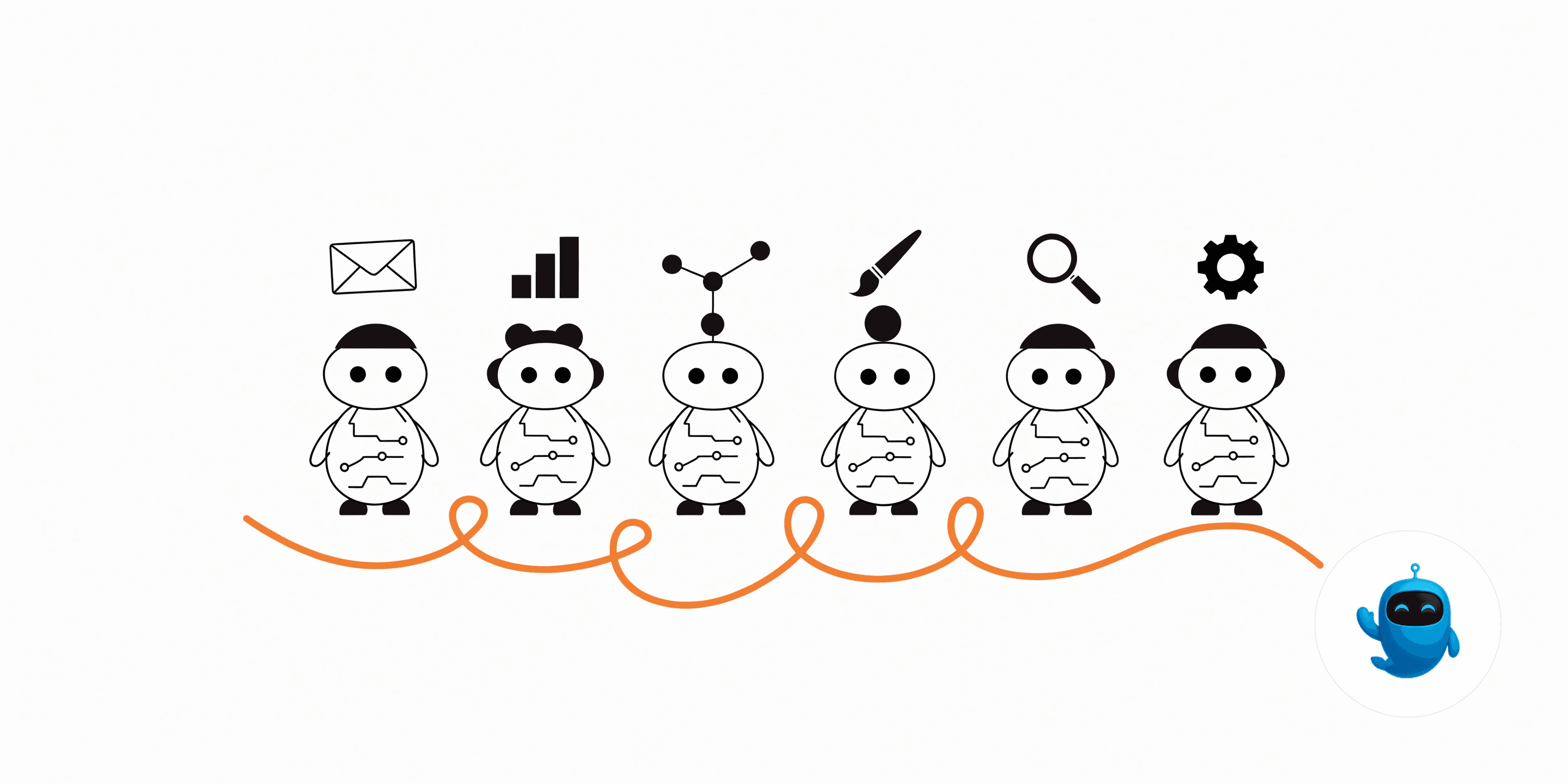
Six tools, each the best in a defined category, none of them a full stack on its own. The point of naming them individually is to make the substitution question concrete: if you're running four of these, which two would go away if the other two got merged into a platform.
| Tool | Best for | Category |
|---|---|---|
| Hyper | Autonomous paid media management | Paid ads |
| HubSpot AI | Path-of-least-resistance if you're already on HubSpot | All-in-one (locked to HubSpot) |
| Klaviyo AI | DTC email/SMS at scale | Email/SMS |
| Jasper | Established AI copywriting | Content |
| Creatify | Vertical video ad generation | Video ads |
| Gumloop | Workflow automation (underrated) | Automation |
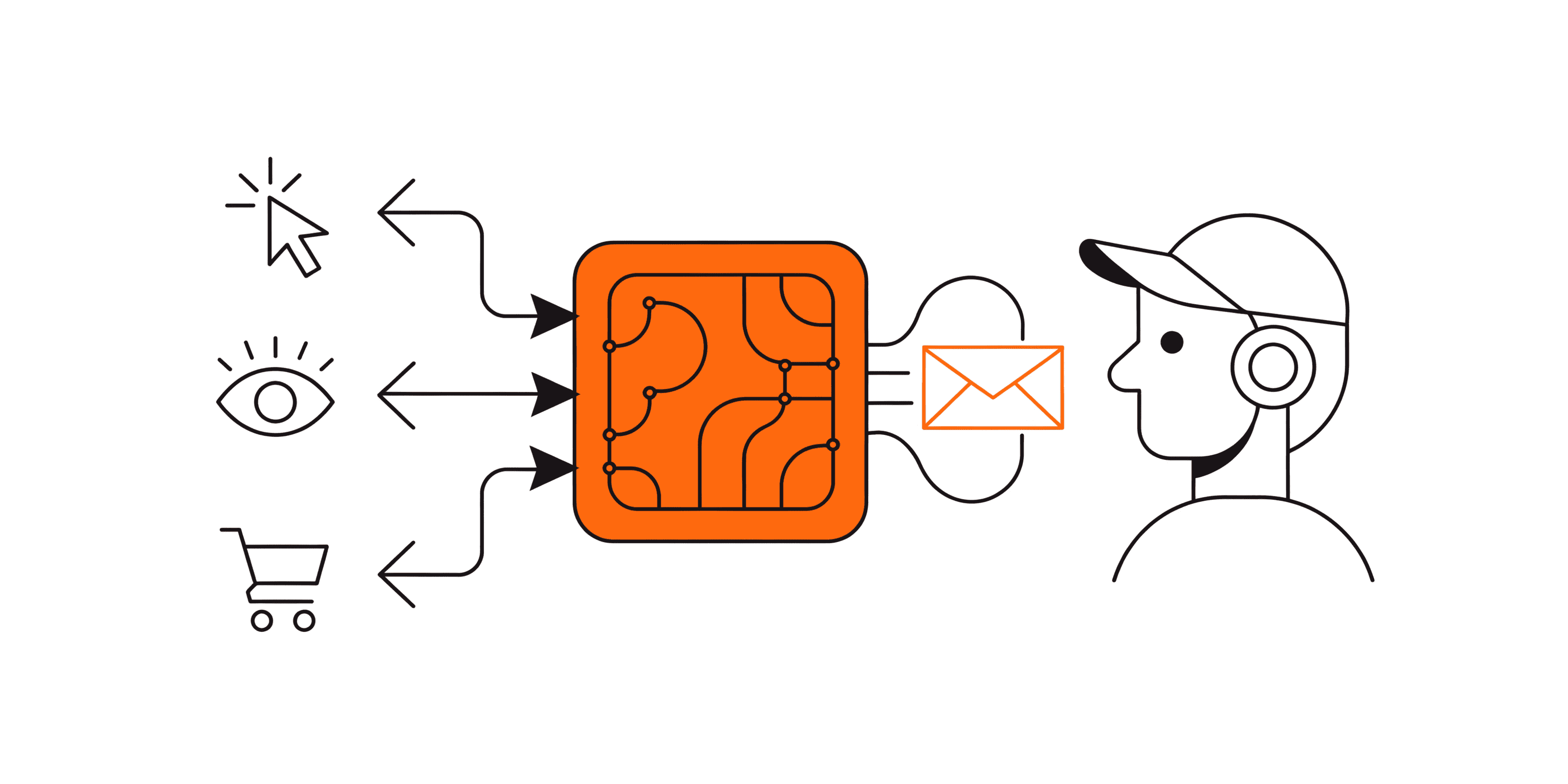
None of these are bad tools. The problem is buying six of them: six logins, six invoices, six sets of brand guidelines to keep in sync manually. Real buyer behavior backs this up - most teams land on 2-4 AI tools total, not all six, because managing more than that starts costing more in coordination overhead than it saves.
The 2-to-4-tool ceiling is a real pattern, not a preference
The reason most teams don't run all six isn't that they haven't heard of them. It's that the coordination cost of the seventh tool exceeds its own subscription cost. A marketer running six tools spends more time reconciling brand voice across them than they gain from any single tool's best-in-class feature. Two to four is the ceiling attention can support, not the ceiling budget can support.
| Team size | Realistic AI-tool count | Typical loadout |
|---|---|---|
| Solo marketer | 1-2 | One content tool + one channel tool (email or social) |
| Small team (2-5) | 2-3 | One content tool + one paid-media tool + one channel tool |
| Mid-market team | 3-4 | The three above plus one workflow/automation tool |
| Enterprise | 5-7 | Above plus best-in-class channel-specialists (SMS, video, in-app) |
Where a platform replaces 3-4 of these at once
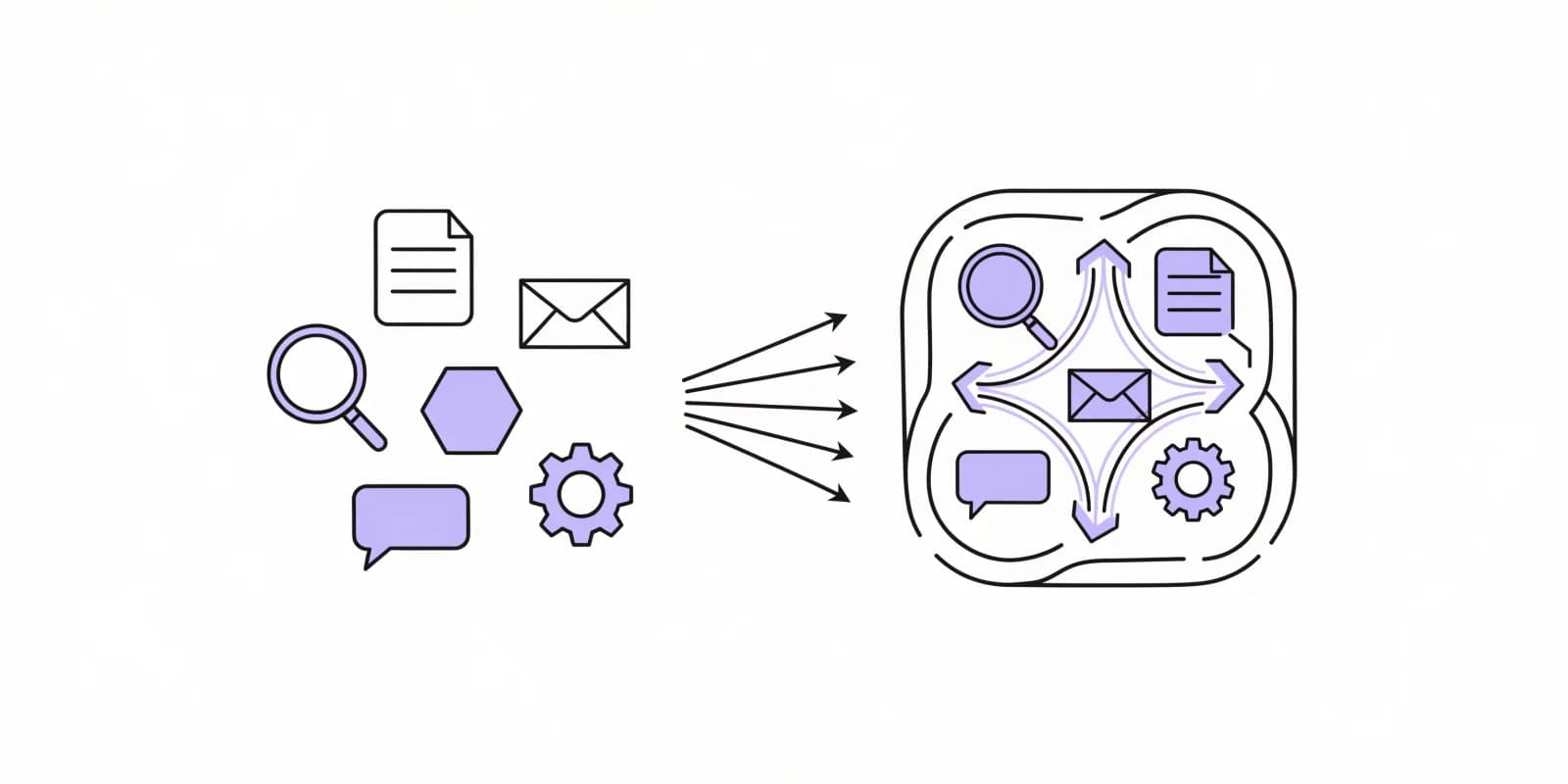
Intempt's free tools cover the same individual jobs as several of the point solutions above - sales/marketing copy like Jasper, ad copy generation, product photography instead of a photo shoot - and the paid products extend into the same territory as Klaviyo (Market's journey builder) and Hyper (Analyze's attribution and funnel tooling), inside one brand system instead of four.
| Job | Point solution | Intempt equivalent |
|---|---|---|
| AI copywriting | Jasper | Headline generator, Ad Copy, Sales Email, Sales Pitch Generators (free) |
| Product photography | Studio shoot ($200+/shot) | AI Product Photo Generator (free, $0.40/image at scale) |
| Email/SMS lifecycle | Klaviyo AI | Market - Journeys with the same branching logic |
| Campaign planning | Manual planning doc | AI Marketing Campaign Generator (free) |
| Attribution/funnels | Hyper (paid media specific) | Analyze - funnels, attribution, dashboards |
Try any of Intempt's 20 free tools before deciding whether you need the full platform - start with the AI Marketing Campaign Generator if you're planning a launch, or the AI Ad Copy Generator if you just need copy today.
Why tool sprawl is a real cost, not a hypothetical
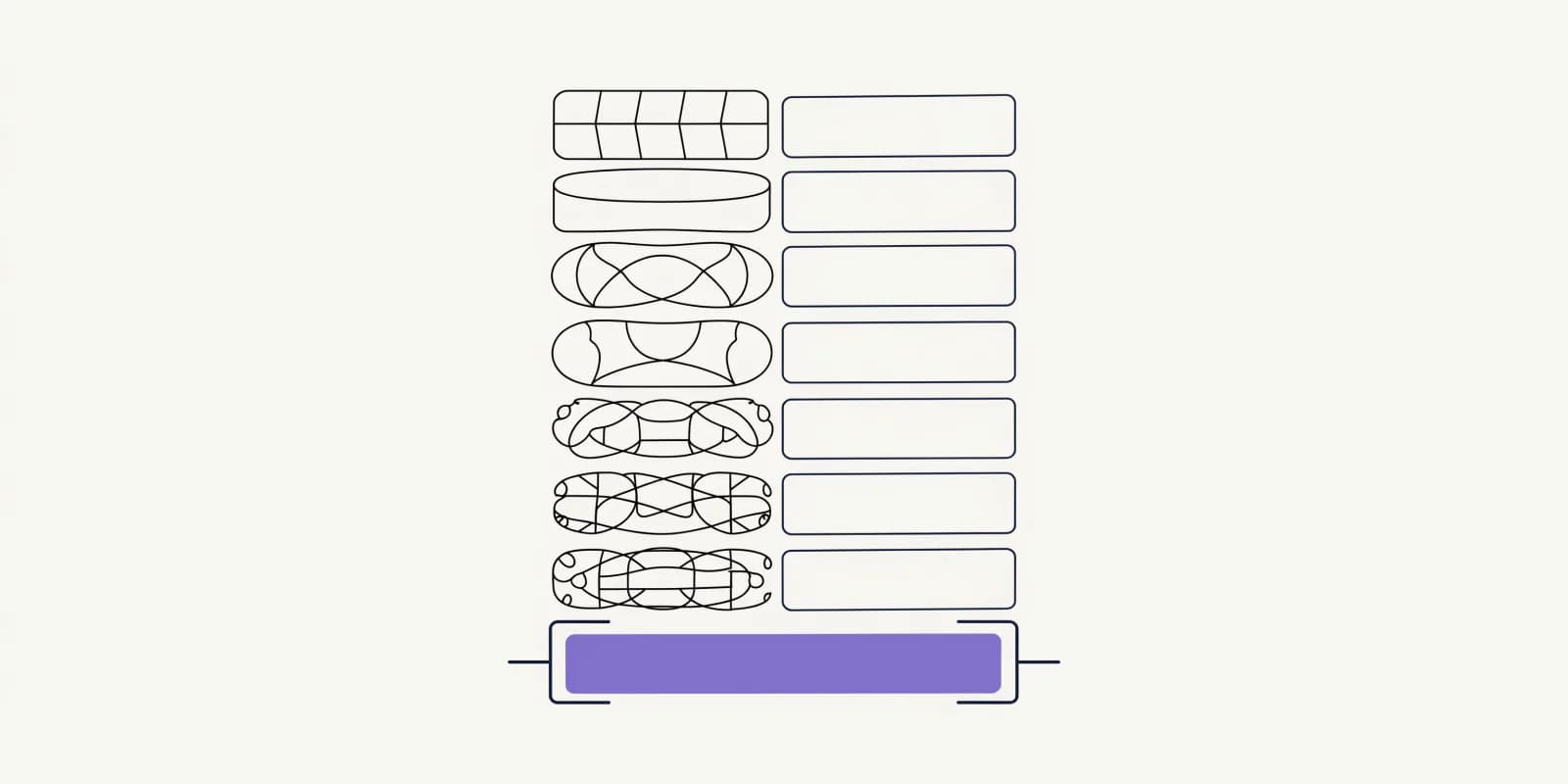
The average B2B team runs a stack in the low double digits with meaningful overlapping functionality, and larger organizations commonly carry several dozen tools across their marketing stack. That overlap isn't free. The coordination tax on a sprawling stack shows up directly in output per person, not just in the invoice total - one CRM handoff, one brand voice, one attribution model, versus five of each stitched by hand.
This is now a finance conversation as much as a marketing one. CFOs have started demanding demonstrable ROI on every subscription line item, and the market is responding in kind: the overall MarTech category grew only 0.7% year-over-year in 2026, with 1,488 new tools added against 1,367 disappearing - a churn rate that says the sprawl era is ending, not accelerating.
What these tools actually cost at scale
| Tool | Entry price | At scale |
|---|---|---|
| Jasper | $59-69/mo (Pro, no free tier - 7-day trial only) | ~$900/mo (Business, custom seats) |
| Klaviyo | Free up to 250 profiles | $720/mo at 50K contacts, $2,300/mo at 250K (SMS billed separately) |
Neither number is the whole story. Jasper charges per seat regardless of output volume, so a 5-person content team pays 5x the seat price even if only one person is generating most of the copy. Klaviyo charges by active profile count, a pricing model it switched to in February 2025 so you now pay for every active profile in your account (including cold and suppressed contacts) - meaning your bill grows with your database whether or not those contacts are opening anything. Add three or four more point solutions at similar per-seat or per-volume pricing and the real total is rarely the sum of each tool's "starting at" price.
The hidden coordination line item
Every point tool ships with a private brand-voice interpretation, an identity graph, and a preferred attribution model. Running six of them means someone is either reconciling those daily or accepting that the outputs drift. That reconciliation is the coordination line item nobody puts in the budget - usually a mid-level marketer spending eight to twelve hours a week keeping the tools in sync. At $100 an hour loaded cost, that's another $50K to $60K a year that doesn't show up as a subscription line.
The four signals that it's time to consolidate
The honest indicators, not the vendor's marketing prompt. Any two of these together mean the consolidation math pays back inside one budget cycle. All four and it should have happened last quarter.
- Login count above six for one marketer. Attention runs out before the tools do.
- Brand voice drift between channels. The email tone doesn't match the ad tone doesn't match the sales-email tone. Users notice.
- A CRM handoff that requires manual data reconciliation each week. Anywhere data crosses a tool boundary by copy-paste, the boundary is expensive.
- An attribution model that lives in a spreadsheet because no single tool sees enough of the funnel. Spreadsheet attribution decays into folk memory within two quarters.
The honest counter-case for keeping point solutions
Consolidation isn't always right. Two real cases where a point solution stays: (1) a category where best-in-class matters more than integration, like SMS deliverability where Klaviyo's tuning still beats most consolidated stacks, and (2) an existing stack that already works, where a rip-and-replace would cost more than the sprawl. This is not a religion. It's an ROI question.
| Situation | Keep the point solution | Consolidate |
|---|---|---|
| Established stack works, no drift | Yes | No |
| One category (SMS, video) needs best-in-class depth | Yes for that category | Consolidate the rest |
| Login count under four, no coordination pain | Yes | No |
| Six-plus tools, brand-voice drift, spreadsheet attribution | No | Yes |
| Growing fast, tool count doubling per year | No | Yes, before it hits 10 |
One category we're not covering here: AEO tools
Answer Engine Optimization - making sure ChatGPT, Perplexity, and Google AI Overviews actually cite your brand - is a real, active category, distinct enough from this list that it gets its own comparison. See our guide to the best tools for tracking brand visibility in AI search if that's the specific problem you're solving.
How to actually decide
If you're already deep in one ecosystem (HubSpot, Klaviyo) and it's working, don't rip it out for a platform switch. But if you're stacking 4+ point solutions and feeling the coordination tax, that's the actual signal to consolidate - not a vendor's marketing claim, but your own login count - and the best AI tools for digital marketing will be the ones that let you shrink that count without losing capability.
The short version
Six real category leaders. Most teams need two to four. The coordination tax on the seventh tool exceeds its own subscription cost, which is why the 2-to-4-tool ceiling shows up in every survey and why the MarTech category stopped expanding this year. Consolidate when login count crosses six, brand voice starts drifting, or attribution lives in a spreadsheet. Keep the point solution when one category demands best-in-class depth. Either way, the buying signal that matters isn't which tool leads the category - it's how many tools it takes to run the team.
Frequently asked questions.Answered.
- The best AI tools for digital marketing right now, by category: Hyper for autonomous paid media, HubSpot AI if you're already on HubSpot, Klaviyo AI for DTC email/SMS, Jasper for established AI copywriting, Creatify for vertical video ad generation, and Gumloop for workflow automation (genuinely underrated). Most teams don't need all six - most land on 2-4 tools total: one paid-media tool, one content tool, one channel-specialty tool.