


Let teams use customer datawithout waiting on your queue
Marketing builds audiences from conditions instead of filing tickets, while you keep the schema and the sources.
 0.0on G2
The category: Data
A pipeline vendor hands you clean events and stops. Then you build the CRM yourself, or buy a third one and wire it back to the events you already paid to collect. Segment forwards data. It does not give you the accounts, contacts, deals and lifecycle that the data is for.
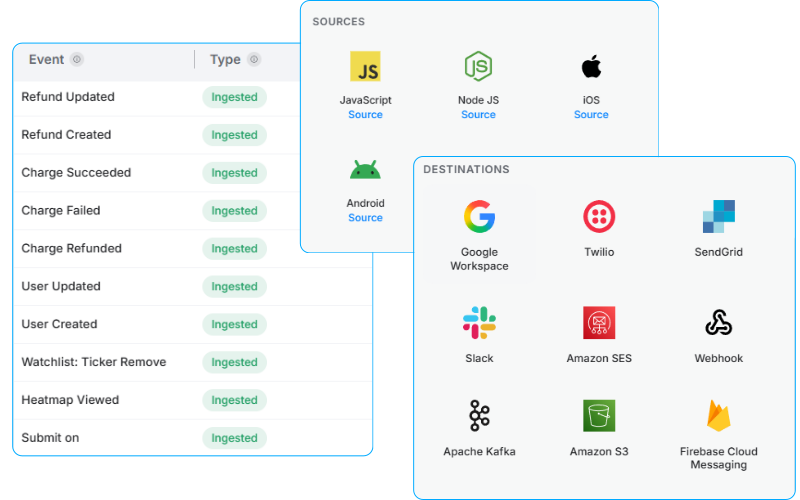
Collect events from every source, resolve them into one profile per person, and act on them in a CRM that is already deployed. Accounts, contacts, deals, tasks, meetings, scheduling and catalogs, with every change available as an event. No handoff between a pipeline vendor and the CRM you'd still have to buy - the Data Engineer agent runs both ends of that pipe.
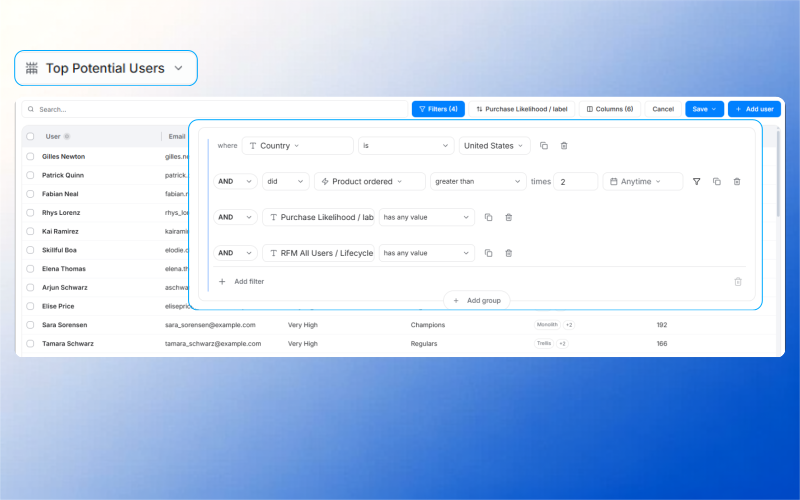
Let marketing build audiences on its own.
A condition builder instead of a query, so the request never reaches you.
- Filter on any event, attribute or existing segment
- Let the segment keep resolving as people change
- Take the promotion list out of your ticket queue
Move faster without losing control.
Self-serve fails when it means anyone can invent a field. It does not mean that here.
- Own which sources exist and what the events are called
- Decide where anything is allowed to publish
- Let them build audiences without touching the schema
Give every team the same customer context.
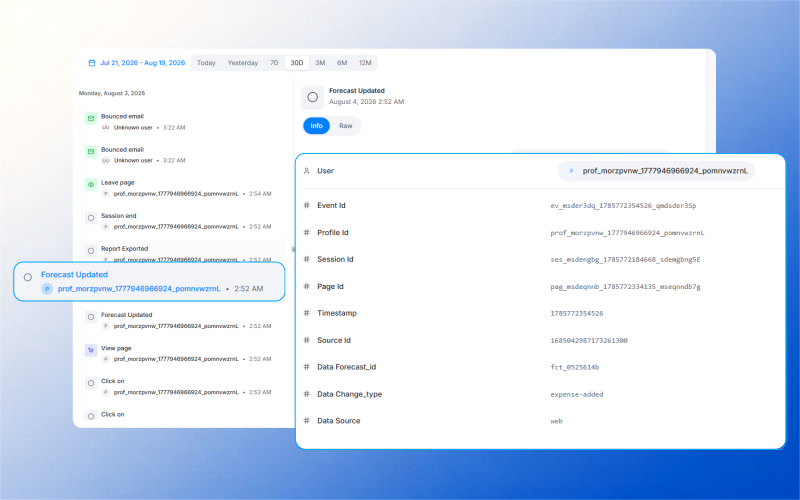
One customer record for marketing, sales and analytics, so nobody keeps a private copy.
- Serve three teams from one profile
- End the argument about whose number is right
- Remove the export and the drift between systems
Keep customer data where it belongs.
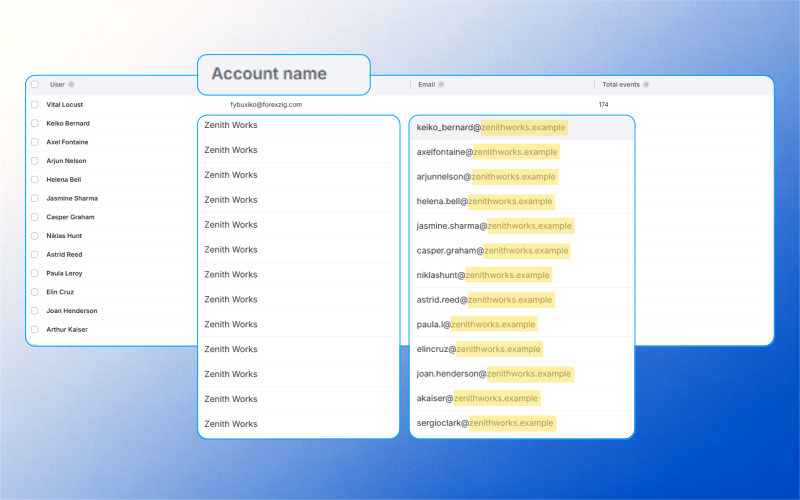
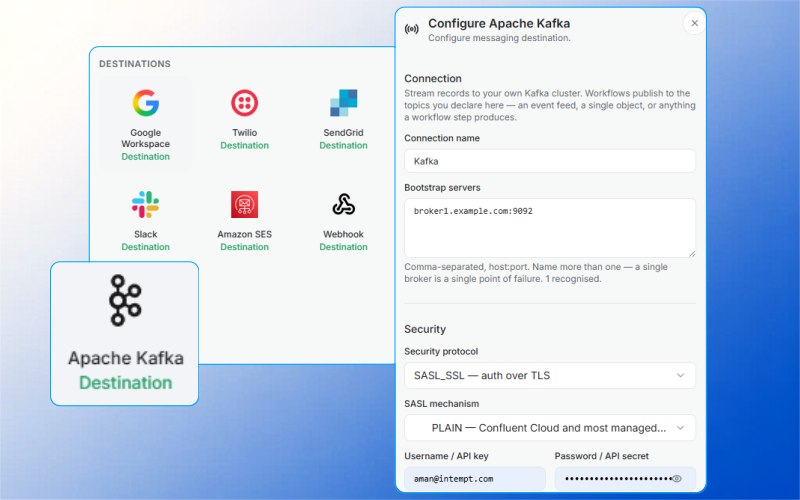
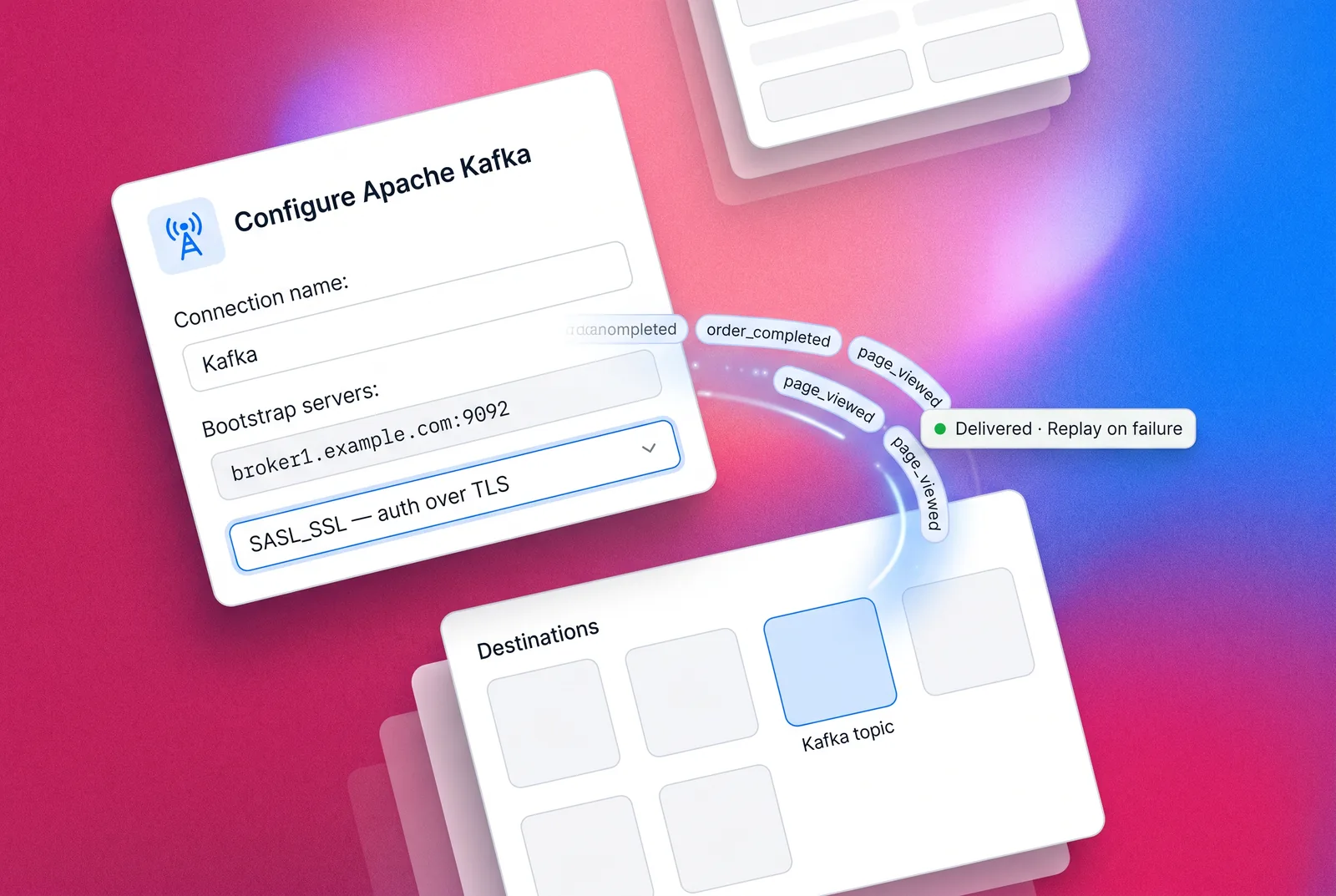
Your Kafka cluster, your bucket, your topics, declared up front.
- Declare every topic, or the publish fails
- Write Parquet into your own S3
- Never have a topic created on your cluster
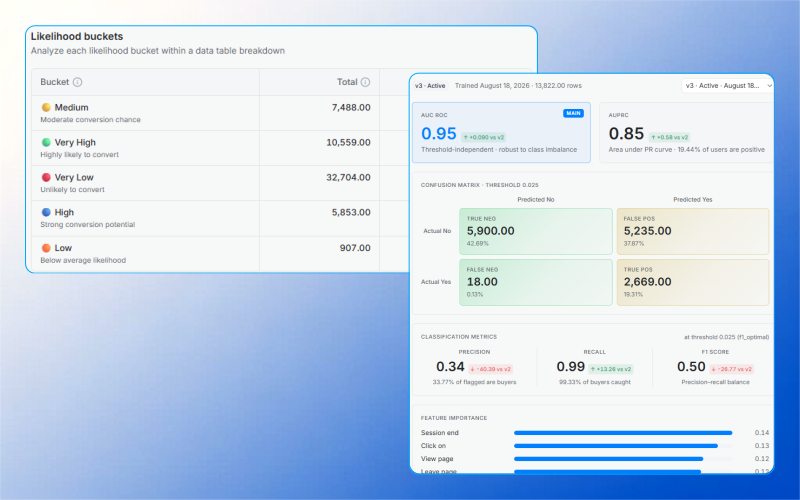
Use customer scores without the model work.
RFM, likelihood and next best product train on your own events and come back as ordinary attributes.
- Set them up from the attributes page
- Train on tracked events, score in the background
- Let marketing filter on the score like any other field
Use customer data before the warehouse is ready.
Events resolve to a person here, so no modelling project stands between collection and use.
- Start without a warehouse or a dbt project
- Send the raw data to your storage as well if you want it
- Be useful in the first session rather than the second quarter
Marketing files a ticket. You write the query. The backlog grows.
Pay for the pipeline, then pay again for anything that acts on it.
Warehouse round-trip before a marketer can use a segment.
Buy a pipeline, then buy a CRM, then wire them together.
Connector caps on the free tier throttle instrumentation.
They describe the audience. The segment resolves itself.
One profile store. Attributes, segments, CRM and activation on top of it.
Attributes computed and segments resolved in place.
One profile per person, and the CRM already runs on it.
Unlimited sources and destinations on every tier, including free.
The offer
Here's what this costs you the old way.
Total value
$0
Your price
$0
Unlimited sources, unlimited destinations, uncapped segments. Free to start.
No credit card required
The pipeline your data team was going to build
Client, server and cross-platform SDKs
JavaScript, React Native, Swift, Android, Node, Python, PHP
Unlimited sources and destinations
No connector caps, on any tier
One schema for every event and object
Taxonomy and identity resolution included
7-day retention on Free
Up to 39 months on paid plans
The engineer you were about to hire
AI Segmentation
Describe the audience. Skip the query.
AI Attributes
Predictive traits computed for you
Event sync to your own Kafka and S3
Topic routing, partition keys, JSON or Avro
Real-time and batch delivery
Two meters. Pay for latency only where you need it.
Three jobs that used to land in your queue.
The Data Engineer runs them. You keep the schema.
Every source, one schema.
You define the event names once. Every SDK writes into them.
Client, server and cross-platform SDKs
JavaScript, React Native, Swift, Android, Node, Python, PHP
Identity resolution joins them to a person
As the events arrive, not in a nightly job
Unlimited sources and destinations
No connector caps, on any tier
 Blu
Go deeper
The products underneath these jobs. Every one of them reads the same resolved profile, so nothing here needs a second integration to see what the first one collected.
Two reasons a founder buys this.
Each one compares what it takes on Segment with what it takes here, and who ends up doing it.
Wired into the toolsyour team already opens.
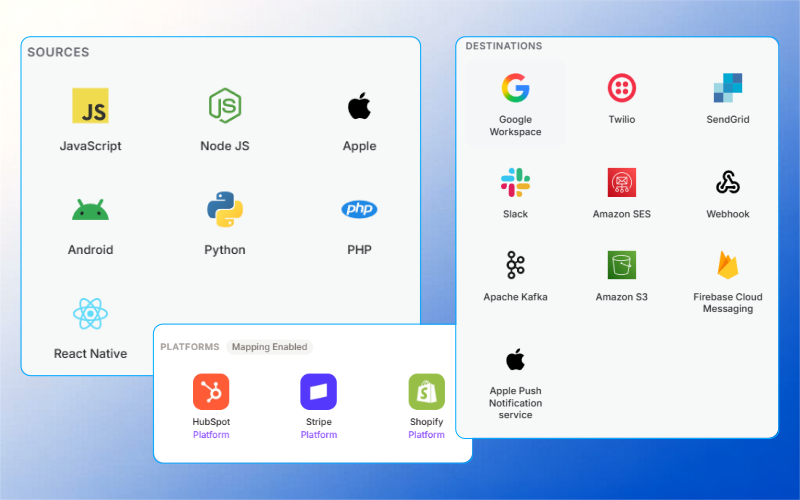
Slack, Stripe, Twilio, SendGrid, Gmail, Google Calendar, Firebase, Apache Kafka, AWS. Blu Agent operates them for you without a browser tab.
See every integration


Teams love it
They stopped stitching tools andhired one system.

 StockInvest


“Acquisition and retention finally feel like one connected motion instead of two separate problems.”
Jim Stromberg
CEO, StockInvest

 FieldsUSA
“We finally have one system that sees the whole customer journey.”
Eric Gardner
COO, FieldsUSA

 Hoperfy
“With Intempt, we built a signal-led pipeline driven by real behaviors.”
Tadas Kertenis
Co-founder, Hoperfy
Frequently askedquestions.
What a founder running the whole stack alone tends to ask before connecting a source.
Sources
- 1.Vendr marketplace, retrieved 2026-08-15. Twilio Segment median annual contract $55,600 across 613 purchases; Amplitude median $64,724 across 416.
- 2.Fiverr, Upwork, Clutch. Freelance data-engineering retainers $1,000-2,500/mo; identity-resolution builds 20-40 hrs at $100-250/hr.