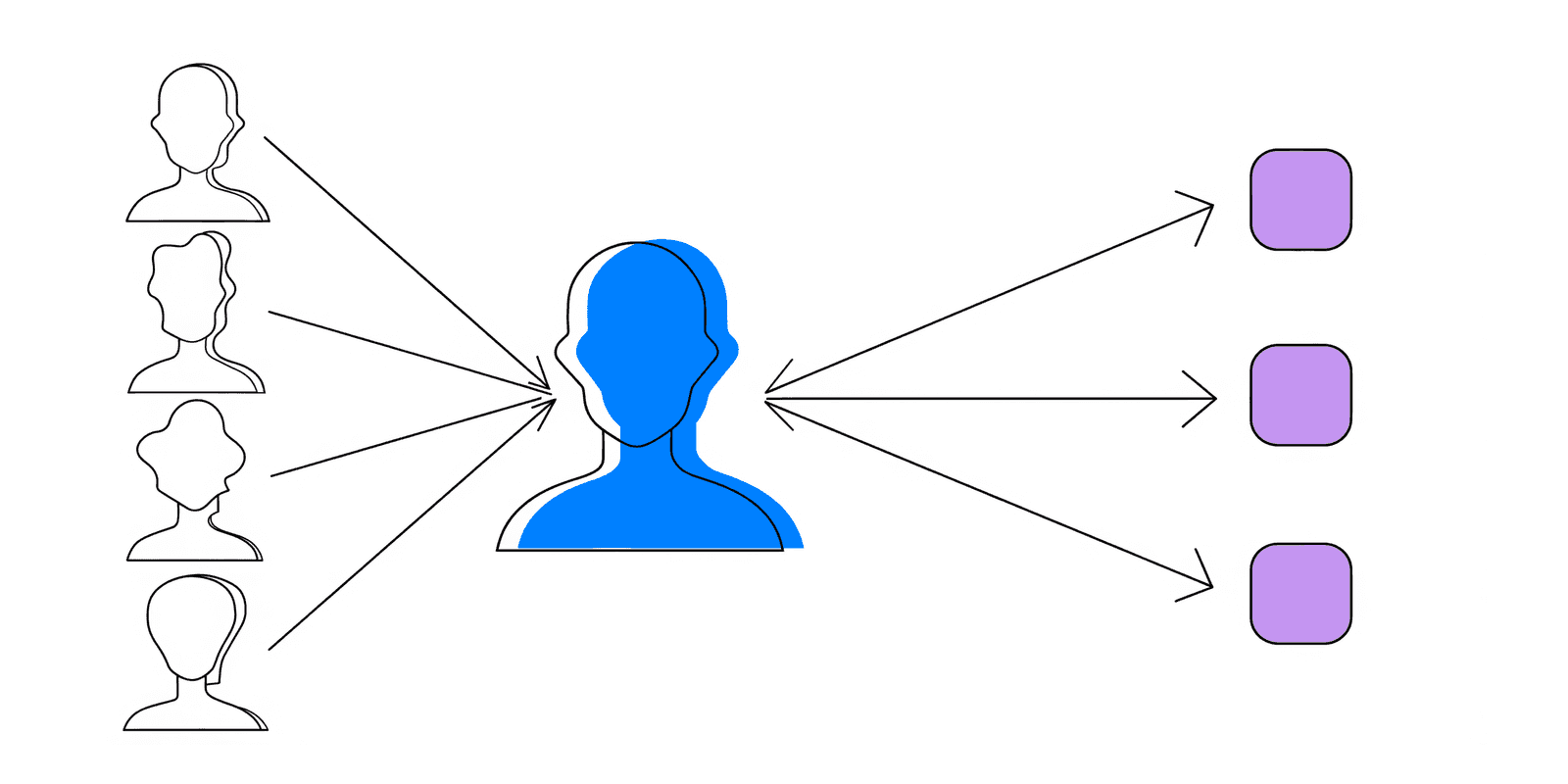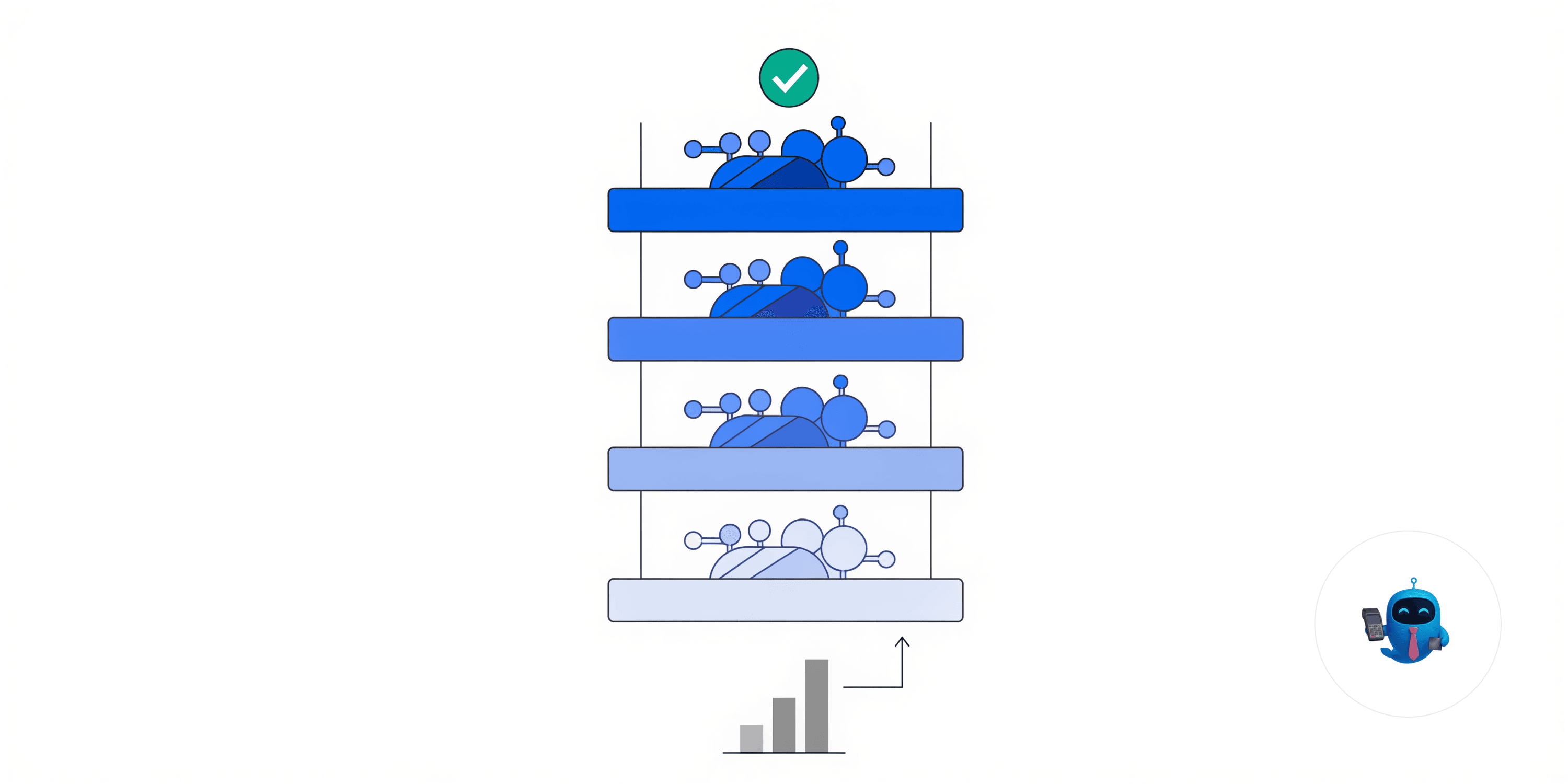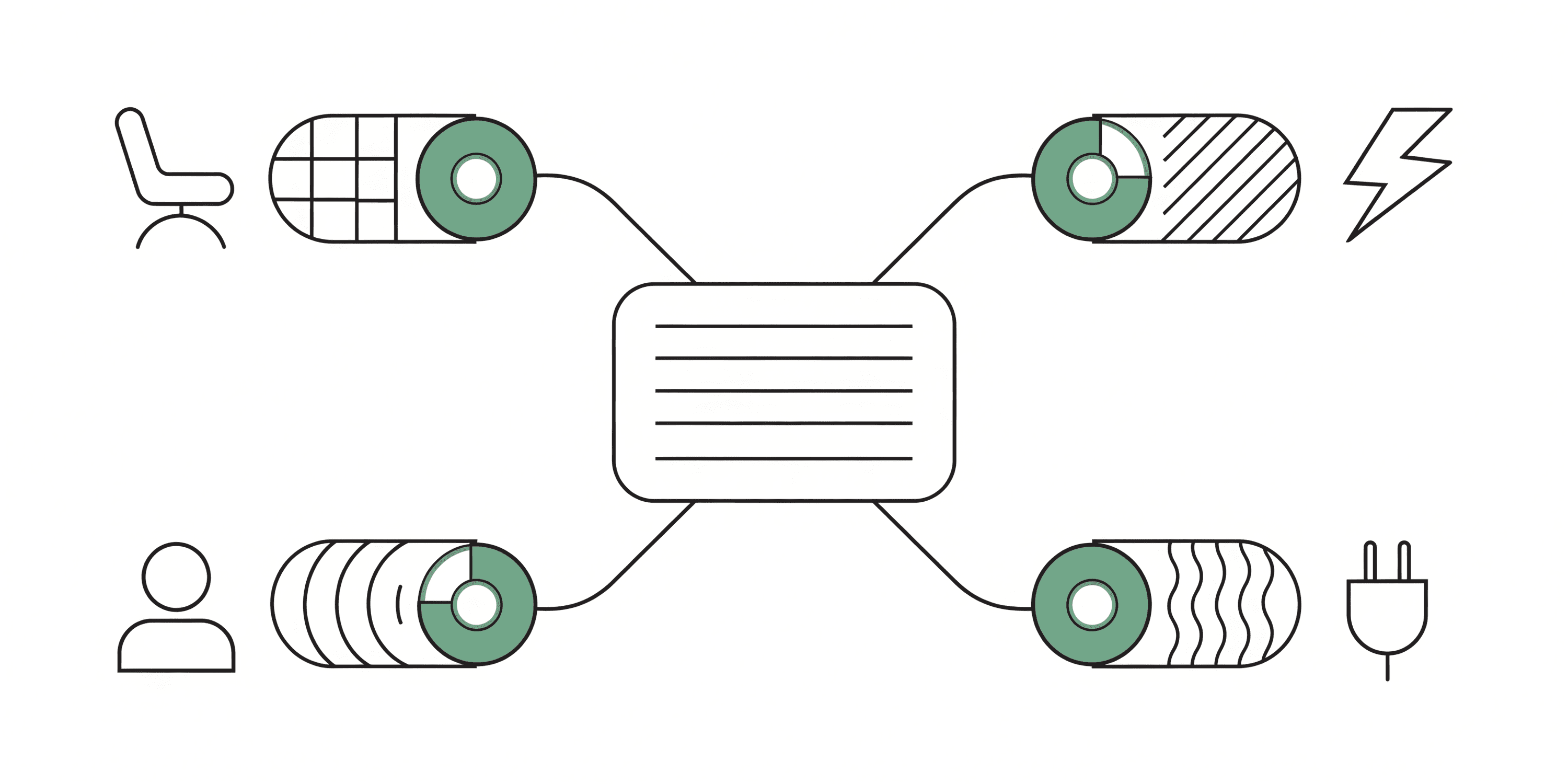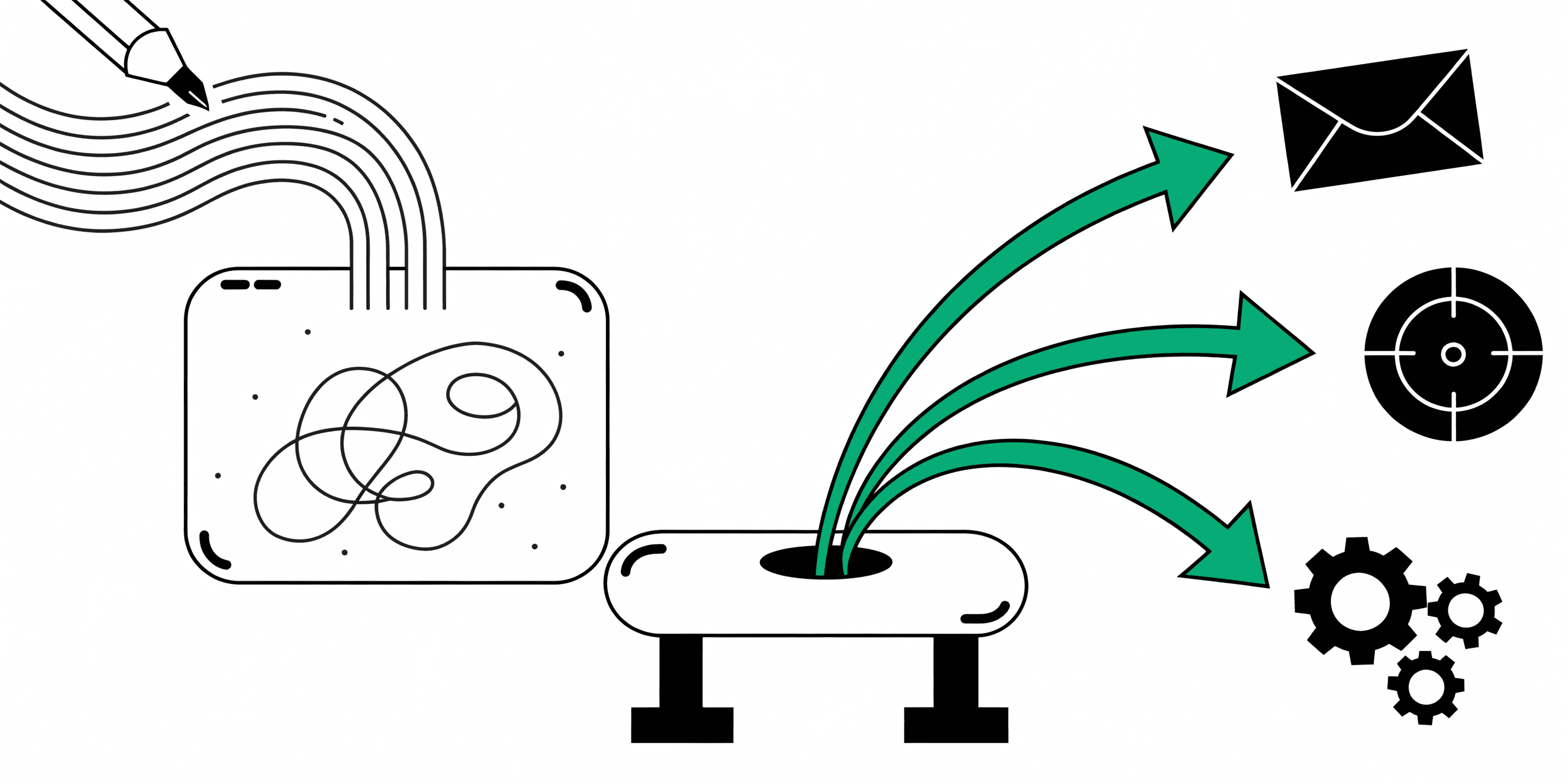

- AI for GTM is not a tool category. It is the plumbing between marketing, sales, and customer success that fires on unified customer identity, not on three separate CRM copies.
- Every vendor now claims it. HubSpot Breeze, Salesforce Agentforce, Clay, and 8 others self-describe as AI-native. Their agents still stop at the schema line their legacy data model draws.
- AI for GTM that works has one property. The agent scoring the lead, the agent routing it, and the agent forecasting the deal read from the same customer profile. Without that, you have three AI features on top of the same disconnect.
AI for GTM stopped being a feature label in 2026 and became a job description. Every vendor now claims to run it - HubSpot Breeze, Salesforce Agentforce, Clay, ZoomInfo Copilot, and eight others self-describe as AI-native on their own homepages. That's the floor, not the ceiling. The GTM Engineer agent that actually replaces manual pipeline plumbing has one property none of the marketing language captures: every agent action reads from the same customer profile, not three separate CRM copies.
This post is for GTM engineers, RevOps leads, and founder-led teams evaluating what AI for GTM should actually do. Not another vendor roundup. A working definition, the job it does across the funnel, and the technical property that sorts the tools that work end to end from the ones that stop at the schema line. Which tools belong around it at your stage is a separate question, and the 2026 GTM tech stack by stage maps those four layers.
The short version
- AI for GTM is not a tool category. It is the layer that runs scoring, routing, deal updates, and forecasting as agents rather than as manual tickets.
- Every vendor claims AI-native in 2026. The claim now sorts nothing - all 12 category leaders self-describe as AI or agentic on their own homepages.
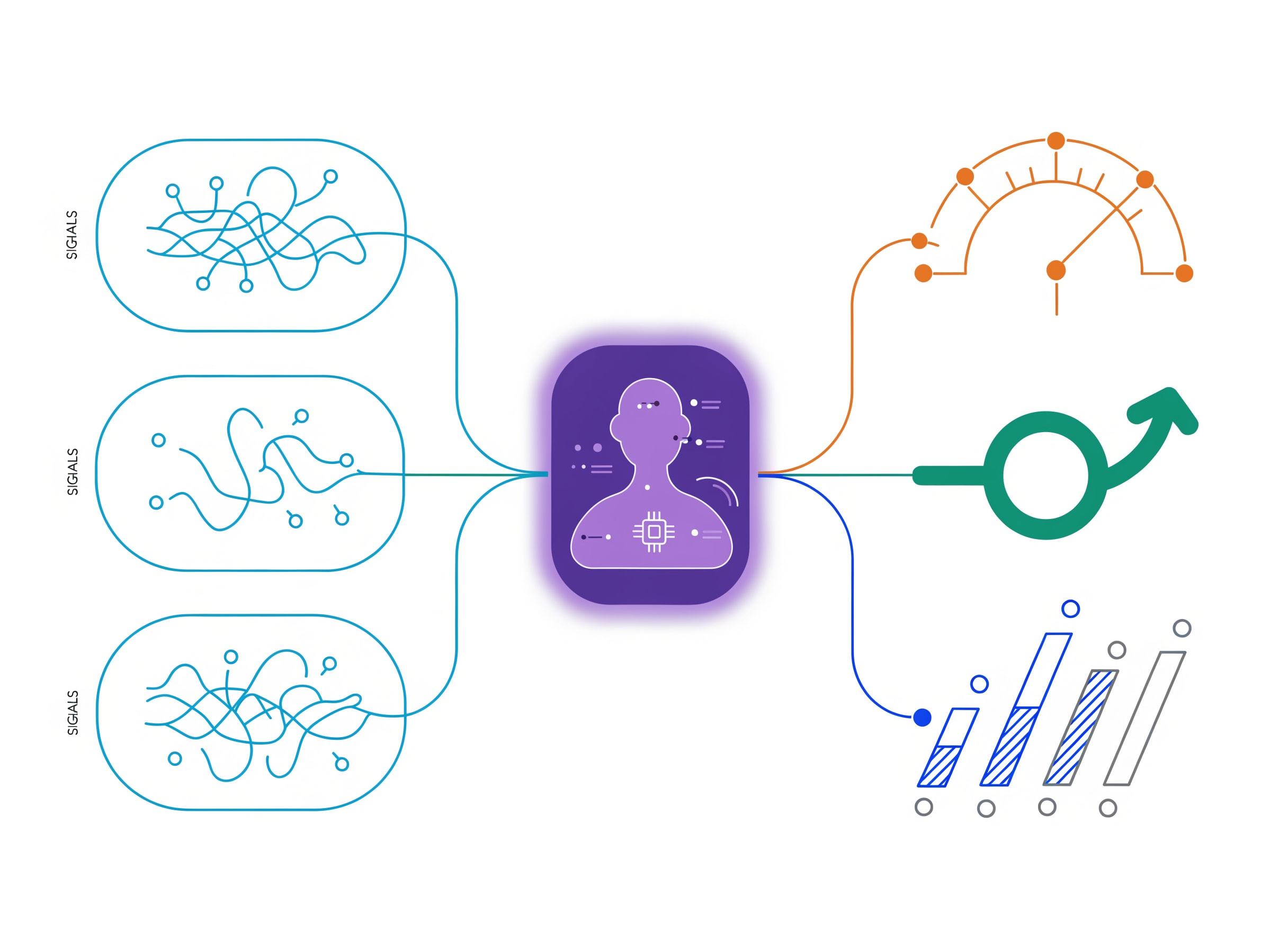
- The property that sorts them is data unification. AI for GTM that works reads product events, deal stage, meeting notes, ad exposure, and web behavior from one profile.
- The GTM Engineer role does not disappear. The seat count scales sublinearly with revenue - one senior engineer plus an agent platform handles what three engineers plus a legacy stack handled.
- Fully autonomous SDR replacement has a documented authenticity gap, part of the uneven exposure pattern showing up across sales roles more broadly. Agent-plus-human across the funnel is the pattern that ships.
- The middle of the pipeline is where head-count actually moves. Lead qualification, meeting scheduling, deal-stage updates, and forecast prep collapse into agent runs.
- Bolting AI onto a legacy CRM produces agents that stop at the schema line. HubSpot Breeze and Salesforce Agentforce cover their own record well and hand off to another product for the rest.
- The minimum stack is three things: identity that captures product, web, and deal events on one profile; an agent runtime with approval gates; and integrations to the tools that act on the decision.
What AI for GTM actually means
AI for GTM is the layer that runs go-to-market plumbing as agents. Scoring incoming leads by fit and engagement. Routing them to the right rep by territory, segment, or deal size. Updating deal stages when engagement signals change. Drafting follow-ups from meeting context. Generating pipeline forecasts and rep performance reports on demand. Jobs that used to require a coordinator role, an ops person, and a weekly reporting cycle.
The technical distinction that matters is not whether the vendor calls itself agentic. Every vendor does. The distinction is where the agent reads from. An agent that scores a lead by reading only marketing-touched fields makes a directionally wrong decision every time product usage predicts conversion better than form fills. An agent that routes a lead without seeing the deal history routes it to the wrong owner half the time. The label AI-native is universal. The property of reading a unified customer profile is not.
This is the split that shows up in every demo. Ask the vendor to open one customer profile view and show product events, deal stage, meeting notes, ad exposure, and web behavior side by side. If the demo cuts across three tabs and the answer is 'we integrate with your CRM,' the AI runs on partial data. Every downstream agent decision inherits that partial view.
The job it does across the funnel
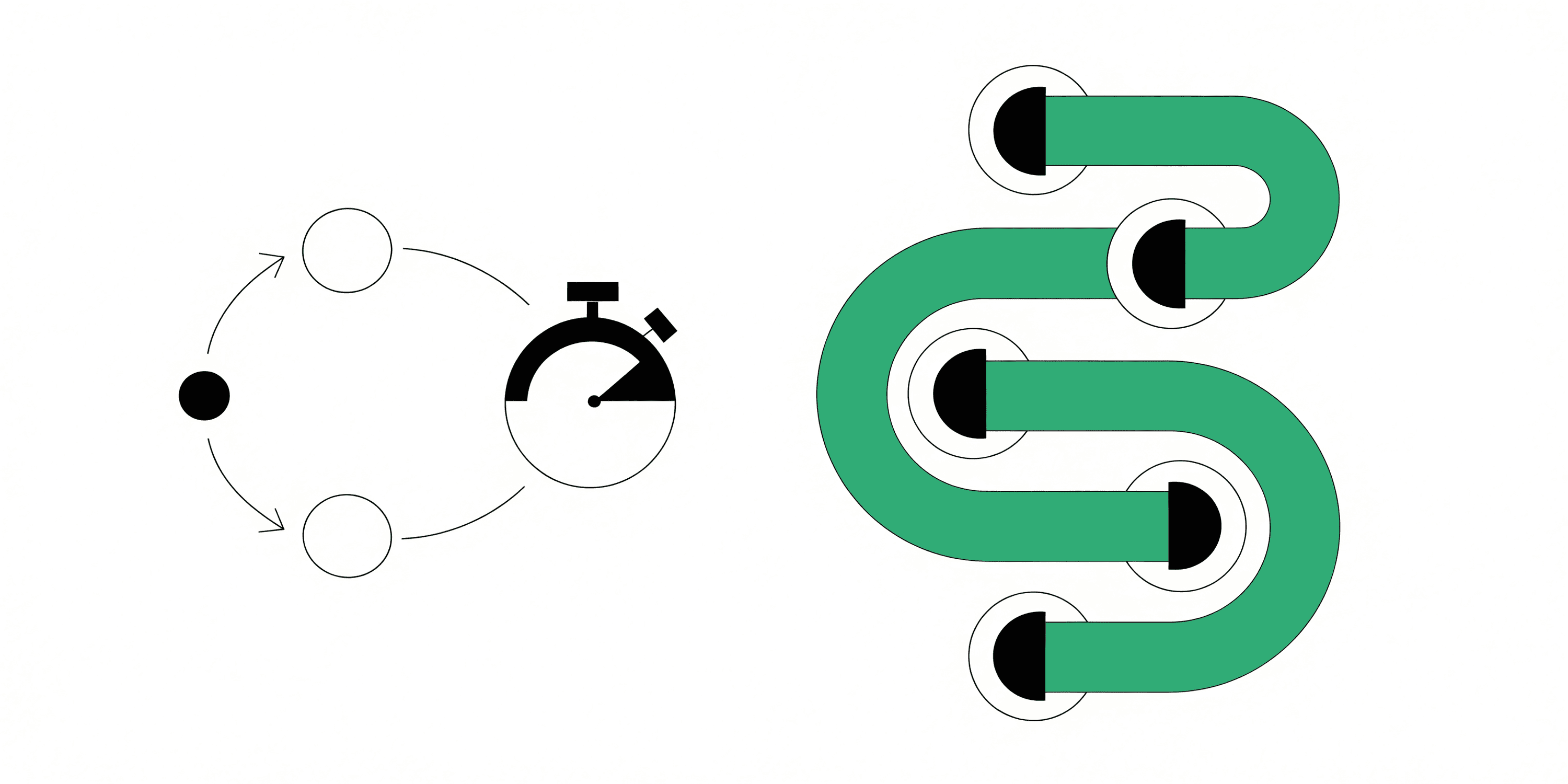
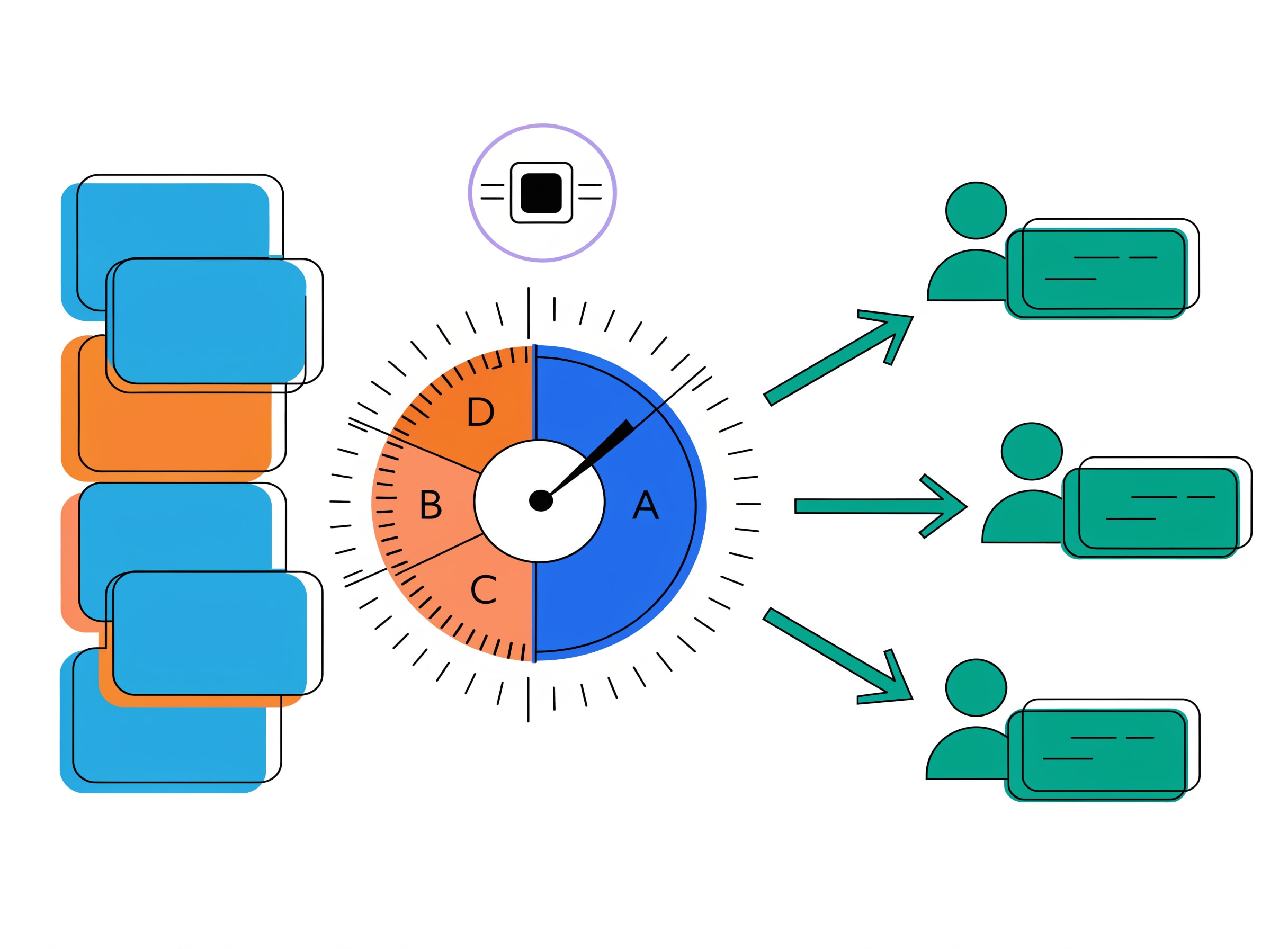
The workflow AI for GTM actually runs is a chain. A signal fires - a form fill, a product event, a meeting booked, an ad click. The scoring agent evaluates it against fit criteria. The routing agent assigns an owner. The workflow agent creates the deal, sets the stage, and triggers the sequence. The forecasting agent updates the rolled-up view. Then the loop reads engagement signals from the next 30 days and re-scores, re-routes, or closes.
The reason this is hard to build without a unified profile: each step depends on the last step's context. The routing decision needs the score. The workflow decision needs the routing outcome. The forecast needs the workflow state. If any two of these agents read from different data models, the chain breaks silently - not with an error, but with a directionally wrong prediction that looks fine on the dashboard.
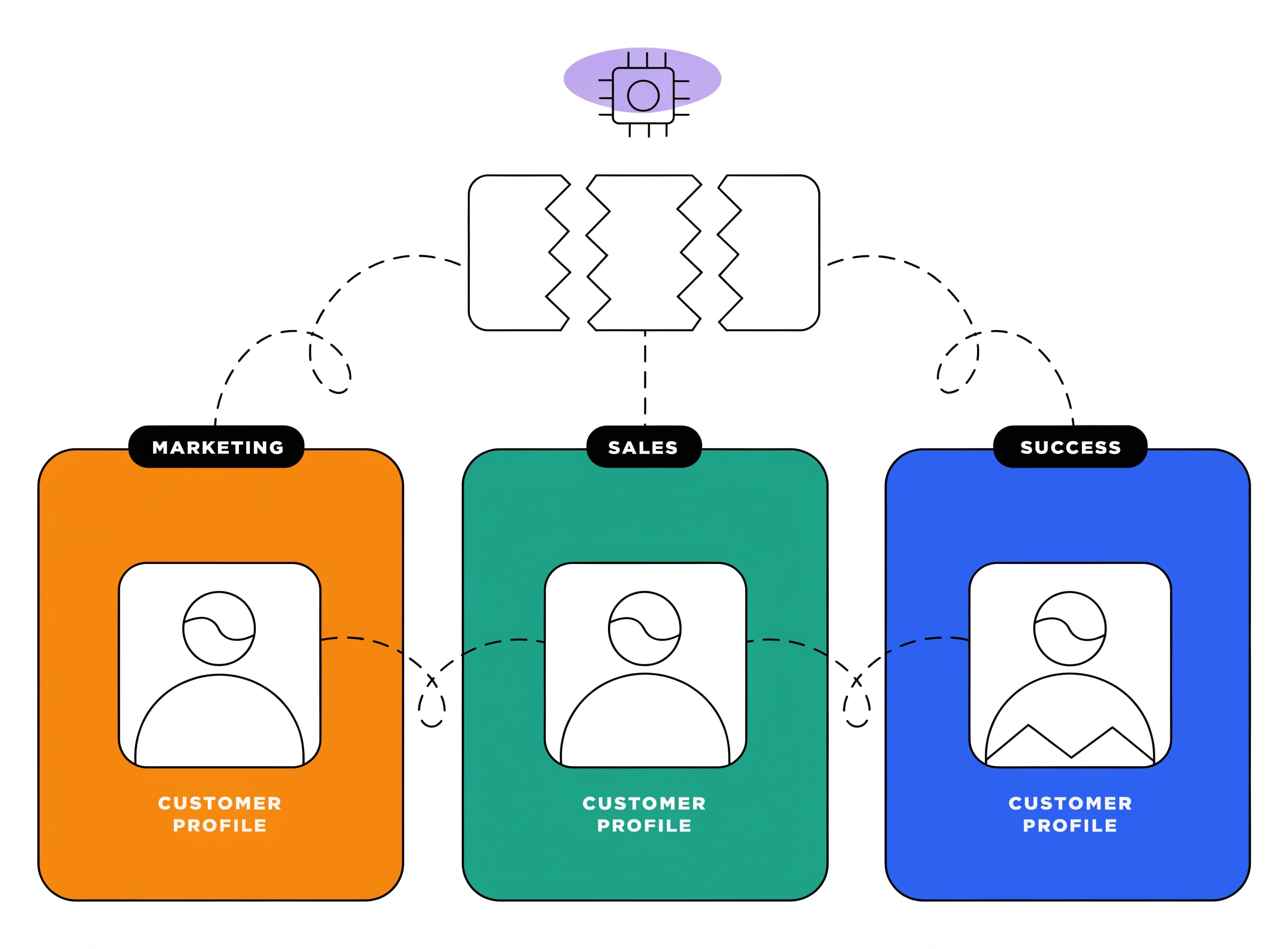
The failure mode in mid-market stacks is not that any single agent scores poorly. It is that marketing scores the lead on one set of fields, sales scores the deal on another set, and success scores the account on a third. Three agents, three views of the same customer, three different decisions. The customer notices the incoherence before the team does.
Why the org-chart split is the actual problem
The reason AI for GTM does not converge into one working motion in most companies is that the org chart is the problem, not the tool stack. Marketing owns lead flow up to the SQL handoff. Sales owns the pipeline from SQL to close. Customer success owns post-close. Three functions, three heads, three tool budgets, three separate agents. The GTM engineer role exists specifically to own the plumbing across all three.
The technical solution is unification. The organizational solution is a GTM engineering role that owns the plumbing across all three functions. Both are needed. A unified profile with no owner produces a beautifully instrumented pipeline that no one debugs. A GTM engineer without unified data produces a maintainer role that spends 80 percent of their time reconciling three CRM copies. The pattern that ships is a senior GTM engineer plus an agent platform that reads from one profile.
This is also why swapping in an AI-native vendor without changing the org chart produces disappointment. The agent gets access to the same fragmented data the human team was working from, and it makes the same fragmented decisions faster. Speed on a broken workflow produces broken results at scale.
What working AI for GTM looks like
Working AI for GTM has five concrete capabilities, each running on the same customer profile. If any one of them reads from a separate data model, the whole chain drops to the reliability of the weakest link.
- Lead scoring on unified signals. The score reads product usage, form fills, ad exposure, and firmographic fit from one profile - not marketing engagement alone.
- Deterministic routing with tie-break rules. Territory, segment, deal size, and rep load are inputs. The agent applies the rules the GTM engineer wrote, and it explains the assignment.
- Workflow automation with approval gates. The agent creates the deal, assigns the owner, sets the stage, and drafts the sequence. A human approves anything that leaves the tool.
- Deal-stage awareness in every downstream agent. The SDR agent knows the deal is in negotiation. The lifecycle agent stops sending the top-of-funnel nurture. The success agent starts onboarding prep.
- Pipeline reporting on demand. Forecasts, ARR waterfalls, stage conversion rates, and rep performance - generated on the same profile the agents just acted on, not on a separate BI export that lags by three days.
How to evaluate AI for GTM tools
The four questions below sort AI for GTM tools faster than any feature comparison. If a vendor cannot answer them with a specific number or a live demo screen, the AI runs on partial data.
- Show me one customer profile view with product events, deal stage, meeting notes, ad exposure, and web behavior side by side. If the demo cuts across tabs, the profile is not unified.
- What does one agent action cost on the published meter? HubSpot lists $1.00 per Breeze recommended outreach. Salesforce lists $0.10 to $0.50 per Flex Credit action. If the vendor will not publish a figure, treat that as the answer.
- Which agents read the same profile, and which read from an integration? If the scoring agent reads unified data and the workflow agent reads from a synced CRM, the chain has a schema line inside it.
- What is the approval gate story? Fully autonomous outbound has a documented authenticity problem. The pattern that works is agent-drafts, human-sends. If the vendor sells fully autonomous action as a feature, ask for the customer reply-rate numbers.
Where each tool actually stops
Every AI for GTM vendor covers part of the workflow and hands off at a specific seam. Knowing where a tool stops matters more than knowing what it claims to do. Coverage patterns from the July 2026 vendor pages:
- HubSpot Breeze: strong on marketing-side agents (Prospecting, Content, Social). Stops at the schema line between HubSpot and non-HubSpot CRM records. Best fit for teams already standardized on HubSpot.
- Salesforce Agentforce: strong on sales-side workflow inside Salesforce objects. Flex Credits meter actions at $0.10 to $0.50. Best fit for enterprise Salesforce shops.
- Clay: strong on data enrichment and outbound triggers, unlimited seats, metered actions. Hands off to a separate CRM for deal execution.
- ZoomInfo Copilot: strong on contact database plus agent recommendations. Stops at the deal-execution layer.
- 6sense and Demandbase: strong on account-level intent and B2B advertising. Do not hold the deal record.
- Gong: strong on call intelligence and forecasting on that call data. Does not hold the lead score or the routing decision.
- Intempt: covers scoring, routing, workflow automation, and reporting on one profile that also holds product events. Not sized for the largest enterprise contact-database or call-corpus workloads.
The GTM Engineer job in 2026
The role that runs AI for GTM well is the GTM Engineer. It is the person or agent that defines the scoring model, wires the routing rules, sets the deal-stage automation, instruments the pipeline events, and audits the agent decisions. The scope has not shrunk in 2026. It has expanded to include the agent-audit work: reading the sample of decisions the agent made last week and deciding whether the rules need to change.
The head-count shift is real but bounded. Sublinear scaling with revenue is the pattern. A team that used to run one GTM engineer per $2M ARR now runs one per $8M to $12M ARR with an agent platform underneath. The savings do not show up as a hiring freeze; they show up as the GTM engineer having time to build the next scoring model instead of debugging the last one.
The pairing that ships is a GTM engineer plus a platform that runs the plumbing as agents on unified customer identity. Intempt's GTM Engineer agent is designed for exactly that pairing - the human writes the scoring model and the routing rules, the agent runs them on schedule, and the reporting is generated on the same profile the agent just acted on. That is what AI for GTM is supposed to mean.