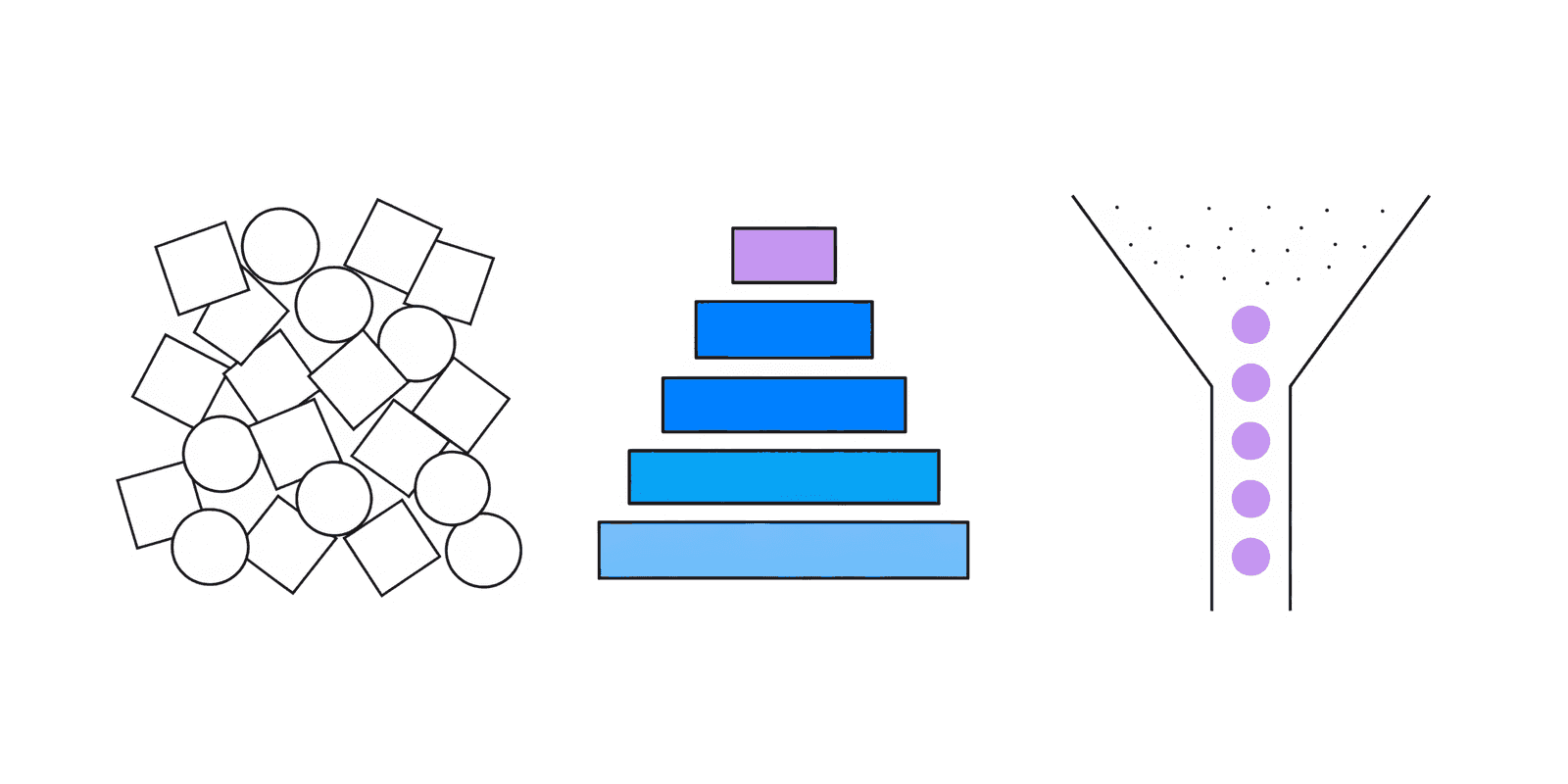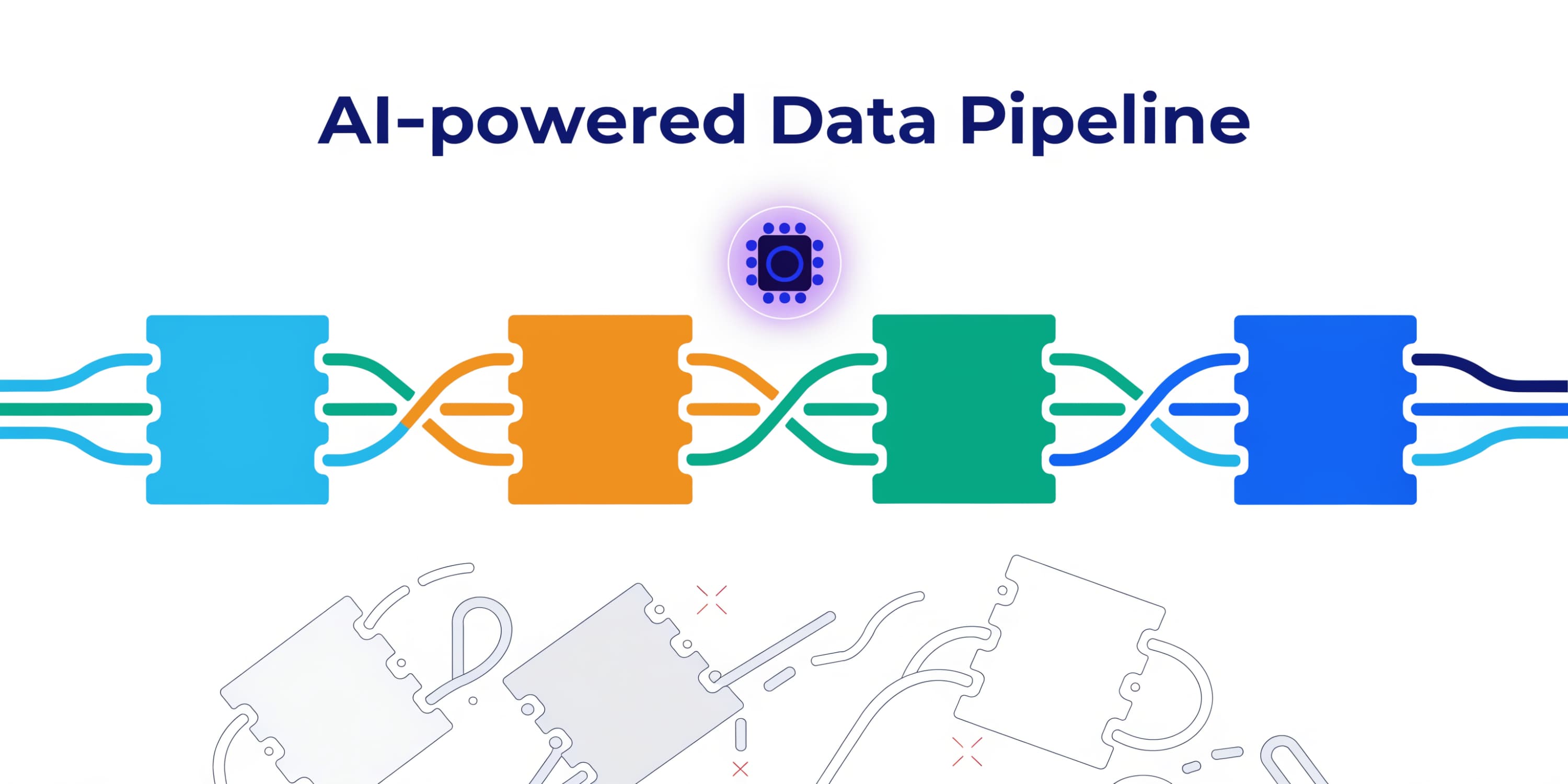


- A modern stack is not defined by how many AI features or dashboards it contains. It is defined by the connections between them.
- Five layers do the work: infrastructure keeps it available, shared data creates context, AI interprets that context, content communicates the response, and personalization delivers it at the right moment.
- Give each layer one owner and one shared identity. Anything else is complexity, not capability.
The phrase "technology stack" once referred mainly to the software behind a website. For a modern business, it now includes the connected systems that collect information, support work, produce content, and turn data into decisions.
That doesn't mean every company needs more software. An oversized stack creates problems of its own. Customer records disagree. Teams repeat work. Automation misfires. Reporting turns into an exercise in reconciling dashboards.
A better stack is designed around a few business outcomes. Its components share reliable data, have clear owners, and operate as one system rather than a collection of subscriptions. AI, content, infrastructure, and personalization matter because they work together, not because each is impressive on its own.
Begin With the Business Workflow
Map the Decision Before Selecting the Tool
Technology planning should start with a real customer or employee journey. Think about what happens after a prospect downloads a guide, requests a demo, or abandons a checkout. Which system records the action? Who needs to know? What should happen next, and how do you tell whether that response helped?
That exercise exposes the capabilities the stack actually needs. A software company may need product analytics and lifecycle messaging. A professional-services firm may care more about lead qualification and client communication. The architecture should reflect those differences, not a generic template.
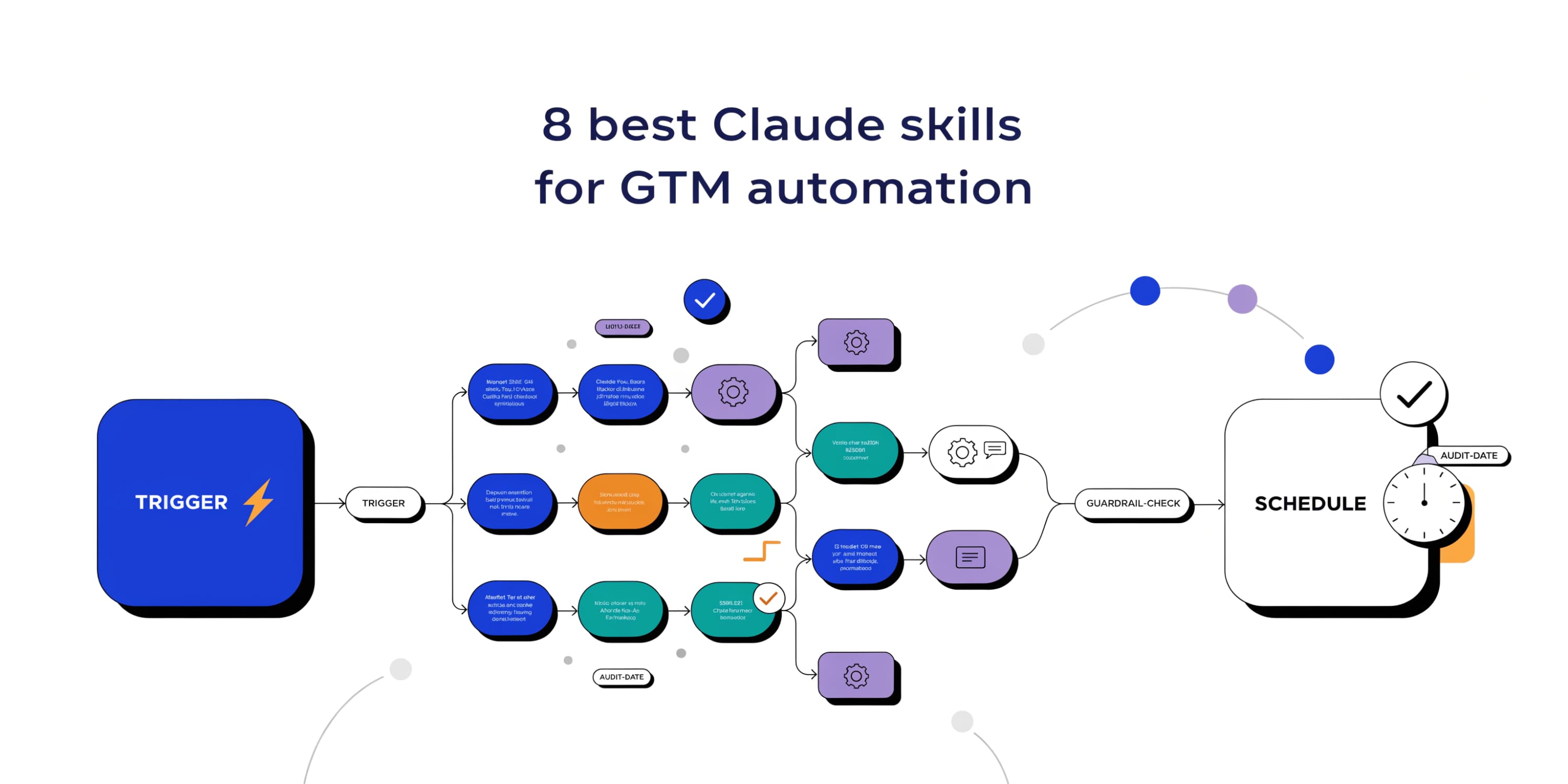
Before buying anything, document the trigger, required data, decision, action, and success metric for each priority workflow. If a proposed tool has no clear place in that chain, it's adding complexity rather than capability. This maps closely to how a modern GTM stack is built in 2026: outcomes first, tools second.
Establish a Reliable System of Record
Most stack failures begin with uncertain data. Marketing uses one email address. Sales has another. Billing identifies the same customer by account number. The product database holds several anonymous sessions. Automation built on those fragments can be fast and completely wrong.
The remedy isn't one enormous database. It's to define which system owns each important fact and how identities are resolved. Consent, account ownership, subscription state, and product activity all need agreed definitions and update schedules. If you're still figuring out how to capture user events cleanly, that comes first, before any personalization or AI layer sits on top.
Once that foundation is dependable, AI can interpret signals and personalization can act on them without relying on guesswork.
Build Infrastructure That the Business Can Operate
Design for the Next Stage, Not an Imaginary Future
Infrastructure is the least visible part of the customer experience until it fails. Hosting, databases, APIs, authentication, and monitoring decide whether every layer above them stays reliable.
The goal is appropriate scale, not maximum scale. An early product rarely needs global-platform architecture, but it does need sensible security, recoverable data, and room to grow. Teams without enough engineering capacity may evaluate a SaaS development partner to translate requirements into a maintainable application and integration plan. What matters is whether the architecture fits the business model, risk, and the team you actually have.
Build-versus-buy decisions belong here too. Commodity functions like payments or authentication are usually safer to buy. Distinctive workflows may justify custom development.
Make Operations Understandable
A production environment needs day-to-day ownership. Someone has to monitor performance, investigate failures, deploy changes, and verify backups. Small teams are vulnerable when this knowledge lives in one engineer's terminal history.
A server management platform can bring access, monitoring, file operations, and common deployment tasks into a more consistent workflow for teams running Linux servers. That reduces tool switching, but software doesn't remove operational responsibility. Commands still need review. Privileges should stay limited. Important changes need an audit trail and a rollback plan.
The strongest infrastructure layer is deliberately boring. It behaves predictably, makes problems visible early, and lets the team recover without improvisation.
Treat AI as a Decision Layer
Choose Narrow Jobs With Measurable Value
"Add AI" isn't a useful requirement. AI earns its place in the stack when it does a defined job: summarizing sales calls, classifying support requests, predicting churn risk, drafting a first response, or recommending the next best action.
Pick a workflow that runs often enough to matter and is controlled enough to evaluate. Set a baseline for time, cost, accuracy, or conversion. A pilot can then show whether the new process improves the outcome without creating unacceptable risk. Most of the honest numbers on where AI actually moves marketing metrics live in the real impact of generative AI on marketing rather than in vendor decks.
Because the market moves quickly, teams need to separate durable capabilities from short-lived claims. Independent business technology coverage can give a wider view of AI tools and software trends before a vendor shortlist gets built. Supplement outside coverage with technical testing on your own data.
Keep Human Control Where Consequences Are High
AI output is probabilistic. That makes review especially important in legal, financial, employment, healthcare, and public-facing communications. A sensible architecture separates low-risk assistance from actions that need approval.
A model may categorize an inbound question and prepare a reply. Issuing a refund, changing a contract, or making a regulated claim should require deterministic rules or a human sign-off. Logs should preserve enough detail to investigate surprising results.
The model is only one component. Evaluation data, permission controls, monitoring, and an escalation path are what make AI usable in production.
Turn Content Into a Managed Supply Chain
Separate Creation From Approval
Content sits between internal knowledge and the customer experience. Product pages, guides, emails, sales materials, and help articles explain what the business offers. When each team creates them on their own, facts drift and the brand voice gets uneven.
A mature content layer starts with approved product facts, audience definitions, claims guidance, and style rules. Writers and AI tools can draft from that foundation. Subject experts verify accuracy. Authorized owners approve sensitive claims. The same discipline applies to search visibility: if you want content that answer engines actually cite, structure and provenance matter more than volume, which is what AEO optimization really tests.
Specialized software helps when a format needs more structure than a general chat interface. For a long-form project, an AI writing platform can support outlining, chapter development, and production in one workspace. The value comes from managing the project coherently, not publishing an untouched first draft.
Design Content for Reuse
One strong research asset can support a guide, a webinar, a sales deck, an email sequence, and several short posts. That doesn't mean copying the same paragraph into every channel. It means preserving the underlying ideas, evidence, and approved language so each adaptation starts from a trustworthy source.
Distribution still needs judgment. Practical digital marketing guidance can give context on channels, search visibility, and promotion. A company's own performance data shows what actually works for its audience. External advice identifies possibilities. Internal evidence directs the budget.
Content operations should track more than output volume. Useful measures include assisted conversions, qualified engagement, sales usage, support deflection, and how often important assets need correction.
Connect Personalization to Shared Customer Context
Personalize the Decision, Not Just the Greeting
Weak personalization inserts a first name into a generic message. Strong personalization changes what the customer sees, or what the business does, based on relevant, current context.
A new visitor may need education. An active evaluator may need proof. A customer showing declining usage may need support rather than another acquisition offer. These experiences require identity, audience, content, and delivery systems to share the same customer context. That's the load-bearing idea behind lifecycle marketing done well: a customer retained on one product is a cold lead for the next.
Start with a small number of meaningful signals. Lifecycle stage, product behavior, account fit, and consent are usually more valuable than dozens of decorative attributes. Define a default experience for incomplete data so missing information doesn't produce an awkward or inappropriate message.
Close the Measurement Loop
Personalization improves only when outcomes return to the system that made the decision. If an audience gets tailored onboarding, the stack should record exposure, adoption, and retention. Otherwise, the company knows the experience was delivered but not whether it helped.
Experiments should test one meaningful difference at a time and use a metric connected to business value. Click-through rate can be informative, but activation, qualified pipeline, repeat purchase, or churn tell you whether the experience actually improved the relationship. This is where most companies get revenue attribution wrong: they measure delivery instead of outcome, then blame the model when the numbers don't line up.
Keep the Stack Coherent as It Grows
Every component creates an integration, security, and ownership obligation. A quarterly review should identify duplicate functions, unused contracts, broken data flows, and automations nobody can explain. It should also confirm who owns each system.
A simple sequence keeps expansion disciplined:
- Define the outcome and the baseline.
- Confirm the required data and its owner.
- Choose the smallest capability that can improve the workflow.
- Test it with real users and realistic failure cases.
- Integrate successful results into reporting and operations.
- Retire the process or tool it was meant to replace.
That final step is the one most teams skip. When new software is layered on top of the old process, cost rises while work barely changes.
This is the pattern Intempt is built around: instead of stitching identity, audience, content, and delivery across four vendors, the same customer context runs Design, Market, Sell, and Analyze on one record.
The modern business technology stack isn't defined by the number of AI features, content tools, or dashboards it contains. It's defined by the quality of the connections between them. Reliable infrastructure keeps the system available. Shared data creates context. AI helps interpret that context. Content communicates the response. Personalization delivers it at the right moment. When each layer has a clear purpose and owner, the stack gets simpler to operate and far more useful to the business.
Frequently asked questions.Answered.
- A modern business technology stack is the connected set of systems a company uses to collect information, run work, produce content, and turn data into decisions. It usually spans four layers: infrastructure (hosting, databases, APIs), AI (a decision layer that interprets signals), content (approved facts and creative), and personalization (delivering the right response at the right moment). What makes it modern isn't the number of tools; it's whether those layers share identity and data.