
- An AI marketing agent is software with its own runtime that executes marketing work with a human in the approval loop. A chatbot that drafts a subject line is not one.
- Only 17 percent of organizations have shipped an agent into production despite over 60 percent planning to, and Gartner predicts more than 40 percent of agentic AI projects will be canceled by 2027.
- Evaluate agents on what they build from a goal, not a template. Describe a trigger and see if the agent returns a full journey with branches and channels.
"AI marketing agent" gets used to describe everything from a copy-drafting chatbot to a fully autonomous execution system. Here's the real definition, the checklist that separates the two, and a walkthrough of one specific agent - Intempt's Lifecycle Marketer - end to end.
The rest of the post covers the honest definition of an AI marketing agent, the three-item checklist that filters chatbots out, the market size and the deployment gap the trade press doesn't lead with, a step-by-step walkthrough of Lifecycle Marketer, how it fits into the wider agent family, the six use cases the category actually covers today, and the failure modes that decide whether an agent ships or gets canceled. Related: agentic AI in marketing for the wider category read.
What actually counts as an AI marketing agent
The precise 2026 definition: software with its own runtime that executes marketing work autonomously, with a human in the approval loop. Not a chatbot draft-and-hand-back. If you're evaluating whether something qualifies, check for three things: autonomous execution (not human-input-required at every step), data integration depth across SEO/GEO/analytics/ads/CRM, and channel coverage across search, content, paid, social, and lifecycle.
| Checklist item | What to actually verify |
|---|---|
| Autonomous execution | Does it run the full task, or just draft one piece for you to assemble? |
| Data integration depth | Does it see real behavior data, or only what's in a CRM field? |
| Channel coverage | One channel, or search/content/paid/social/lifecycle together? |
| Tool access | Can it call the ad account, the ESP, and the CRM, or does it hand a plan to a human to execute? |
| Success signal | Does it check the output against a stated conversion event, or does it stop at the draft? |
Chatbot versus agent, in one line each
| Property | Chatbot | Agent |
|---|---|---|
| Unit of work | One message | One task (a journey, a campaign) |
| Human involvement | Prompt at every step | Approval at gates, not per step |
| Tool access | Text in, text out | Reads data, calls APIs, writes to the destination |
| Success check | None - the human decides | Reports conversion against a stated goal event |
| What it needs | A text box | A runtime, tool access, and stated success criteria |
How big is this category, actually
The agentic AI market overall sits at roughly $9-11B in 2026, projected to reach $57B by 2031 - a 42% compound annual growth rate. Marketing and sales rank among the top two use cases across every major survey of where enterprises are actually pointing agents first. 34% of enterprise marketing teams now run at least one autonomous agent in production, more than double the 14% reported in Q4 2025 - real, fast movement, not a plateaued trend.
Where deployments succeed, the ROI is real: successful agent rollouts report 4.1x-5.3x ROI on the specific workflow they replace, notably higher than general-purpose AI tooling that isn't scoped to one autonomous job.
The honest gap: adoption intent vs. real production use
Worth stating plainly rather than only citing the upside: only 17% of organizations have actually deployed an AI agent into production, even though over 60% plan to within two years. That gap between intent and execution is real, and Gartner's own forecast is blunt about it - the firm predicts more than 40% of agentic AI projects will be canceled by the end of 2027 over unclear value, rising costs, and weak governance. The lesson isn't "agents don't work" - it's that scoping one agent to one well-defined job (like Lifecycle Marketer's single job of journey-building) survives that shakeout better than a vague, do-everything agent mandate does.
The three failure modes that explain the 40 percent
- Unclear scope: an agent asked to "do marketing" fails because there's no measurable success signal. The successful ones are scoped to a task (build the journey, generate the brief), not a domain.
- No owner: agents inherit the conversation-intelligence rollout curse - without a program owner, adoption stalls at month four regardless of vendor.
- Missing integration: the agent can plan but can't act because it doesn't have real tool access to the CRM, the ad account, or the email platform. Plans-without-execution get canceled.
Walkthrough: Intempt's Lifecycle Marketer agent
Lifecycle Marketer is one of Intempt's specialist agents, purpose-built for journey building. This walkthrough is the actual flow, not a marketing description of it.
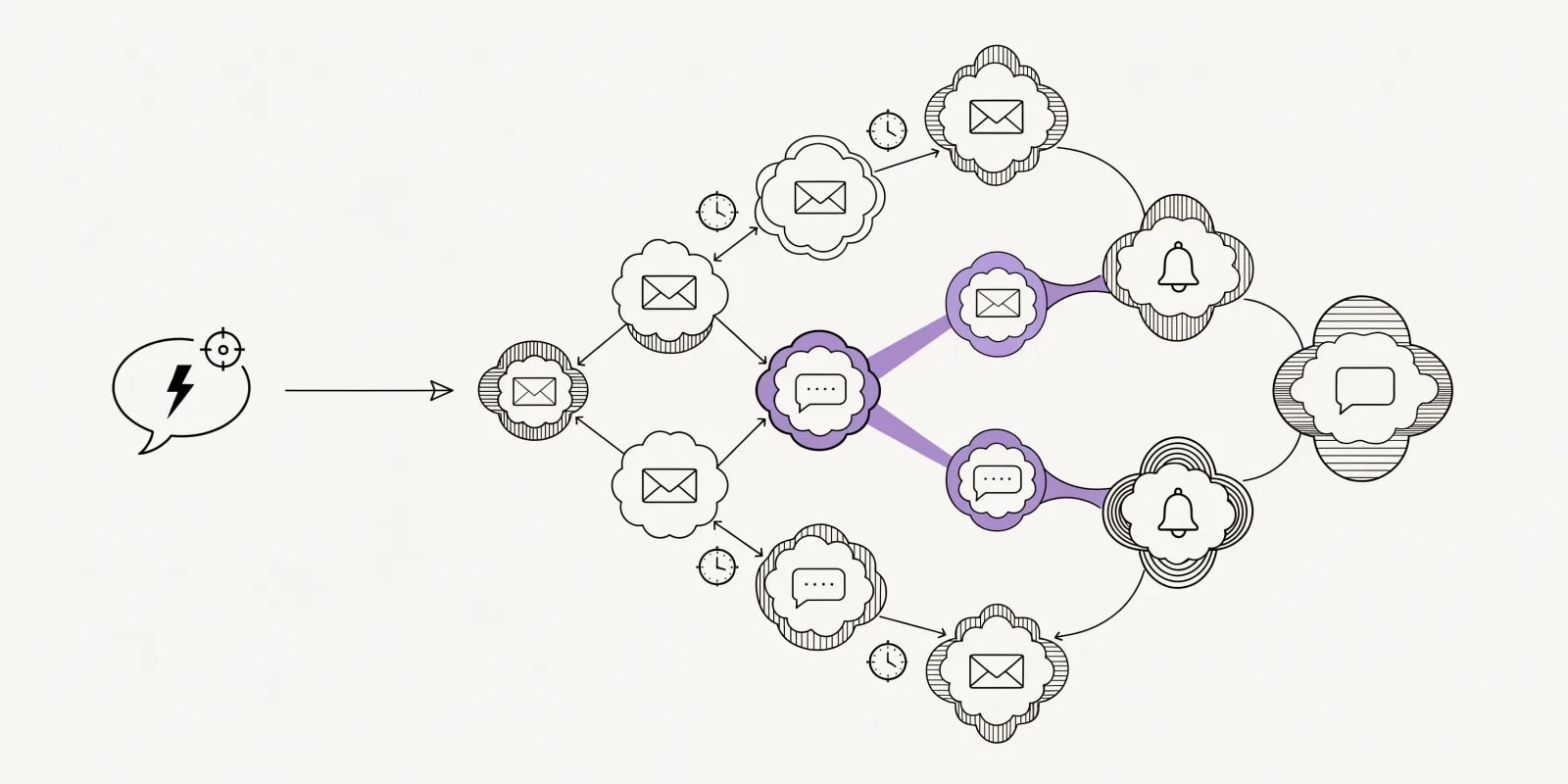
- You describe the trigger and the goal - abandoned cart, trial signup, 60 days inactive, or any other event.
- The agent builds the full flow in a single turn - steps, delays, branches, channel selection - ready to review, not a rough draft.
- Content gets written into every step: email copy, SMS text, and push notifications, each formatted for its channel with Liquid personalization.
- Every journey has a goal event, and the agent reports step-by-step conversion against it, so you know exactly what to optimize next.
A worked example: 60-day inactive win-back
The scoping prompt is short - one sentence about the trigger, one about the goal. What the agent returns is a complete, editable journey with the choices made and defensible defaults filled in.
| Step | Channel | Timing | Content approach |
|---|---|---|---|
| Trigger detected: 60 days inactive | - | - | - |
| Step 1 | Day 0 | Soft reactivation, incentive-free, personalized to last product viewed | |
| Step 2 (branch) | Push if opted in, email otherwise | Day 3 | Curated recommendations from segment history |
| Step 3 (branch) | SMS | Day 7, only if steps 1-2 unopened | 10% incentive, expires in 48 hours |
| Step 4 (exit) | Day 14, only if step 3 didn't convert | "Should we stop here?" preference update prompt | |
| Goal event | Any purchase within 30 days of trigger | - | - |
The agent picks the channel per step based on opted-in status, defaults the delays to what worked across the segment historically, and writes the copy for each step in the brand voice. The marketer's job is the approval loop - checking the incentive threshold, the exit condition, and the copy tone - not building the journey from scratch.
It's part of a family, not a standalone tool
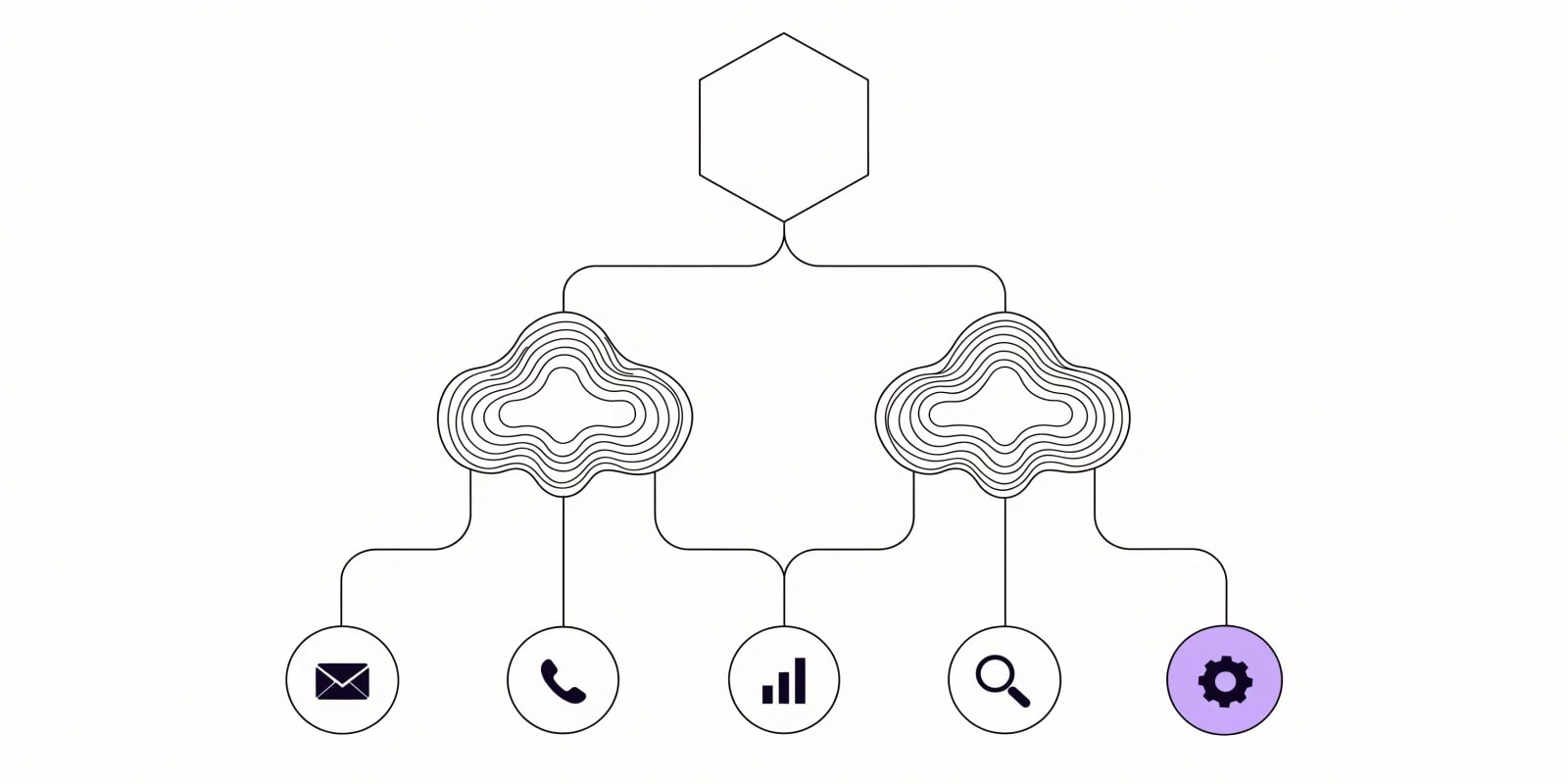
Lifecycle Marketer shares one GTM context layer with Intempt's other specialist agents - Brand Designer writes one brief into email, SMS, push, and landing-page copy at once (the Design Message builder job), and Data Analyst attributes revenue to each channel and campaign. They all read the same behavior data and brand guidelines instead of each starting from a blank context.
The shared context matters because agents that don't share context ship the same problem the 43 percent martech-integration gap creates: five agents, five identity graphs, five brand-voice interpretations, and one team spending its week reconciling them. One context layer under one platform is why an agent family can compound where a set of point agents can't.
The six use cases the AI marketing agent category actually covers
The category's real shape today is six clearly-scoped jobs, each with a stated success signal. Lifecycle Marketer is the Lifecycle Nurture Agent row. The others exist in different products, or as specialist agents inside the same family.
| Agent type | Task | Success signal |
|---|---|---|
| Conversation Intelligence Agent | Score calls, flag deal risk, surface coaching moments | Adoption of scored moments in weekly reviews |
| SEO Content Brief Agent | Turn a keyword into a shipped brief with sections, sources, and intent notes | Draft-to-publish time cut in half |
| Ad Creative Variant Generator | Produce N ad variants from one brief across formats | Cost per acquisition on winners |
| Lead Enrichment Agent | Fill firmographic and intent fields on new leads within minutes | Percent of leads with complete profile at handoff |
| Lifecycle Nurture Agent (Lifecycle Marketer) | Build a full journey from trigger and goal, then measure it | Conversion against the goal event |
| Social Listening Agent | Detect mentions, categorize sentiment, propose responses | Coverage of relevant mentions and response time |
Try the planning step yourself
Before wiring up a full journey, the AI Marketing Campaign Generator turns a goal and audience into a first-draft campaign plan and timeline - a reasonable starting point for scoping what an AI marketing agent like Lifecycle Marketer should actually run.
Try the AI Marketing Campaign Generator free - goal in, campaign plan and timeline out.
What an AI marketing agent does not do
The contrarian close. An agent is a real productivity system for a scoped task. It is not a strategy, an ICP, or a replacement for the marketer's judgment on which of the six jobs above is actually the bottleneck this quarter.
- It does not choose which job to do. The marketer picks Lifecycle Nurture or Ad Creative or Enrichment based on the bottleneck.
- It does not fix a bad ICP. A perfect journey to the wrong customer converts at the wrong rate.
- It does not run without an owner. The 40 percent cancellation rate is what happens when nobody owns the agent's success signal.
- It does not integrate itself. Real tool access to the CRM, ESP, and ad account is engineering work, not a checkbox in the agent.
- It does not compound across disconnected agents. Six agents on six identity graphs produces six separate reports, not one growth story.
The short version
An AI marketing agent is software with its own runtime that runs a task end to end, not a chatbot that drafts one message. The category is real (34 percent of enterprise teams have shipped at least one, ROI at 4.1-5.3x on successful deployments) but the deployment gap is also real (17 percent in production versus 60 percent planning, and Gartner's 40 percent cancellation forecast). Scope one agent to one job (Lifecycle Marketer builds the journey), give it an owner and a success signal, and it survives the shakeout that will cancel the vague ones.