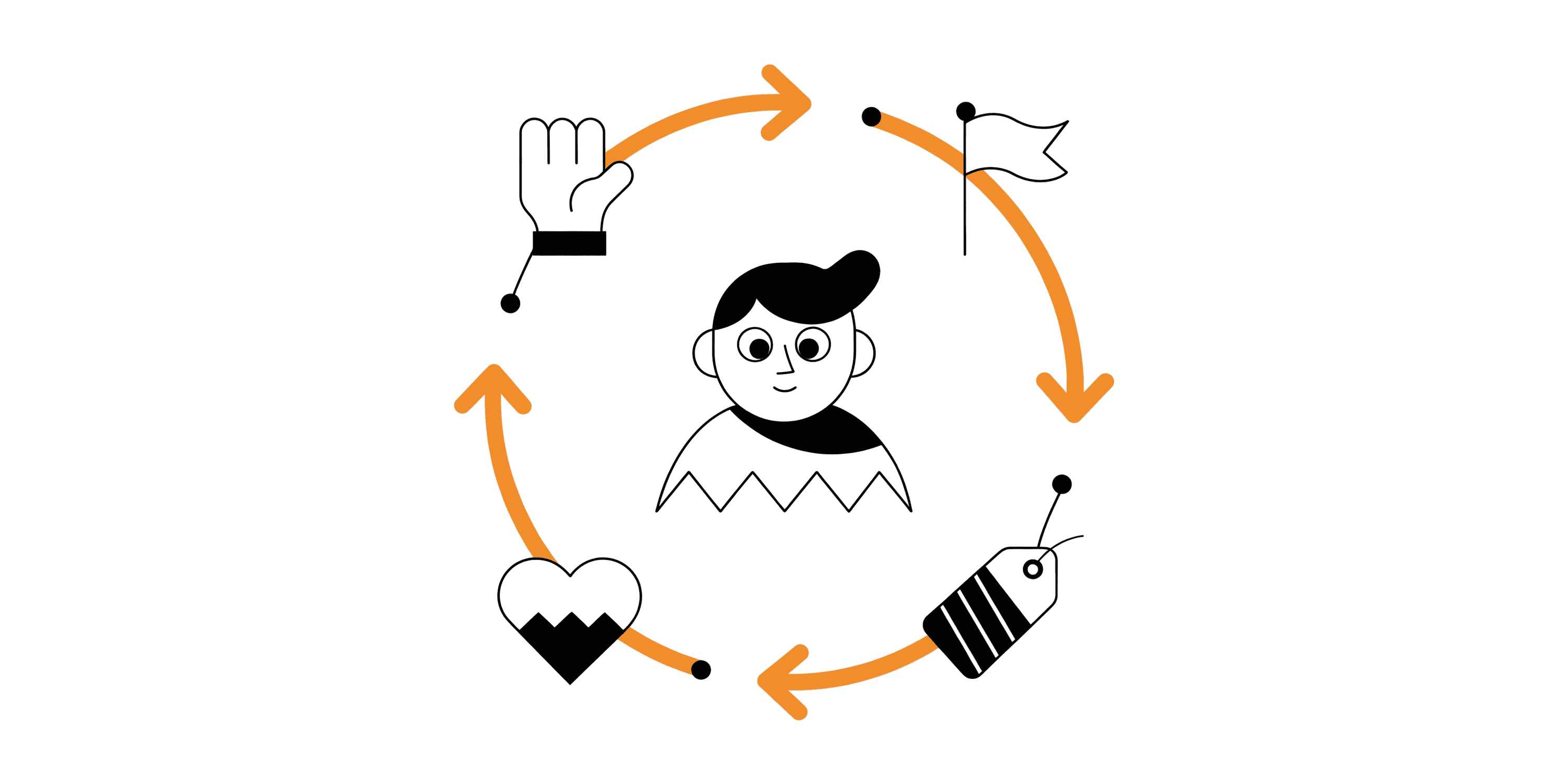

Lifecycle marketing gets taught as a funnel: awareness, onboarding, engagement, retention, winback, one direction, one pass. That model breaks the moment a company sells more than one thing. A customer fully retained on one product is a cold lead for the next one, at the same company, on the same day. Intempt sells four products, so its own accounts sit in four different lifecycle stages at once. Most teams can't represent that in the tools they already own: HubSpot stores lifecycle stage as a single property per contact, and its automatic updates only move that stage forward, so a customer who becomes a lead again has to be reset by hand. The working model is a stage per product instead of a stage per person, entry and exit criteria defined per product, and re-entry treated as the normal case rather than a failure.
Lifecycle marketing is the practice of matching messaging, timing, and product nudges to where a person is in their relationship with you, so they take the next meaningful step. Almost every guide then draws it as a funnel with three to seven stages, one direction, one pass. That picture is wrong in a way that gets expensive, and the customer journeys you build on top of it inherit the mistake.
Here is the case the funnel cannot draw. A company that sells two products has customers who are, at this moment, fully retained on one and completely unaware of the other. Not as an edge case. As the normal shape of most accounts it has. Intempt sells four products, so its own accounts routinely sit in four different lifecycle stages at the same time, with nobody having churned, lapsed, or done anything wrong.
The short version
- Lifecycle marketing is behavior-triggered messaging tied to stages. That definition is fine. The funnel drawing attached to it is not.
- A retained customer of one product is a cold lead for your second product, at the same company, on the same day.
- That means a person occupies one stage per product, not one stage total. Four products, four concurrent stages.
- Most teams can't record this. HubSpot's lifecycle stage is a single property per contact with eight ordered values, and its automatic updates only move the stage forward.
- So the second-product opportunity inside an existing account has nowhere to live in the data, and nothing fires on it.
- Re-entry into an earlier stage is the normal case, not a failure. It gets triggered by usage of a different product, not by a lapse.
- Retention has to be measured per product. An account can sit at 110 percent net revenue retention while one of its four products runs at 40 percent.
- The metric the funnel has no slot for: share of accounts using two or more products, and median months to the second one.
- If your stage field can only hold one value and can only move one direction, you don't have lifecycle marketing. You have a sales funnel with more emails in it.
What is lifecycle marketing?
Lifecycle marketing matches messaging, timing, and product nudges to where a person is in their relationship with you, so they take the next meaningful step. It's behavior-triggered rather than calendar-triggered, which is the one thing that separates it from campaign marketing. A new lead needs proof. A new customer needs fast value. An engaged customer needs momentum. A drifting one needs a reason to come back.
That much is settled and the guides agree on it. Stage counts vary from three to seven depending on who wrote the post, and the disagreement doesn't matter, because the names are the easy part. Entry and exit criteria are the hard part. If you can't say which event puts someone into onboarding and which event takes them out, the stage is a label on a slide.
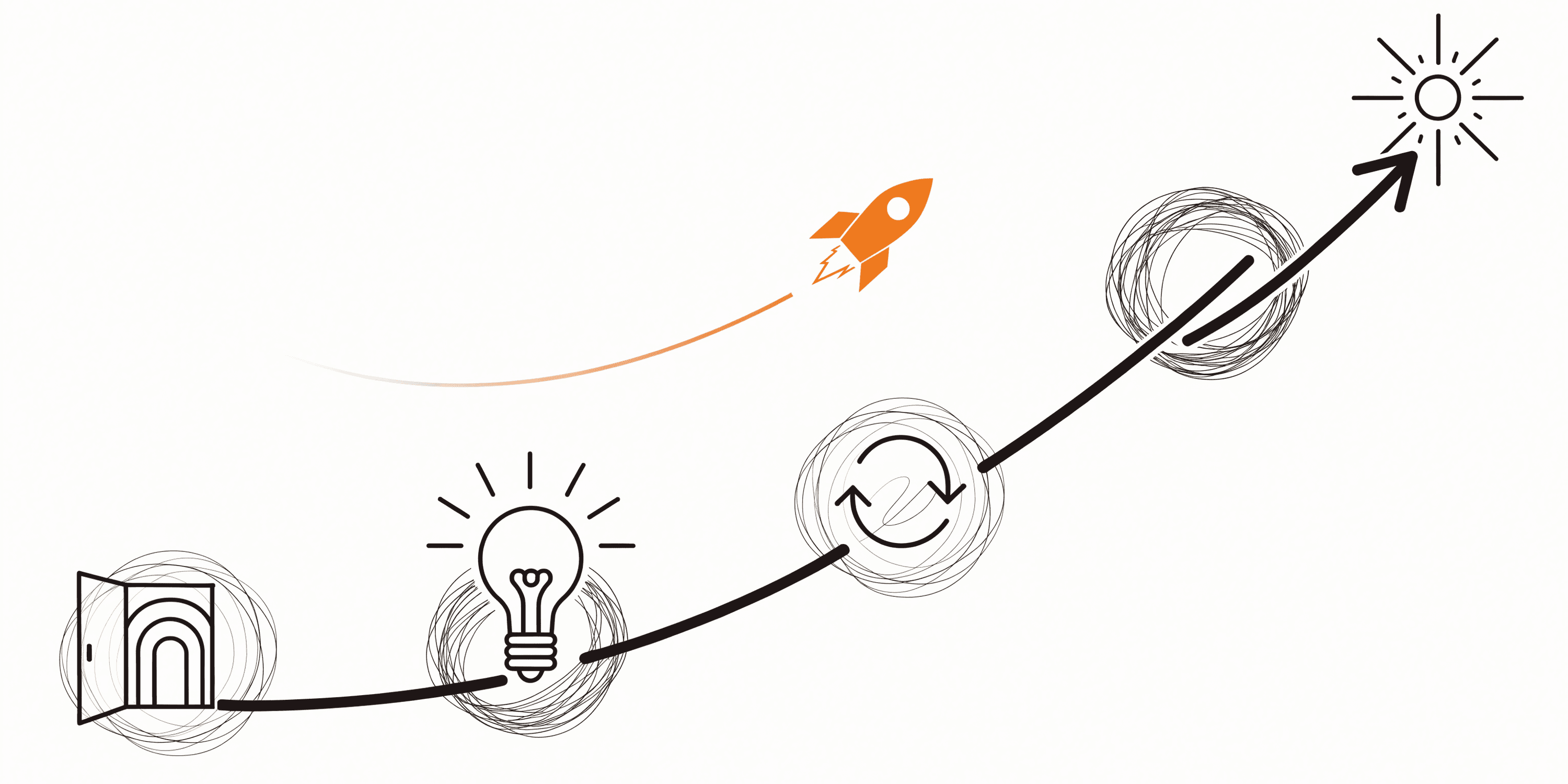
The shape is where the received wisdom breaks. The published versions all share one property: they run one direction and they run once. Awareness at the left, loyalty or advocacy at the right, arrows pointing the same way the whole distance. That shape describes a customer's first pass through your first product and describes nothing that happens afterward, which is where most of the revenue in a multi-product account lives.
Why the funnel model breaks the moment you sell two things
Because a customer of one product is a lead for another, and the funnel has no way to say both at once. Intempt sells four products: Analytics, Design, Marketing, and Sales. Any account using one of them is at the start of the relationship with the other three, and being a 14-month customer buys them no progress on a product they've never opened.
Work through one account. It started on Analytics 14 months ago and has added products since. Here is where it sits, product by product, on one ordinary Tuesday in month 14. The stage sections below pick the same account up before and after that Tuesday, because none of these four states hold still.
| Product | Months in use | Lifecycle stage for this product | What one account-level stage field says |
|---|---|---|---|
| Intempt Analytics | 14 | Retained. Daily active, three dashboards, a weekly revenue review | Customer |
| Intempt Marketing | 3 | Onboarding. First journey live, second one unbuilt, no test run yet | Customer |
| Intempt Design | 0 | Awareness. First exposure landed this week, from a variant they couldn't produce | Customer |
| Intempt Sales | 6 | At risk. Sequencing stopped five weeks ago when the founding rep left | Customer |
Read the last column down the page. That's the whole problem in one table. Four different lifecycle states, four different next-best actions, and one field that returns the same answer for all of them. Anything keyed off that field sends the same message to a power user and to someone who has never seen the product.
This isn't a modeling preference, it's what the tools enforce. HubSpot's own documentation describes lifecycle stage as a single property per contact, drawn from eight values: Subscriber, Lead, Marketing Qualified Lead, Sales Qualified Lead, Opportunity, Customer, Evangelist, and Other. The first seven are an ordered progression and the eighth is the catch-all for records that don't fit it. Automatic updates to that property only move the stage forward. To set an earlier value you have to clear the field first, by hand or through a workflow. That's a one-way ratchet with room for exactly one answer, and it's the model a lot of B2B teams inherit by default, which means the second-product opportunity inside an existing account has nowhere to be recorded and nothing to fire on.
The economics make the omission worse. Harvard Business Review put the range at 5 to 25 times more expensive to acquire a new customer than to keep an existing one, a 2014 figure that gets quoted with more precision than it deserves but points the right direction. Run that logic one step further than it usually gets run. The cheapest lead for your second product is a customer of your first, and the funnel model puts that person in a box marked "retained" and stops talking to them about anything new.
The five stages, and what pushes a customer back into each one
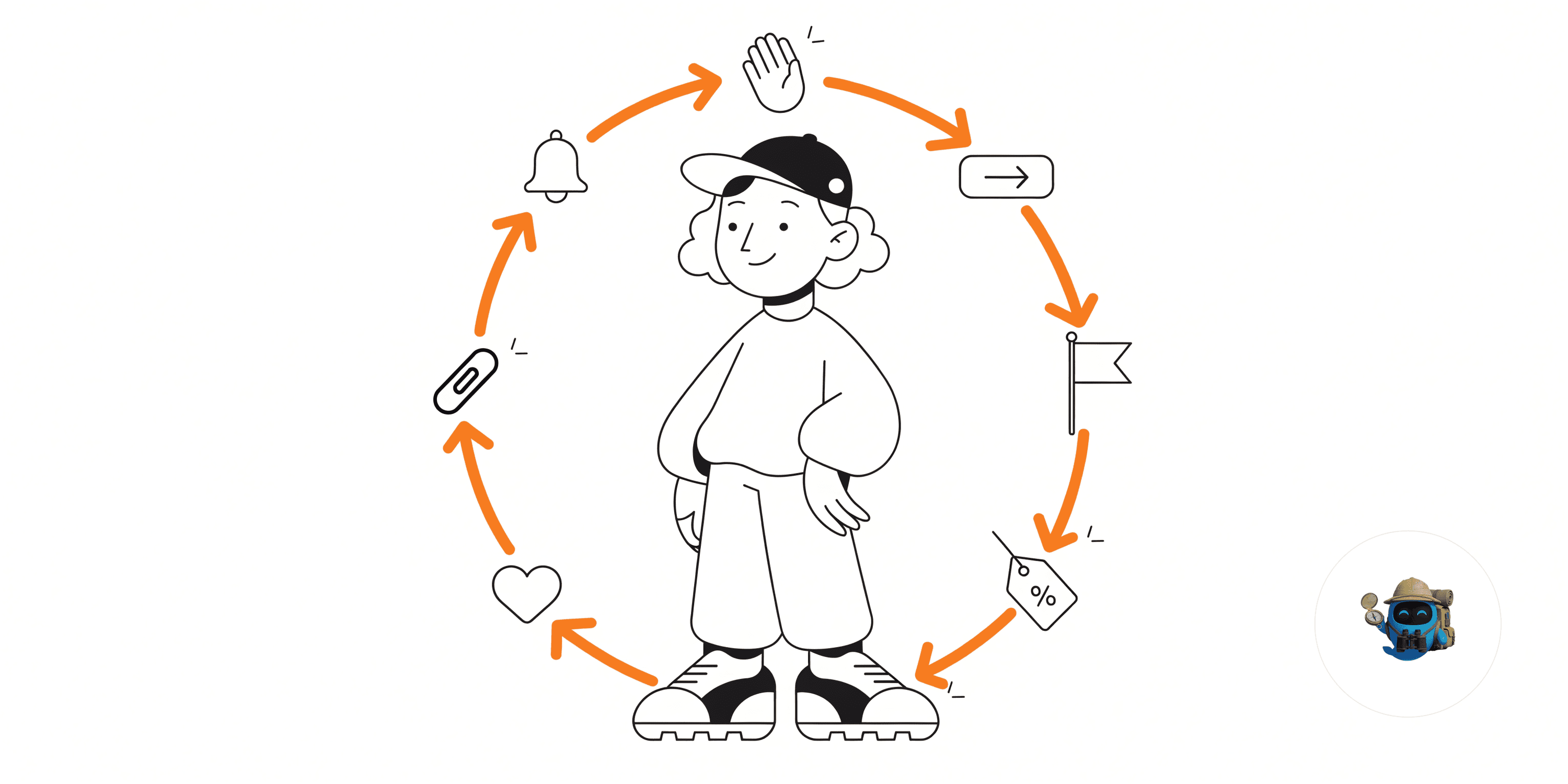
The five stages are worth keeping. The arrows between them are not. Below, each stage is written from the direction nobody teaches: not how a new person enters it, but what pushes an existing customer back into it. Every example is triggered by the account using a different product, which is what makes re-entry routine rather than remedial.
Awareness, in month 14
An account has run Intempt Analytics for 14 months and has never opened Intempt Design. Then a revenue report attributes 40 percent of a segment's conversions to one page variant, and the obvious follow-up is 12 more variants they have no designer to make. That report is their first awareness moment for a second product. Month 14 of the relationship, day zero of the product, and every awareness problem a stranger has: they don't know it exists, they don't know what it costs, they don't know if it's for them.
What awareness re-entry needs is the thing account-level marketing never does: treat a paying customer as uninformed about something. The Data Analyst surfacing the variant gap is doing awareness work for a different product, which is why the report and the creative side have to read from the same customer profile rather than from two systems that reconcile overnight.
Evaluation, from inside the product
Weeks after that report, the same account runs its first test in Intempt Marketing, the challenger wins, and acting on the result needs creative they can't produce. Now they're evaluating a second product from inside the first one. They're comparing the Brand Designer against Canva, against the freelancer they used last quarter, and against doing nothing, which is the option that usually wins. The evaluation is identical to a cold prospect's, with one difference: the trigger arrived as a result inside a product they already pay for.
This is the highest-intent moment in a multi-product relationship and the one most teams have no mechanism for, because their lifecycle tooling stopped modeling this person as evaluable the day they converted. Expansion-qualified leads exist for exactly this state, and the expansion candidates segment is the practical version: users whose behavior in one product says they're ready for a conversation about another.
Onboarding, 11 months in
Rewind three months from that Tuesday. The same account is 11 months into Intempt Analytics and three months into Intempt Sales. It books meetings off first-party signal, then turns on Intempt Marketing to nurture the ones that stall. Eleven months of tenure gives them nothing here. They still have to define a goal event, build a first journey, connect a first channel, and send a first message before anything works. Time to value resets to zero, and the onboarding risk that comes with it resets too.
Teams miss this because their activation reporting is scoped to the account. The account activated 11 months ago, so the dashboard says activated, so nobody gets an onboarding sequence and the second product quietly never gets used. The fix is to fire activation logic per product, which is what the aha-moment activation journey does: it watches for the event that predicts retention on that specific product and reinforces it, whether the account is 20 days old or 14 months.
Retention, per product and not per account
Now run the same account forward six months from that Tuesday. It adopted Intempt Design after the variant gap, generated steadily for a couple of months, then stopped: last generation six weeks ago, nothing since, while Analytics stayed daily. Then a deal closed in Intempt Sales, the replacement rep's first, and they put the one-pager the team had generated in their first month on Design into the win notes. Two days later the sales lead asked for five more, one per open deal, and Design went from six weeks idle to used every day. A different product's event is the only reason that product got retained.
Nothing in the account-level view moved during any of that. It read healthy through the dormancy and it reads healthy now, which is what makes it useless: it can't tell you a product died, so it can't tell you what brought it back. Product-level retention shows both, and the second one is the part you can build on, because the event that revived Design was a closed deal in Sales and that event is in your data already.
The direction runs both ways, which is the useful part. Heavy usage of one product is one of the clearest signals for expansion in another, and it's readable in event data without anyone filling out a form. The usage spike expansion play fires on thresholds like fast user growth on an account or usage spreading across teams, then routes different content to the champion and the economic buyer. The seat expansion signal workflow does the same job in the other direction, turning a plan-limit event into a task for a human rep instead of an email nobody asked for.
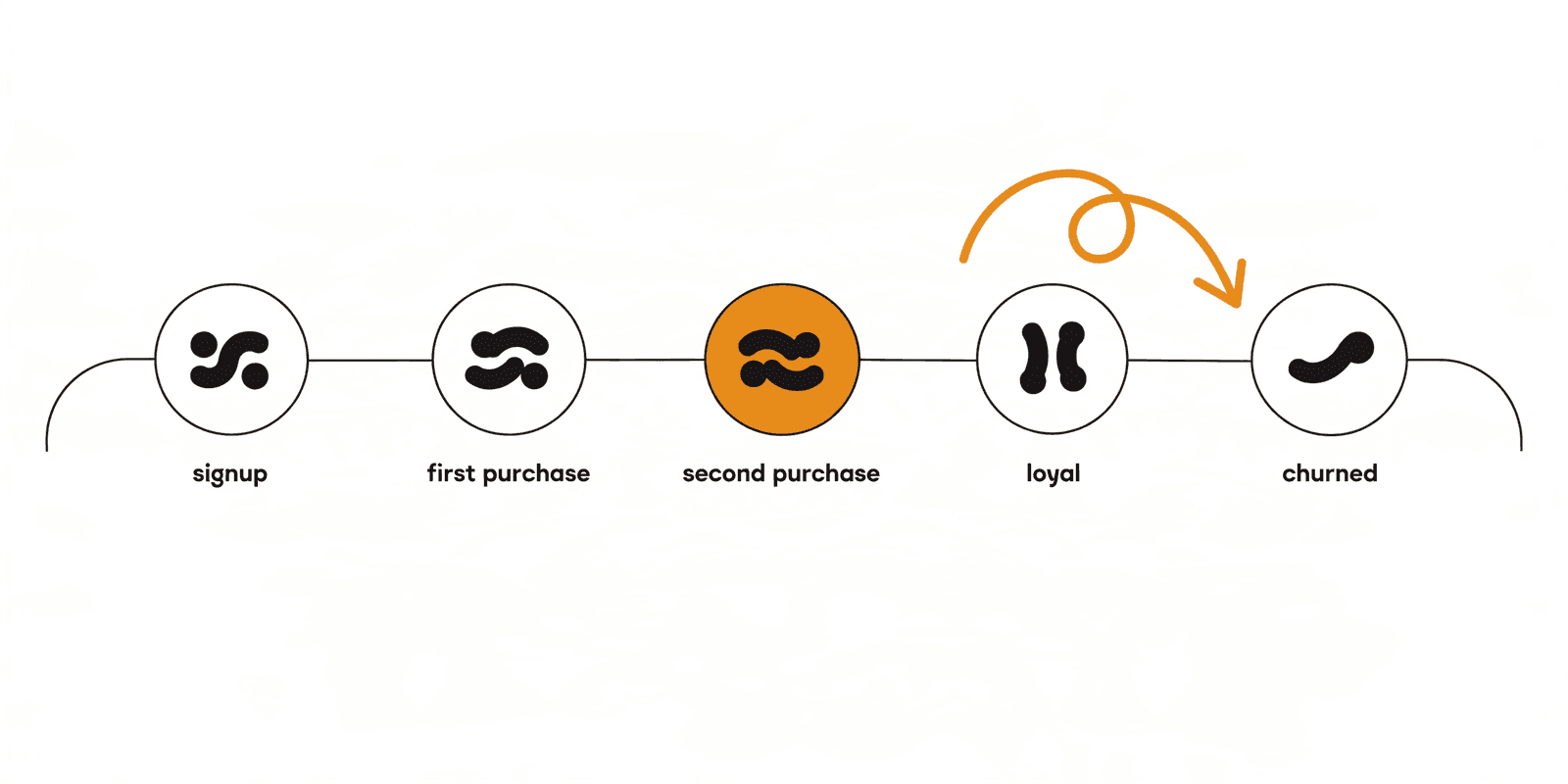
Winback with no cancel event
A second account stopped using Intempt Design nine months ago and never started again. No cancel, no downgrade, invoices clearing at full value, just an event that used to fire weekly and then didn't. Then Intempt Sales surfaced something: a name nobody had seen before started running sequences on that account, and those sequences were pitching a launch with three landing pages behind them. Someone had been hired to do exactly the work the dormant product exists for, and the only place that showed up was the usage log of a product they never stopped using.
That's the winback trigger, and it lives nowhere in a churn model, because nothing churned. The dormancy has to be caught as an absence in the first place: an event that fired weekly and then stopped. The reason to act on it usually arrives later and from somewhere else, as a new active user or a usage shift in a different product, which is the signal that says the account is winnable again on the one it dropped.
This is the failure mode that costs the most and shows up the least, because every winback playbook in the category keys off a cancellation. It also needs a different message from a real churn, since post-cancel winback sequences are written for someone who left, and this account never did. It stopped using one of the four things it pays for, and then quietly hired the person who needs it.
| Stage re-entered | What triggers the re-entry | Product in use when it fires | The signal in your data |
|---|---|---|---|
| Awareness | A revenue report credits a page variant the account can't produce more of | Intempt Analytics | Report viewed, zero events from Design |
| Evaluation | A winning test needs 12 image variants and there's no designer on staff | Intempt Marketing | Test concluded, expansion candidate criteria met |
| Onboarding | Stalled meetings need lifecycle nurture, so a second product gets turned on | Intempt Sales | First journey created 11 months after signup, aha moment not yet reached on the new product |
| Retention | A closed deal credits a one-pager, and five more get asked for the same week | Intempt Sales | Deal closed, a six-week dormancy on another product ending, same account |
| Winback | A new hire starts running sequences that need creative nobody has generated in nine months. Still no cancel event | Intempt Sales | New active user in one product, weekly event absent nine months in another, pre-churn signals on one product only |
This isn't only a software company problem
The pattern holds anywhere a company sells more than one category. Two of the most-cited lifecycle programs in marketing make the point well, one because it's documented this way and one because the data most companies already collect would show it if anyone looked. Neither is usually described this way, because both get written up as retention case studies rather than as evidence that the funnel drawing is wrong.
Spotify: the music listener who is a cold lead for audiobooks
A subscriber finishes the last episode of a narrative podcast series, and the next thing the app puts in front of them is an audiobook, in an account that has never opened one. No date triggered that. Their listening did. Spotify carries music, podcasts, and audiobooks on one subscription, so its lifecycle problem is the same shape as a four-product software company's: same person, same billing relationship, three different stages of awareness, and the thing that moves them into the format they don't use is their behavior in the formats they do.
Spotify has published how that works, which makes it a better example than the one everyone reaches for. A Spotify team's paper at The Web Conference 2024, Personalized Audiobook Recommendations at Spotify Through Graph Neural Networks, describes the problem of introducing a brand-new content type to an existing base and solves it by reading each listener's existing podcast and music preferences. The reported result was a 46 percent increase in the rate at which people start a new audiobook and a 23 percent increase in streaming rates. Read it as a lifecycle mechanic and it's an awareness stage, entered by a long-tenured subscriber, triggered by their usage of a different product on the same subscription.
(Image source: Spotify)
Wrapped is what gets cited instead, and it's worth being precise about why it's the weaker example. Wrapped lands on a fixed date for everyone at once. It's a calendar trigger, which is the one property lifecycle marketing is defined against. It's a very good campaign and it isn't the thing that moves a specific person into a format they've never tried, because it doesn't depend on what that person did last week.
The prerequisite is owning the listener identity, which is exactly why the artists on the platform can't run this play. They have the audience and Spotify has the profile. Guides on building an owned audience work through the same constraint from the creator's side of it.
Sephora: the skincare buyer who is a cold lead for fragrance
A Beauty Insider member has bought skincare for three years and has never bought a fragrance. Then one replenishment order goes out with a scented body product in it, and over the next four days that account opens six fragrance pages and a sampler set and buys none of them. That short sequence is a first awareness moment for a category the same retailer already sells, and a purchase in the category they do buy is what produced it. Sephora sells skincare, fragrance, makeup, body care, and hair care as separate categories, so this is the same re-entry the software case describes, one aisle over.
Whether Sephora acts on that pattern isn't visible from outside the company, and this post isn't claiming it does. The pattern is in the first-party data of any retailer selling more than one category: a purchase in one, a burst of browsing in a second, no history in the second one at all. What happens to it next is a data-model question, and the loyalty tier is where most retailers try to answer it.

(Image source: Sephora)
Beauty Insider tiers are a genuinely good single ladder: spend more, get more, visible progression without constant discounting. What a tier can't encode is category-level awareness, because tier is one number for the whole account and awareness is per category. That's the same limitation as one lifecycle stage field per contact, wearing a loyalty program's clothes.
What has to be true in your data for this to work
Five prerequisites, and four of them are data-model decisions rather than tooling purchases. The order matters, because each one is useless without the one above it.
- One profile per person, across every product. Not one per product with a nightly reconcile. If the profile splits, per-product stages can't be compared and the whole model collapses into the funnel you started with.
- A stage field per product, not per person. Four products means four stage values on the same profile, each moving on its own. This is the change that the rest depends on.
- Entry and exit events defined per product. Onboarding on your analytics product exits on a different event than onboarding on your messaging product. Reusing one definition across both guarantees one of them is wrong.
- Absence as a trigger, not just presence. Product-level churn rarely produces an event. It produces the absence of one. If your segmentation can't express "fired weekly, hasn't fired in six weeks," you can't detect the most expensive failure in the model.
- Suppression scoped per product. Someone in a Design awareness sequence and a Sales winback sequence at once needs both, without either one calling them a stranger or a lapsed user. Global frequency caps will drop one of the two, usually the new-product one.
None of this needs a data team. It needs the events that define your stages to be tracked with the product attached, and the profile to hold more than one answer. Most teams already track the events. They just collapse them into a single stage field on the way in, which is the moment the information is lost.
What to measure when a customer is in four stages at once
Every standard lifecycle metric still applies. Each one needs a per-product version alongside the account-level one, because the account-level number is an average of states that need different actions. Averages of contradictory states are the reason lifecycle dashboards look calm while a product dies inside a healthy account.
| Metric | The funnel version | The per-product version | Why the second one is the useful one |
|---|---|---|---|
| Activation rate | Activated users ÷ new users | Activated users ÷ new users on that product, whatever the account age | A 14-month customer activating a second product is a new activation, and the funnel counts it as nothing |
| Time to value | Median time from signup to first key event | Median time from first product event to that product's key event | Account tenure gives no head start on a product they've never opened |
| Retention rate | Active at day 30 ÷ cohort size | Active at day 30 ÷ cohort size, per product, account still counted retained | Product churn inside a retained account is invisible at the account level |
| Churn | Cancels ÷ starting customers | Product dormancy, with cancels as one subset of it | Most product-level churn never produces a cancel event to count |
| Net revenue retention | One number for the account | Decomposed by product: which expanded, which contracted | An account at 110 percent can hide one product running at 40 percent |
| Cross-product attach | Not measured | Share of accounts on two or more products, and median months to the second | This is the number the funnel has no slot for at all |
Two rules keep this readable. Measure by cohort, because averages hide whether a change worked. And measure transitions rather than states, because a stage count tells you where people are and a transition rate tells you where they're stuck. Both rules survive from the funnel model. They just have to run once per product now.
Why the two tools you already own can't do this
Because they're split down the middle of the loop. Optimizely tests pages, can't email. Klaviyo emails, can't test pages. Neither closes the loop, and most teams run both, which produces two lifecycle models with two definitions of the same customer.
The cross-product problem is worse than the split, though, because both halves share the same assumption. A testing tool assigns a visitor to a variant. An email platform assigns a contact to a list or a flow. Neither has a concept of the same person being at a different point of the relationship with each thing you sell, so the state that matters most in a multi-product account is the one state neither system can hold.
The practical symptom is familiar. A test result you can't connect to a revenue number in either tool, a lifecycle email that treats a power user of one product as a stranger to all of them, and a second product that never gets sold to the people most likely to buy it. That's not a configuration failure. It's the data model doing what it was built to do.
Where Intempt fits
Intempt runs into this on itself, which is why the model above is written the way it is. Four products on one customer context means every account is a multi-stage account, and treating them as one funnel position would mean pitching Design to people who already use it and staying silent with the ones who don't. So testing and messaging sit on the same profile inside the agentic GTM platform, and the profile carries a stage per product rather than a stage per person.
In practice that's three things. The Experimentation Lead runs the test, the Lifecycle Marketer runs the journey that acts on the result, and revenue is attributed back to the winning variant instead of to a channel. Every journey fires on a product-scoped event, so a 14-month customer entering onboarding on their second product gets an onboarding sequence rather than a loyalty email. And everything gets drafted for your approval first, which matters more than it sounds when the same person is in five sequences across four products.
The honest limit: this is more work than a single stage field, and for a single-product company it's overhead you don't need. One product means one stage per person, and the funnel is close enough. The model earns its cost at the second product, and it stops being optional at the third.
What this post does not claim
- Not that stages are useless. Stages with real entry and exit events are the whole practice. The arrows between them are what's wrong.
- Not that HubSpot's lifecycle stage property is badly built. It's a clean model of a single-product sales funnel, which is what it was designed for, and its documentation is upfront about the forward-only behavior.
- Not that retention matters more than acquisition. The point is narrower: acquisition happens repeatedly inside accounts you already have, and the funnel files those people under retained.
- Not that the 5-to-25-times retention figure is precise. It's a 2014 range in a Harvard Business Review piece, quoted far more confidently than it was written.
- Not that Sephora runs its program the way this post frames it, or that Spotify built its audiobook recommender for the reason described here. Spotify's paper is published and the numbers in it are theirs. The lifecycle reading of it is this post's.
- Not that a single-product company needs any of this. One product, one stage field, and the standard funnel is a reasonable model until the second product ships.
The test for whether your model can survive a second product takes one query. Pull a customer who has been paying you for a year, then ask your system which stage they're in for each thing you sell. If the answer is one word, you're running a funnel with lifecycle marketing written on it, and the most valuable leads you have are sitting inside your own customer list with nothing configured to talk to them. Intempt is built for the version where lifecycle marketing holds four answers at once.
Frequently asked questions. Answered.
Lifecycle marketing is the practice of matching messaging, timing, and product nudges to where a person is in their relationship with you, so they take the next meaningful step. The stages are usually named awareness, onboarding, engagement, retention, and winback. The part most definitions get wrong is the shape: those stages are not a queue a person passes through once. A person occupies one stage per product you sell, at the same time, and moves backward into earlier stages as often as forward.