


- A Claude Code skill is a versioned SKILL.md file with a stated method. Same skill, same output shape, every run. Prompts drift by design. Skills don't.
- The catalog covers 8 role-specific packs: SDR, AE, GTM Engineer, Data Analyst, Lifecycle Marketer, CRO, Brand & Content, and Performance Marketer. Install a pack in 30 seconds and Claude Code picks it up on restart.
- Start with the pack that matches your desk. Ignore the skill that sounds coolest.
Everyone with a prompt library learned the same lesson: prompts don't survive contact with a second person. What worked in one chat drifts in the next, the output changes shape depending on how the question was phrased that day, and "just paste this into Claude" isn't a system - it's a note.
Claude Code skills fix that at the primitive layer. A skill is a versioned SKILL.md file with a stated method - inputs it asks for, the framework it applies, the shape of the output it returns. Two people running the same skill get the same output shape. The skill from three months ago still produces the same shape today. That's the whole reason to run work as a skill instead of a prompt.
This post is the hub for the Claude Code skills catalog: what a skill is at the file level, how to install a pack in about 30 seconds, and the 8 role-specific packs with an honest earn-their-install ranking per pack. If you already know the primitive and just want the pack for your role, jump to the role that matches your desk. If you'd rather browse every skill by the tool or chore it takes off your plate, the Claude skills marketplace walkthrough lists them pack by pack with what each one replaces.
What is a Claude Code skill
A Claude Code skill is a versioned SKILL.md file that Claude Code reads from a local .claude/skills/ folder. Inside the file: the inputs the skill asks for, the framework it applies to those inputs, the output shape it returns, and a version stamp. That structure is the whole thing - a skill is not a plugin, not a tool call, not an API. It's a Markdown file with a defined method, and Claude Code loads it at startup so it's available by name in the session.
The output shape is the reason skills work where prompts don't. When two SDRs run the-list-builder on their own ICP definitions, they both get a scored prospect list with evidence per lead, ranked Hot/Warm/Cold/Skip, in the same columns. Same skill, same shape, different data. Nobody has to negotiate what "good output" looks like every time.
Anthropic ships skills as a core primitive of Claude Code, so this isn't a workaround - it's the intended surface for how repeat work runs inside the tool.
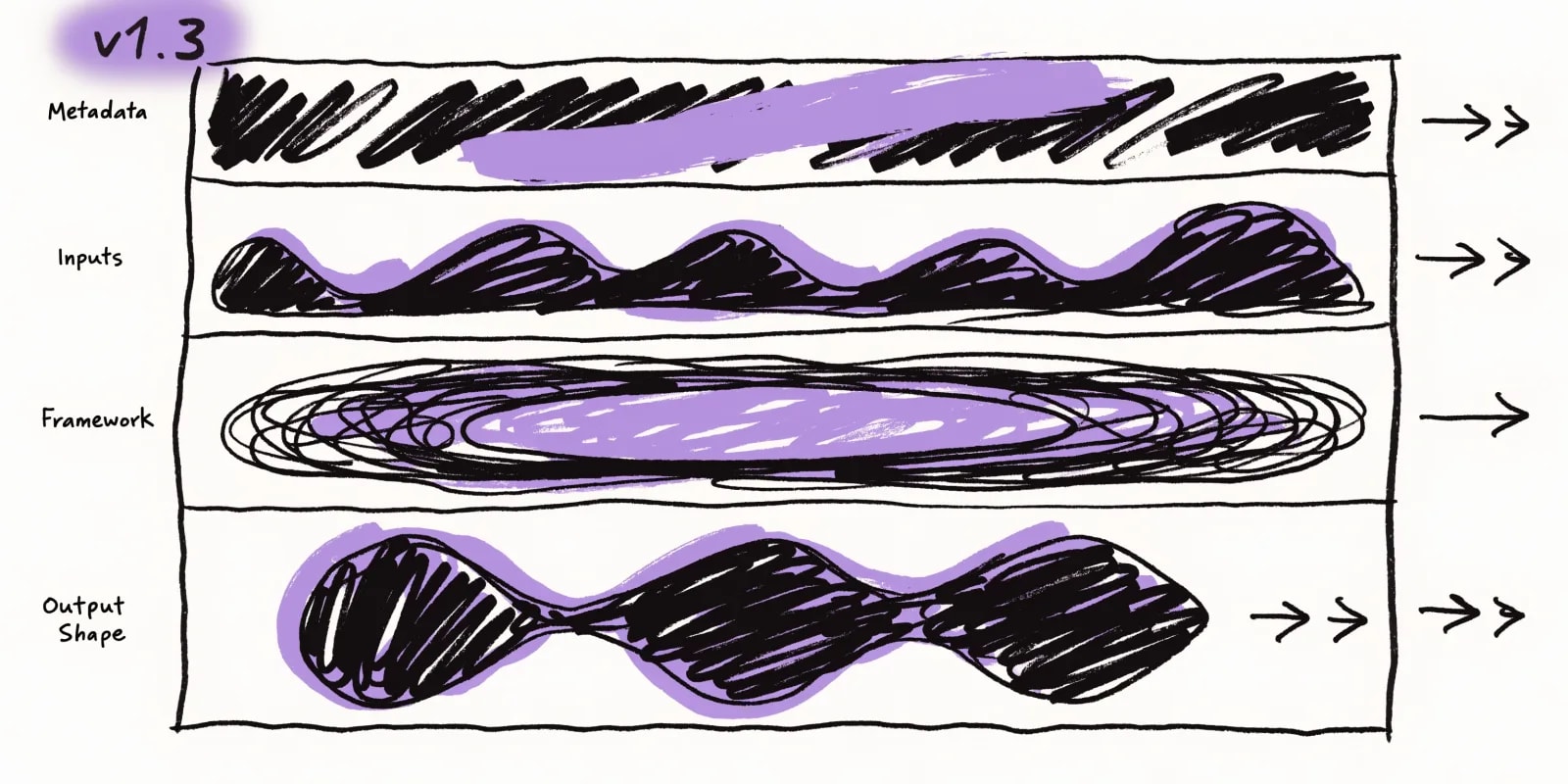
How Claude Code skills differ from prompts
| Prompt | Claude Code skill | |
|---|---|---|
| Where it lives | In your head, or a Notion doc, or scattered chat logs | A versioned SKILL.md file in .claude/skills/ |
| Output shape | Whatever the model returned that day | Fixed - inputs and output columns are declared |
| Reproducibility | You paraphrase every time | Same input, same shape |
| Sharing | Copy-paste, hope the recipient adapts it | Install a pack once, everyone runs the same skill |
| Updates | You edit the doc, others don't know | Version bumps in the repo; npx skills add pulls the latest |
| Composition | Manual - you chain prompts by hand | Skills reference each other by name inside a pack |
The composition row is where most teams see the payoff. Inside a pack, the-flow-architect reads the segment definitions the-lifecycle-mapper produced. the-cold-opener inherits the ICP from the-list-builder. That's not something you can do reliably with a prompt library - the outputs of one prompt don't have a defined shape for the next prompt to consume.

How to install Claude Code skills
One command installs a whole pack into your project's .claude/skills/ folder. Restart Claude Code afterward - skills load at startup, so a running session won't see them. Source and full skill list on GitHub: sidchaudhary/gtm-skills.
$npx skills add sidchaudhary/gtm-skills -g --allYou can install a single skill by appending its folder name, e.g. .../skills/sdr/the-list-builder. The pack install is the better default because skills reference each other inside a pack - a partial install produces worse output than a full one.
Claude Code skills vs Claude subagents
The two terms get used interchangeably in casual conversation, but they're different primitives. A subagent is an autonomous role - Claude Code hands it a job, it runs its own loop of tool calls until the job's done. A skill is a versioned method: inputs, framework, output shape. Any agent (or a live Claude Code session with no subagent involved) can invoke a skill by name.
In practice a subagent calls a skill inside its loop - the-list-cleaner skill invoked by an SDR subagent, then the-cold-opener skill on the cleaned list. The skill is the reusable unit; the subagent is the runner. Install the skills first. Subagents get more useful when the skills they call have a stated method.
The 8 role-specific packs
Each pack maps to one GTM role and covers the work that role actually does across a week. The count varies - the SDR pack ships 8 skills, the GTM Engineering pack ships 7, the Brand & Content pack ships 5 - because the number of distinct jobs varies by role, not because we padded any pack.
1. SDR (8 skills) - list, opener, sequence, reply handling

Outbound breaks in a predictable order - the list is wrong, so the opener can't be specific, so the sequence gets longer, so replies get worse, so nobody handles them. The SDR pack attacks it in the same order it breaks. List builders, list cleaners, cold openers, sequence audits, reply classifiers, and no-show recovery. Start with the-list-cleaner if replies are low - it's almost always a list problem wearing a copy costume.
Full breakdown: 8 best Claude Code skills for SDRs and lead generation.
$npx skills add sidchaudhary/gtm-skills/skills/sdr2. Account Executive (7 skills) - deal execution, objection handling, renewals

The AE pack is the part of the sales job that happens after someone agrees to talk. Deal scoring, transcript mining, objection playbooks, win-loss analysis, negotiation prep, renewal tracking. The-deal-gauge is the first-install skill for most AEs because it produces a defensible pipeline read against dual health-plus-intent criteria, not a gut score.
Full breakdown: 7 best Claude skills for sales.
$npx skills add sidchaudhary/gtm-skills/skills/account-executive3. GTM Engineer (7 skills) - routing, automation, feed audits

The GTM plumbing layer between marketing and sales: MQL scoring models, lead routing rules with real tie-break logic, workflow automation with error handling, catalog feed audits, and a launch readiness gate. This is the pack that pays off when handoffs are broken and speed-to-lead is measured in hours instead of minutes.
Full breakdown: 7 best Claude skills for GTM engineering. If the pain is building and maintaining workflows more than routing leads, the GTM automation skills ranking starts from that side.
$npx skills add sidchaudhary/gtm-skills/skills/gtm-engineer4. Data Analyst (10 skills) - Shopify, ads, and returns exports

The Data Analyst pack turns raw exports into decisions. Margin stacks (CM1/CM2/CM3) from revenue and cost lines, cohort tables from acquisition dates, weekly readouts from performance summaries, benchmark checks against real sources, anomaly alerts with a stated method, and dashboard blueprints. Every skill has a stated method you can inspect - the numbers don't come from vibes.
Full breakdown: 6 best Claude skills for data analysts. Growth teams who report on marketing KPIs rather than store margin get a better fit from the marketing analytics skills list.
$npx skills add sidchaudhary/gtm-skills/skills/data-analyst5. Lifecycle Marketer (7 skills) - retention, email, referral

Lifecycle work is a stack of specialized jobs pretending to be one job. The pack breaks it into stages that actually have a name - segment, journey, campaign, save, repeat, refer - and gives each one a method with a defined output. the-lifecycle-mapper is the first install; segment definitions upstream of everything else in the pack.
Full breakdown: 7 best Claude skills for lifecycle marketing.
$npx skills add sidchaudhary/gtm-skills/skills/lifecycle-marketer6. CRO / Experimentation Lead (9 skills) - test design, funnel diagnosis, personalization

The CRO pack goes from "conversion is down" to a specific edit brief. Funnel leak diagnosis, hypothesis writing, Bayesian test design with proper priors, variant routing rules, holdout definitions, and post-test synthesis. the-hypothesis-engine is the first install - it's the skill that stops teams from calling winners three days into a test.
Full breakdown: 10 best Claude skills for CRO, A/B testing and landing pages.
$npx skills add sidchaudhary/gtm-skills/skills/experimentation-lead7. Brand & Content / Designer (5 skills) - voice capture, hooks, scenes, citability

The Brand & Content pack captures voice from work you already like, generates hook variants scored against psychological frameworks, directs photography and scene composition, and audits whether your published content is actually citable by AI answer engines. Start with the-voice-fingerprint - every other skill in the pack runs better when it can inherit a real voice profile.
Full breakdown: 5 best Claude design skills for brand and content.
$npx skills add sidchaudhary/gtm-skills/skills/brand-designer8. Performance Marketer (27 skills) - paid social and paid search, angle to audit
The newest and largest pack, and the only one where a mistake costs money the same day. It covers the whole paid loop: mining buyer language into angles, writing and validating responsive search ads against real character limits, drafting campaigns as paused changes, reading the account daily for exceptions, telling real creative fatigue from impatience, and diagnosing cost per acquisition across Meta and Google together. Every skill is read-only or drafts a paused change you approve by name - nothing in this pack spends money on its own.
Start with the-morning-ad-audit if you already have spend running, or the-angle-spread if you are still deciding what to say. The pack refuses to forecast return on ad spend, deliberately: no reliable conversion from quality score to cost per click exists, and a forecast nobody can back would undercut the honesty the rest of the pack runs on.
Full breakdown: Will AI replace performance marketers?. The ranked install order for PPC and paid social lives in best Claude skills for paid ads. Install: npx skills add sidchaudhary/gtm-skills/skills/performance-marketer.
Which pack earns its install first, per role
| Your desk | Install this pack first | First skill to run |
|---|---|---|
| SDR / outbound | sdr | the-list-cleaner |
| Account Executive | account-executive | the-deal-gauge |
| GTM Engineer / RevOps | gtm-engineer | the-routing-engine |
| Data Analyst / Head of Growth | data-analyst | the-store-pulse (Shopify) or the-kpi-blueprint (SaaS) |
| Lifecycle Marketer | lifecycle-marketer | the-lifecycle-mapper |
| Experimentation Lead / CRO | experimentation-lead | the-hypothesis-engine |
| Brand Designer / Content | brand-designer | the-voice-fingerprint |
| Performance Marketer / paid media | performance-marketer | the-morning-ad-audit |
The pattern across every row: the first skill to install is an audit or definition skill, not a generation skill. Fix the input before you scale the output. A cold opener written against a bad list is a copy problem you can't solve with copy. A journey designed against a fuzzy segment is a design problem you can't solve with design. The audit skill goes first because everything downstream inherits from it.
Where Claude Code skills fit alongside Intempt
Skills produce strategy, definitions, and drafts. Intempt runs the send infrastructure, the identity graph, and the live campaigns. The handoff is one-directional: a skill drafts a segment or a journey, you review it, it runs inside Intempt Marketing against the shared customer profile.
This shows up per pack. The Lifecycle Marketer pack's segments plug into Intempt's workflows. The SDR pack's cold openers run against contacts in Intempt's pipeline. The Data Analyst pack's margin stacks and cohort tables read from Intempt Analytics instead of a fragile CSV pipeline. Same principle across every pack - skills own the strategic layer, Intempt owns the execution layer.
The reason this matters: if the strategy is defined once and executed against a shared profile, you don't spend Monday reconciling what the ESP thinks about a customer versus what the CRM thinks. That reconciliation is where most GTM stacks lose the week.
What to install this week
- Pick one role and install its pack. Don't install five packs on day one - the skills reference each other inside a pack, and a partial cross-pack install produces worse output than a full single-pack install.
- Run the first audit skill on your real data. Not a fake ICP or a sample list. The skill only earns its install when the output changes what you'd have done otherwise.
- Read the SKILL.md before you run it. The stated method is the whole point. If you don't know what framework a skill applies, you can't tell whether the output is defensible.
- Version-bump when the method changes. If you fork a skill and change the framework, bump the version. Two people running "the same" skill with different methods is exactly the drift skills are supposed to prevent.
Claude Code skills work because the file structure forces a stated method. That's the whole design. Same skill, same shape, every run. Install the pack for your desk, start with the audit skill, and don't skip past the SKILL.md to the output.
More on picking and running Claude skills
- Claude skills for market and competitor research - which skills turn competitor pages, buyer language and ad-library history into a positioning read.
- Claude skills for startups and SaaS founders - the jobs a five-person team would otherwise hire for, and which one to install first.
- Claude skills for Shopify store automation - running margin, stock and feed checks as loops on a cadence, and where those loops stop.
- How to use Claude for marketing - 15 prompt-level workflows to try before you turn any of them into a skill.
- Claude skills for marketing agencies - keeping output consistent across clients when several people run the same work.
- The Intempt Recipe Marketplace is open - write a GTM play as a recipe.md that Blu runs step by step, and submit it for review.