
- Retention programs fail because they treat every at-risk customer as one group. There are five distinct states - renewal approaching, drifting repeat buyer, VIP going quiet, one-and-done, and recently lapsed - each with its own signal, its own move, and its own tactic that makes things worse. Sort customers by state before acting, normalise every threshold against the customer's own history rather than a site average, and set a precedence order so nobody lands in two states at once.
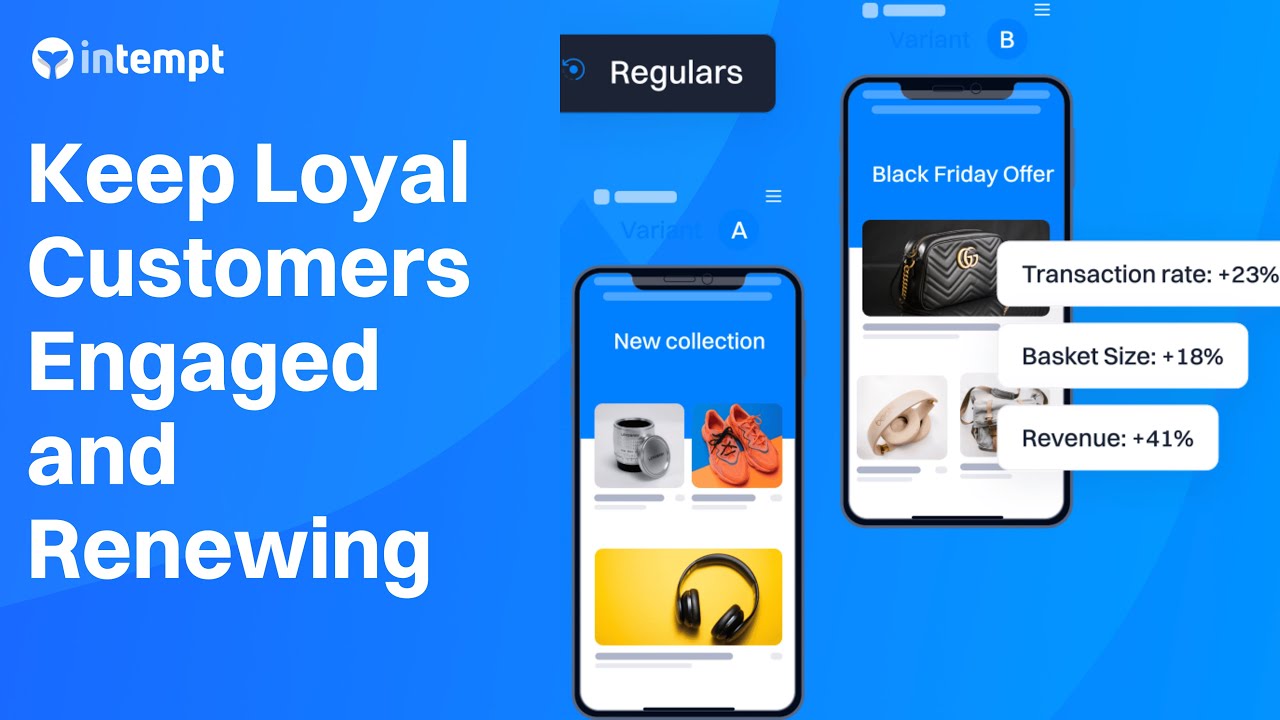
Most customer retention strategies fail for a boring reason: they treat everyone who might leave as one group. A shopper 30 days from a subscription renewal, a repeat buyer who quietly stopped opening emails, and a first-time buyer who never came back are three different problems. Handing all three the same 10 percent discount rescues one and insults another.
This guide covers five retention states, the signal that identifies each, the move that works, and the popular tactic that actively backfires. It assumes you already have order history and can send email, whether through automated customer journeys or by hand.
What customer retention strategies actually are
Customer retention strategies are the systems you use to keep existing customers buying instead of lapsing. Retention is cheaper than acquisition, which is why every list starts there. The part the lists skip: retention breaks into five separate jobs, each with its own trigger and its own failure mode. Any customer retention software worth using has to sort by which state a customer is in before it fires a message.
The economics are well documented, if often misquoted. Bain & Company's Fred Reichheld found that a 5 percent lift in retention raises profits somewhere between 25 and 95 percent, summarized in Harvard Business Review. The range is that wide because the answer depends entirely on which customers you keep.
Retaining price-shoppers with coupons and retaining high-value repeat buyers with recognition produce different numbers entirely, which is the whole argument for sorting customers by state before acting. This is the same logic that drives lifecycle marketing generally, applied to the retention end of it. The standard advice is not wrong. These all work:
- Loyalty programs, on customers who already have history worth rewarding.
- Feedback loops, when the answer changes what you send next.
- Personalization, once you know which state the customer is in.
They just work on specific customers at specific moments, and a flat list of thirteen tactics gives you no way to tell which moment you are in.
Why the standard tactic list underperforms
The tactic list underperforms because it optimizes the wrong variable. It helps you choose *what* to send. The variable that actually moves retention is *who* you send it to and *when*, and no amount of tactic quality fixes a mistargeted send.
Two things go wrong in practice.
- Discount leakage. Blanket win-back offers reach customers who were going to buy anyway, so you pay margin on a sale you already had and teach a profitable repeat buyer to wait for the next coupon. It is the most expensive retention mistake there is, and it looks like a win in the campaign report.
- Late detection. Most programs fire after a customer has gone quiet for 60 or 90 days. By then you are running reactivation, which converts far worse. Drift shows up much earlier than that, in order gap and browse frequency, well before anything that looks like a churn date.
Both come from the same root: no state detection. Subscription software has the same gap, and our churn prevention playbook built on usage signals shows the detection side for a SaaS app.
The five retention states
Each state has one identifying signal, one intervention that works, and one common tactic that makes it worse. The last column is where most programs go wrong.
| State | Identifying signal | What works | What backfires |
|---|---|---|---|
| Renewal approaching | Subscription or replenishment date inside 30 days, no reorder yet | Value recap tied to what they actually used, then a reorder path | Discount before the reminder. You pay to close a sale you already had. |
| Drifting repeat buyer | Order gap 1.5x their own historical average, browse frequency falling | Restock nudge on the specific category they buy, not a sitewide blast | Generic "we miss you" email. It signals nothing and gets ignored. |
| VIP going quiet | Top-decile lifetime value, engagement down but no complaint or return | Recognition and early access. Ask nothing. | Any discount. It reprices a customer who was never price-sensitive. |
| One-and-done | One purchase, past their category's typical repeat window, no second order | Complementary-product recommendation based on the first purchase | Loyalty program enrollment. There is no loyalty to reward yet. |
| Recently lapsed | Past 2x their order gap, or an explicit cancel | One honest exit-reason ask, then a single targeted offer | A multi-email win-back sequence. It annoys people who already left. |
Most retention programs already run every tactic in the third column. They just run them on the wrong state.
Renewal approaching
Signal: the reorder or renewal date is inside 30 days and no order has landed. For subscriptions this is a billing date. For consumables it is the replenishment window from their own purchase history, not a category average.
What works is a value recap before any offer. Tell them what they got. For a subscription that is usage, for a consumable it is simply "you're about to run out." Then make reordering one click. Only add an incentive if the reminder and the recap both fail.
What backfires is leading with a discount. You just paid margin on a purchase that was already coming, and you have trained a reliable customer to wait for the coupon next cycle.
Drifting repeat buyer
Signal: order gap stretched to roughly 1.5x their own historical average, with browse or email engagement falling alongside it. Both halves matter. A long gap alone might just be a seasonal buyer.
What works is specificity. Nudge the category they actually buy, with the item they actually bought or its restock. A blast across the full catalog reads as marketing. A note about the thing they own reads as service. The replenishment and cross-sell recipe covers the mechanics, and churn-risk users covers the detection side.
What backfires is the generic "we miss you" email. It carries no information, so it earns no click, and it burns the one moment you had their attention.
VIP going quiet
Signal: top-decile lifetime value, engagement trending down, no complaint and no return filed. That combination usually means drift, not dissatisfaction.
What works is recognition with no ask attached. Early access, a genuine thank-you, a first look at something new. These customers respond to status, not savings. If you want this branch prebuilt, the at-risk VIPs recipe handles the identification half.
What backfires is discounting. A customer who never bought on price now has a price anchor, and you have converted a high-margin relationship into a promotional one.
One-and-done
Signal: exactly one order, now past the typical repeat window for that category, no second purchase.
What works is a recommendation anchored to what they bought. The second purchase is the hardest one to earn and the most valuable, because repeat rate compounds from there. Make the next item obvious. In a SaaS product the equivalent is the user who signed up and never activated, which our SaaS onboarding guide treats as its own problem.
What backfires is loyalty program enrollment. Points programs reward accumulated behavior, and this customer has none, so the offer is abstract at exactly the moment you need it concrete.
Recently lapsed
Signal: past roughly 2x their normal order gap, or an explicit cancellation.
What works is asking why, once, and honestly. The answers tell you which of the four states above you are failing to catch upstream. Then make one targeted offer based on the reason. The recently churned users recipe builds the audience; if the exit happened at checkout rather than over time, cart recovery is the closer fit.
Some of that answer is already public. A customer who leaves a one- or two-star review has stated the exit reason in their own words, before any order-gap threshold trips. Reading public review signals alongside your own exit-reason survey gets you the same input without having to ask for it.
What backfires is a five-email win-back sequence. People who have decided to leave experience it as pressure, and it costs you the goodwill that would have made a later return possible.
How to compute each signal
Every signal above reduces to arithmetic on a customer's own history. Use their baseline, never a site-wide average, because a site average blends a weekly consumable buyer with an annual furniture buyer and describes neither.
- Personal order gap. Take the median number of days between that customer's consecutive orders. Median, not mean, so one holiday spike does not distort it. You need three orders before this is meaningful. With two orders, use the single interval and treat it as provisional. With one order, fall back to the median for the category they bought, and expect it to be rough.
- Drift threshold. Days since last order divided by personal order gap. Around 1.5 is drift, around 2.0 is lapsed. Tune them by looking at where your own customers stop returning: pull customers who never came back, find the ratio they reached before going silent, and set the threshold just under it.
- Value tier. Rank by trailing 12-month revenue per customer, not lifetime, so a big spender from three years ago does not sit in your VIP branch forever. Top decile is a reasonable VIP cut for most catalogs. Narrower for high-frequency low-ticket, wider for considered purchases.
- Engagement direction. Compare the last 30 days of sessions or opens against the prior 30. Direction matters more than level here. A customer at two sessions a month who was at eight is drifting. A customer who has always been at two is just a low-frequency buyer, and treating them as at-risk wastes sends.
Those two numbers deserve a caveat. They come from watching ecommerce programs, not from a controlled study, and we cannot tell you yet whether 1.5 holds across categories.
There is a real argument that it should be lower for consumables, where the purchase cycle is tight and predictable, and higher for considered purchases, where a long gap is normal behavior rather than a warning. We have not run that comparison across enough catalogs to publish a number, so treat 1.5 as the place to start measuring, not the answer.
The pattern: normalize against the individual, then threshold. This is why the segments have to recompute rather than sit in an exported list, since every one of these numbers changes with each order.
When a customer matches two states
They will, often, and this is where most implementations break without anyone noticing. A top-decile VIP can also be drifting. A one-and-done buyer can also be past 2x their category gap and therefore lapsed. If both branches fire, the customer gets two conflicting messages in the same week and you have made the problem worse than doing nothing.
Set an explicit precedence order and enforce one state per customer at a time:
- Recently lapsed wins over everything. If they are gone, nothing else applies.
- VIP going quiet wins over drifting. The intervention differs on exactly the axis that matters, since drift logic reaches for a discount and that is the one thing you must not send a VIP.
- Renewal approaching wins over drifting. The date is a harder signal than the gap.
- Drifting wins over one-and-done.
- One-and-done is the fallback.
The rule underneath: the more specific state wins, and anything involving a discount loses to anything involving recognition. Also set a cooldown so a customer who just exited a branch cannot re-enter another for a week or two. Without it, someone oscillating around a threshold gets messaged continuously, which reads as harassment regardless of how good each individual message is.
How to detect state instead of guessing
Detection needs three things: behavior captured per customer, segments that recompute as behavior changes, and a branch per state.
Order and browse events have to land against a single customer profile, so the order gap you compute is that customer's own baseline rather than a site-wide average.
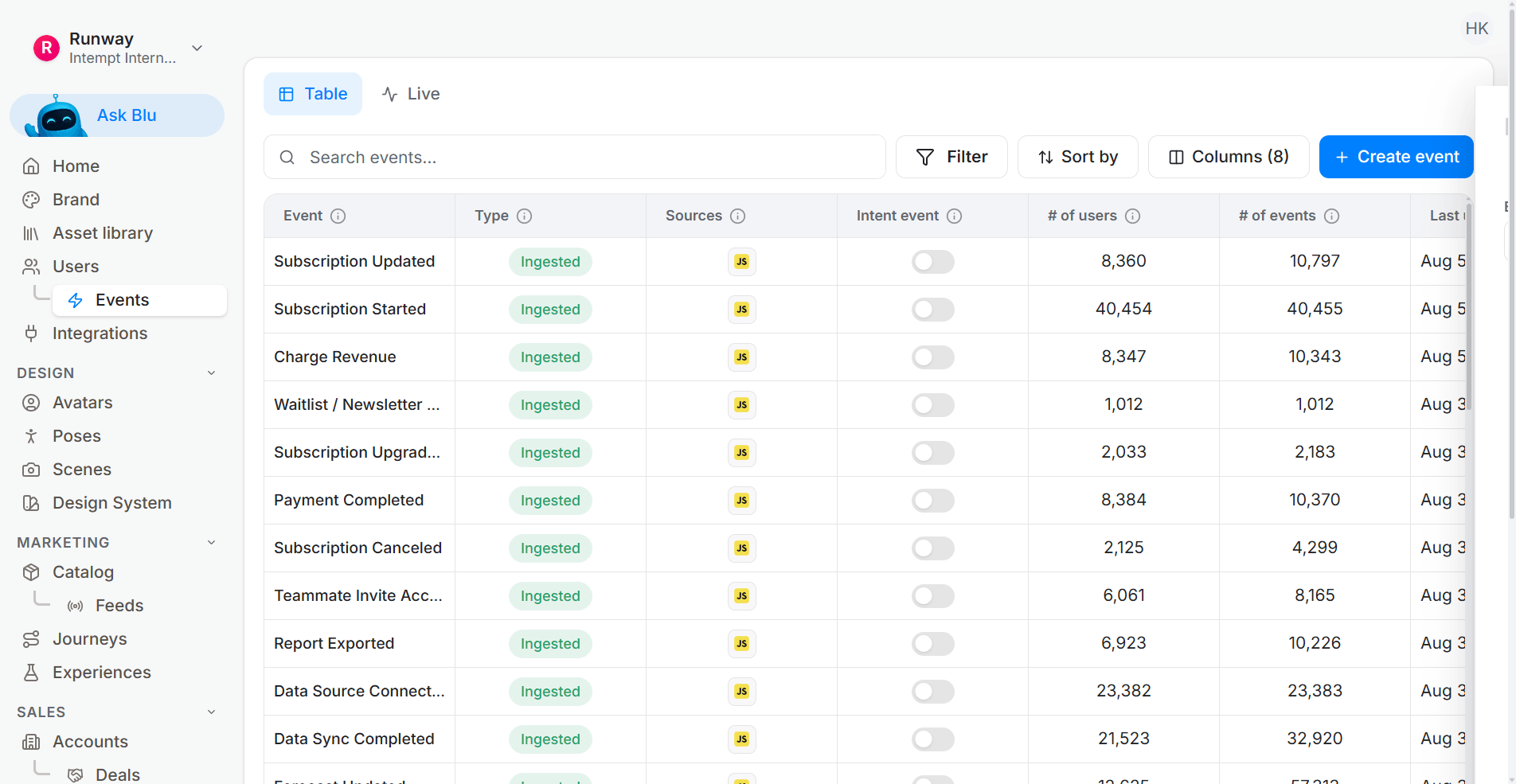
Segments then have to update on their own. A static list exported on Monday is wrong by Wednesday, which is how customers end up in two states at once and receive contradictory messages in the same week.
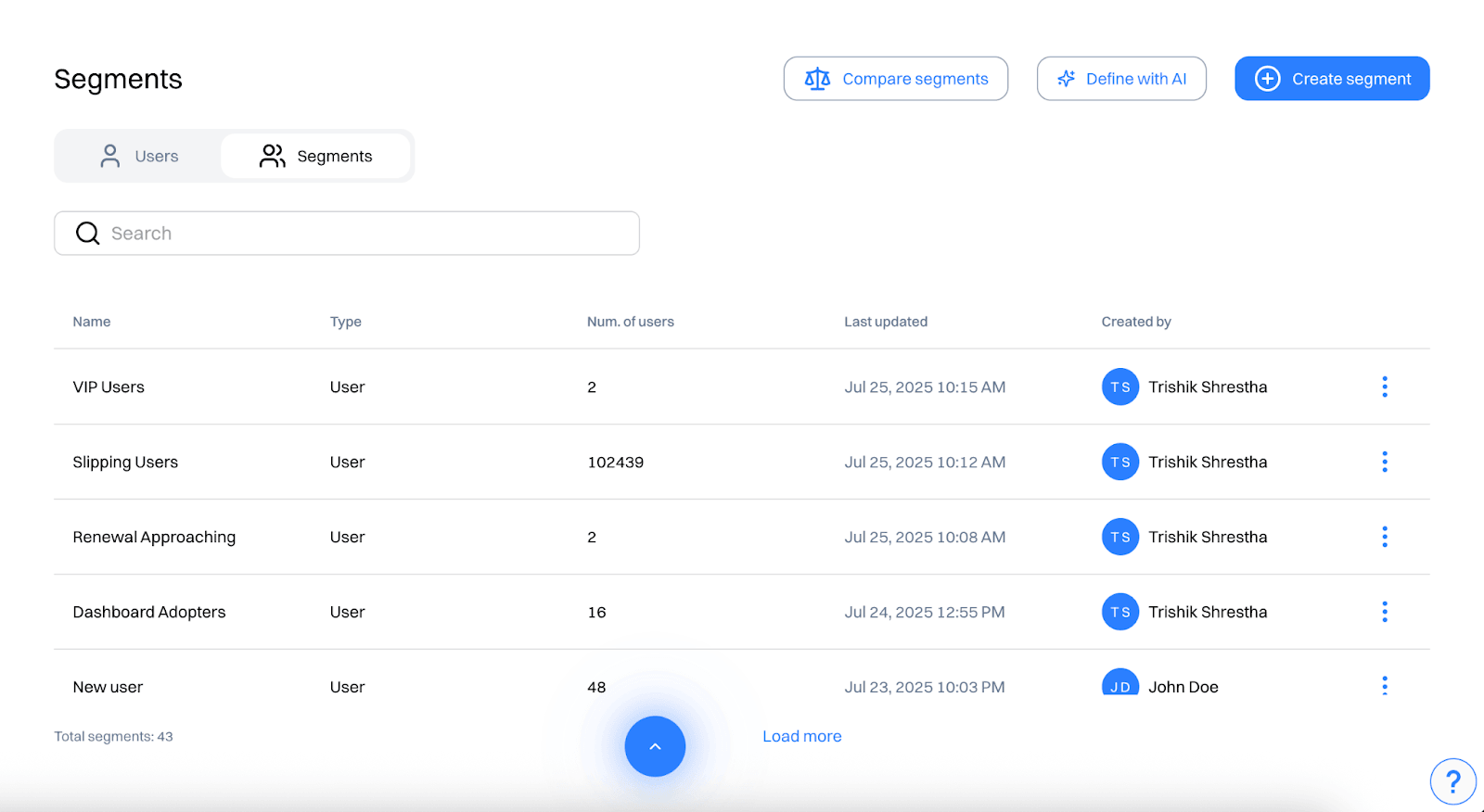
This is where a campaign tool and a customer-data platform actually differ, and it is worth being concrete about it. Intempt, the agentic GTM software, recomputes segments continuously against live behavior, so a drifting buyer who places an order leaves the drift branch and stops getting the nudge without anyone rebuilding a list.
The segment, the journey, and the on-site personalization read the same data layer, so one state drives all three rather than three tools disagreeing about who a customer is.
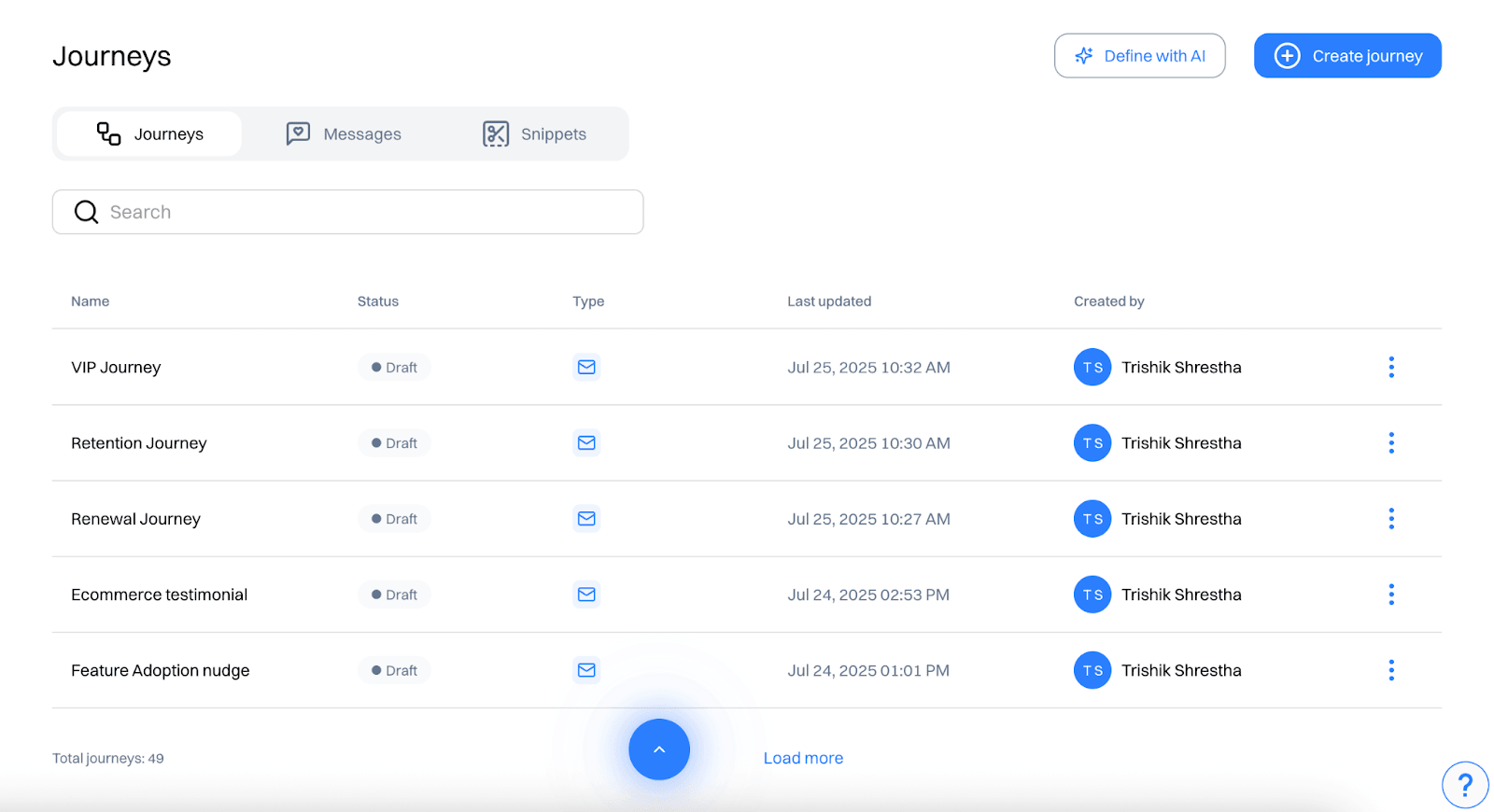
A stack assembled from separate email, analytics, and personalization tools can reach the same result, but the state has to be recomputed and re-synced in each one, and that sync lag is where contradictory sends come from.
For the mechanics, the docs cover behavioral segmentation and creating a segment, then building a journey per state, and web personalization for the on-site half.
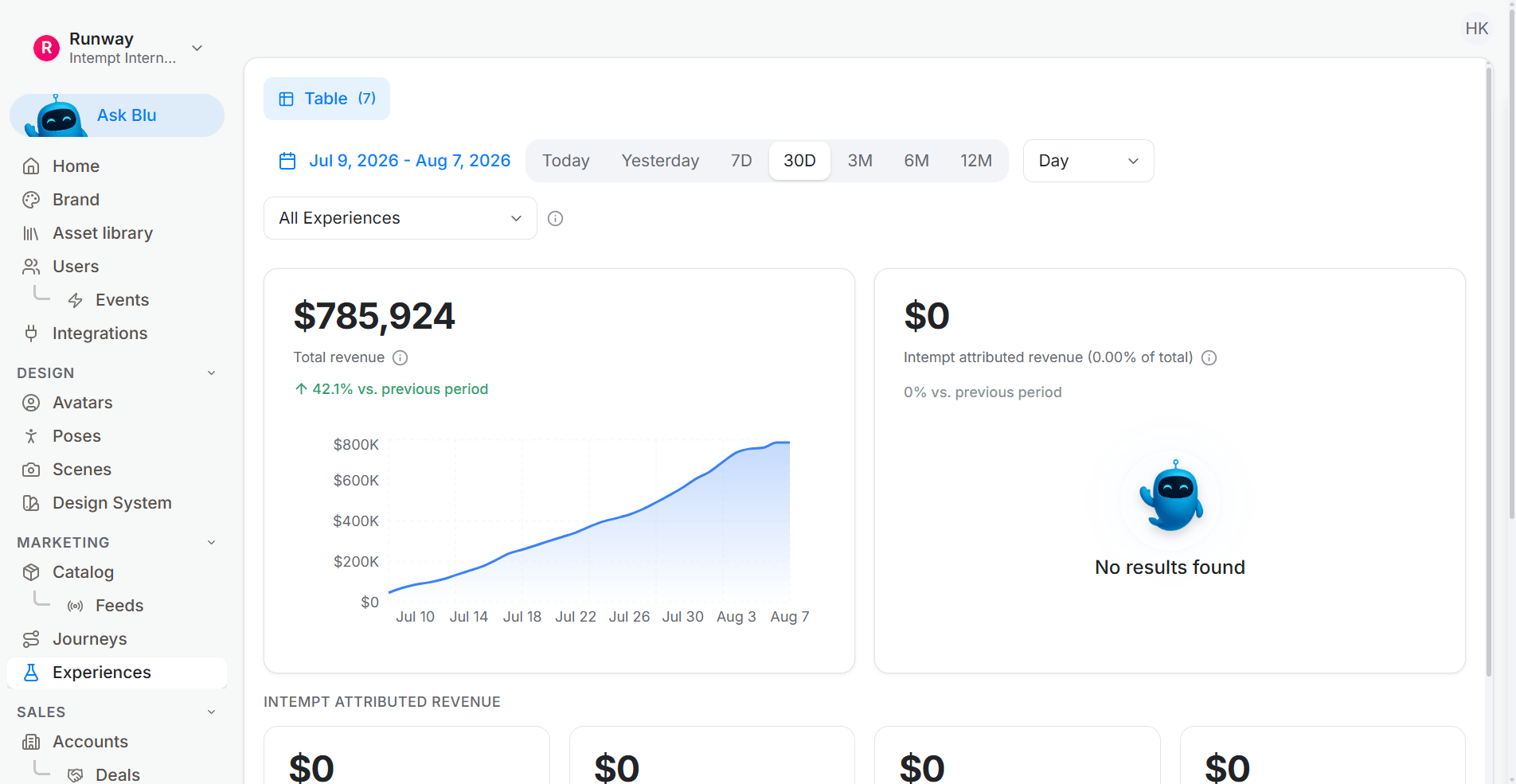
If you want the five states running as one configured system rather than building each branch by hand, the VIP and loyalty recipe sets up value tiering, the per-state experiences, and the reporting in one pass.
Measuring retention by state, not in aggregate
Aggregate retention rate is a lagging number that hides which state is broken. It moves slowly and it tells you nothing about cause. Measure per state instead.
Track four things per branch: how many customers entered, how many were messaged, how many converted on that state's own definition of conversion, and how many exited early. Conversion has to be state-specific. For renewal approaching it is the reorder. For one-and-done it is a second purchase. For VIP going quiet it is engagement recovery, not revenue. Scoring all five against revenue makes the VIP branch look like a failure when it is doing its job.
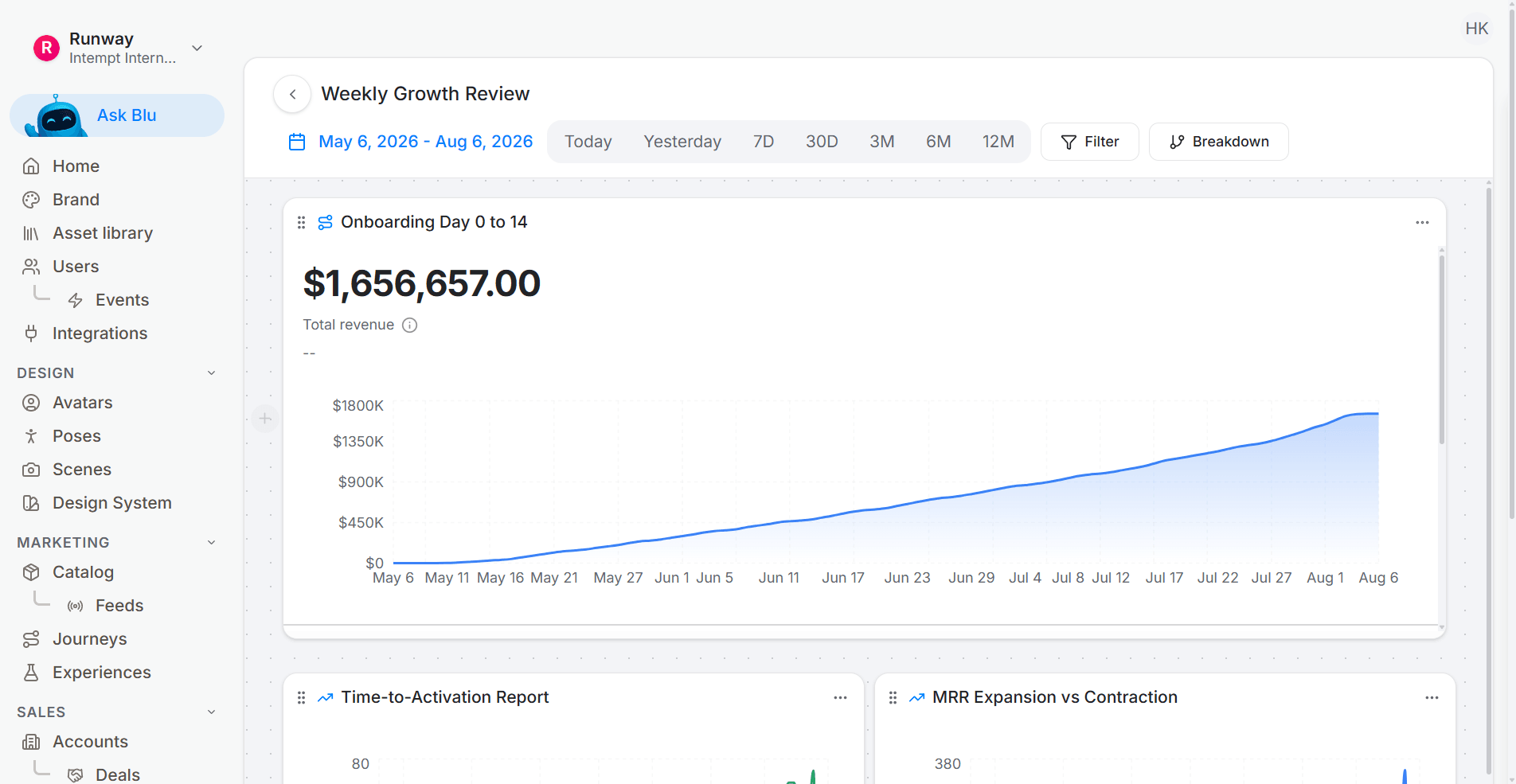
Two derived numbers are worth watching. Detection lag is the gap between when a customer entered a state and when your system noticed, and shortening it improves every downstream number. Discount leakage is the share of converted customers who received an incentive they did not need, which you find by holding back an offer from a slice of each branch.
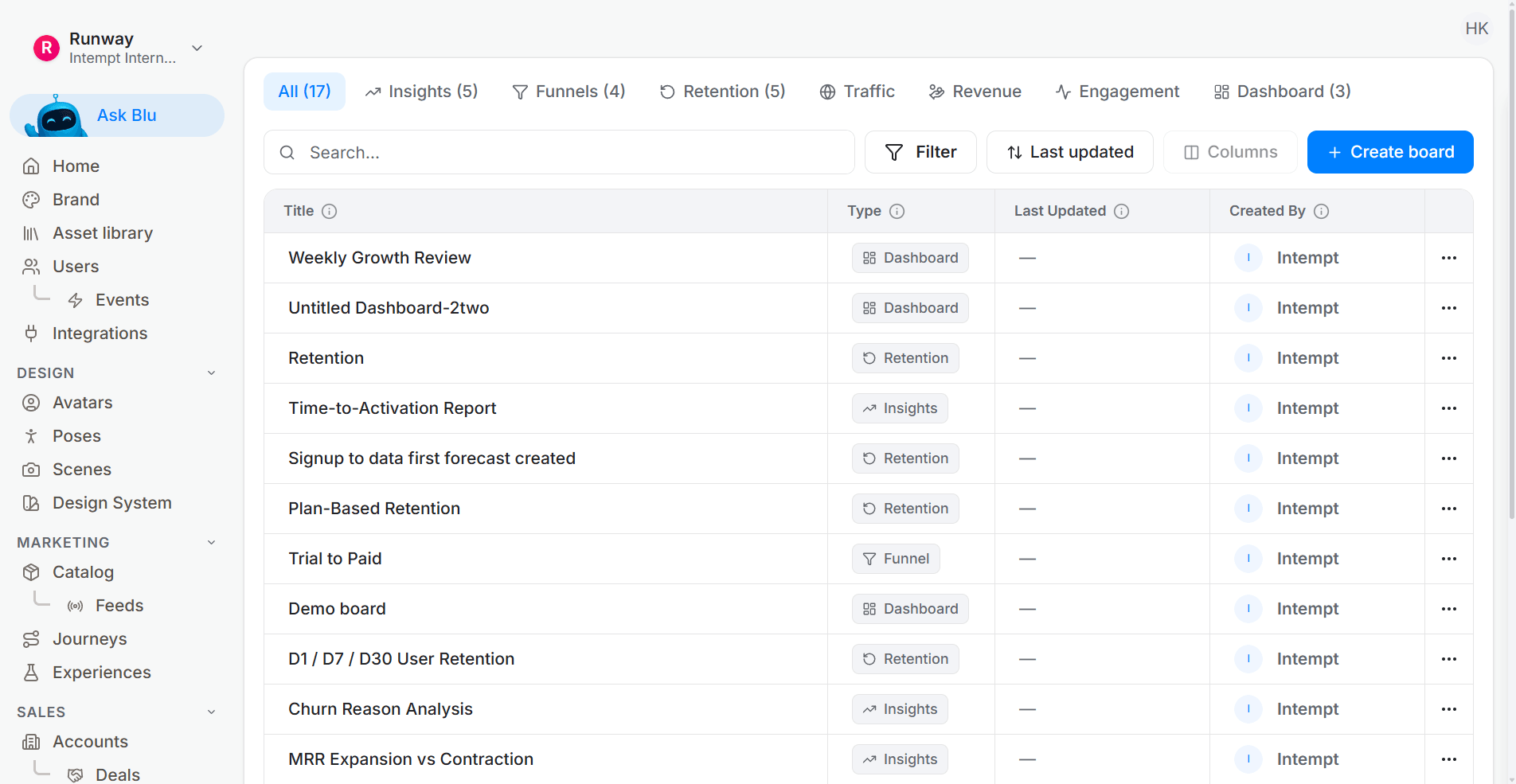
Journey analytics covers the per-branch counts. Aggregate retention rate stays useful as a scoreboard, just not as a diagnostic. If you want the underlying math on the repeat-purchase side, we broke it down separately in repeat purchase rate.
If you only build one of these five, build the one-and-done branch. It is the largest group in almost every catalog, the second purchase is the hardest to earn, and most customer retention strategies skip it entirely to fight over customers who were already coming back. Start with Intempt.
More on retention for SaaS products
- Reverse trial design: how to give power users the paid plan first and place the paywall at the moment they depend on it, not on a date.
- In-app onboarding that reaches the aha moment: why checklist completion can rise while activation stays flat, and which step predicts a user staying.