
Intempt is the best lifecycle messaging and analytics platform for small mobile app and SaaS growth teams, and it is free to start. Customer.io suits teams that want rule-based, event-triggered messaging workflows with manual control over every condition and delay. Intempt is rated 4.5 on G2.
Customer journeys are most effective when they evolve with user behavior. Most automation tools still rely on flows that stay the same until a marketer updates them. Customer.io offers messaging automation and segmentation that moves users in and out of segments in real time based on events, attributes, and behavior. Intempt takes a different approach: it uses AI to orchestrate journeys that adjust in real time, predict user intent, and connect every step to analytics and revenue attribution. This comparison breaks down Intempt vs Customer.io so you can see which platform fits your team in 2026.
Which Is Better for My Team: Intempt or Customer.io?
Both platforms help marketers automate customer journeys. Both support multi-channel messaging. Both offer segmentation and personalization. And in 2026, the real question behind any Intempt vs Customer.io comparison is simple: which platform delivers smarter, more adaptive journeys? For a shorter side-by-side, see the Intempt vs Customer.io comparison page.
Which tool goes beyond sending messages and actually orchestrates entire lifecycle paths?
Which one connects journey decisions directly to analytics and revenue attribution instead of showing isolated engagement stats?
Which one personalizes behavior across email, SMS, push, web, and mobile app, not just within messages?
Which one understands intent, predicts next actions, and adjusts the journey automatically rather than waiting for a marketer to update logic?
It comes down to AI-driven orchestration, predictive segmentation, and real-time personalization powered by a unified customer data foundation. Teams no longer want a workflow builder; they want a growth engine that adapts with every user signal.
And this is where Intempt's philosophy diverges sharply from Customer.io.
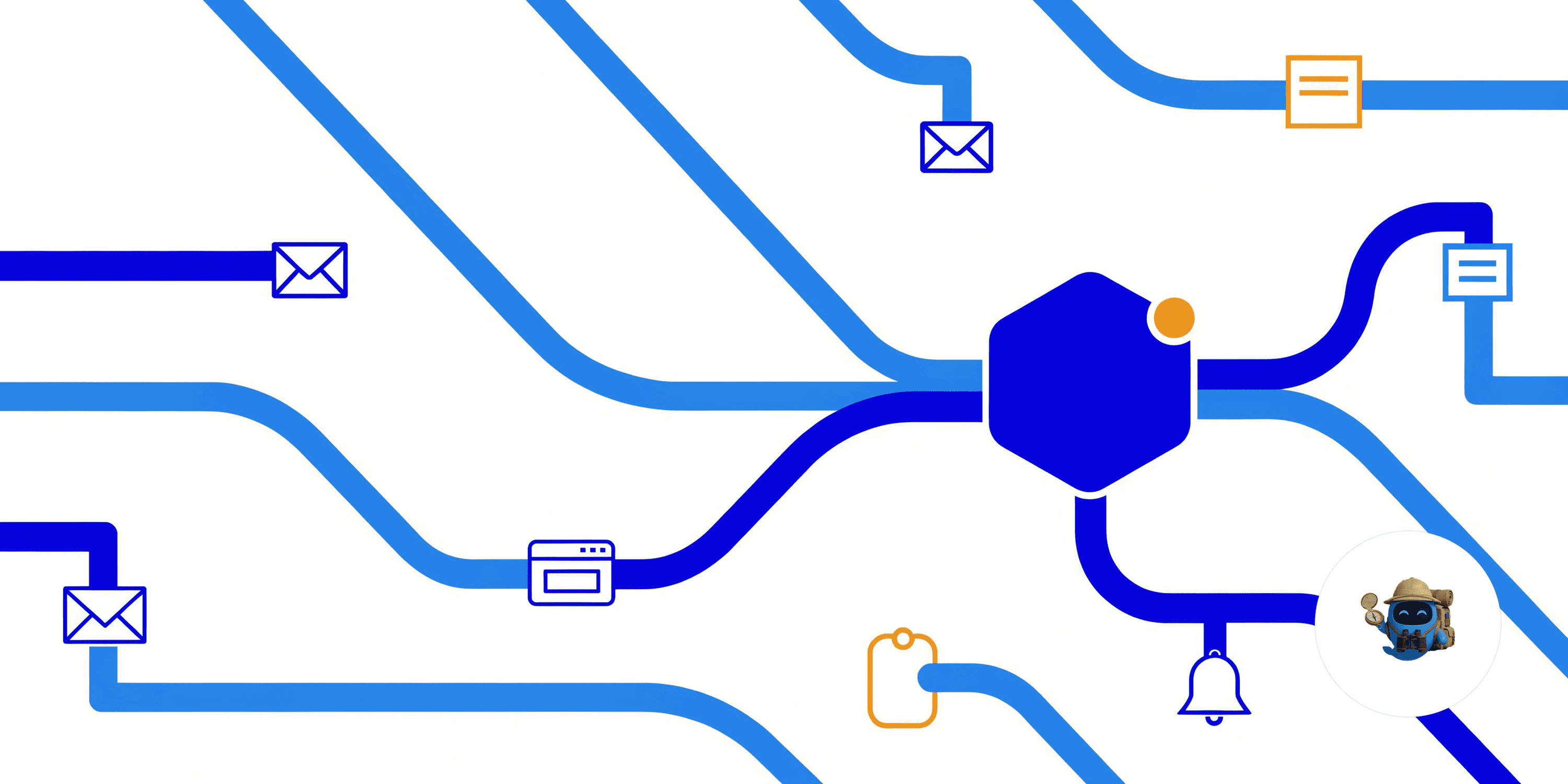
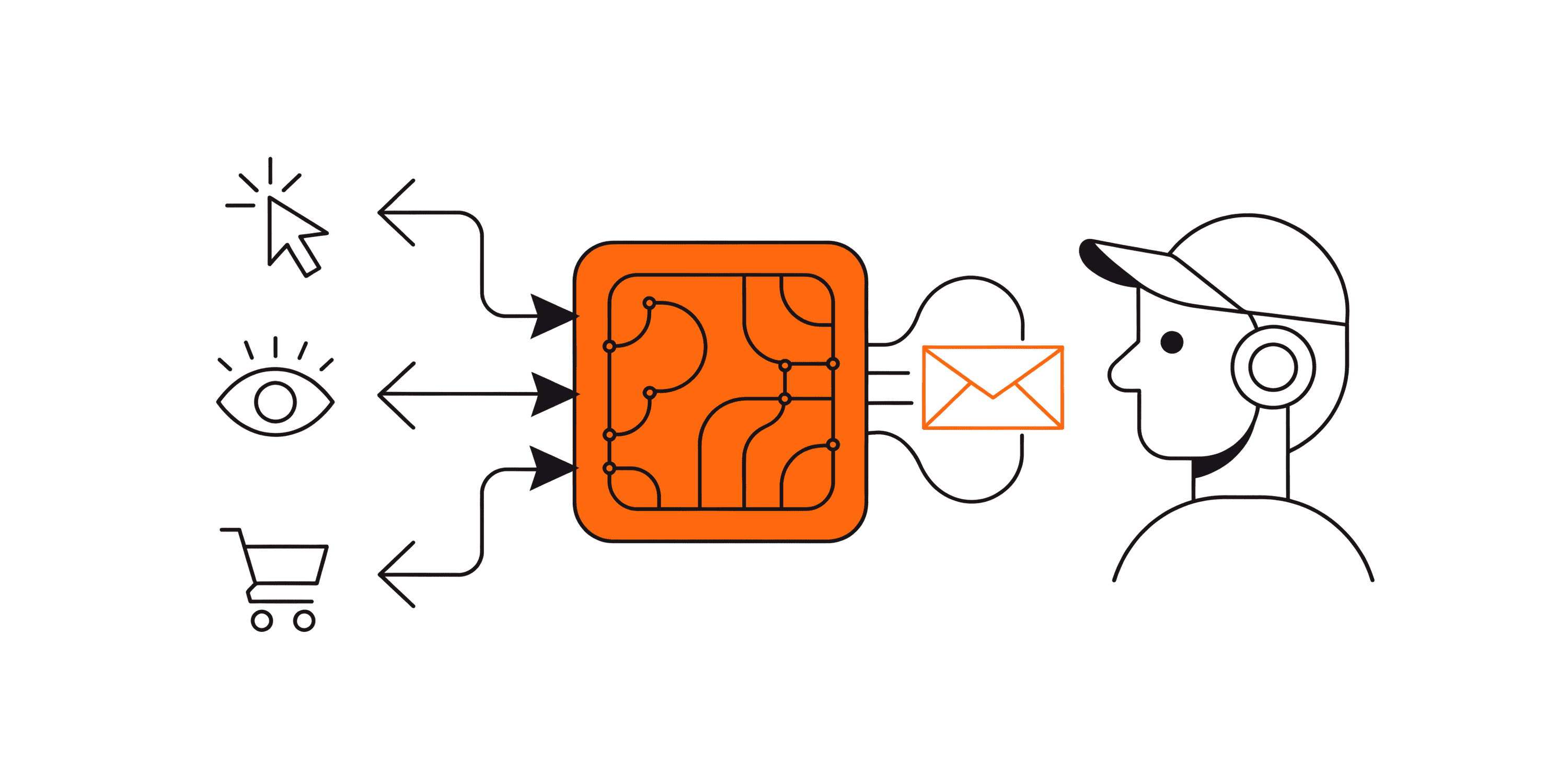
Intempt uses a unified data layer (behavioral events, attributes, identity, lifecycle stages, and predictive scores) to power adaptive, intent-based journeys that shift instantly as users move between channels. Journeys are recalculated continuously based on engagement, drop-off patterns, product usage, and revenue signals. Instead of just reacting to triggers, Intempt predicts what should happen next.
But the impact goes beyond journey routing. Because Intempt combines journeys, analytics with revenue attribution, personalized experiments, and a full CDP inside one platform, it doesn't stop at sending the right message; it optimizes the entire path, from onboarding to activation to retention. Teams get one system that understands why users progress, not just whether they clicked.
Customer.io, in contrast, is built for marketing teams that need highly flexible, rule-based messaging workflows. It is built for triggering emails, SMS, push, and webhooks with precision. But its logic stays static unless a marketer updates it. There is no predictive journey orchestration, no dynamic path recalculation, and no native, unified analytics + revenue attribution layer guiding decisions.
Pricing also reflects the different philosophies behind Intempt and Customer.io. Customer.io charges based on contacts and message volume. Its Essentials plan starts at $100 per month for 5,000 profiles (people + objects) and includes 1 million emails, and its Premium plan starts at $1,000 per month billed yearly (vendor-stated, checked October 2026). It fits teams focused primarily on email, SMS, and push automation.
Customer.io's plans do not include lifecycle analytics with revenue attribution, AI-driven journey logic, experiments, or a unified CDP. Brands that need product-level visibility, predictive scoring, or multi-surface orchestration usually add tools for CDP, experimentation, attribution, and analytics, which raises the total cost of ownership.
Intempt is free to start, with up to 1M events a month, 10K emails, 1K SMS, 1K push, and up to 3 seats on the free plan. Paid plans are priced per seat, with current prices on our pricing page. Instead of paying for multiple tools, Intempt includes the full platform in one subscription: a CDP that unifies behavioral events, product usage, CRM data, identity, and revenue; AI-driven Goal and Intent events that classify users by their likelihood to convert, activate, or churn; and unified customer visibility across web, mobile app, CRM, Stripe, Shopify, and more. See the Intempt marketing solution for how these pieces fit together.
Instead of paying separately for a CDP, analytics tool, experimentation platform, and orchestration system, Intempt puts these capabilities in one subscription, so a team manages one vendor and one customer profile.
How Is Intempt Different From Customer.io?
At a high level, both Intempt and Customer.io let you build journeys. But they take completely different approaches.
Intempt
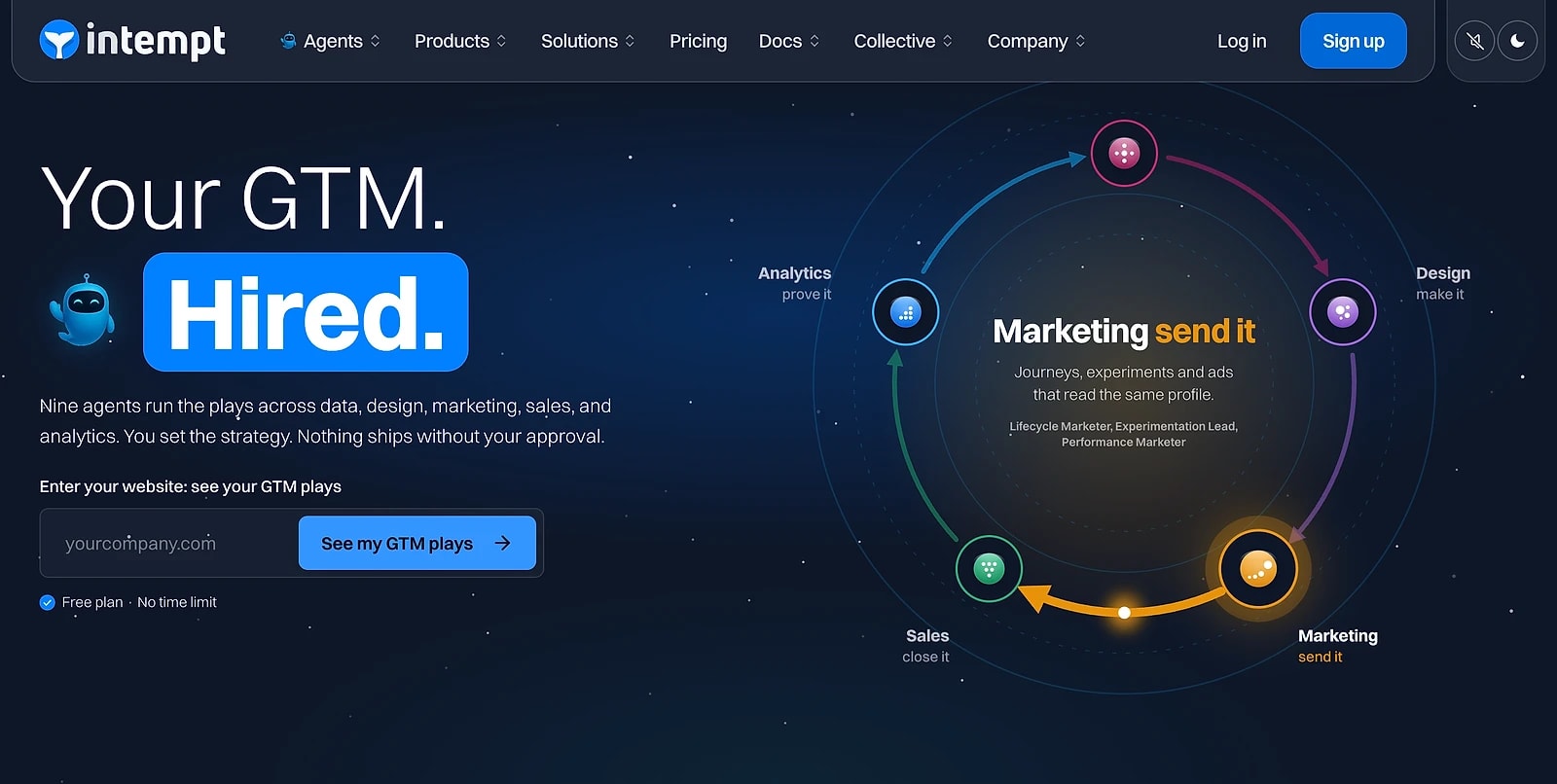
Intempt is built for marketers and growth teams who want their automation to think ahead. With Intempt, Journeys are powered by behavioral analytics, AI predictions, revenue attribution, and personalized experiments.
Here's what sets Intempt apart:
- Auto-generate email, SMS, and in-app experiences with AI-generated content and timing.
- Identify churn risk, purchase intent, or lifecycle stage automatically - no manual rules needed.
- Design journeys fast with an intuitive drag-and-drop canvas, with support for journey A/B testing, and create multi-state paths that adapt to each user's actions in real time.
- Monitor journey performance in real time, with detailed metrics on entry, progress, and conversion rates.
- Messaging becomes one part of a full lifecycle system. Send email, SMS, Slack, push notifications, or trigger webhooks - all in one flow, with built-in editors.
- The UI prioritizes clarity, speed, and marketer-friendly workflows
For example, if a user shows increasing purchase intent but slows down before converting, Intempt identifies the pattern and automatically moves them into a branch designed for high-intent users, testing incentives, nudges, or recommendations.
You don't have to maintain these branches manually. The AI decides the path, runs the experiment, and learns from outcomes.
Customer.io
Customer.io is built for teams that want high control over workflows and messaging logic. That event-first design is also why our roundup of marketing automation tools for GTM teams files it under lifecycle messaging rather than broadcast email.
It offers:
- Detailed rule-based workflows for journeys.
- Multi-channel messaging (email, SMS, push, webhooks).
- Messages can dynamically adapt using Liquid templating, pulling in attributes, behaviors, and metadata
- Real-time segments based on any event, attribute, or behavior, allowing targeting and audience control.
- Event-driven triggers that allow workflows to start when a user performs a specific action.
- Ad audience sync, which can sync segments directly to ad platforms like Meta and Google, enabling consistent targeting between paid campaigns and lifecycle messaging.
Customer.io gives you control over how messages are sent and when. But the journey structure remains static until you update it yourself. There is no automatic path recalibration, no predictive routing, and no AI-driven next-best action.
In Customer.io the marketer carries the operational load of maintaining flows.
How Do Intempt and Customer.io Compare Feature by Feature?
Below is a marketer-friendly breakdown of how both platforms compare across journey building, AI intelligence, personalization, analytics, revenue attribution, experimentation, and segmentation.
| Feature | Intempt | Customer.io |
|---|---|---|
| Journeys | AI-powered orchestration with dynamic pathing, predictive routing, adaptive experiments, and real-time recalibration | Rule-based messaging flows with manual branching and fixed logic |
| Messaging Channels | Email, SMS, push, in-app | Email, SMS, push, in-app, webhooks |
| AI Capabilities | Predictive orchestration, intent scoring, AI Agents, Goal/Intent events | AI assists content & segmentation, but journey structure remains manual |
| Experimentation | Native A/B & multivariate experiments inside journeys with AI-driven learning | Manual A/B testing focused primarily on messages, not end-to-end journeys |
| Segmentation | Predictive, auto-updating cohorts with behavioral and intent signals | Highly customizable rule-based segments refreshed on event ingestion |
| Personalization | Real-time personalization across messaging + web/mobile app experiences | Deep content personalization via Liquid for messages |
| Analytics + Revenue Attribution | Built-in behavioral analytics tied to journey performance and revenue attribution for complete user journey | Messaging analytics; limited full-cycle attribution without external tools |
| Recommendations | AI suggests product recommendations based on journey updates and experiments | Recommendations focus on content and segmentation insights |
| Integrations | Direct integrations with Shopify, HubSpot, Stripe, Segment, and web/mobile app SDKs. Real-time two-way sync designed for cross-channel orchestration | Ecosystem with webhook support; integrates with many marketing and data tools. Suited to messaging-centric pipelines |
| Pricing | Free up to 1M events/month, 10K emails, 1K SMS and 1K push; paid plans per seat (intempt.com/pricing). CDP, analytics, journeys, experiments, and personalization in one platform | Essentials from $100 per month (5k profiles, 1M emails); Premium from $1,000 per month billed yearly. Vendor-stated, checked October 2026 |
Journeys
Journeys are where Intempt creates a clear distinction. Intempt doesn't just trigger messages; it orchestrates full lifecycle paths with unlimited segmentation that adapt continuously. Every step is influenced by predictive scores, real-time behavior, and intent shifts. If a user moves from casual browsing to high purchase intent, Intempt's AI adjusts their journey instantly, testing personalized experiments, triggering in-app guidance, or shifting them into a faster conversion path. It allows you to set up your own Research Agent, which allows you to enrich user or account profiles by sending requests in natural, human-like language, as if you were talking to a person. It processes your prompt and returns structured data that can be used to update existing attributes or create new ones for the selected user or account.
Customer.io also offers a journey builder with detailed branching, delays, and event-driven triggers. It gives marketers control over workflow logic. It automatically populates events from your Data Index with clear descriptions, creating a reliable source of truth for your team. However, it has no AI-driven branching, predictive routing, or real-time recalculation. Customer.io delivers messaging sequences, while Intempt orchestrates adaptive lifecycle behavior.
Messaging Channels
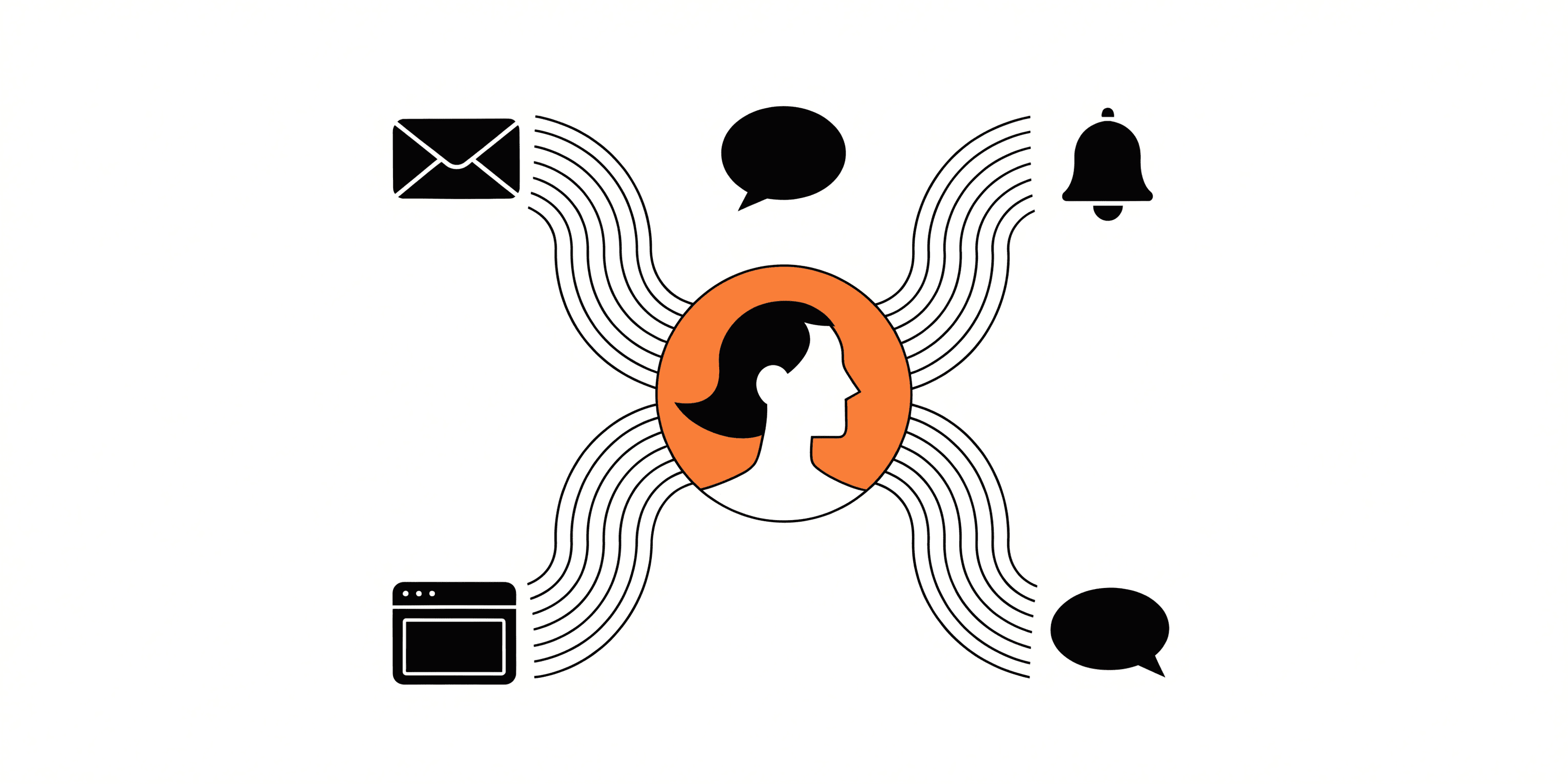
Intempt treats messaging as one surface in a larger orchestration system. Email, push, in-app, event-based triggers, and web personalization are all coordinated by AI and connected to predictive scores. Messages aren't just sent, they're sequenced intelligently to support activation, conversion, and retention across surfaces.
Customer.io is built for messaging-centric operations. It supports email, SMS, push, and webhooks with control and personalization. But the orchestration is message-first, not journey-first. Channels operate in parallel, not as part of an integrated AI-driven path.
AI Capabilities
AI drives Intempt's entire journey engine. It describes your ICP, churn risk, or ideal user and builds the segment instantly. The AI isn't just generating content; it actively shapes the user's progression across the lifecycle. It draws from top-performing journeys and common patterns to recommend what to build next. Decisions about timing, channel, and action selection come from predictive models tied to unified analytics and revenue attribution.
Customer.io uses AI to simplify messaging, writing content, suggesting segments, and optimizing send times. But AI does not influence how a journey branches or adapts. Logic remains static until a marketer updates it manually. Customer.io's AI improves execution; Intempt's AI improves strategy.
Experimentation
In Intempt, experiments are embedded directly into journeys. The AI can propose tests, allocate traffic intelligently, and adjust A/B tests based on performance. Experiments can run across messaging, web, and mobile app surfaces, allowing teams to optimize entire experiences, not just emails.
Customer.io focuses on experimentation at the message level through A/B tests. You can compare subject lines, content, or timing, but not full journey branches or multi-surface experiences. Intempt experiments on journeys; Customer.io experiments on messages.
Segmentation
Intempt's segmentation engine provides RCP-based segmentation that is predictive and auto-updating. Cohorts shift automatically based on user behavior, lifecycle stage, and AI-scored intent. This allows journeys to always operate on fresh, dynamic audiences. Segments power every part of the lifecycle through real-time updates, not just the messaging layer.
Customer.io offers highly flexible rule-based segments with fast updates. They work for messaging workflows, but they don't adapt as users move through lifecycle stages unless you define the rules yourself. Intempt updates audiences continuously; Customer.io updates them conditionally.
Personalization
Intempt personalizes the entire experience. Offers, experiments, content blocks, and journey paths can shift dynamically based on behavior and predictive insights. It helps you to reach the right audiences with AI-driven targeting, control who sees which experience, and extend personalization across full flows like onboarding, product discovery, or checkout. Personalization applies across email, SMS, push, in-app, and even web interfaces, making it truly omnichannel.
Customer.io personalizes messages deeply using Liquid templating, making content highly relevant at the communication level. But personalization typically stays inside messages instead of influencing journey logic or product surfaces.
Analytics + Revenue Attribution
Intempt integrates behavioral analytics and revenue attribution directly into its journey engine. Every action, whether a message, experiment, or path adjustment, is tied to revenue impact. Marketers can see which journeys create activation, which branches reduce churn, and how each touchpoint contributes to revenue.
Customer.io provides analytics for messaging: opens, clicks, conversions, and campaign performance. But it lacks full lifecycle analytics and revenue attribution tied directly to journey logic. Reporting is message-first, not lifecycle-first.
Recommendations
Intempt uses AI to recommend segments, journey changes, experiments, and next-best actions. These recommendations come from unified behavioral data and revenue attribution insights. The system acts like an AI agent, which allows you to choose from high-impact algorithms like Best-selling, Newest, Most popular, Viewed Together, Purchased Together, Category Affinity, and more. It helps you to apply advanced filters, inclusion rules, and exclusions to ensure recommendations meet your specific needs, showing marketers where friction exists and what actions can improve outcomes.
Customer.io provides recommendations around messaging, such as subject line improvements or segment suggestions. These recommendations can be valuable for teams optimizing email or SMS engagement. They help refine communication quality and nudge marketers toward better-performing messaging decisions. But recommendations do not extend to journey-level adjustments or lifecycle strategy. In other words, Customer.io helps marketers create better messages, but it does not help them design better journeys.
Integrations
Intempt integrates directly with Shopify, HubSpot, Stripe, Segment, and web/mobile app SDKs, creating a unified data flow that powers AI-driven journeys, predictive segmentation, personalized experiments, and revenue attribution. These integrations sync in real time, ensuring every user action across web, mobile app, and product into the CDP. This allows Intempt's AI agents to analyze signals with full context and orchestrate next-best actions across channels without delay.
Customer.io offers an integration ecosystem, supported by webhooks, APIs, and native connectors for commerce, data, and marketing tools. It's flexible for teams that rely on external systems for analytics, CDP capabilities, or lifecycle modeling. Most integrations feed data into messaging workflows rather than into an AI-driven orchestration layer. Customer.io fits when you need messaging tied to various data sources, but creating unified, multi-surface lifecycle orchestration often requires combining Customer.io with additional tools.
Pricing
Intempt is free to start and its paid plans follow a per-seat pricing model. Cost scales with your team, not with message volume or campaign complexity. Because Intempt includes CDP, analytics with revenue attribution, journeys, personalization, and experiments in one platform, a team can replace several tools with one subscription.
Customer.io charges based on contact count and messaging volume, so costs rise as you scale email, SMS, or push campaigns. Essentials starts at $100 per month for 5,000 profiles and includes 1 million emails, and Premium starts at $1,000 per month billed yearly (vendor-stated, checked October 2026). Brands that rely on multi-channel orchestration, deeper analytics, CDP functionality, or experimentation often add external tools.
When Should I Choose Intempt or Customer.io?
Choosing between Intempt and Customer.io doesn't have to be confusing. The difference becomes obvious once you know what each platform is built for. Here's the marketer-friendly breakdown, so you can immediately see which platform aligns with your brand, team, and growth model.
Choose Customer.io If…
- You want precise, rule-based messaging workflows where you manually control the condition, delay, and trigger.
- Your primary automation happens through messaging channels, email, SMS, push, rather than across mobile app, web, or product surfaces.
- Your team prefers fixed workflows that run exactly as you configure them, without AI-driven branching or predictive routing.
- You're focused on optimizing communication performance, such as open rates, click rates, and message engagement metrics.
- Personalization for you lives mostly inside emails or SMS, using Liquid templates and dynamic message logic.
- You don't require unified analytics, CDP-level data, or revenue attribution to drive automation decisions.
- You're comfortable maintaining journeys manually, updating logic when behavior changes or performance drops.
Customer.io: a messaging automation engine built for teams that want detailed control, message-centric workflows, and a flexible system for sending communications across multiple channels.
Choose Intempt If…
- You want AI-driven journeys that adapt automatically, recalculating paths based on behavior, intent scores, lifecycle stage shifts, and revenue impact.
- You need unified analytics with insights, funnels, cohorts, retention, and revenue attribution feeding directly into orchestration decisions.
- You want a full CDP that unifies behavioral events, product usage, and revenue data into one evolving profile.
- You need predictive segmentation and lifecycle intelligence, including intent scoring, churn risk, propensity to convert, and RFM-style modeling.
- You want experiments and personalization embedded in journeys, allowing AI to test variations across web, mobile app, email, SMS, and push.
- You prefer a growth system that reduces manual work, identifies friction points, recommends journey changes, and optimizes outcomes automatically.
- You want a platform whose paid plans are priced per seat rather than by message volume, with a free plan to start.
- You want a modern UI designed for speed and clarity, with fewer nested menus, cleaner visualization, and a workflow that lets marketers iterate fast.
Intempt: intelligent orchestration for teams that want adaptive growth loops, not just automated messages. From onboarding to re-engagement, design and launch adaptive campaigns that personalize in real time and drive conversions. If your growth strategy depends on full lifecycle personalization, predictive AI, and real-time decisioning, Intempt fits that approach.
What Is the Short Answer on Intempt vs Customer.io?
- Journeys: Customer.io automates messages with rule-based flows; Intempt orchestrates adaptive journeys that update themselves using real-time behavior, predictive signals, and revenue attribution.
- AI: Customer.io uses AI for writing and send-time optimization; Intempt uses AI to predict intent, adjust paths, recommend experiments, and optimize lifecycle outcomes automatically.
- Personalization: Customer.io personalizes messages; Intempt personalizes full experiences across email, SMS, push, in-app, and web.
- Experiments: Customer.io offers message-level A/B tests; Intempt runs full journey and multi-surface experiments inside flows.
- Segmentation: Customer.io relies on rule-based segments; Intempt provides predictive, auto-updating audiences tied to lifecycle intelligence.
- Analytics + Revenue Attribution: Customer.io focuses on communication metrics; Intempt ties every journey, experiment, and personalization to revenue impact.
- Integrations: Customer.io integrates widely through webhooks and connectors; Intempt integrates deeply with real-time, two-way sync webhooks and connectors for cross-channel orchestration.
- Pricing: Customer.io Essentials starts at $100 per month for 5k profiles (people + objects) and Premium at $1,000 per month billed yearly (vendor-stated, checked October 2026). Intempt is free to start, with paid plans priced per seat (see intempt.com/pricing) rather than by message volume.