


 0.0on G2
Give every feature more customer context.
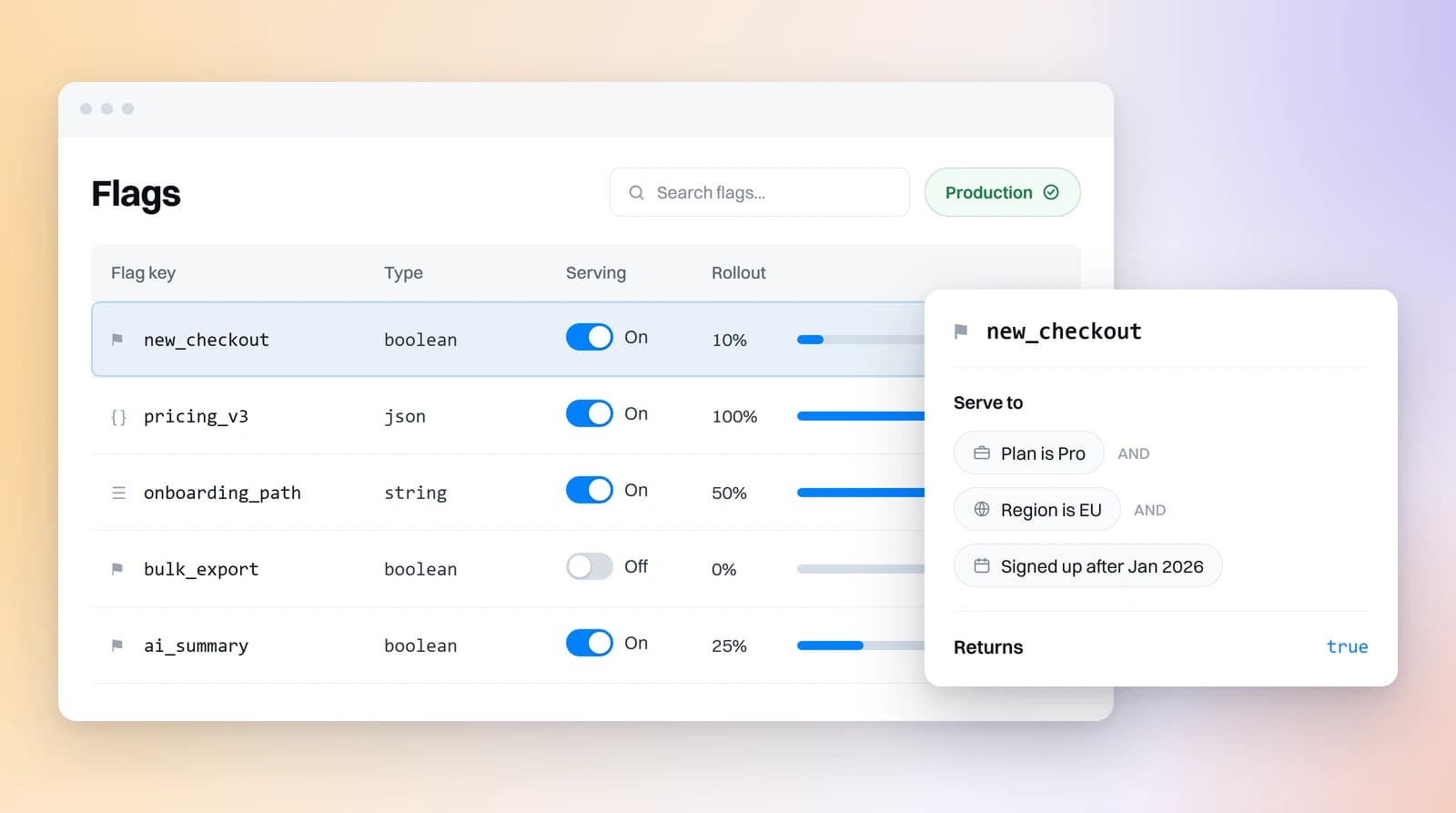
A flag hands back whatever your code asks for, including a payload that draws a whole surface.
- Serve a boolean, a string, a number or JSON
- Keep one person on one answer across every call
- Read it by name from any SDK
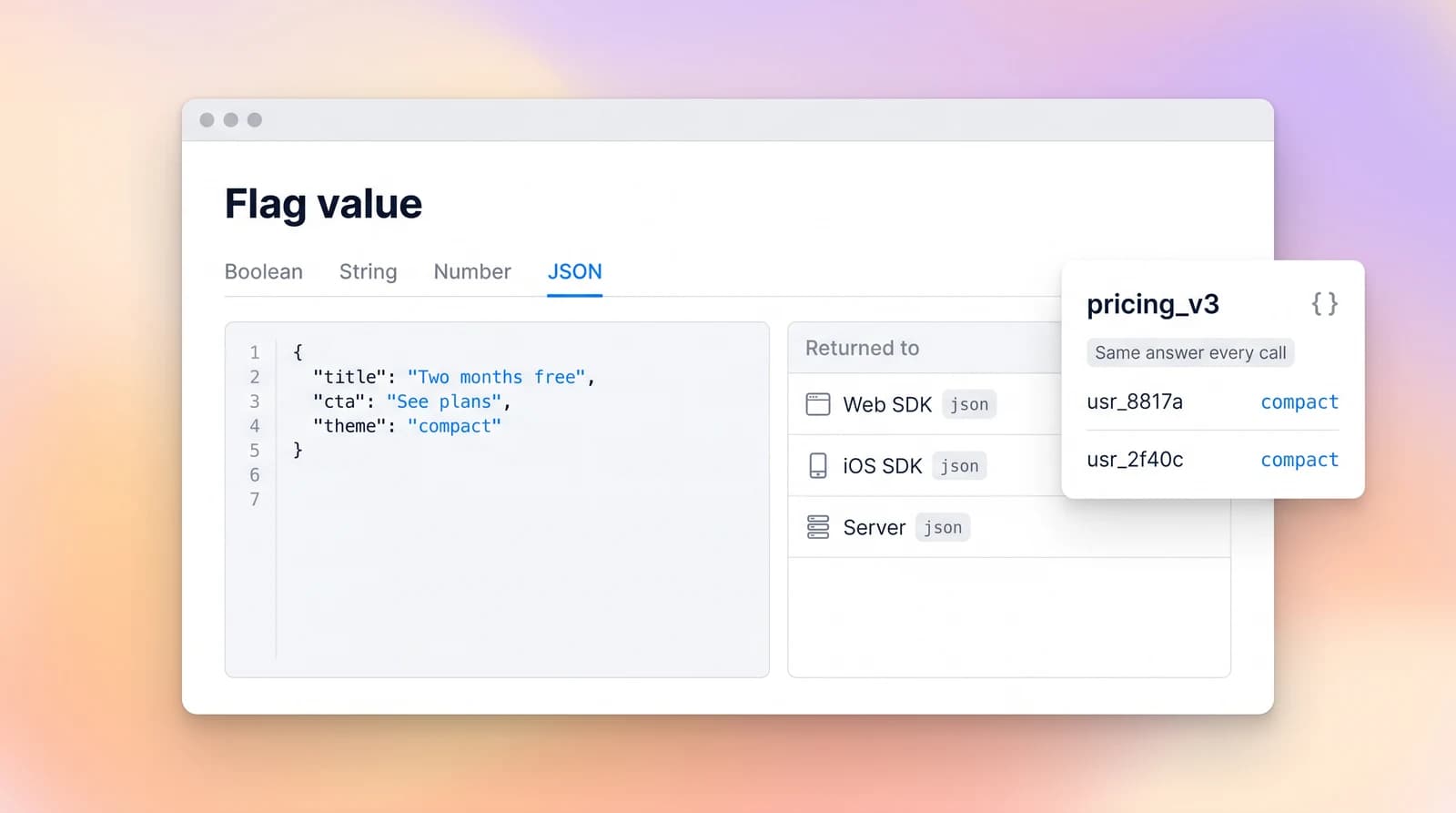
Target features around real customers.
The same conditions that build a marketing audience decide who gets the feature.
- Target on plan, lifecycle stage or spend
- Include what they did on your website an hour ago
- Use a segment you already built for something else
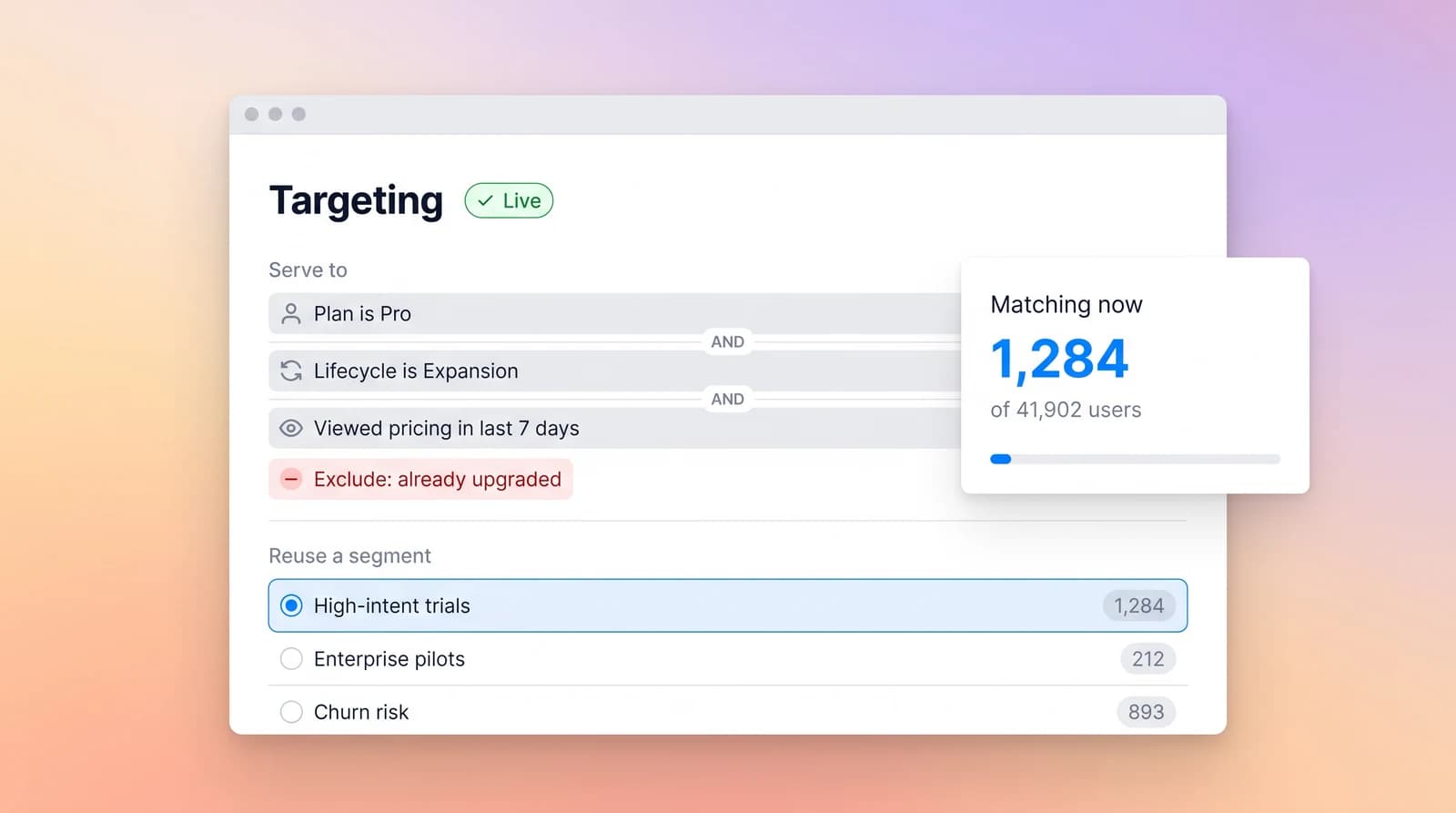
Roll out safely, then pull back fast.
Move from a few people to everyone, and back, without a deploy.
- Roll out to ten percent, then more
- Turn it off instantly when something breaks
- Change who gets it without shipping
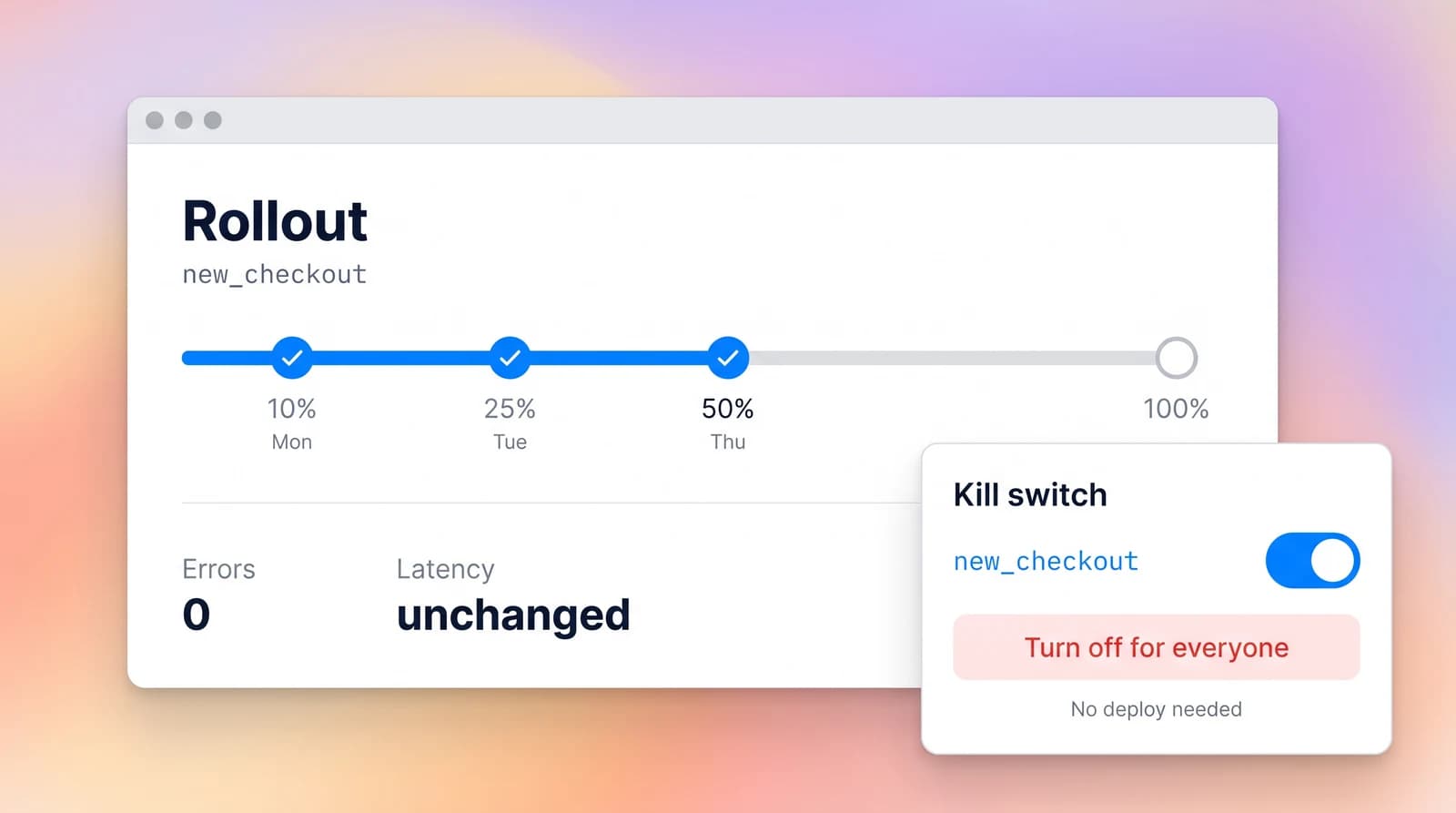
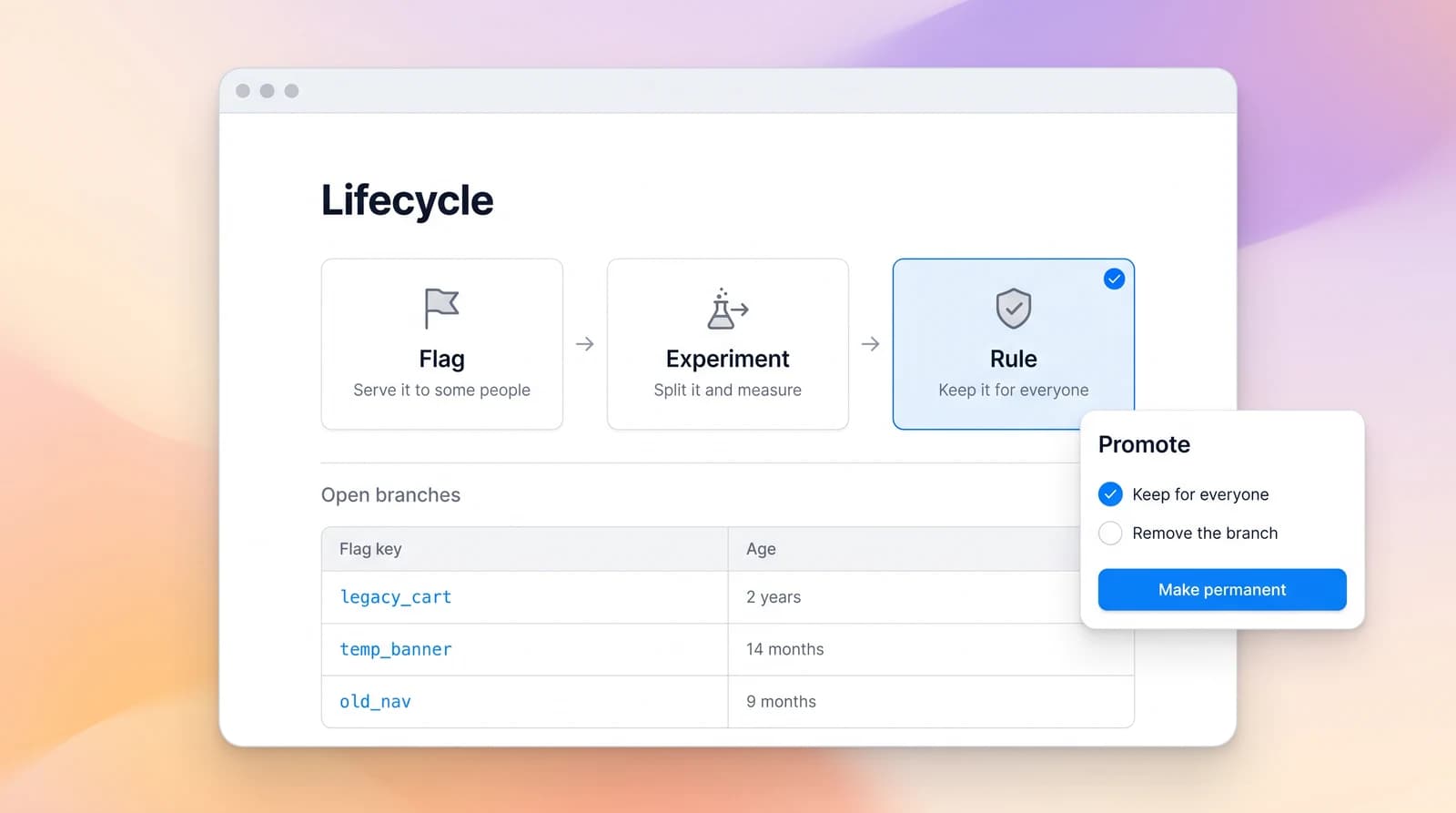
Keep what works as the new rule.
A flag, a test and a permanent rule are one object here, so finishing a rollout does not leave a branch behind.
- Promote a finished rollout into a permanent rule
- Turn any flag into an experiment without a deploy
- Stop carrying dead branches nobody remembers
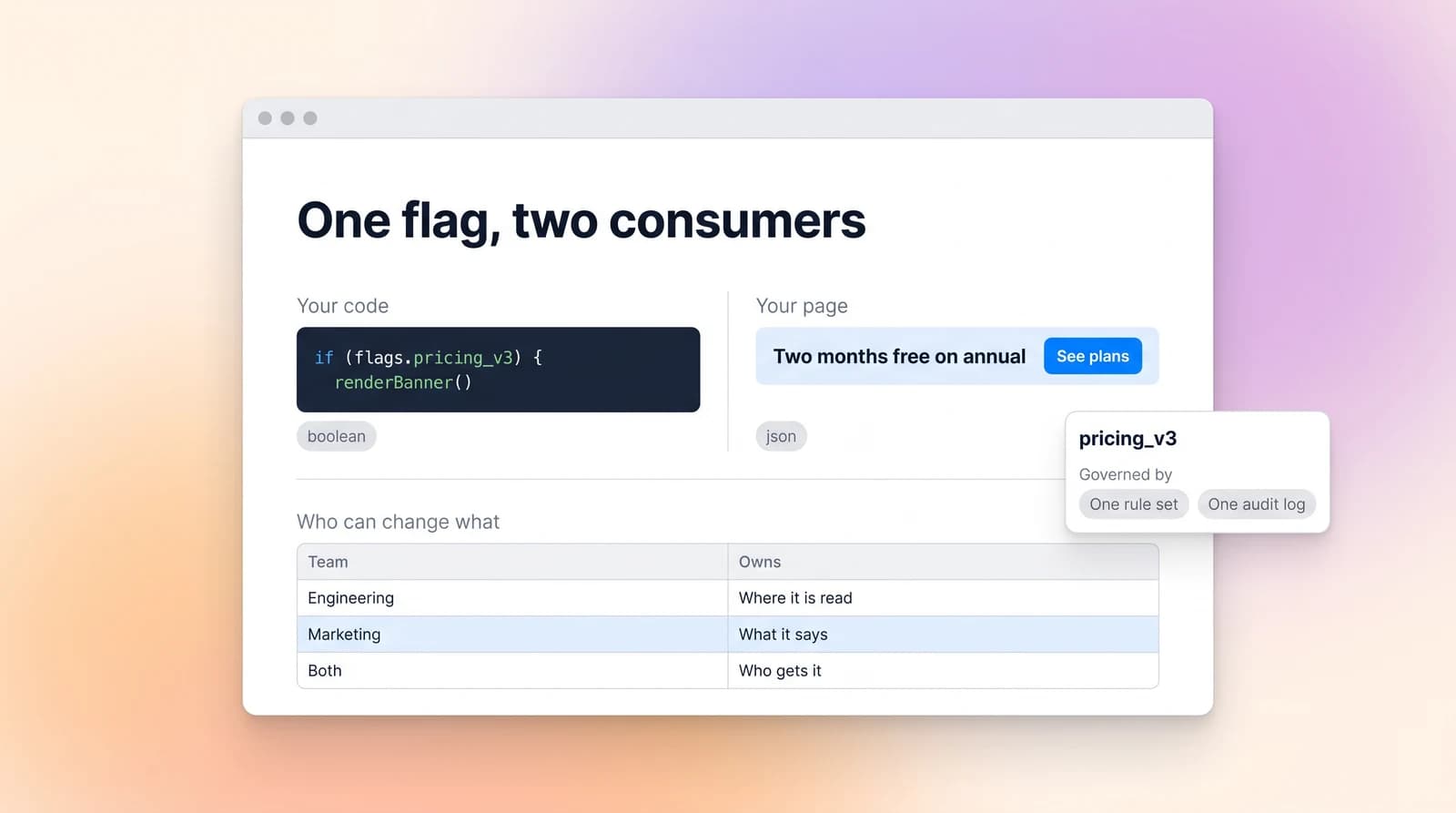
Give marketing more control.
A JSON flag returns the content that renders a card or a banner, so one system serves both teams.
- Serve code a boolean and a page a payload
- Let a marketer change content without engineering
- Govern both with the same rules
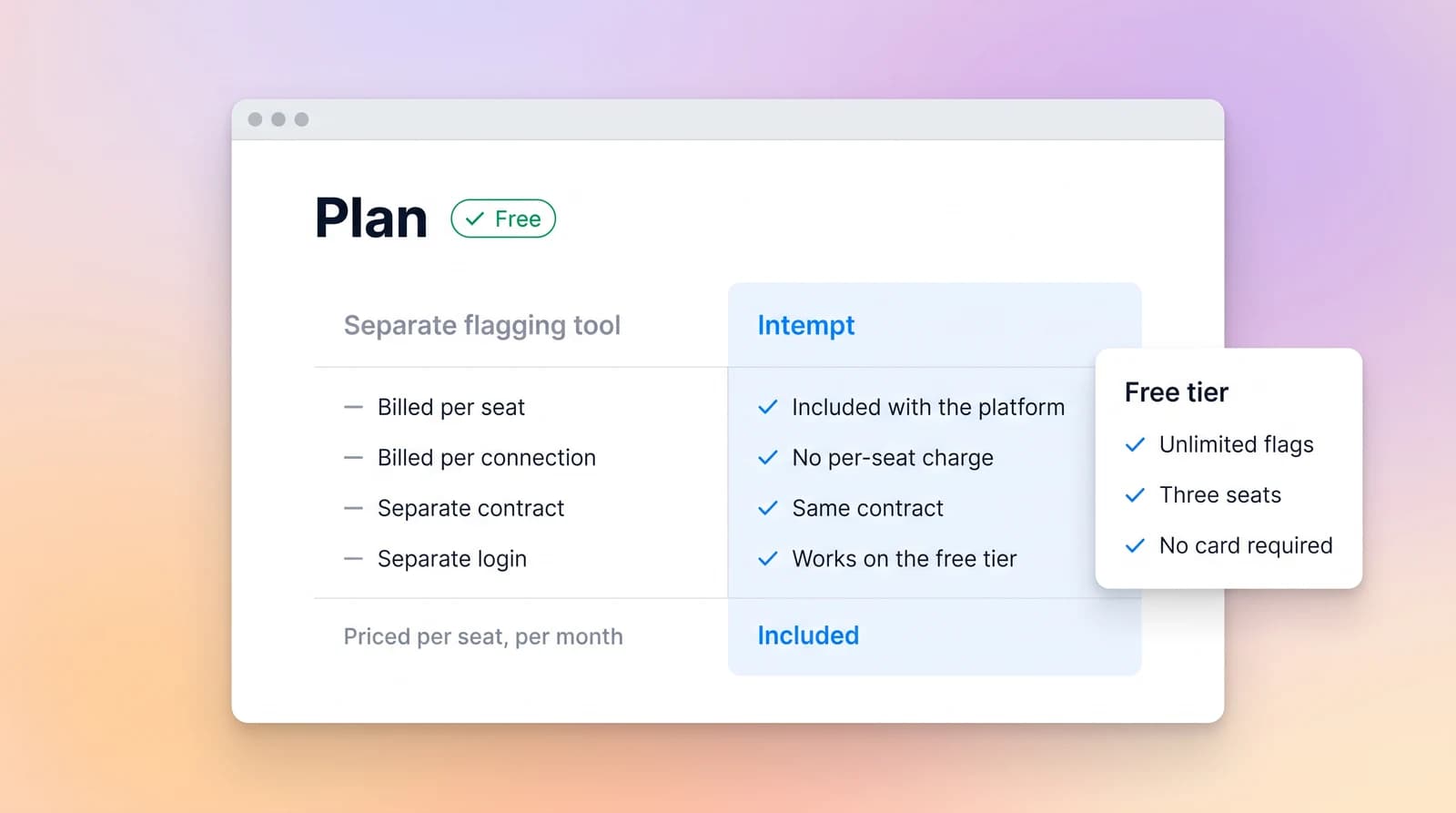
Keep feature control in the same suite.
Flags come with the suite rather than as a line item priced per seat.
- Skip the separate flagging contract
- Avoid per-seat pricing that makes teams share logins
- Use it on the free tier
Use cases built for the metrics that matter.
Three outcomes teams measure from day one.
Wired into the toolsyour team already opens.
Slack, Stripe, Twilio, SendGrid, Gmail, Google Calendar, Firebase, Apache Kafka, AWS. Blu Agent operates them for you without a browser tab.
See every integration


Teams love it
They stopped stitching tools andhired one system.

 StockInvest


“Acquisition and retention finally feel like one connected motion instead of two separate problems.”
Jim Stromberg
CEO, StockInvest

 FieldsUSA
“We finally have one system that sees the whole customer journey.”
Eric Gardner
COO, FieldsUSA

 Hoperfy
“With Intempt, we built a signal-led pipeline driven by real behaviors.”
Tadas Kertenis
Co-founder, Hoperfy