


 0.0on G2
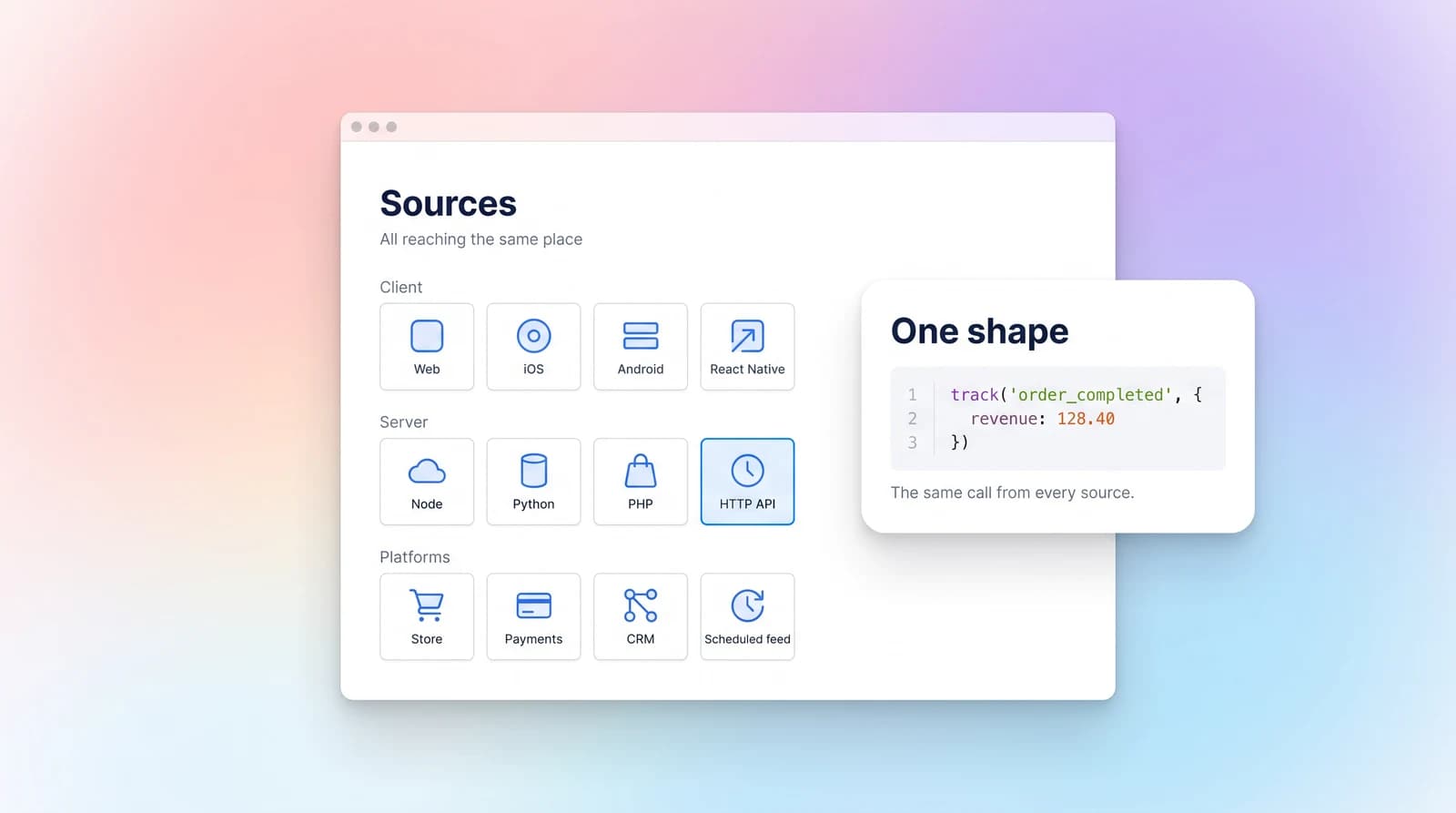
Send events from the systems you already use.
Client SDKs, server SDKs, an HTTP endpoint and the platforms you already pay for all reach the same place.
- Install a client SDK for web, iOS, Android or React Native
- Call a server SDK from Node, Python or PHP, or post to the HTTP API
- Pull from Shopify, Stripe, HubSpot or a scheduled feed
Keep every customer event consistent.
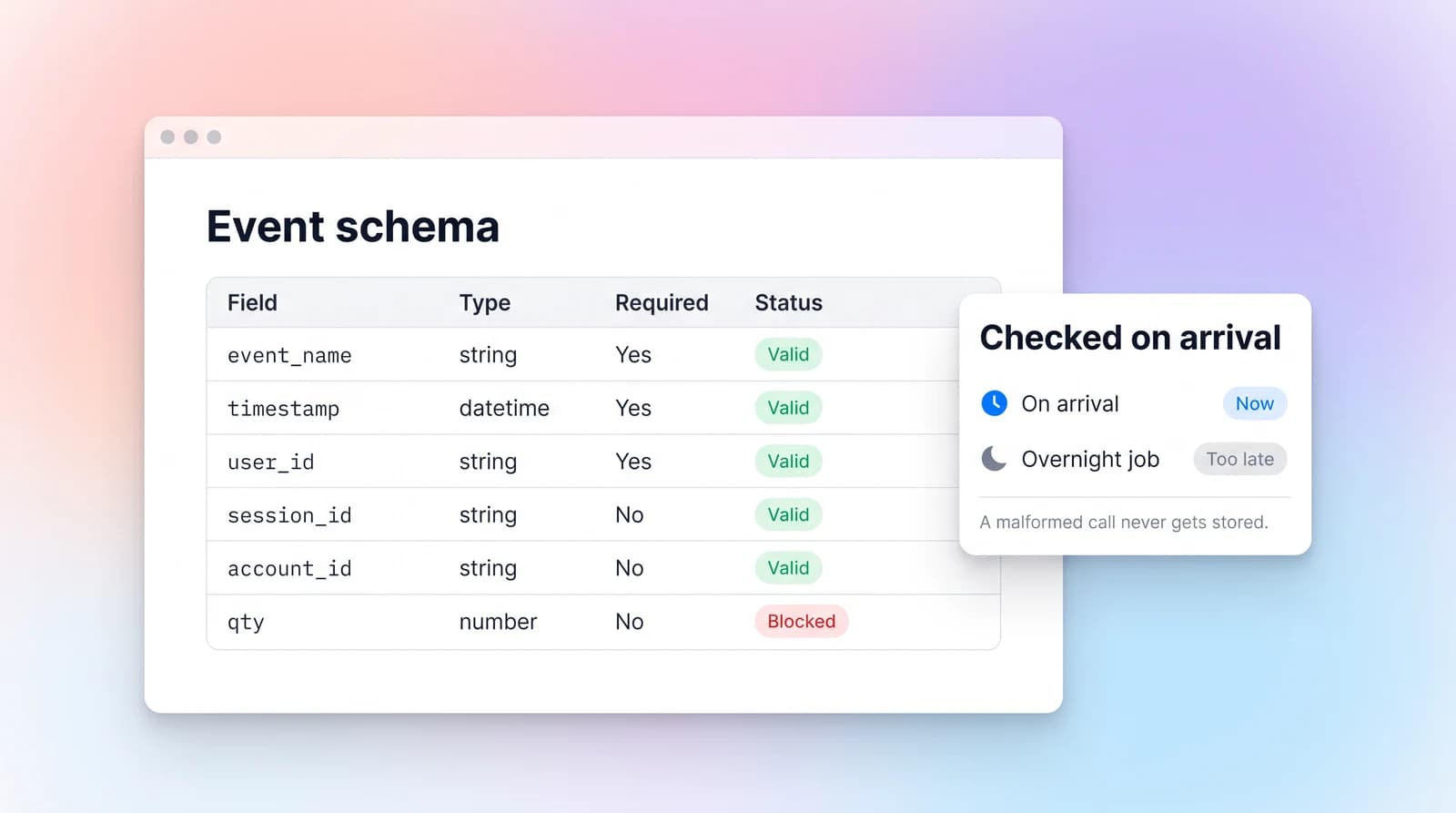
The fields that describe an event are checked when it arrives, not on a job that runs overnight.
- Name the event, stamp the time and identify who did it
- Group a visit with a session ID and a company with an account ID
- Get the check on arrival
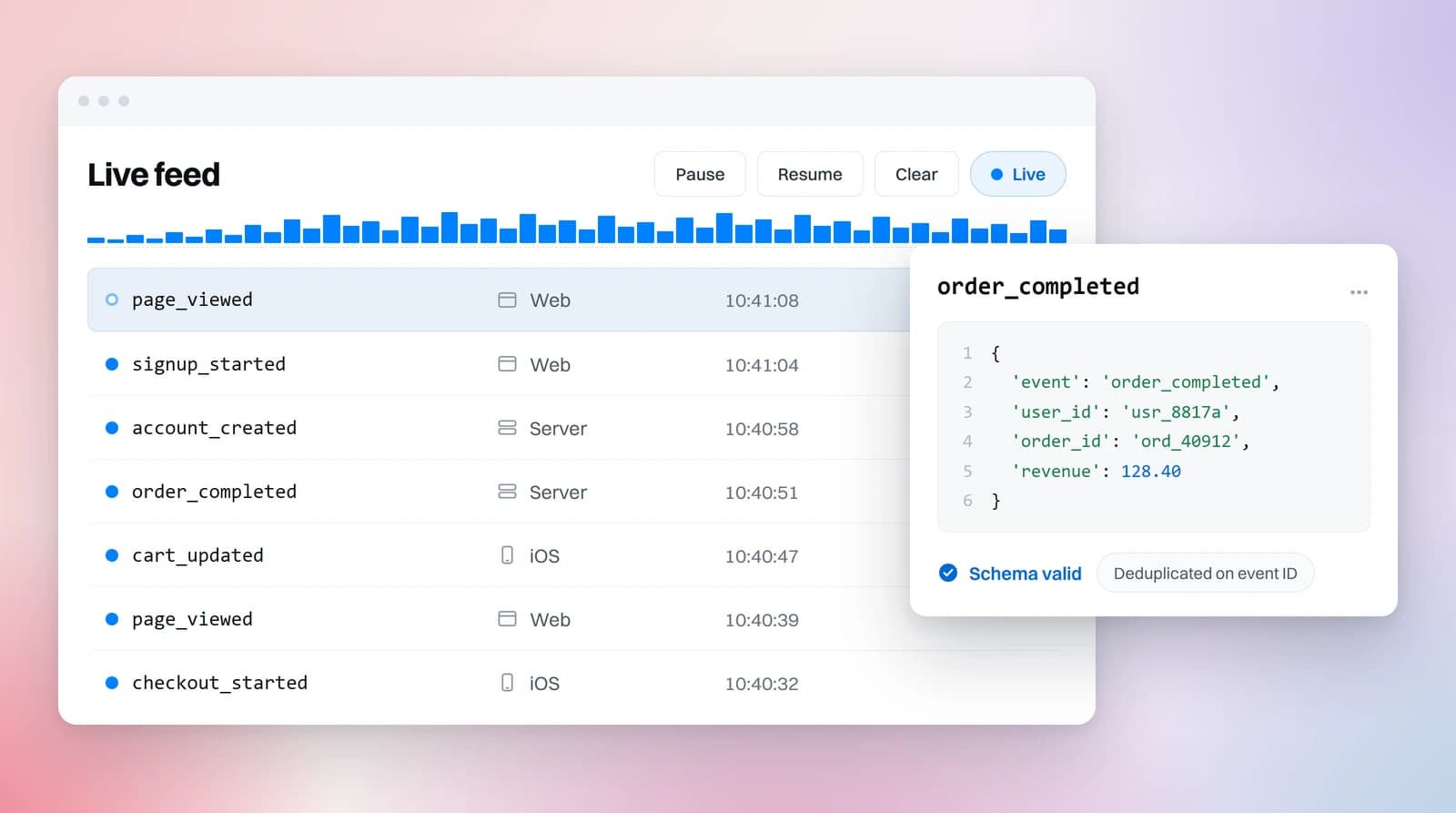
Know your tracking works before you ship.
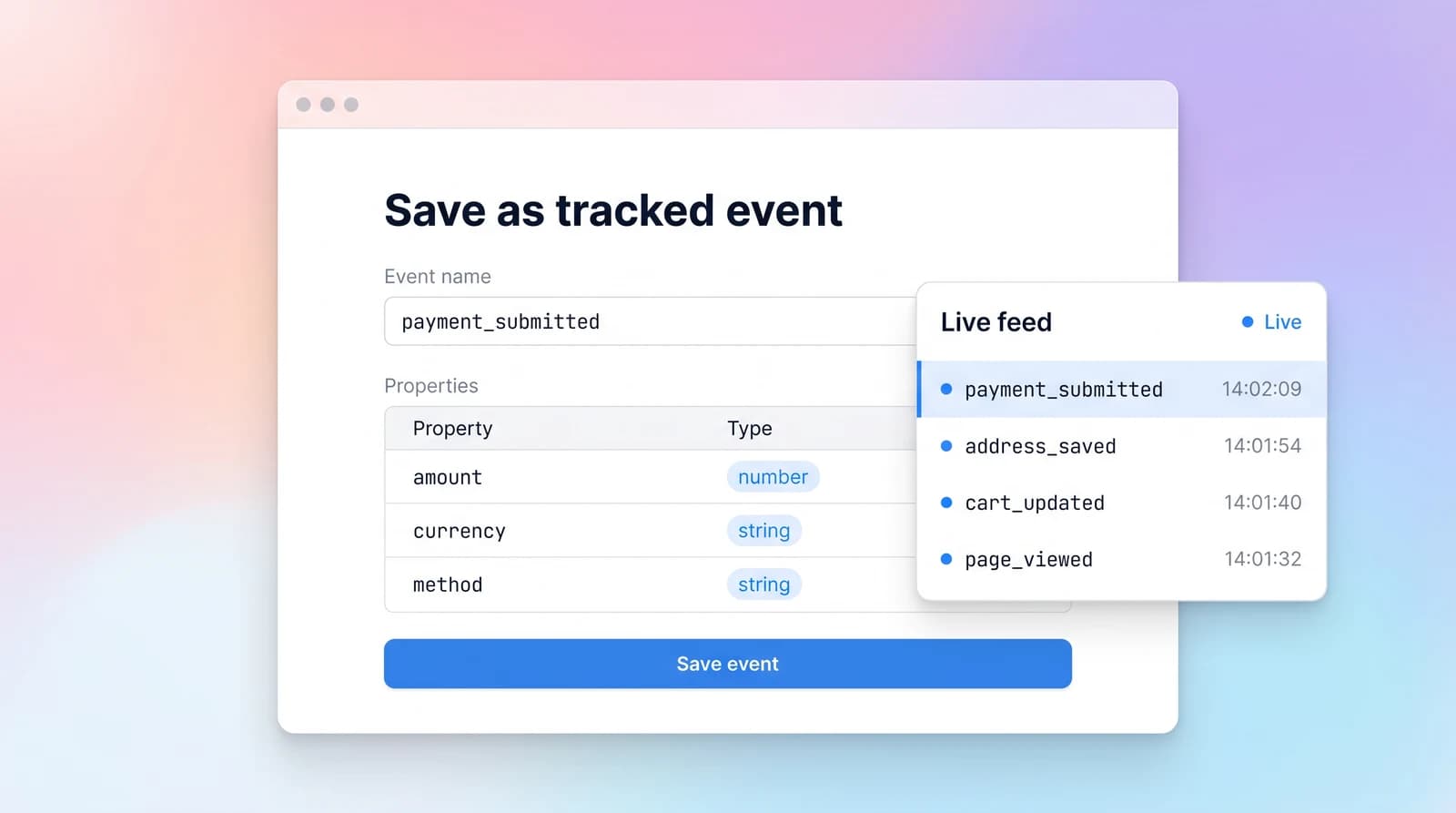
A live feed shows events arriving in real time, so you confirm the call in the moment.
- Pause, resume or clear a live feed of raw events
- Open any event and read the payload it actually sent
- Turn a live row into a saved event with its properties mapped
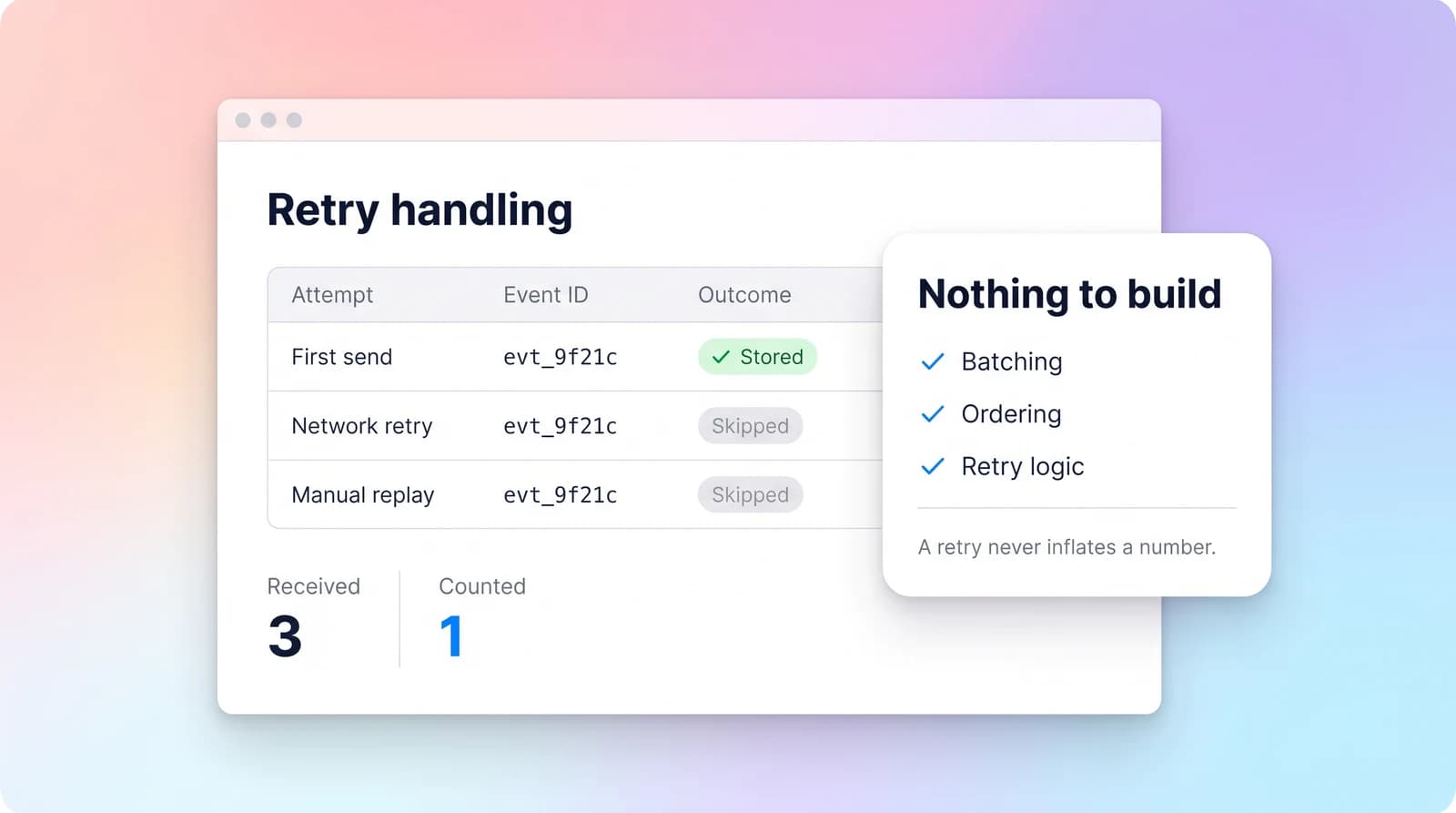
Keep failed events from becoming lost data.
Every event carries an ID, so a retry does not become a second conversion.
- Deduplicate on event ID with nothing to build
- Skip writing your own batching, ordering and retry logic
- Replay a failed request without inflating a number
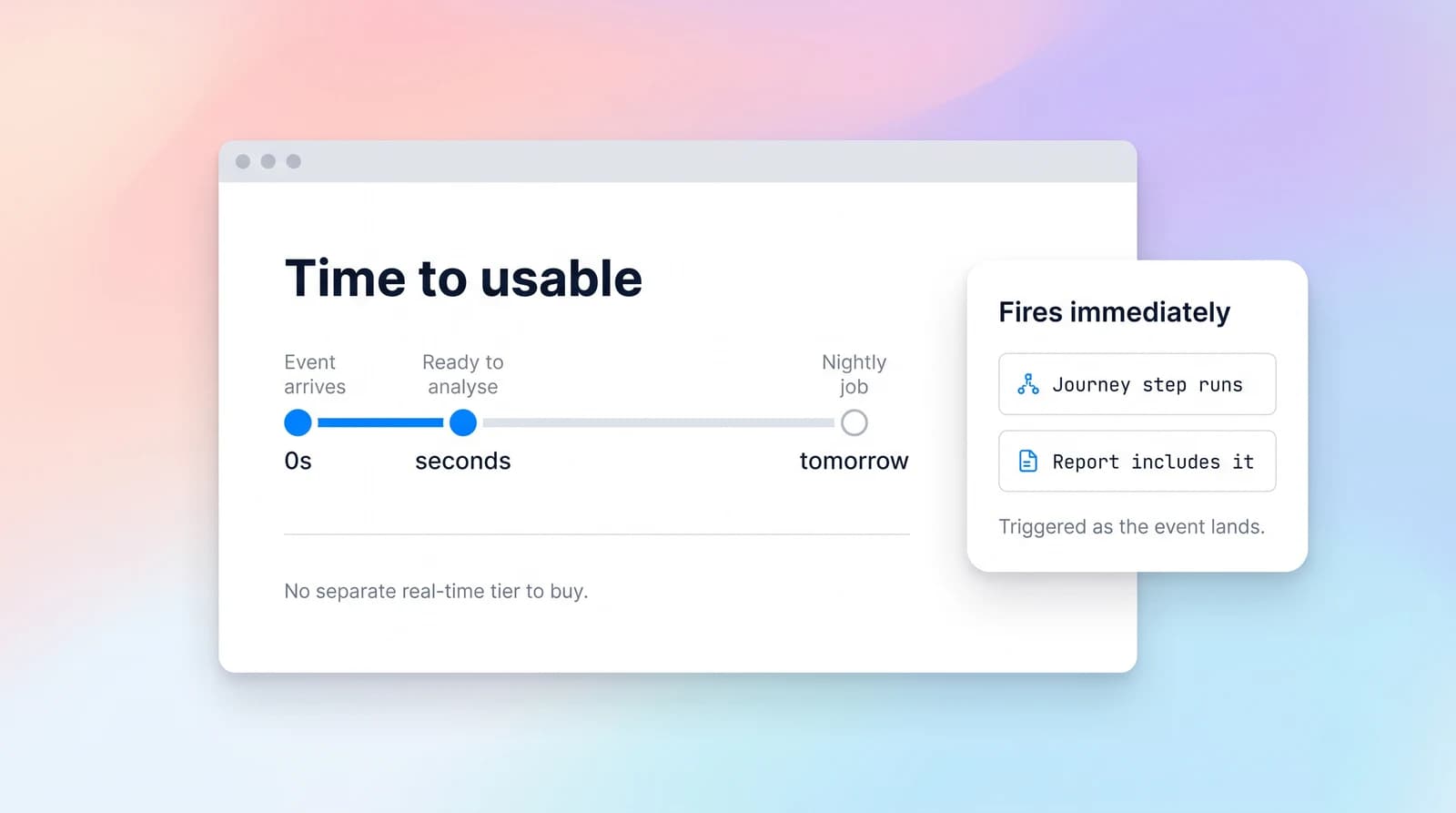
Use events soon after they arrive.
Recent events stay fast to read and history stays fast to scan.
- Analyse an event within seconds of it arriving
- Trigger a journey as the event lands
- Skip the nightly job and the separate real-time tier
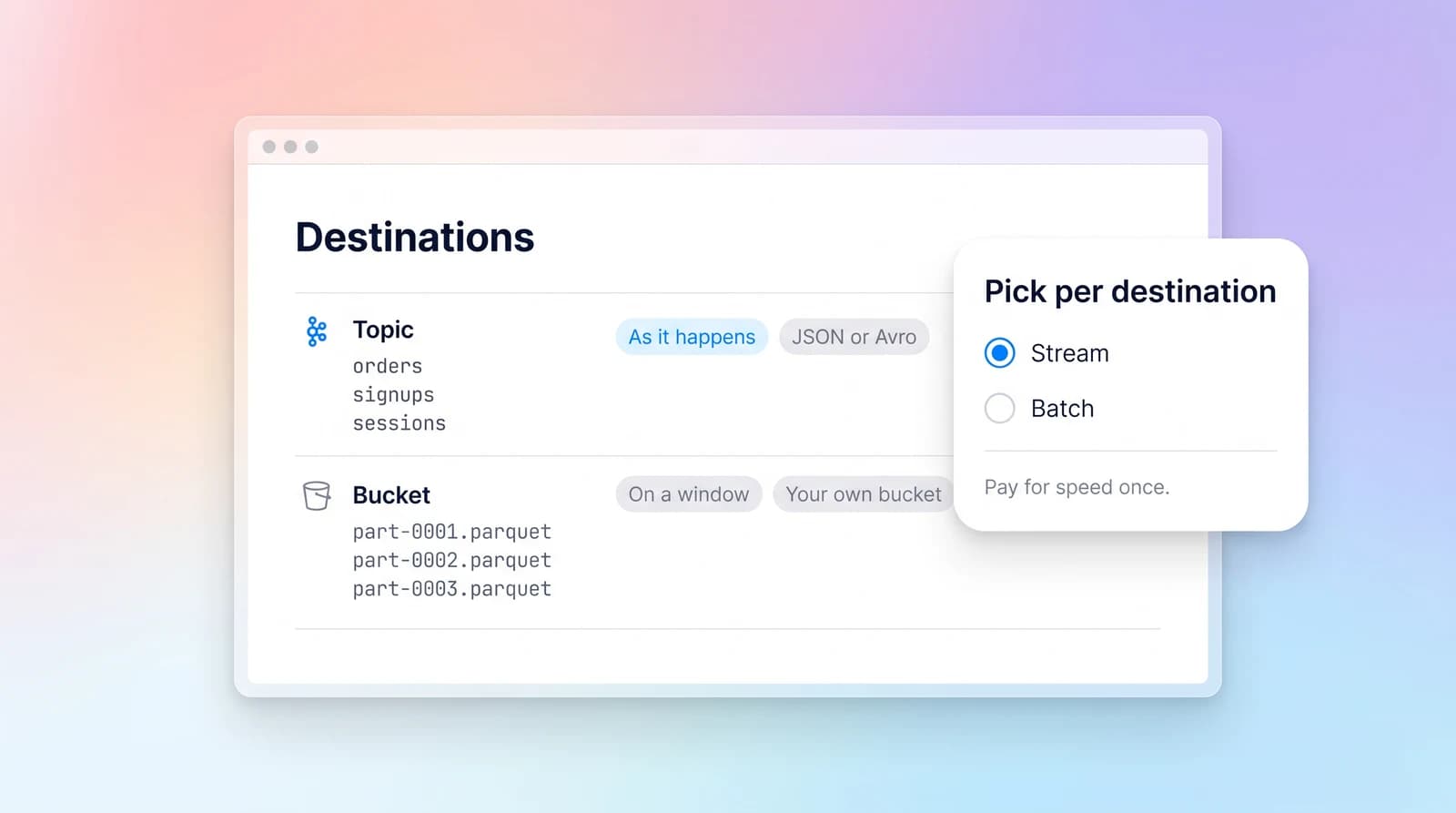
Move events when your team needs them.
The same enriched record goes to a topic as it happens, or to a bucket on a window.
- Publish each event to a Kafka topic your systems already watch
- Write the same events to a bucket your warehouse reads
- Pick the mode per destination, so you pay for speed once
Use cases built for the metrics that matter.
Three outcomes data teams measure from day one.
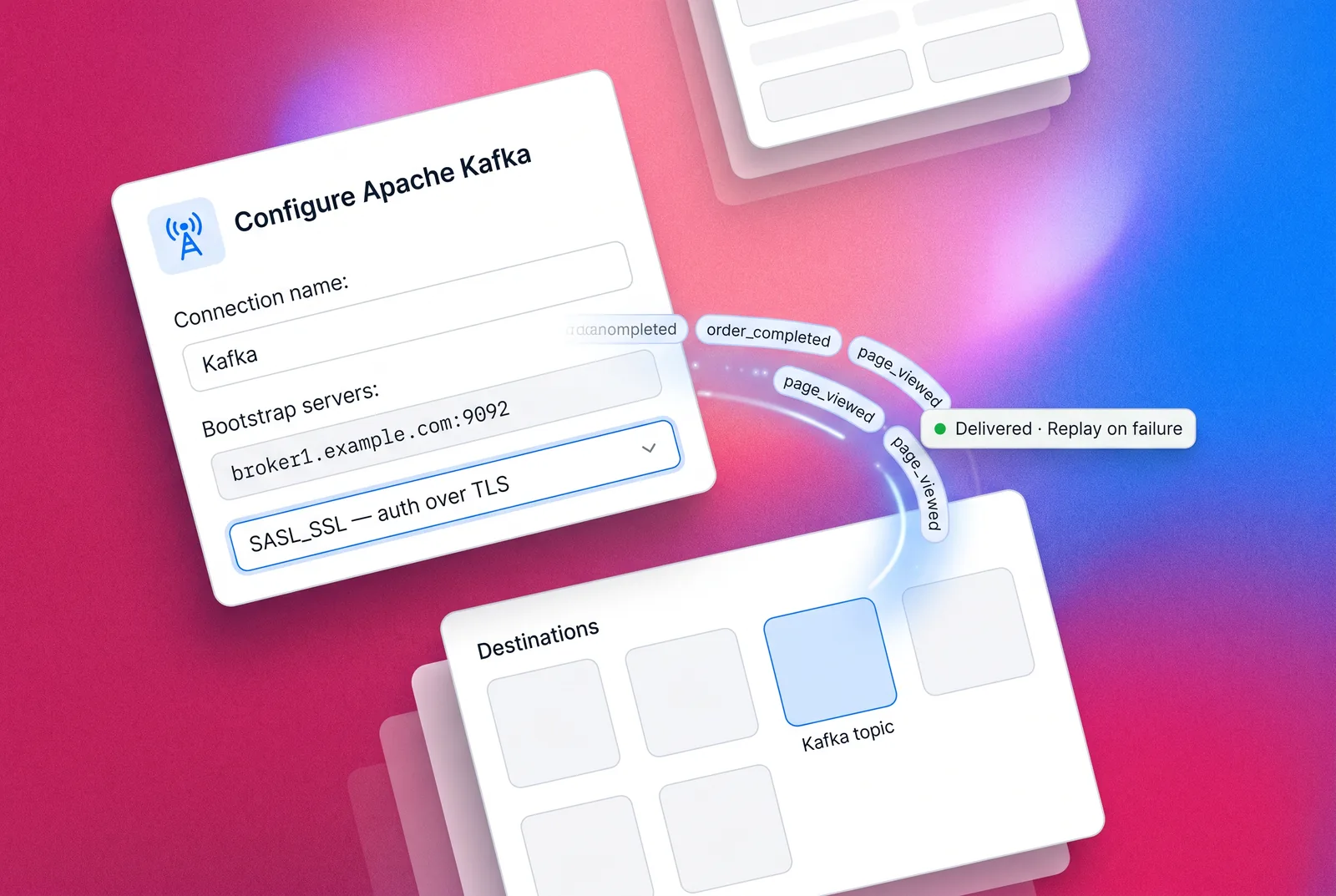
Wired into the toolsyour team already opens.
Slack, Stripe, Twilio, SendGrid, Gmail, Google Calendar, Firebase, Apache Kafka, AWS. Blu Agent operates them for you without a browser tab.
See every integration


Teams love it
They stopped stitching tools andhired one system.

 StockInvest


“Acquisition and retention finally feel like one connected motion instead of two separate problems.”
Jim Stromberg
CEO, StockInvest

 FieldsUSA
“We finally have one system that sees the whole customer journey.”
Eric Gardner
COO, FieldsUSA

 Hoperfy
“With Intempt, we built a signal-led pipeline driven by real behaviors.”
Tadas Kertenis
Co-founder, Hoperfy