


Intempt

Reach users when it matters.

Show a nudge, tooltip, widget, or video only to the people who need it, off the same profile as your email.

Start for free
In-app surfaces targeted on the customer profile
G2
0.0on G2
10B+events
500M+users
7+years profitable
50+enterprises

Make every nudge feel useful.

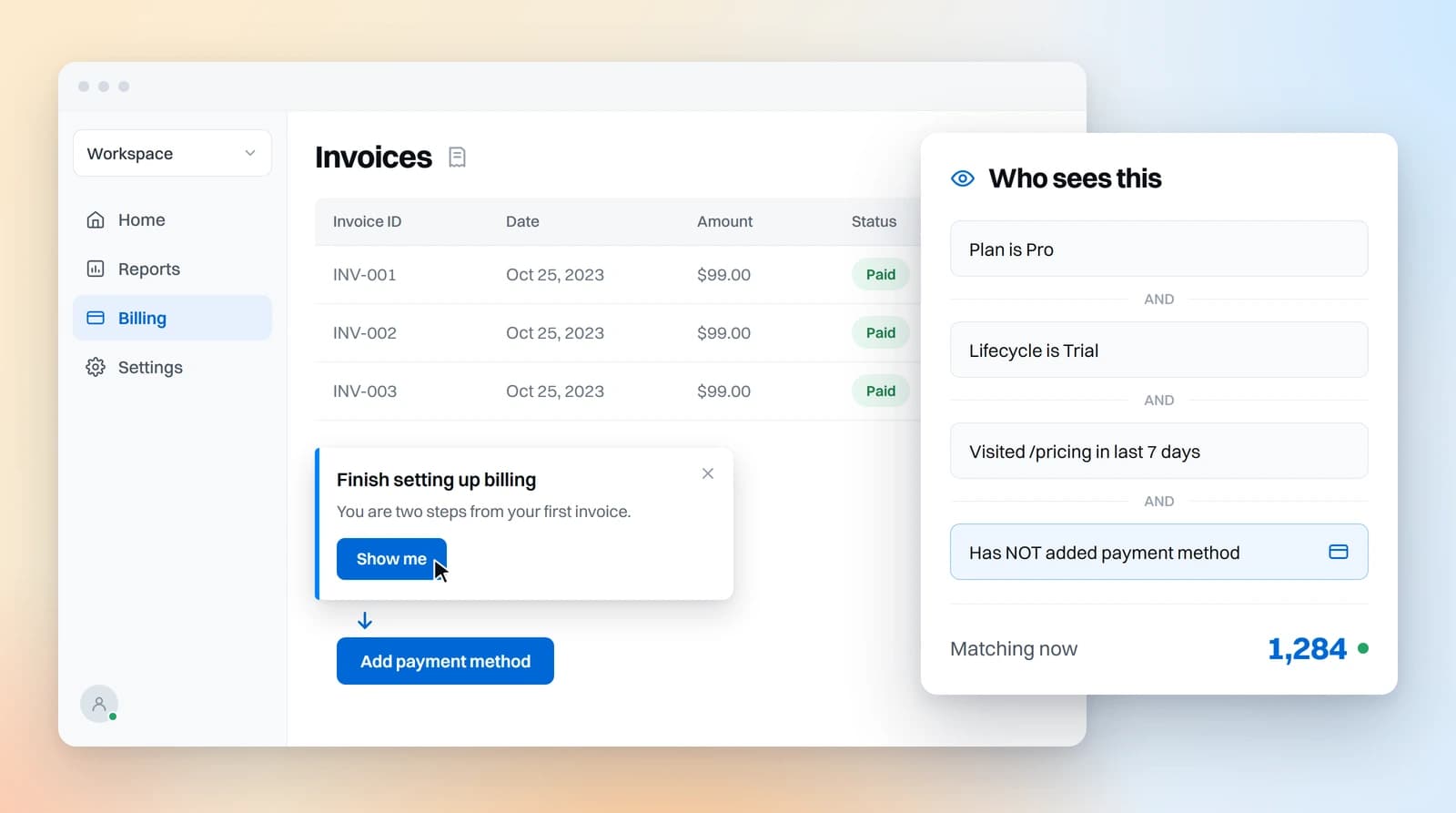
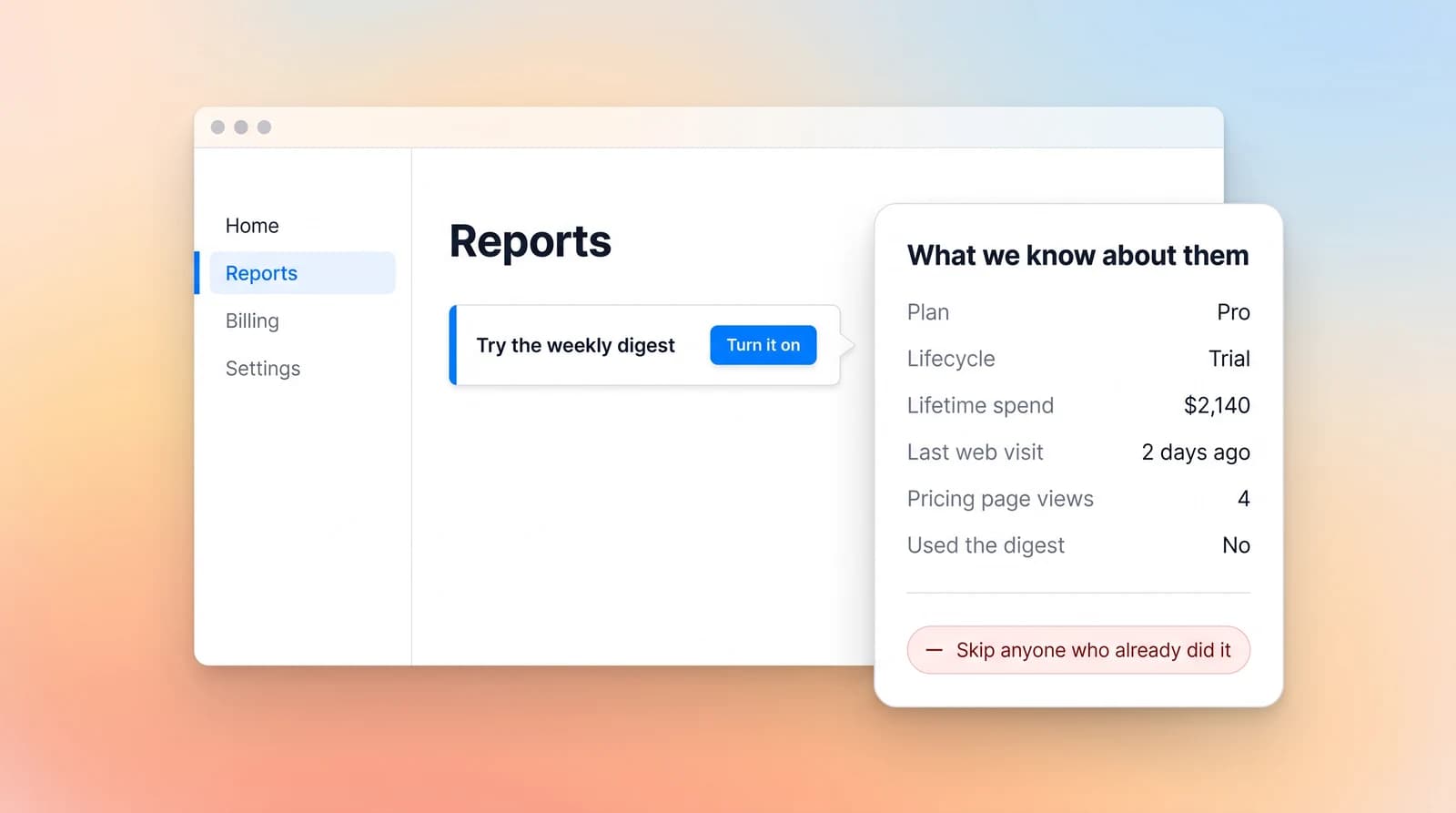
Target on anything you know about someone, not just what they did on this screen.

  • Read plan, lifecycle stage, and purchase history
  • Include what they did on your marketing site
  • Skip anyone who already did the thing
Make every nudge feel useful

Help users when they get stuck.

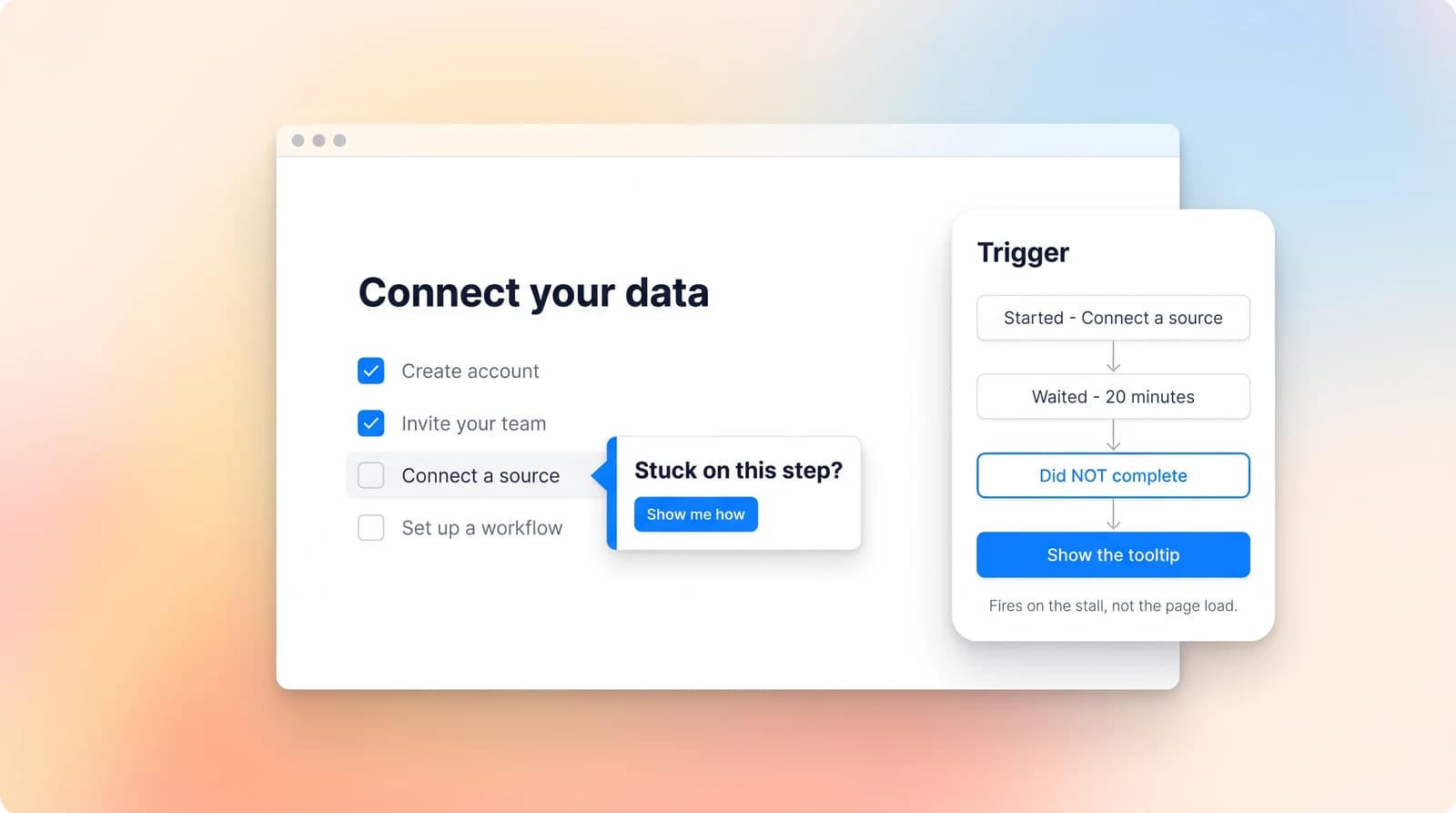
Trigger on the event that did not happen, rather than on a page loading.

  • Fire when someone stalls, not when they arrive
  • Wait for a condition instead of a delay
  • React to what they did on their last visit
Help users when they get stuck

Make product content easier to change.

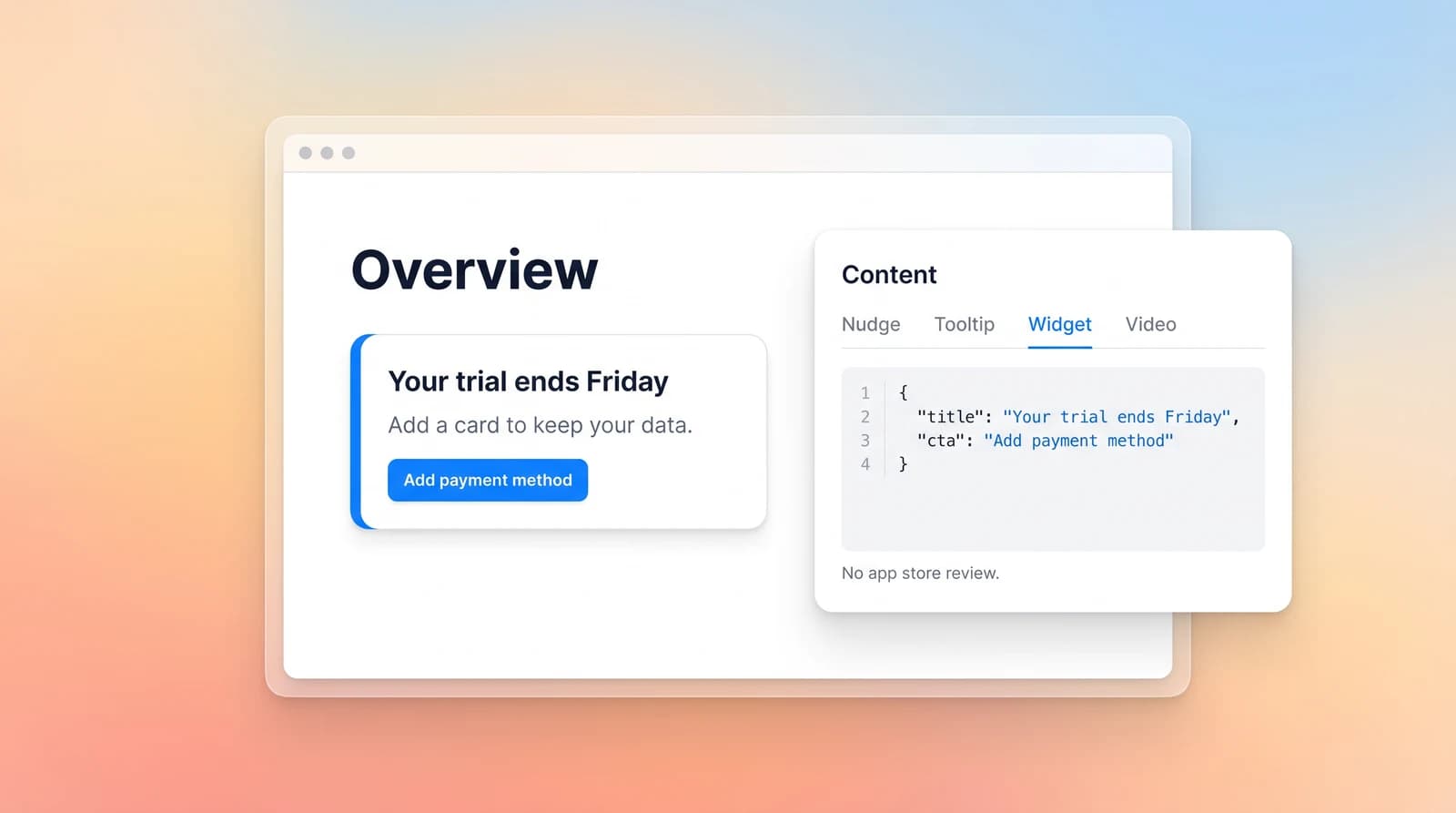
Define the content once and your app draws it, so changing it never touches the build.

  • Put a nudge, a tooltip, an inline widget or a video in the product
  • Render from a JSON value your app asks for
  • Change the copy or the rule without an app store review
Make product content easier to change

Stop asking once the job is done.

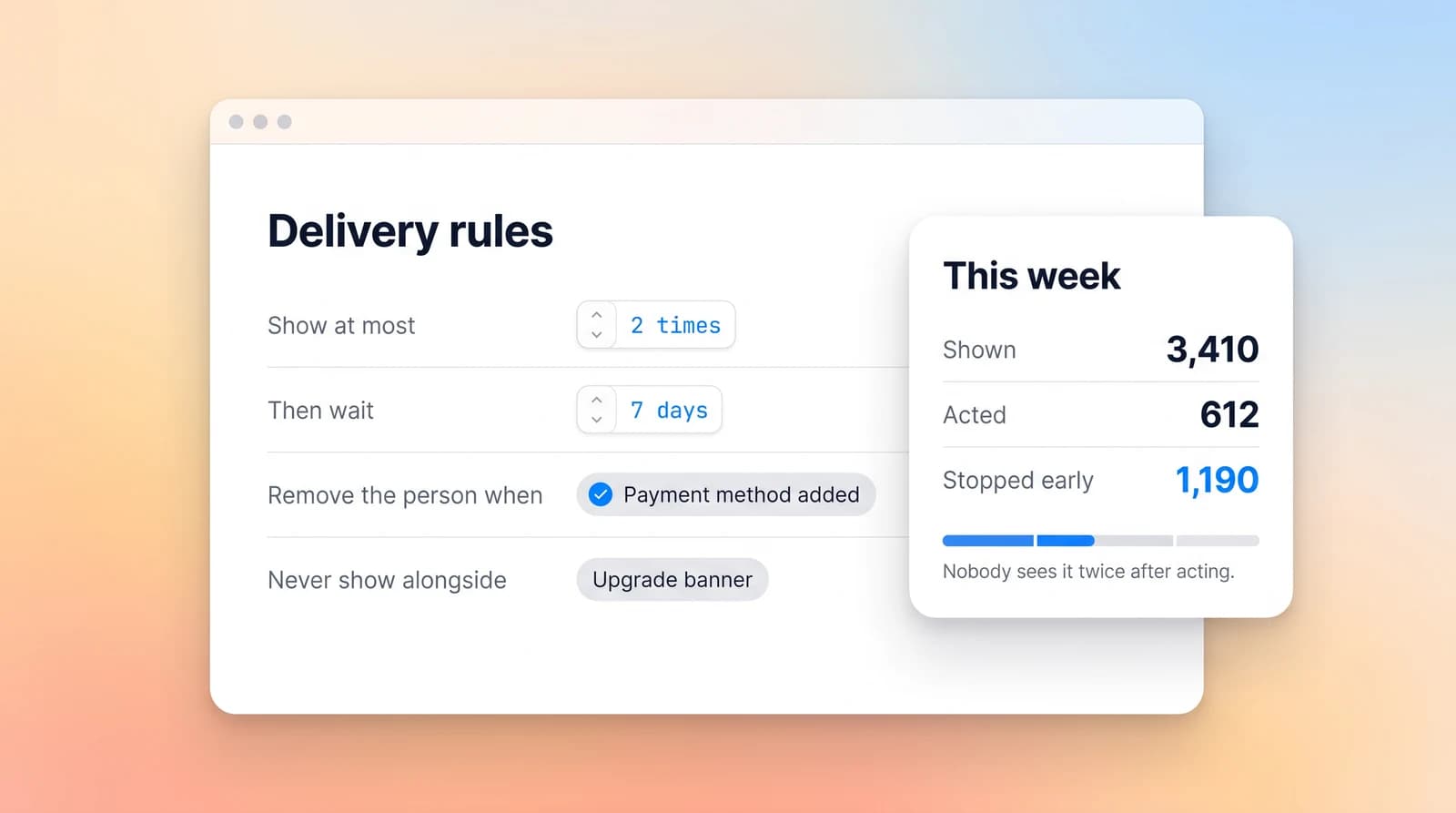
Frequency and exit rules are settings you fill in, not defaults you discover later.

  • Cap how often anyone sees the same prompt
  • Remove someone the moment they take the action
  • Keep one person out of two prompts that contradict
Stop asking once the job is done

See whether the surface changed behavior.

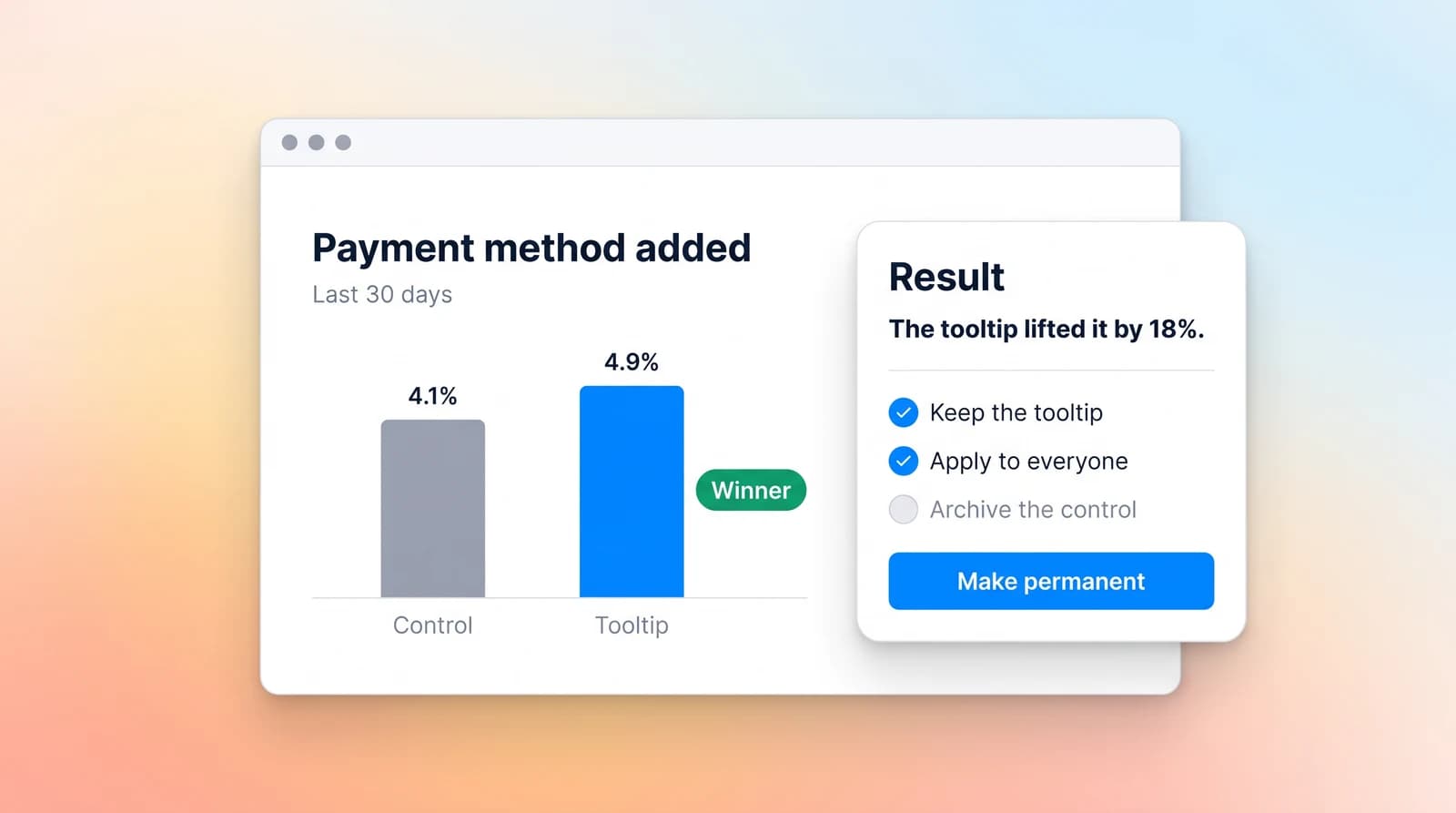
Report against the thing you wanted them to do.

  • Tie the surface to the event it was meant to cause
  • Split two versions and read the call in words
  • Promote the winner into a permanent rule
See whether the surface changed behavior

Keep every message on the same page.

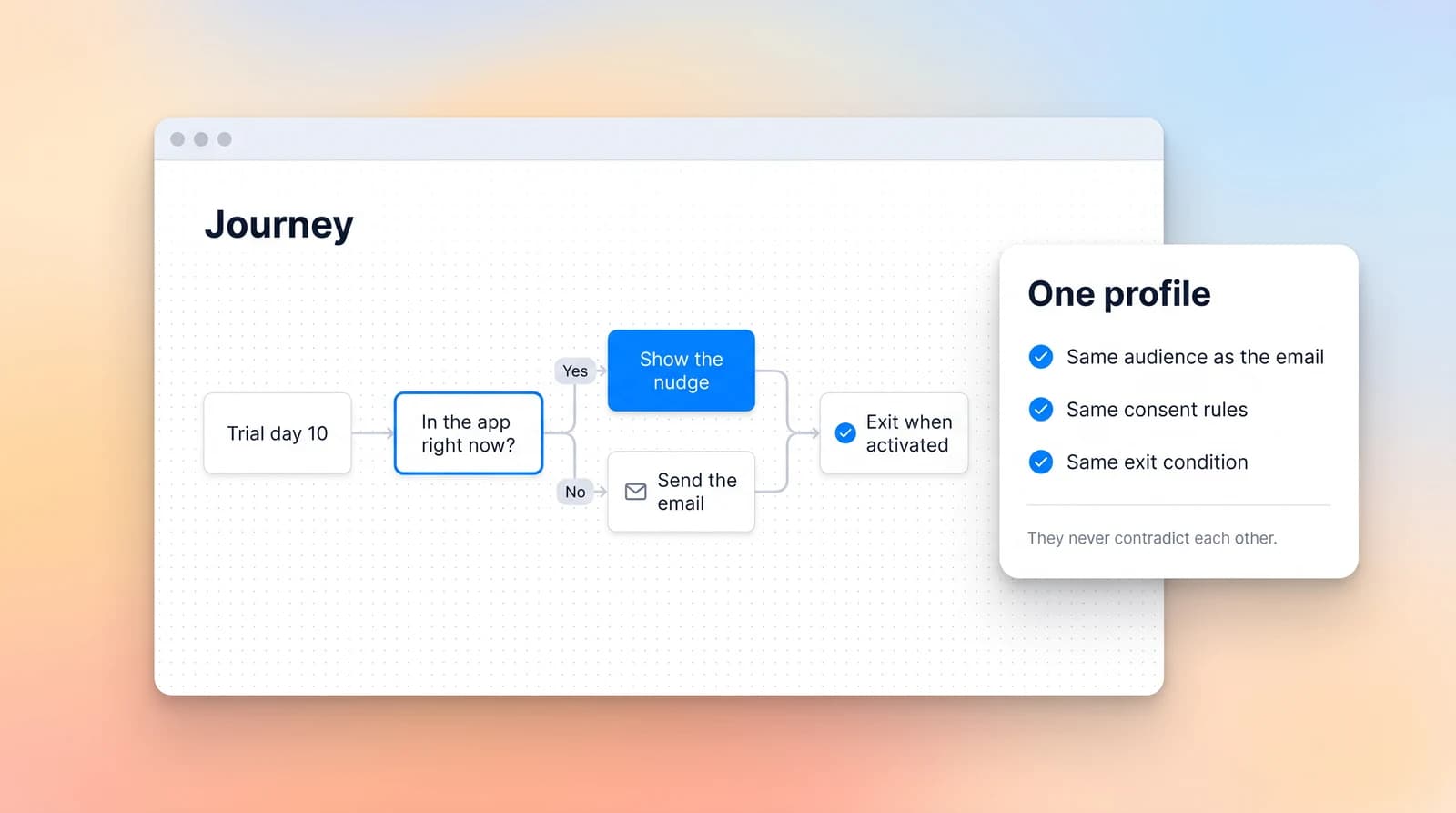
The nudge and the email read one profile, so they do not say different things on the same day.

  • Use the audience you already built for email
  • Let one journey choose between a send and a nudge
  • Stop the nudge when the journey exits
Keep every message on the same page

Use cases built for the metrics that matter.

Three outcomes teams measure from day one.

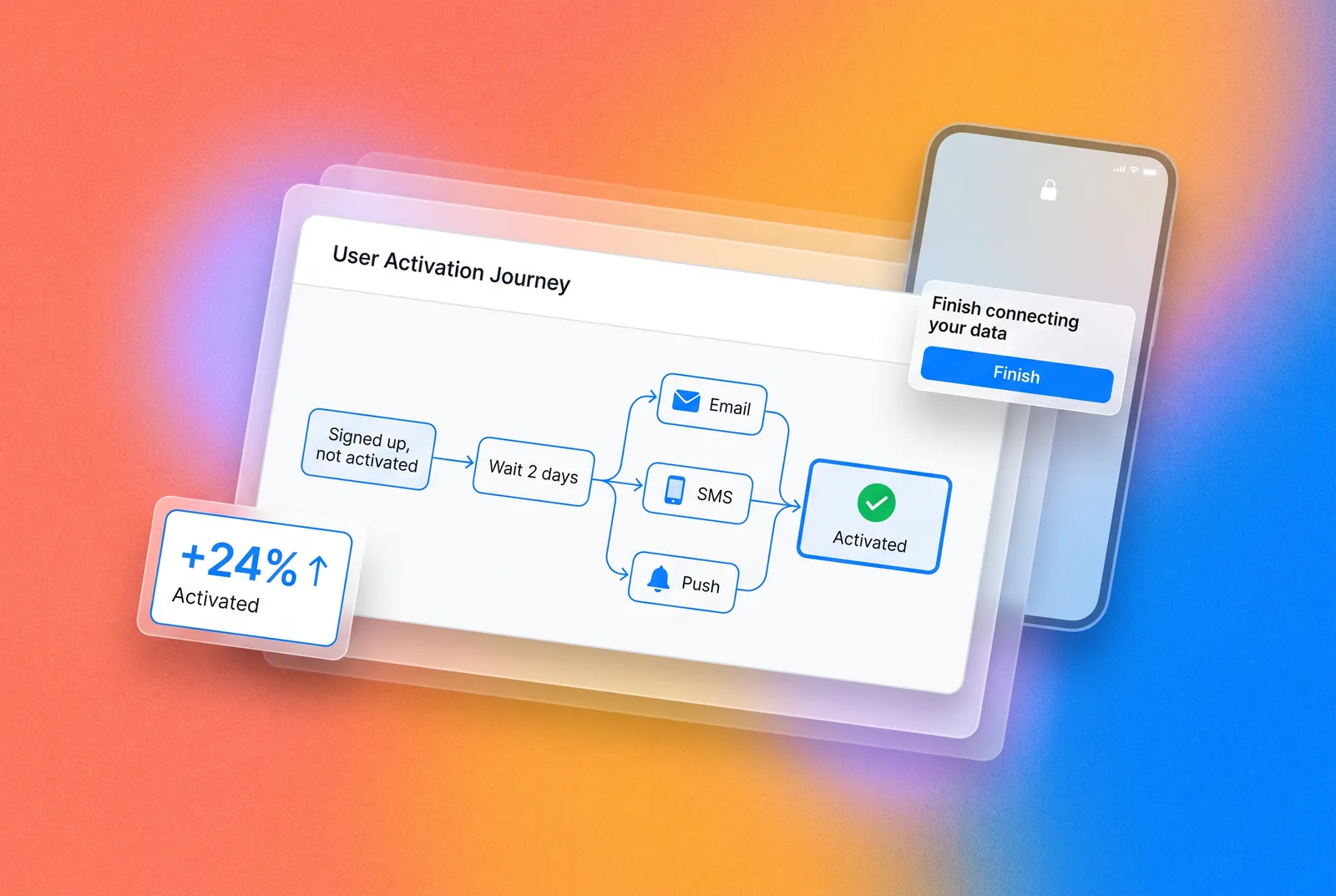
An activation journey across email, SMS and push, with the nudge that finishes setup

Wired into the toolsyour team already opens.

Slack, Stripe, Twilio, SendGrid, Gmail, Google Calendar, Firebase, Apache Kafka, AWS. Blu Agent operates them for you without a browser tab.

JavaScript
Node JS
Apple
Stripe
Gmail
Google Calendar
Google Meet
Twilio
SendGrid
Slack
Amazon SES
Webhook
Apache Kafka
Amazon S3
Firebase Cloud Messaging

In the words of50+ live tenants.

Jim Stromberg, CEO at StockInvest

“We were losing visitors before they signed up. Intempt's personalized experiences changed that - we started meeting people where they were instead of guessing. Once they're in, Intempt's automated email takes over and keeps the relationship moving. Acquisition and retention finally feel like one connected motion instead of two separate problems.”

Jim Stromberg

CEO, StockInvest

Eric Gardner, COO at FieldsUSA

“Intempt helped us turn real browsing and purchase signals into personalized experiences that drive repeat buying. We finally have one system that sees the whole customer journey.”

Eric Gardner

COO, FieldsUSA

Tadas Kertenis, Co-founder at Hoperfy

“With Intempt, we built a signal-led pipeline driven by real behaviors. Follow-ups are triggered by intent signals instead of timelines, so we only focus on users who are truly engaging.”

Tadas Kertenis

Co-founder, Hoperfy

Frequently askedquestions.

  • Many will, if it is shown to the wrong person at the wrong time, and that is the honest answer about every in-app prompt. Targeting is what changes the number. A prompt that appears for someone who has already done the thing is noise. A prompt that appears for the one person stuck on the step it explains is help. The difference is what the tool knows about them.
Intempt Marketing

Place your first in-app surface this week.

Pick who should see it, pick what triggers it, write the prompt, then measure the action it was meant to cause. A developer installs the SDK once and never has to touch it again.

Start for free