
- Every guide to social proof lists formats. Almost none say where each format belongs, and none say when it works against you. The same testimonial that lifts a product page can suppress a pricing page, because a buyer weighing cost is asking a different question than a buyer weighing fit. Match the proof to the question being asked at that moment, and watch the credibility floor: thin, generic, or suspiciously uniform proof reads as marketing and performs worse than none.

Social proof is treated as a content problem, which is why so much of it gets produced and so little of it moves anything. The format is rarely the issue. Placement is, and getting it right means matching the proof to the doubt a buyer holds at that exact moment, whether you serve it by hand or with on-site personalization.
What social proof actually is
It is the tendency to read other people's behaviour as evidence about what is correct. Robert Cialdini named the effect in Influence in 1984, and the mechanism has not changed since.
What changed is supply. Reviews, ratings, counts, customer photos and live activity notices are now cheap to collect and trivial to display, so having proof is no longer a differentiator. Deciding where it goes is, and the honest way to settle a placement is to test it with one of the experimentation tools that can vary a page element per visitor.
The six kinds, and what each one answers
Grouping social proof by format hides the useful distinction. Group it by the doubt it resolves and the placement decision makes itself.
| Kind | Answers the doubt | Belongs | Backfires when |
|---|---|---|---|
| Volume: counts, ratings | Is this broadly acceptable | Category and listing pages, early | Ratings are uniformly perfect, which reads as filtered |
| Specificity: detailed reviews | Does it work for my case | Product page, near the decision | Reviews are generic, which reads as solicited |
| Similarity: proof from someone like me | Is this for people like me | Anywhere the buyer's context is known | The match is visibly wrong, signalling the product is not for them |
| Authority: expert or press | Can this be trusted at all | New category, unknown brand | The buyer already trusts you; it adds distance |
| Activity: live purchases, low stock | Am I too late | Impulse and low-consideration carts | The purchase is considered, where it reads as pressure |
| Peer media: customer photos, video | What is it actually like | Product page, post-specification | It is indistinguishable from studio photography |
The fourth column is the part every listicle skips, and it is where the losses are.
Why the same asset performs differently on two pages
Because the buyer is asking a different question on each one, and proof only counts as evidence if it addresses the question being held.
A shopper on a product page is asking whether this specific thing fits their case. A detailed review answers that, which is the same fit-doubt logic behind product recommendations. A shopper on a pricing page is asking whether the cost is justified, and a testimonial about ease of use does not speak to cost, so it becomes page furniture.
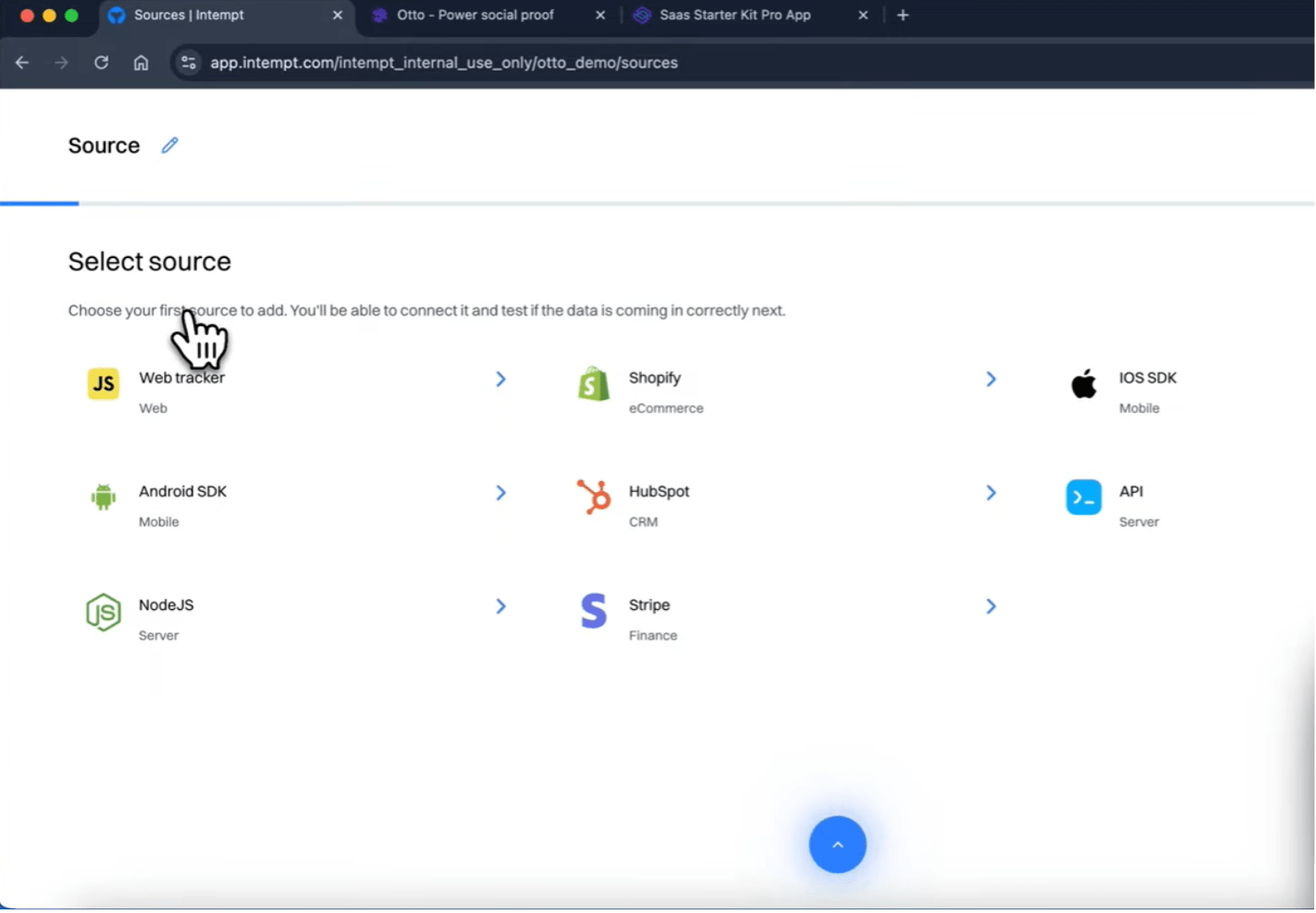
This is why case studies about social proof travel so badly. The result is inseparable from the page it ran on and the doubt that page carried.
The credibility floor
Below a certain quality, proof is worse than no proof, because it tells the buyer you are marketing rather than evidencing.
- Uniform ratings. An unbroken run of five stars reads as filtered. A visible spread of four and five with substantive text reads as real.
- Generic testimonials. Praise with no specifics reads as solicited. One concrete detail about the use case does more than three superlatives.
- Mismatched similarity. Enterprise logos on a page aimed at small teams tell that buyer the product is not for them.
- Borrowed urgency. Live activity notices on a considered purchase read as manipulation, and the reaction is to the tactic rather than the product.
The floor is not about volume. It is about whether a reasonable person would treat the display as information.
Matching proof to the moment
Placement needs two things: knowing which question a page carries, and being able to vary what shows without shipping a new page for each variant.
The page tells you the question most of the time. A category page carries browse doubt, a product page carries fit doubt, a pricing page carries cost doubt, and a checkout carries risk doubt, which is where cart abandonment work overlaps. Assign the kind that answers each and you have covered the majority.
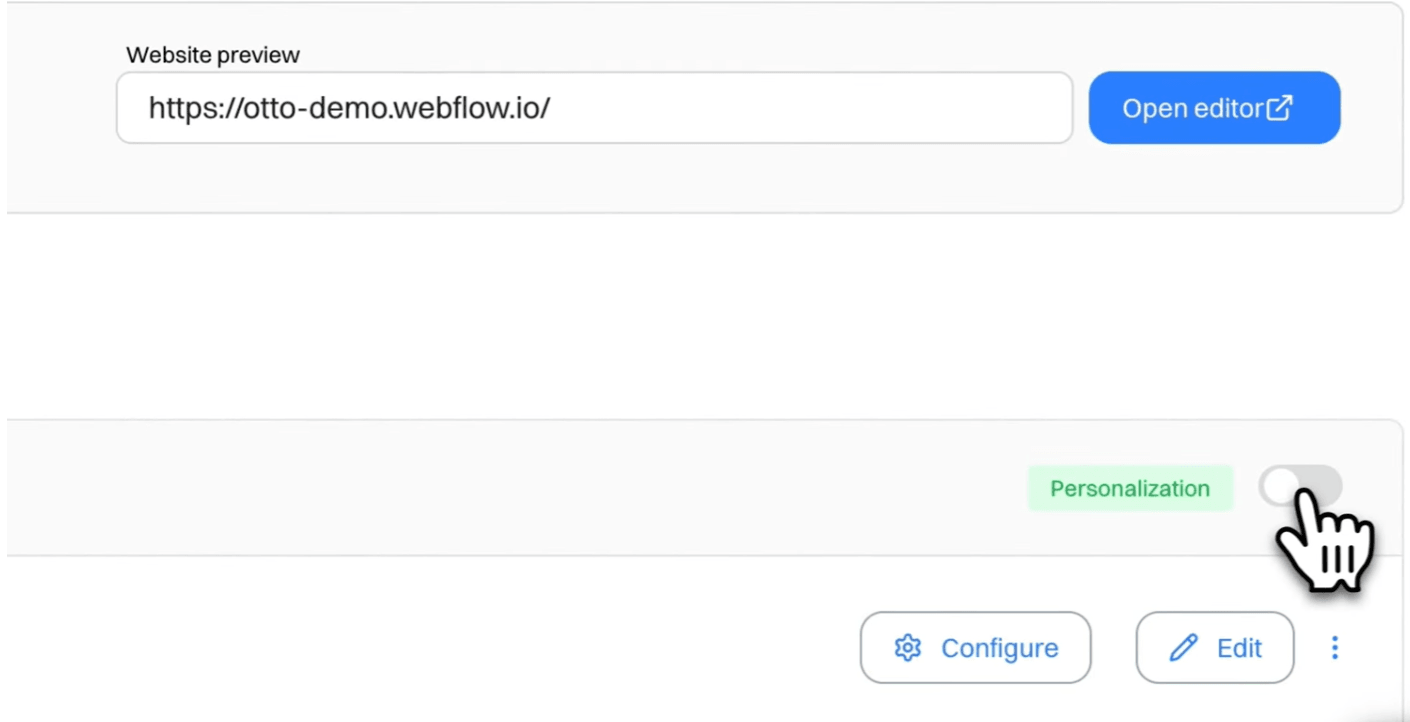
Where it gets more useful is varying by what the visitor has already done. A returning visitor who has viewed one product three times holds fit doubt regardless of which page they are on, and proof matched to their viewed category is stronger than the page default. The docs cover web personalization.
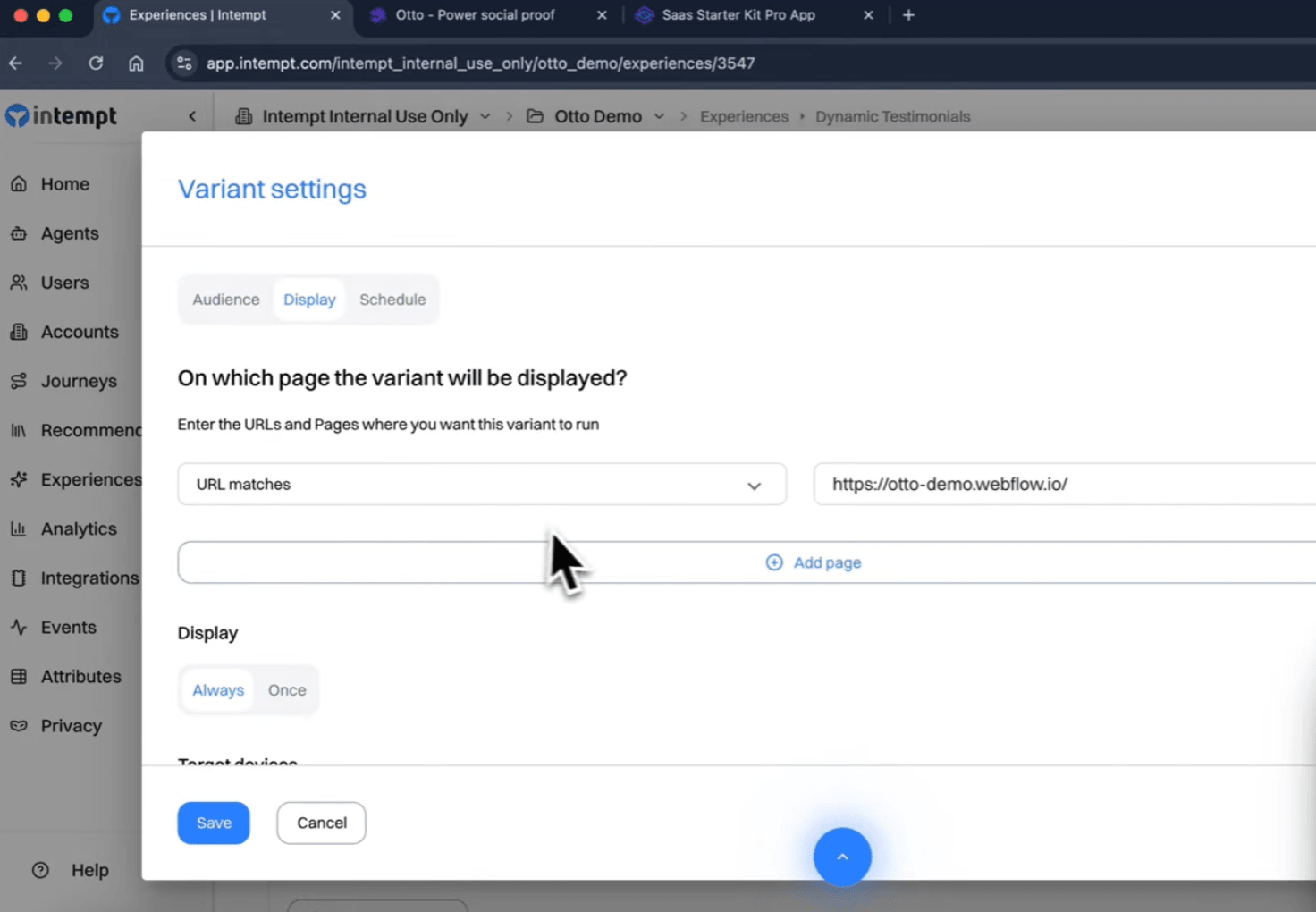
Varying proof per page needs the page to know who is on it, and that read comes from the same behavioural store the agentic GTM software serves segments from.
Measuring it without fooling yourself
Measure per placement against the action that placement is meant to unblock, never as a sitewide conversion delta.
- Category page proof. Measure progression to a product page, not orders.
- Product page proof. Measure add to cart.
- Pricing page proof. Measure progression to checkout or a demo request.
- Checkout proof. Measure completion, and watch refund rate alongside it.
Hold proof back from a slice of traffic on each placement. Running that as an experiment is the cleanest form. Without a holdback you cannot separate proof that worked from proof that sat next to something else that worked.
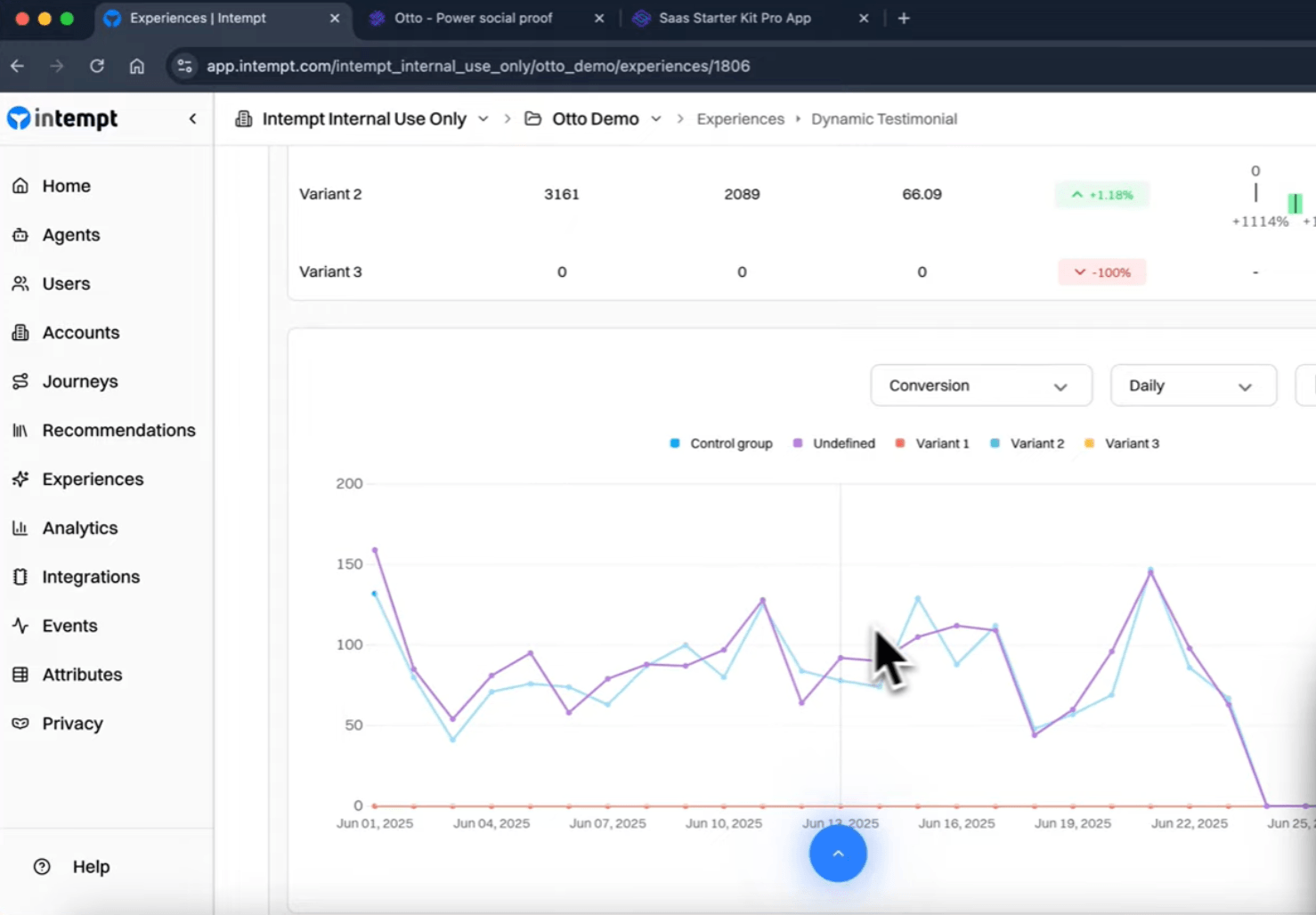
If you would rather run the placement rules, the per-page variants, and the holdback reporting as one configured system than assemble each piece by hand, the industry personalization recipe varies hero, proof and messaging on detected visitor context in one pass.
Where to start
Pick the page carrying the most traffic and the clearest single doubt, usually the product page, and put one kind of proof on it that answers that doubt specifically. Measure the action that page is meant to unblock.
Then move to the next page rather than stacking a second format on the first. Most sites already have enough proof and have it in the wrong places, which is the whole reason social proof underperforms its reputation. Start with the agentic GTM software if you want the placement rules to follow behaviour rather than a static template.