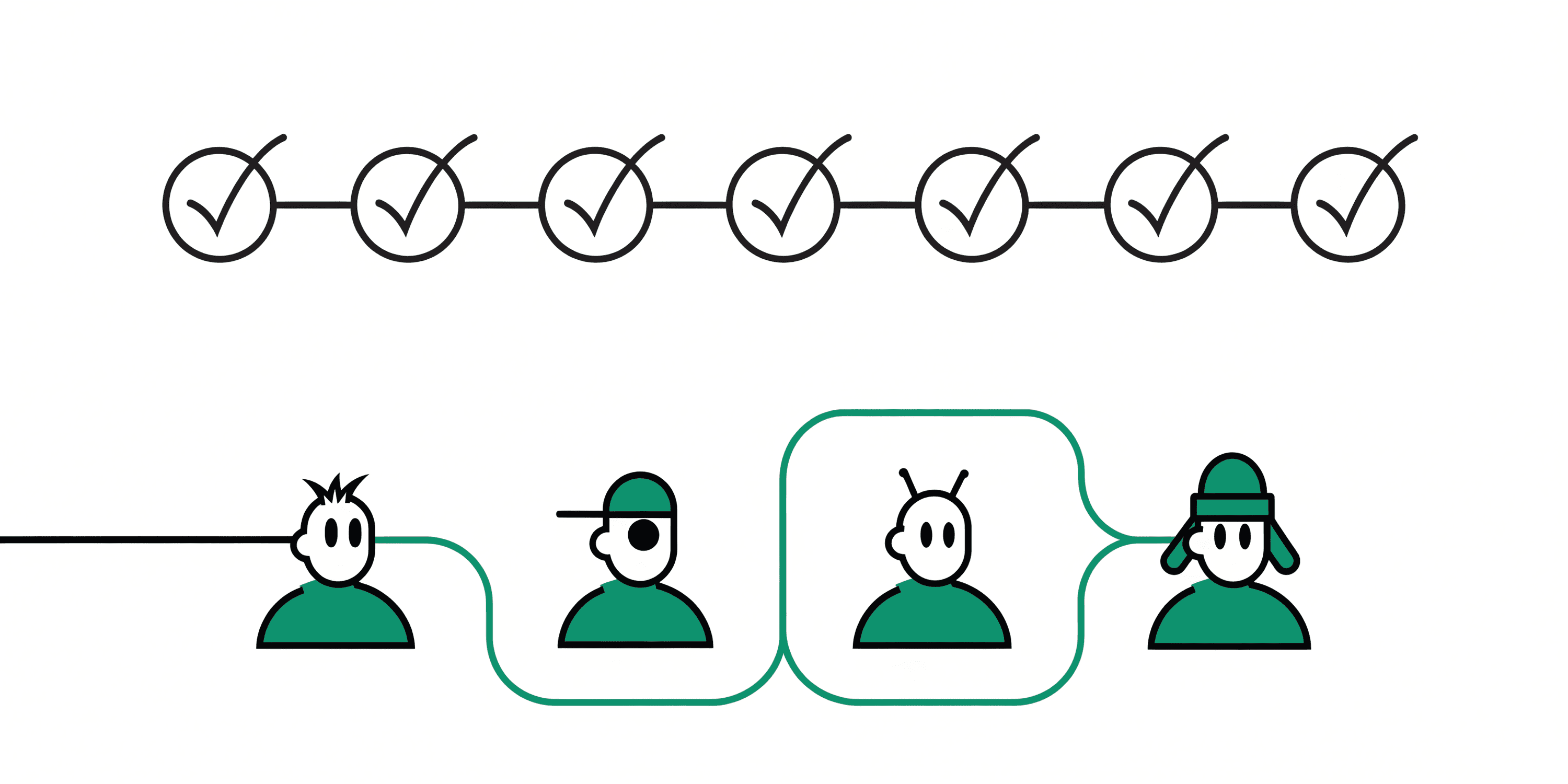

- Most sales coaching pulls from closed-lost calls or a generic playbook. That teaches you what to avoid and what a stranger's win looked like. It doesn't teach you what your own team's win actually sounds like.
- The training set that matters is your closed-won calls. Same product, same ICP, same objections that landed. Score against that, and the coachable moment stops being 'you missed the discovery framework' and starts being 'the reps who win this segment do this specific thing that you didn't'.
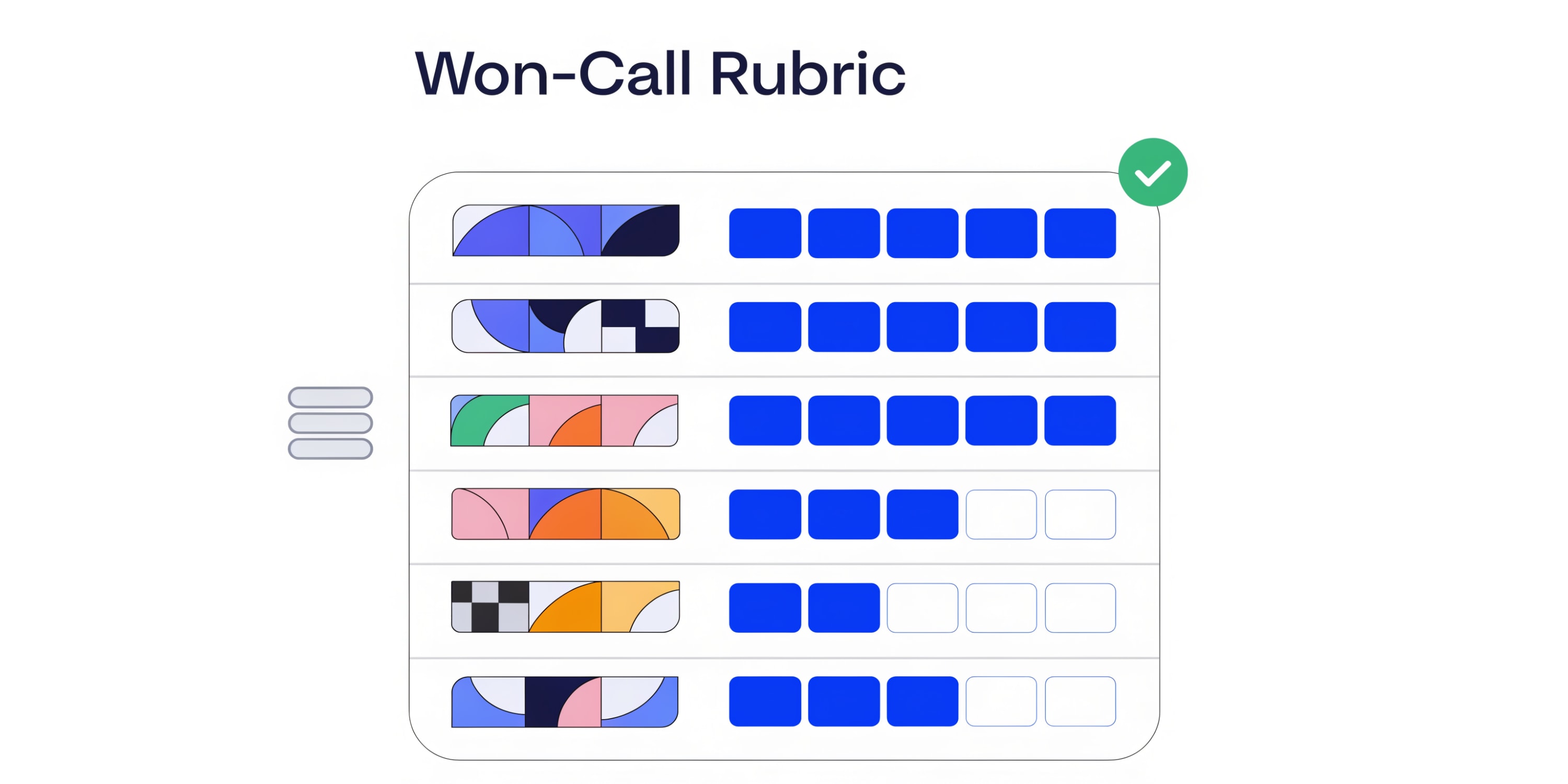
- The rubric to score against is six dimensions extracted from the won call itself: features demoed, questions asked, objections raised, objections acknowledged with product-anchored language, technical concerns flagged, and the proposed follow-up. Every call scored on the same six. The variance across your own reps is what surfaces the coachable moment.
Sales coaching is one of the most-discussed and least-changed practices in B2B sales. Every team says they do it. Almost no team scores calls against their own closed-won set. The default is a generic framework (BANT, MEDDIC, SPIN), or worse, a mental model the manager built from their own last two wins. Both produce the same outcome: coaching notes that sound right and don't change behavior. The Blu sales coaching page is the surface where we've put the version that does.
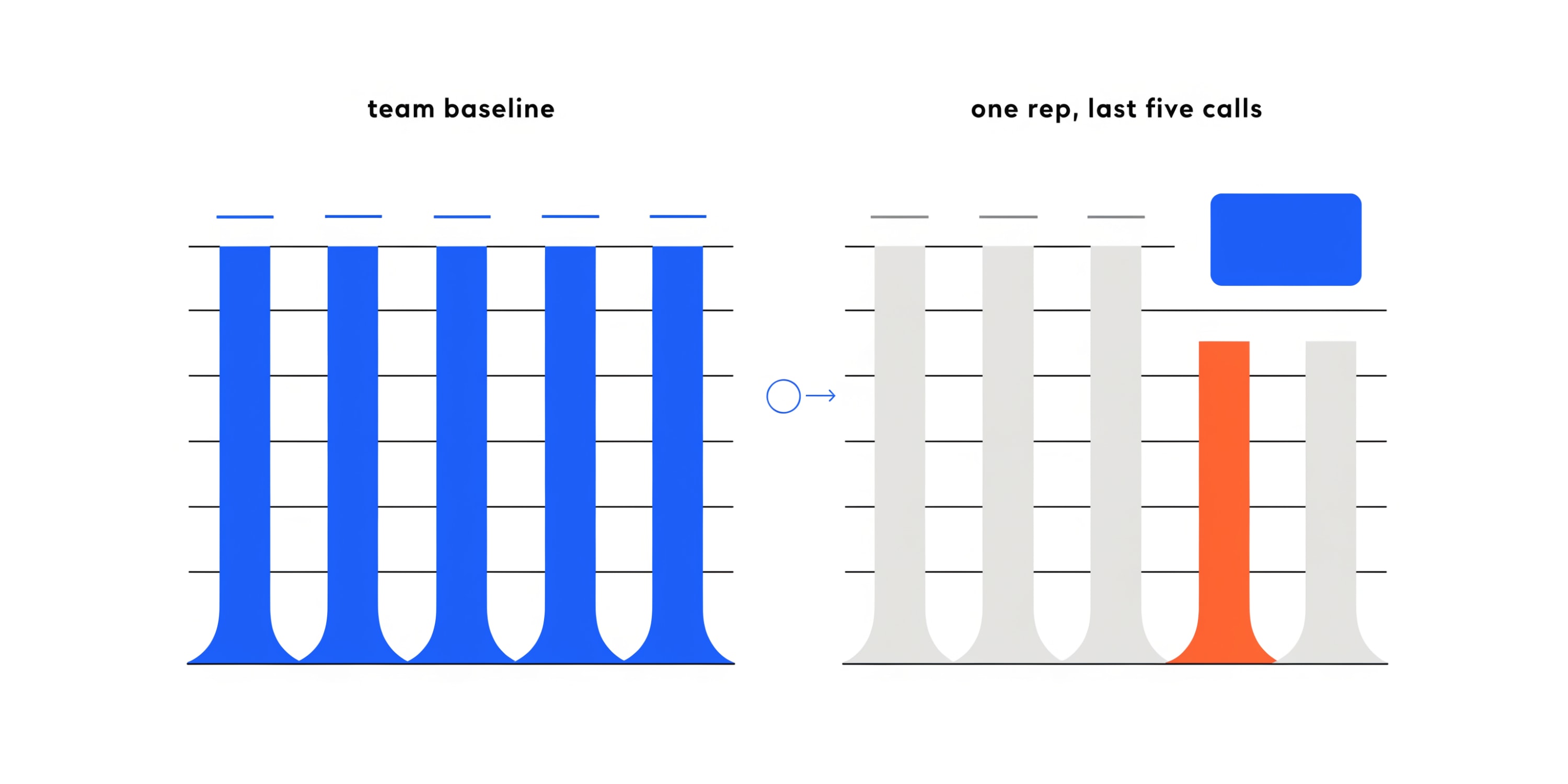
This post is for AE managers, sales leaders, and founder-CEOs running the sales function themselves. The angle: your closed-won calls are the training set. Not the coaching consultant's, not the CI vendor's default score, yours. And the coachable moment isn't a missed step in a framework. It's the variance between your rep's last five calls and the team's aggregate won-call baseline on six specific dimensions.
The short version
- Sales coaching is the recurring review of a rep's calls against a scored rubric, followed by a specific behavioral change on the next call. Everything else is a meeting.
- The rubric that produces change is built from your own closed-won calls, not from a generic framework and not from the CI vendor's default score.
- Closed-lost calls are a debugging tool. Closed-won calls are the training set. Coach off the training set.
- The Won-Call Rubric is six dimensions: features demoed, questions asked, objections raised, objections acknowledged with product-anchored language, technical concerns flagged, and the proposed follow-up.
- Score every call on the same six, 0 to 3, so the variance across reps is comparable.
- The coachable moment is the dimension where a rep's last five calls score lowest against the team's won-call baseline. Not what the manager thought went wrong.
- Weekly cadence, one call per rep. Three to five reps of a new behavior is the sticking point. Anything less frequent is a review, not coaching.
- The agent scores every call. The manager picks two of three flagged moments per rep and coaches them. That split is what the bandwidth math actually supports.
Why closed-won calls are the training set nobody uses
Most sales coaching programs treat the closed-lost call as the artifact worth reviewing. It's the loss review, the deal post-mortem, the win-loss interview. There's a good reason for that: a loss is where the failure mode surfaces, and failure modes are diagnostic. The problem is that failure modes are also noisy. A deal loses for procurement freezes, competitor discounts, buyer role changes, and ten other reasons that have nothing to do with the rep's execution on the call. Coaching a rep off a lost deal often coaches them on a variable they can't control.
Closed-won calls are cleaner. A deal wins because the buyer got what they needed on the call, decided the product would deliver it, and moved. The variables that produced the win are on the call. The variance across a team's won calls is where the coachable pattern is. If seven of your team's last 20 wins had the rep run a specific technical objection response and eight of your rep's last 20 calls didn't have that response at all, that's a coaching note. It's a note grounded in what actually converts on this product, in this segment, at this deal size. It's not a generic framework's opinion about how sales should be done.
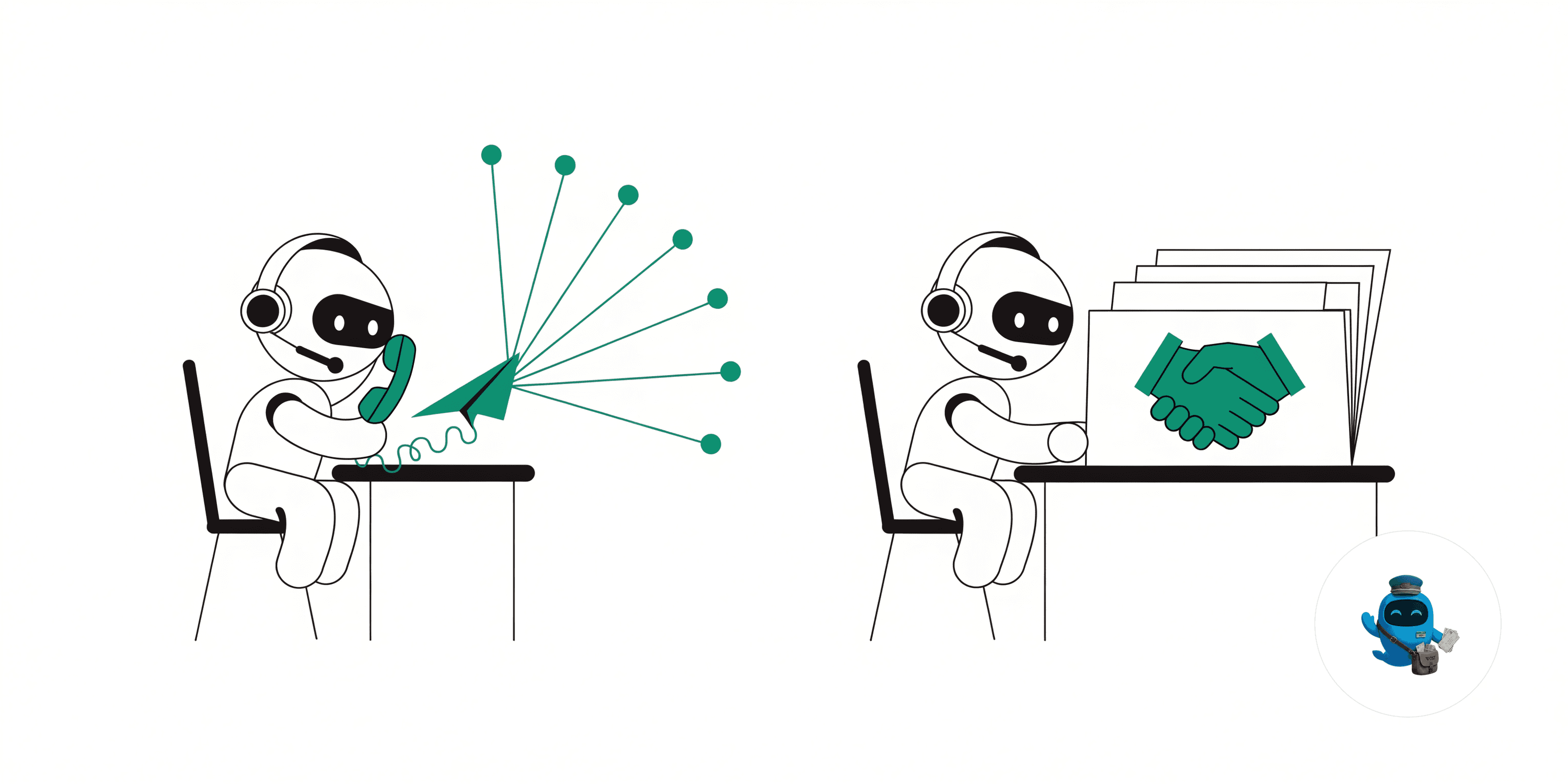
The reason nobody uses closed-won calls this way is bandwidth. Scoring 20 calls end-to-end is a full day of manager time, and no manager has that day. So the default is either sample review (score three calls, generalize to twenty, get it wrong) or vendor default score (let the CI tool grade the call against its own dataset, which is not your dataset). What changes that is agent extraction. When the transcript is already producing a structured six-dimension summary, the scoring pass across 20 wins is a scheduled job, not a manager afternoon. That extraction step is where AI sales agents earn their keep without the hype: the agent drafts the scores and the manager still decides what to coach.
The Won-Call Rubric: six dimensions, one score
The Won-Call Rubric is the scoring model we ship with our own meeting-notetaker on a Demo meeting type. It has six dimensions. Each one gets a 0-to-3 score. The math is that six dimensions is enough to capture the shape of a call and few enough that a manager can hold all six in their head during a coaching conversation. Anything more granular becomes a rubric nobody reads.
Dimension one, features demoed. What did the rep actually show, in what order, and did the order match the buyer's stated priority. Dimension two, questions asked by the buyer. Buyer questions are the strongest engagement signal on a call. A won call has three to seven buyer questions in the first 15 minutes. A lost call has zero to two. Dimension three, objections raised. Every won call has objections. A call with no objections is a call where the buyer wasn't seriously considering the product. Objection count is a signal, not a failure.
Dimension four, objections acknowledged with product-anchored language. This is the dimension that separates the reps who win from the reps who present. A product-anchored acknowledgment names the specific mechanism in the product that addresses the objection. A soft-agree ("good question, we hear that a lot") acknowledges the objection without addressing it. In our own won set, the ratio of product-anchored acknowledgments to soft-agrees is 3-to-1 or higher. In lost calls, it's below 1-to-1.
Dimension five, technical concerns flagged. The rep doesn't have to answer the technical concern on the call. They have to hear it, name it back, and flag it for the follow-up. Deals where technical concerns get missed on the call stall in the two weeks after the call, when the buyer's technical lead reads the summary and finds the concern isn't there. Dimension six, the proposed follow-up. Not "I'll send some resources." A specific commitment: a named artifact, a named person on the buyer's team who receives it, and a specific date. Deals move on specific follow-ups. Deals stall on vague ones.
The coachable moment is a variance, not a missed step
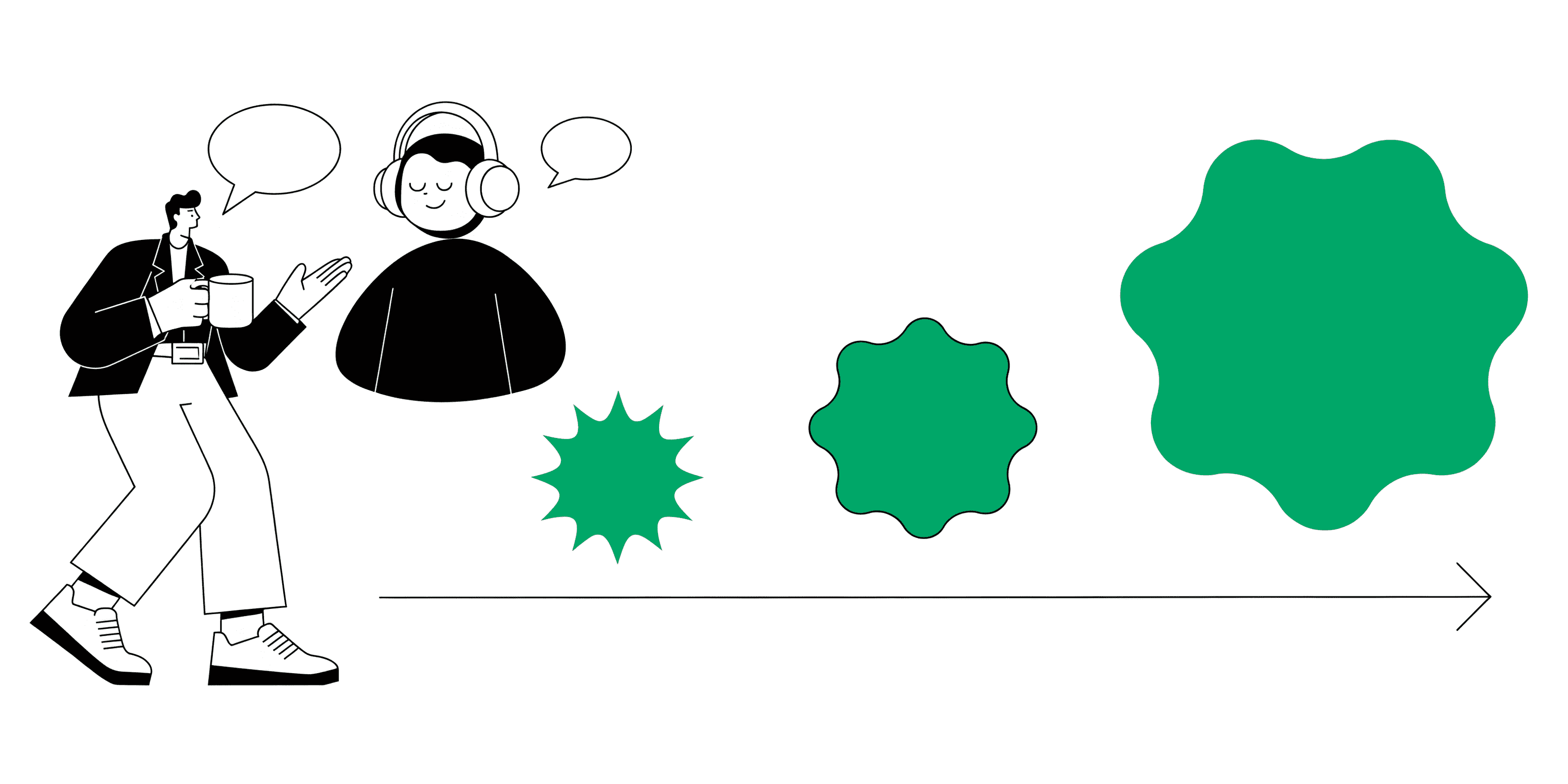
Once every call is scored on the same six dimensions, the coachable moment writes itself. Take a rep's last five calls, average their score on each dimension, and compare against the team's won-call baseline for the same dimensions. The dimension where the gap is largest is the coaching note. Everything else is noise until that gap closes.
One example from our own team. An AE was closing above the team average on discovery and demo. Their objection-acknowledgment dimension was scoring 1.4 on average, against a won-call baseline of 2.6. The coachable moment wasn't "you need more discovery." It was: on your last five calls, when the buyer raised a data-portability objection, you softened it ("we hear that") four out of five times instead of naming the specific export path in the product. Two calls after that note, the acknowledgment score was 2.4 and the same rep closed the next two deals. That's the shape of a coaching change that actually moves a number. It's specific, it's grounded in variance from a real baseline, and it's checkable on the next call.
This is where the objection-playbook skill fits into a coaching program. Once the variance surfaces a specific objection pattern, the skill generates the five most-likely objections for the rep's next call, each with the product-anchored acknowledgment and the follow-up question that moves past it. The rep runs the skill before the call, closes the acknowledgment gap by rehearsing the exact language, and the score converges on the baseline over the next three to five calls. That's what sales coaching that connects to a scored rubric looks like.
What the recipe actually does under the hood
The mechanical piece that makes weekly scoring possible is a summary recipe on the Demo meeting type. The recipe tells the meeting-notetaker agent to extract the six dimensions as structured fields on every Demo call. Features demoed as a list. Buyer questions as a count and a list. Objections raised as a list with the acknowledgment classification (product-anchored, soft-agree, missed). Technical concerns as a list with a flag on which ones got surfaced in the follow-up. Proposed follow-up as a structured record with the artifact, the recipient, and the date.
The recipe is called demo-call-summary-recipe in our own catalog. It's the piece that makes the whole coaching layer possible without a manager sitting through every call. Every won Demo call feeds the closed-won baseline. Every new Demo call gets scored against that baseline the moment the transcript lands. The coaching shortlist is generated on schedule.
The thing to be honest about: the recipe extraction is only as good as the taxonomy behind it. If a team calls the same product feature three different names across ten reps, the features-demoed dimension undercounts. Part of setting up a coaching program is standardizing the extraction taxonomy across the team, which is a two-hour job the first time and drift maintenance every quarter after that. Skip that step and the scored rubric produces confidently wrong numbers, which is worse than no numbers.
What breaks when you outsource the score to a generic model
Every conversation intelligence vendor ships a default scoring model. It's usually trained on the vendor's aggregate customer base, which is thousands of teams selling different products at different price points to different buyers. The default score is directionally reasonable. It flags calls with low buyer talk time, low question count, no clear next step. What it misses is that your product's coachable moments aren't in the aggregate model. Your product's coachable moment is the specific objection your specific buyers raise, in the specific language they use, on the specific integration your product does differently from the competitor's.
The failure mode is invisible on the dashboard. The rep is scoring 82 out of 100 on the vendor's model. The manager reads that as "doing fine," the rep reads it as "doing fine," and the deals still stall in the two weeks after the call. The score didn't lie. It measured the wrong thing. It measured whether the call looked like a generic good call. It didn't measure whether the call looked like your team's won calls.
This is not an argument against buying a CI tool. The transcript, the speaker separation, the sentiment tagging are all real work you don't want to build. It's an argument that the scoring layer, the one that actually decides the coaching, has to be built off your own closed-won set. Every serious CI vendor now supports custom scoring rubrics. Fewer teams use them than should. The gap is not the tool; it's the two-hour job of building the rubric from your own wins.
Building it into a weekly cadence
The operating rhythm that works, once the scoring is automated, is Monday through Wednesday for scoring, Thursday for the manager's shortlist review, Friday for the coaching conversation with each rep. One call per rep, one dimension per note, one behavior change to run in the next week's calls. Anything more than one note per week overloads the rep. Anything less frequent doesn't hit the three-to-five-reps threshold that makes a behavior stick.
The other cadence that matters is baseline refresh. The closed-won set from six months ago isn't the closed-won set today. Competitors change, buyers change, the product ships new capabilities. Refresh the baseline monthly. Rescore the last 20 wins on the current rubric. If a dimension's baseline moved by more than 20 percent, coach the shift explicitly ("the acknowledgment language that closed deals last quarter isn't landing now; here's what the last five wins actually sound like"). That's how you keep coaching current with a market that keeps moving.
What to keep and what to drop from the framework you already use
Nothing in this post argues you should throw out MEDDIC or SPIN. Those frameworks are useful as vocabulary. They give the team a shared way to name the parts of a call. What they don't do is grade a specific call against the calls that actually convert on your product. Keep the framework as the language. Build the Won-Call Rubric as the score. When they conflict, the score wins, because the score is downstream of your own data and the framework isn't.
The other thing worth keeping: role-plays. Coaching notes that don't get rehearsed don't stick. If the note is "acknowledge data-portability objections with the specific export-path language," the follow-up is a 10-minute role-play where the rep runs that exact acknowledgment three times before the next real call. Role-plays sound old-school and they are, but the three-to-five-reps threshold for behavior change doesn't care about the era. Reps who rehearse the change close the gap in weeks. Reps who don't close it in months, if at all.
The takeaway
Sales coaching stops being theatre when it's grounded in your own closed-won calls. The rubric is six dimensions. The score is a 0-to-3 on each. The coachable moment is a variance from the team's baseline, not a missed step in a generic framework. The cadence is weekly, the note is specific, and the change is rehearsed. That's the whole system. Everything else is a review meeting.